
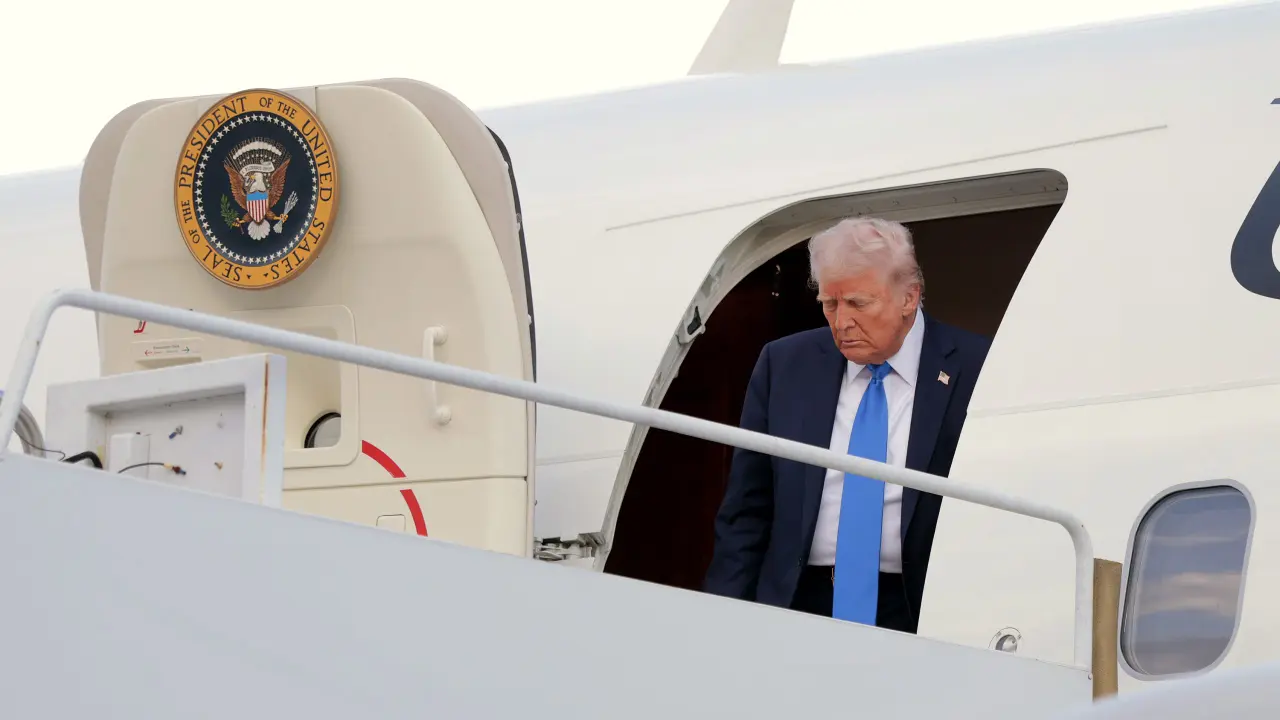
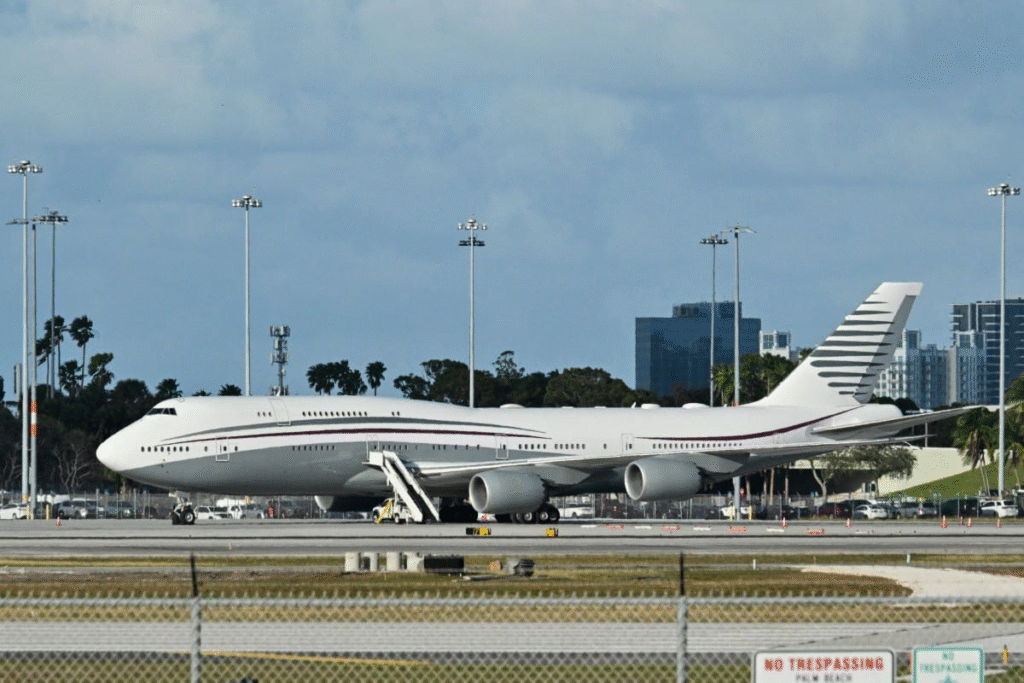
Amid speculations about the Qatari royal family offering a $400 million luxury jet to Donald Trump, Qatar’s government has issued a statement clarifying the situation. According to reports, the Qatari government had planned to gift Trump the luxury plane during his upcoming visit to the country.
However, the Qatari authorities have denied these reports, stating that no final decision has been made. This controversy has raised questions about the legality of such a gift, the potential motivations behind it, and the broader implications for both the United States and Qatar.
The Alleged Gift: Facts and Clarifications
Reports surfaced recently suggesting that during his forthcoming visit to Qatar, President Donald Trump would receive a luxury jet from the Qatari royal family as a gift. The news stirred political debate, given the substantial value of the jet, pegged at $400 million, and its potential to influence international relations between the two nations.
The reports claimed that the jet would temporarily replace Air Force One, serving as Trump’s presidential aircraft until his departure from office in 2029. Furthermore, it was suggested that ownership of the aircraft would eventually be transferred to a foundation overseeing the construction of Trump’s presidential library.
Qatar quickly responded to these reports, denying the narrative that the jet was a gift. Ali Al-Ansari, Qatar’s media attaché, stated that discussions regarding the transfer of an aircraft for temporary use as Air Force One were ongoing but had not been finalized.
Read : Australian Couple Forced to Sit Next to Woman’s Dead Body for 4 Hours on Qatar Airways Flight
Al-Ansari emphasized that the matter was under review by the legal departments of both the Qatari Ministry of Defense and the U.S. Department of Defense. The final decision regarding the aircraft’s transfer, he clarified, had yet to be made.
Read : Qatar : Independent Emirate On the West Coast Of the Persian Gulf
The statement from Qatar essentially framed the reports as inaccurate, refuting claims that the plane was being outright gifted to Trump. Instead, it highlighted that the aircraft was being considered for temporary use as a replacement for the traditional Air Force One during Trump’s visit. This clarification was crucial in reducing the public perception of Qatar engaging in a significant diplomatic gesture that could potentially affect U.S. foreign policy.
The Legal Considerations: Can Trump Accept a Gift?
The question of whether President Trump could legally accept such a gift is a crucial one, given the implications of the Emoluments Clause of the U.S. Constitution. The Emoluments Clause prohibits any person holding government office from receiving gifts, titles, or offices from foreign governments without the consent of Congress.
This clause was designed to prevent foreign powers from gaining undue influence over U.S. officials through the provision of lavish gifts. Kathleen Clark, a government ethics expert at the Washington University School of Law in St. Louis, weighed in on the situation, claiming that the mere suggestion of a foreign gift of such value was “outrageous.”
Clark further suggested that Trump might attempt to skirt scrutiny and circumvent the constitutional restrictions, calling the development part of his broader strategy to amass personal wealth using the power of the U.S. government.
The Emoluments Clause has been a subject of controversy throughout Trump’s presidency, with various ethical concerns surrounding his business dealings and foreign interactions. Some legal experts argue that even if the jet were only temporarily used by Trump, it could still raise significant legal questions regarding compliance with U.S. laws designed to prevent foreign influence over American officials.
Senate Minority Leader Chuck Schumer also commented on the situation, noting that the optics of such a gift were damaging to Trump’s political rhetoric. Schumer, a vocal critic of Trump, mocked the idea of Trump’s Air Force One being provided by Qatar, saying, “Nothing says ‘America First’ like Air Force One, brought to you by Qatar.”
His comments pointed to the perceived contradiction between Trump’s populist message and the potential foreign influence that could be exerted through such a gesture.
Political and Diplomatic Ramifications
The controversy over the luxury jet has also sparked broader political and diplomatic discussions about U.S.-Qatar relations. Qatar, as a key ally in the Middle East, has long enjoyed close ties with the U.S., particularly in terms of military cooperation.
The U.S. maintains several military bases in Qatar, and the two nations have collaborated on various security and counterterrorism initiatives. However, reports of such a lavish gift have the potential to reshape the perception of this relationship, particularly in the context of Trump’s presidency.
Critics have expressed concern that the Qatari royal family could be attempting to buy influence with the U.S. government by providing a gift of such magnitude. While Qatar has denied the gift, the speculation surrounding the matter highlights the potential for foreign governments to leverage diplomatic gestures to curry favor with the U.S. president.

The luxury jet, if it were to be transferred to Trump, could be viewed as a symbolic gesture of goodwill—or as a more strategic move to secure influence over American foreign policy. The potential political ramifications of such a move are far-reaching.
If Qatar were to successfully provide the jet, it could set a precedent for other nations to provide high-value gifts to U.S. officials, potentially undermining the ethical standards that have historically governed such interactions.
The controversy over the jet could also complicate Trump’s foreign policy agenda, particularly in the Middle East, where he has worked to balance relationships with various Gulf nations, including Qatar, Saudi Arabia, and the United Arab Emirates.
On the other hand, proponents of the U.S.-Qatar relationship may view the transfer of the aircraft as a diplomatic gesture that underscores the strong ties between the two nations.
They might argue that the jet is a temporary solution to ensure the continuity of U.S. presidential operations during Trump’s tenure, and not necessarily a means of foreign influence. However, the scale of the gift and the ambiguity surrounding its transfer have raised suspicions, leading to heated political discourse on both sides of the aisle.
The Future of the Jet and Trump’s Presidency
The ongoing discussions about the luxury jet have opened a broader debate about the legacy of Donald Trump’s presidency and his use of governmental power for personal benefit. Trump’s ability to navigate ethical and legal concerns has often been a point of contention throughout his political career, with critics alleging that he has repeatedly violated norms and ethical standards.
The luxury jet, if it were to be gifted to Trump or used by him temporarily, could further fuel the perception that he is exploiting the office for personal gain. If the plane were to be used as Air Force One during the final years of Trump’s presidency, it would underscore the close relationship between Trump and the Qatari government.
It would also raise questions about how future presidents might handle similar situations, particularly in terms of transparency and compliance with the law. The debate over the jet has highlighted the importance of establishing clear guidelines for foreign gifts and interactions with U.S. officials, particularly as the line between diplomacy and personal interest continues to blur.
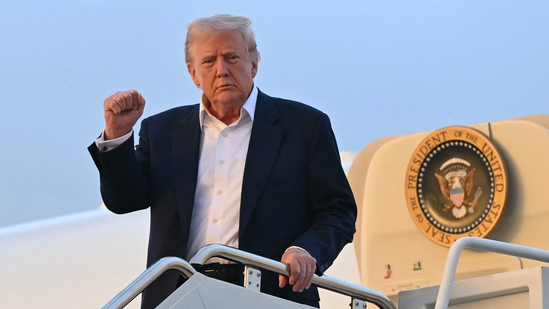
At the same time, Trump’s relationship with the Qatari government could be seen as a continuation of his broader foreign policy strategy, which has emphasized strong ties with certain Middle Eastern nations. While Qatar’s intentions remain unclear, the potential transfer of the jet could serve as a reminder of the complex nature of international diplomacy and the influence that wealth and power can have on global politics.
As the controversy over the $400 million luxury jet continues to unfold, the implications for both U.S. domestic politics and international relations are becoming increasingly evident. Qatar’s response to the reports highlights the complexity of diplomatic gestures and the need for clarity in such high-profile dealings.
The legal challenges surrounding the potential gift of the jet also underscore the importance of upholding ethical standards in government, particularly when it comes to preventing foreign influence over U.S. officials.
While the matter remains under review, the political and diplomatic ramifications of this situation are sure to continue to generate discussion in the coming months.
Whether or not the jet is ultimately transferred to Trump, the controversy surrounding its potential role in his presidency will likely remain a point of contention for those monitoring the ethical implications of his administration’s interactions with foreign powers.