
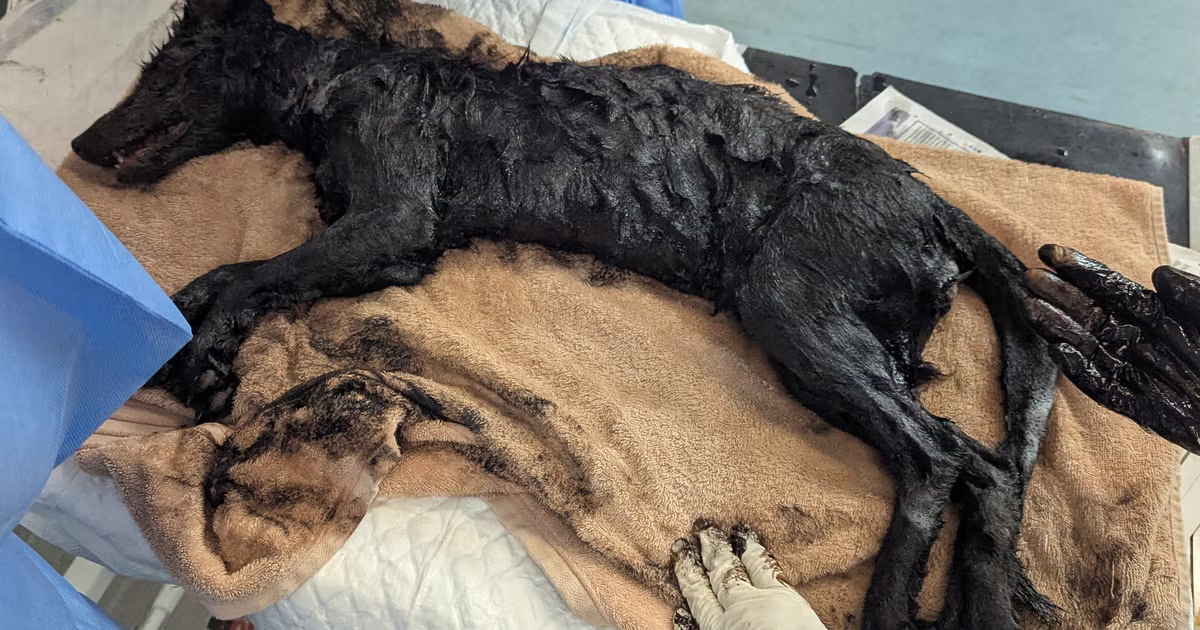
On March 27, 2025, in the heart of Leicester city centre, a juvenile Fox Stuck In oil and faced a life-threatening ordeal, trapped in a pit of thick, tar-like heating oil inside a derelict building.
The Royal Society for the Prevention of Cruelty to Animals (RSPCA) inspector Helen Smith became the fox’s lifeline, executing a daring rescue after a member of the public spotted two frightened eyes peering from the dark liquid.
This extraordinary story of compassion and quick action highlights the challenges faced by urban wildlife and the tireless efforts of those dedicated to their protection.
A Miraculous Discovery in a Derelict Building
The incident began when a passerby noticed something unusual in an abandoned structure in Leicester. Amid the shadows, two small eyes gleamed from a pool of what appeared to be tar.
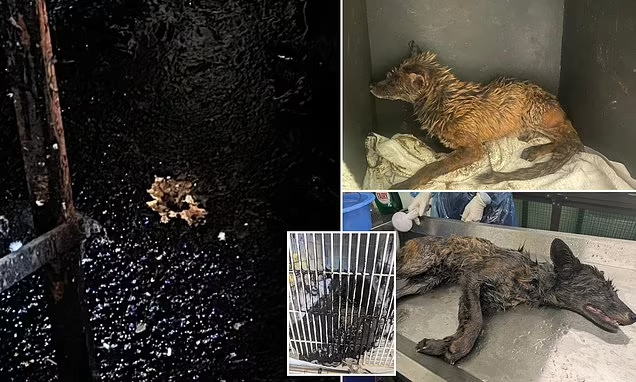
Closer inspection revealed a young fox, its body almost entirely submerged in a viscous, black substance later identified as heating oil that had leaked from a vandalized storage tank. The fox was immobile, its fur matted and heavy, with only its ears, eyes, and nose visible above the surface. The observer immediately contacted the RSPCA, setting the rescue in motion.
Inspector Helen Smith, a seasoned RSPCA officer, arrived at the scene and was struck by the gravity of the situation. “I’ve never seen anything like it,” she later remarked, describing the fox’s desperate state. The pit, described as an observation area flooded with oil, posed a significant challenge.
The substance was so thick that the fox couldn’t move, and any attempt to free itself only worsened its plight. Smith knew time was critical—prolonged exposure to oil can cause hypothermia, skin burns, and toxicity in animals, threatening their survival.
Using a specialized grasper, Smith carefully secured the fox around its neck, gently pulling it from the pit. The operation required precision to avoid further injury to the already traumatized animal.
Read : Thousands of Human Bones Found on Gay Serial Killer Herb Baumeister’s Fox Hollow Farm in Westfield
Once freed, the fox was sedated and rushed to a veterinary clinic for immediate care. Harrowing images from the scene show the fox’s eyes wide with fear, a stark reminder of the dangers lurking in urban environments. The discovery was nothing short of a miracle, as Smith noted: “It’s a miracle he was spotted.”
A fox stuck in an oil-filled pit has been rescued after a member of the public spotted its two eyes peering from the “tar-like substance”, the RSPCA has said pic.twitter.com/mCdsBMFnli
— PA Media (@PA) April 12, 2025
This rescue underscores the often-overlooked hazards in derelict urban spaces. Abandoned buildings, littered with debris or hazardous materials like oil, can become death traps for wildlife.
The Leicester incident highlights the importance of public vigilance—without the sharp-eyed individual who reported the fox, the outcome could have been tragic. It also raises questions about the maintenance of such sites and the need for better safeguards to prevent environmental contamination that endangers animals.
The Road to Recovery: Cleaning and Rehabilitation
At the veterinary clinic, the fox’s condition was dire but not hopeless. Covered in oil from head to toe, the animal required meticulous cleaning to remove the toxic substance. Vets used washing-up liquid, a standard method for decontaminating oil-soaked animals, to break down the heavy residue.
Footage from the clinic shows workers gently scrubbing the sedated fox, gradually revealing its natural red fur beneath the black coating. Despite the intensity of the ordeal, the fox showed signs of resilience, a testament to its youth and the prompt intervention.
The cleaning process was only the first step. Oil exposure can have lingering effects, including skin irritation, respiratory issues, and internal damage if ingested. To ensure comprehensive care, the fox was transferred to the RSPCA Stapeley Grange Wildlife Centre in Cheshire for further rehabilitation.
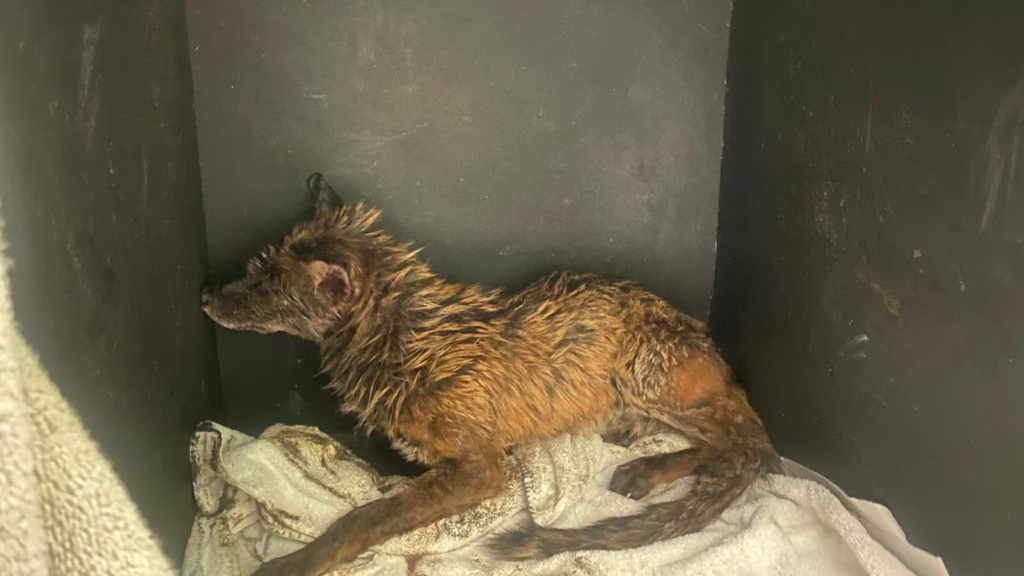
Lee Stewart, the centre’s manager, described the case as “the worst oil case I have ever seen,” emphasizing the scale of the challenge. The fox, still black but slightly cleaner the following day, required ongoing treatment to address potential complications.
At Stapeley Grange, the fox is receiving specialized attention, including a balanced diet, medical monitoring, and a safe environment to regain its strength. Vets are optimistic about its recovery, noting that despite being young—likely only a few months old—the fox has a fighting chance to return to the wild.
“This poor fox was totally stuck in the thick, tar-like substance and couldn’t move,” Smith said, expressing relief that the animal was now in expert hands. The centre’s work is critical, as premature release could jeopardize the fox’s survival if it hasn’t fully recovered.
The rehabilitation process also sheds light on the broader issue of wildlife affected by human activity. Oil spills, whether large-scale or localized like this one, pose severe risks to animals. For foxes, which are highly adaptable and often thrive in urban areas, such incidents are a stark reminder of the trade-offs of coexisting with human infrastructure.
The RSPCA’s efforts extend beyond rescue to advocating for better environmental practices, such as securing hazardous materials and cleaning up neglected sites. This case, while a success so far, is a call to action for communities to prioritize wildlife safety.
Wildlife Rescue and Urban Challenges
The rescue of the Leicester fox is one of many undertaken by the RSPCA, an organization with a 200-year history of protecting animals. In 2024 alone, the charity responded to thousands of calls about wildlife in distress, from foxes entangled in netting to birds coated in oil.
Inspector Smith’s actions reflect the dedication of RSPCA officers who face unpredictable and often hazardous situations to save lives. Her ability to remain calm under pressure and use specialized equipment highlights the training and commitment required in such roles.

This incident also brings attention to the growing challenges faced by urban wildlife. Foxes, once primarily rural creatures, have become a common sight in UK cities, drawn by abundant food sources like discarded waste. However, urban environments are fraught with dangers—traffic, litter, netting, and, as this case shows, industrial hazards like oil leaks.
The Leicester fox’s predicament is a microcosm of these risks, illustrating how human negligence, such as vandalism of storage tanks, can have devastating consequences for animals.
Public response to the story has been overwhelmingly positive, with many praising Smith’s heroism and the RSPCA’s work. Social media posts have highlighted the emotional impact of the fox’s rescue, with users sharing images of its frightened eyes and expressing gratitude for its second chance.
The RSPCA has used the case to raise awareness, urging people to report animals in distress and support initiatives like the Great British Spring Clean to reduce litter and hazards. “The public can help us protect animals and avoid these incidents in the first place,” an RSPCA spokesperson noted.
Looking ahead, the fox’s story is a reminder of the delicate balance between urban development and wildlife conservation. Policies to secure derelict sites, regulate hazardous materials, and fund wildlife rehabilitation centres are essential to prevent similar incidents.
The RSPCA’s ongoing campaign for stricter environmental protections aligns with these goals, advocating for a world where animals face fewer human-made threats.
As the fox continues its recovery at Stapeley Grange, its future looks promising. Vets anticipate that, with time and care, it will be strong enough to return to the wild, perhaps roaming Leicester’s streets once more.
For Inspector Helen Smith, this rescue is one of many, but its uniqueness—those haunting eyes in a sea of oil—will likely stay with her. “This poor fox was very young to have been through such an ordeal already,” she said, hopeful for its full recovery.
The Leicester fox rescue is more than a single act of heroism; it’s a powerful narrative of compassion, resilience, and the urgent need to protect our urban wildlife. Thanks to a vigilant citizen, a skilled inspector, and a dedicated team, this young fox has a chance to thrive again, reminding us all of the impact we can have when we act to save a life.