
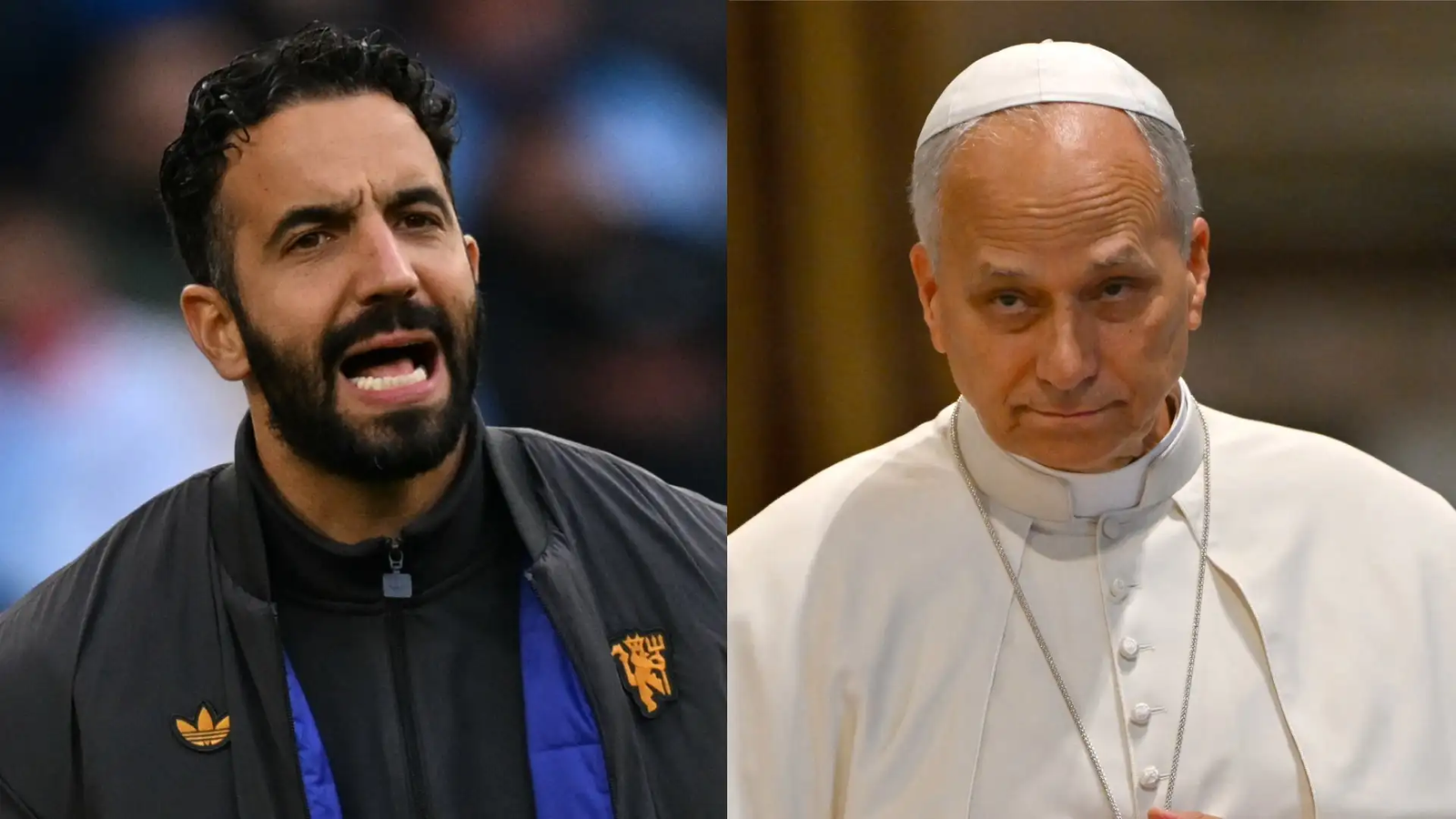
In the high-stakes world of Premier League football, where managerial tenures can hinge on a single result, Manchester United’s Rúben Amorim has emerged as a figure of unyielding conviction. The Portuguese head coach, who took the reins at Old Trafford last season, has faced a barrage of criticism for his tactical stubbornness. Yet, in a candid Q&A session with the Association of Former Manchester United Players on Thursday night—shared via the Man Utd The Religion YouTube channel—Amorim delivered a line that’s already rippling through the football community.
When pressed on whether co-owner Sir Jim Ratcliffe had urged him to abandon his beleaguered 3-4-2-1 formation, the 39-year-old responded with emphatic humor: “No, no, no. No one. Not even the Pope will change this.” It’s a bold declaration from a man steering a club mired in its worst start to a season in over three decades, underscoring the tension between tactical philosophy and pragmatic survival.
Rúben Amorim’s words come at a precarious moment for United. With just four points from their opening four Premier League matches, including a humiliating 3-0 derby defeat to Manchester City last weekend, the pressure is mounting. The Red Devils have also stumbled out of the Carabao Cup, falling to League Two side Grimsby Town in an embarrassing early exit.
Statistically, Rúben Amorim’s win percentage in the top flight stands at a dismal 25.8% across 31 games— the lowest for any United boss since the Second World War. Fans and pundits alike have zeroed in on his preferred setup: a back three flanked by wing-backs, two advanced midfielders, and a lone striker. Detractors argue it’s ill-suited to the current squad, exposing frailties in transition and leaving creative talents like Bruno Fernandes overburdened in deeper roles.
This isn’t mere bravado; it’s Amorim channeling the same resolve that propelled Sporting CP to a league title in 2020-21, where his system revolutionized Portuguese football. Arriving at United amid the post-Ferguson chaos, he inherited a dressing room fractured by inconsistency and a structure he believes requires wholesale reform. During the Q&A, Rúben Amorim didn’t shy away from the bigger picture, stating he “thought the club was in a much better place than it was” and emphasizing that “the whole structure of Manchester United needed to change.”
🚨 Rúben Amorim: “Sir Jim Ratcliffe ask to change the system? No, no, no. Not once. Not even the Pope can do it!”.
— Fabrizio Romano (@FabrizioRomano) September 20, 2025
“This is my job, my responsibility, this is my life”.
“The system will have an evolution and I am doing things my way. I hope I will have the time to change”. pic.twitter.com/gUTMJlQeFk
Ratcliffe’s visit to Carrington on Thursday provided reassurance rather than rebuke, with the INEOS chief offering public backing. Rúben Amorim revealed the conversation focused on long-term vision, not knee-jerk alterations, allowing the coach to double down on his identity. As United prepare to host Chelsea at Old Trafford on Saturday—a match live with subplots like Alejandro Garnacho’s return after his summer transfer to Stamford Bridge—these upcoming fixtures against the Blues, Brentford, and Sunderland could define whether Amorim’s faith is rewarded or ridiculed.
The Roots of Amorim’s Tactical Obsession: From Sporting to Old Trafford
Rúben Amorim’s journey to Manchester United is a tale of rapid ascent built on an uncompromised blueprint. At just 39, he’s one of the youngest head coaches in Europe’s elite leagues, yet his track record speaks volumes. Taking over at Sporting CP in March 2020 amid a seventh-place slump, Amorim transformed the Lions into champions within a season—their first Primeira Liga title in 19 years. Central to this revival was his 3-4-2-1 (or 3-4-3 in more attacking guises), a fluid system emphasizing high pressing, compact defending, and explosive transitions. Players like Pedro Gonçalves and Pedro Porro thrived in dual-threat roles, while the back three provided stability against Portugal’s technical heavyweights.
This wasn’t accidental; Amorim’s philosophy draws from a blend of José Mourinho’s pragmatism—his early mentor—and modern influences like Julian Nagelsmann’s positional play. He prioritizes asymmetry: wing-backs bombing forward to create overloads, midfield duo linking defense to attack, and forwards dropping deep to knit play. At Sporting, it yielded a 2.5 goals-per-game average and the fewest goals conceded in the league. United’s hierarchy, scouring for a post-Ten Hag savior, saw echoes of that success in Amorim’s data-driven approach. Signed on a three-year deal last November, he arrived promising evolution, not revolution, but the Premier League’s intensity has tested his convictions.
Read : Pope Leo’s Childhood Home in Chicago Sells for $375,000
Adapting to United’s squad has been the crux. The club boasts talents like Fernandes, whose visionary passing suits an advanced role, and Marcus Rashford, whose pace could exploit wing-back channels. Yet, Amorim’s insistence on Fernandes as a No. 8—tracking runners like Phil Foden in the City loss—has sparked debate. “Against City, [striker Benjamin] Sesko looks like he’s alone in the box,” Amorim admitted post-derby, acknowledging service issues.
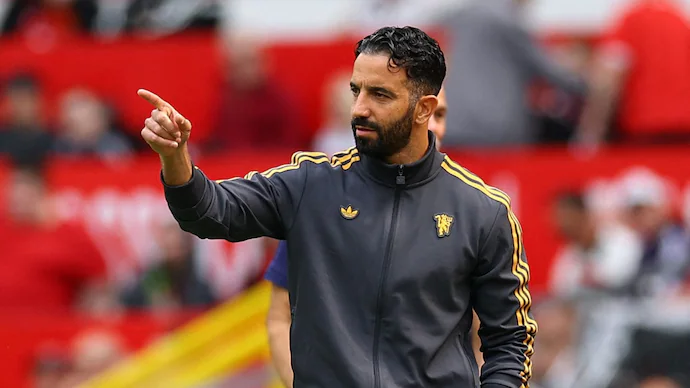
The system demands full buy-in: full-backs like Diogo Dalot must cover vast ground, while center-backs like Lisandro Martínez anchor a high line vulnerable to counterattacks. Early signs of promise, like the 2-1 win over Arsenal in December, faded as injuries and fatigue exposed gaps. By summer 2025, with signings like Sesko bolstering the attack, Amorim viewed this season as his canvas. Four games in, however, the canvas is smudged—United sit 12th, scoring just three goals while conceding seven.
Critics, including former United midfielder Roy Keane, have labeled it “stubborn folly,” arguing a switch to 4-3-3 would unleash the squad’s flair. Rúben Amorim counters that true change requires time: “This is my job, my responsibility, my life.” His Q&A quip about the Pope wasn’t deflection; it was defiance rooted in results at Sporting, where doubters were silenced by silverware. As United grapple with a squad blending youth (Kobbie Mainoo) and experience (Casemiro), Amorim’s obsession isn’t blind—it’s calculated, betting that persistence will forge a dynasty.
Facing the Backlash: Ratcliffe’s Support and the Road Ahead
The Pope remark landed like a thunderclap in a storm of scrutiny, amplifying voices calling for Rúben Amorim’s head. Pundits on shows like Match of the Day dissected the derby debacle, highlighting how Foden’s unmarked run echoed Fulham’s equalizer earlier in the campaign. Social media buzzed with memes—God himself petitioning for a formation tweak—while Reddit threads debated if Amorim’s inflexibility borders on arrogance. “A manager unwilling to adapt isn’t a good one,” one user lamented, echoing broader sentiment.
United’s fanbase, scarred by the post-Ferguson merry-go-round of managers (Moyes, Van Gaal, Mourinho, Solskjær, Rangnick, Ten Hag), is weary of experiments. Yet, Amorim’s retort reveals a deeper fear: changing now could signal weakness to the players. In the Q&A, he elaborated: “Not once [have I thought about changing]. Not even the Pope [can make me], it will not change.” This stems from psychology—abandoning his system mid-struggle might erode locker-room authority, inviting whispers of capitulation.
Instead, Amorim envisions evolution: subtle tweaks like inverting wing-backs or varying pressing triggers, but only after embedding principles. Ratcliffe’s intervention was pivotal here. The billionaire co-owner, overseeing United’s restructuring since his 27.7% stake acquisition, met Amorim at Carrington to affirm patience. “He has my full support,” Ratcliffe reportedly said, focusing on structural overhauls like youth integration and scouting revamps. No ultimatums were issued, despite whispers of a three-game grace period before the October international break.
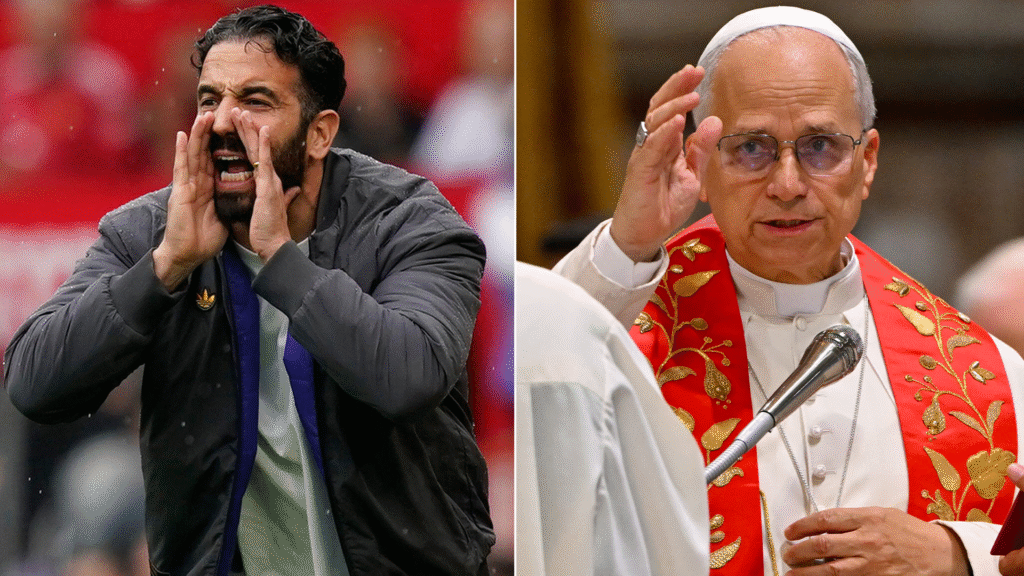
The road ahead is treacherous. Saturday’s clash with Chelsea reunites Amorim with Garnacho, the Argentine winger shipped out after a Europa League final fallout with Tottenham. Garnacho’s brace in a recent Barcelona win underscores the risks of such “bomb squad” exiles—Rashford, too, has flourished post-United at Barca. Brentford’s resilience and Sunderland’s promoted grit follow, games where United’s high line could be shredded by quick counters. Amorim knows results trump rhetoric: “We need to make all the good steps.” Off-field, his candor has endeared him to some—former players at the Q&A applauded his vision—but alienates others demanding trophies now.
Amorim’s gamble is existential. Succeed, and he’s the architect of United’s renaissance; fail, and he’s another chapter in the club’s turbulent history. His Pope line, laced with Portuguese wit, humanizes a coach under siege, reminding us that football’s greatest innovations often demand faith amid fire.
Why Amorim’s Stand Matters: Philosophy Over Panic in Modern Football
In an era of data dashboards and instant analysis, Amorim’s refusal to bend embodies a rare purity. Modern football glorifies adaptability—Pep Guardiola’s tweaks, Jürgen Klopp’s gegenpress evolutions—but at what cost to identity? Amorim argues that ditching his 3-4-2-1 for short-term gains would betray the very ethos that lured him to United: building from a defensive spine to unleash chaos upfront. “When I want to change my philosophy, I will change, but if not, you have to change the man,” he said post-City, a veiled nod to potential sacking over compromise.
This stance resonates amid United’s identity crisis. Since Ferguson’s 2013 exit, the club has cycled through systems without a cohesive thread, amassing £1.5 billion in transfer spend yet yielding one major trophy (Europa League 2017). Amorim’s arrival promised continuity—a Portuguese core with Fernandes, a high-energy press echoing United’s halcyon days.
Sticking to his guns could galvanize the squad, fostering the buy-in that won Sporting’s title. Mainoo’s emergence as a midfield pivot or Martínez’s ball-playing prowess from the back three hint at untapped potential. Yet, the backlash is valid: Fernandes’ deeper deployment has stifled his 10-goal haul from last season, and Sesko’s isolation up top wastes a £70 million investment.
Broader implications loom for English football. Amorim’s saga tests the Premier League’s tolerance for continental imports—his system’s success in Portugal (where Sporting topped Europe in chance creation) clashes with the league’s physicality. If he prevails, it validates bold hires; if not, it fuels narratives of “foreign tinkering.” Ratcliffe’s backing signals a shift toward patience, contrasting the knee-jerk eras of the Glazers. As United eye a top-four push, Amorim’s conviction could be the spark—or the fuse.
Ultimately, this isn’t about one quote; it’s about a coach betting his legacy on belief. In a sport where popes and pundits alike offer sermons, Amorim’s heresy might just be the gospel United needs. With Chelsea looming, the faithful await judgment.