
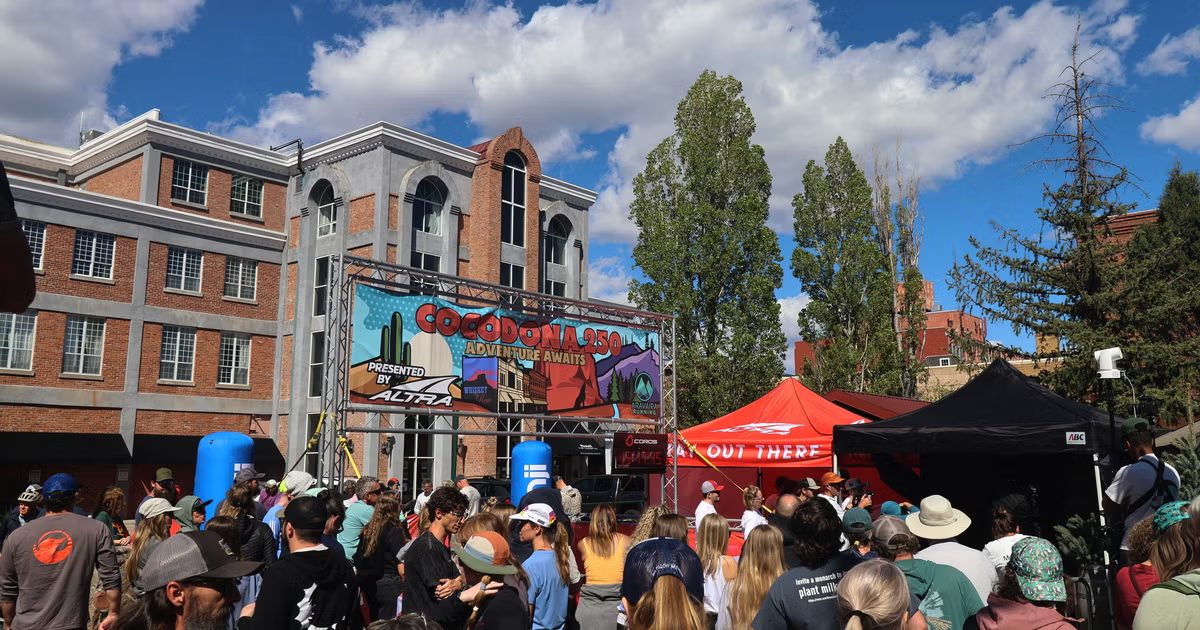
The ultrarunning community was shaken after organizers of the Cocodona 250 ultramarathon confirmed that a participant died following a medical emergency during the grueling race across Arizona. The event, known for its punishing terrain, dramatic elevation changes, and extreme endurance demands, had only recently begun when the tragedy occurred. Race officials announced the death in a public statement, expressing condolences to the runner’s family, fellow competitors, volunteers, and emergency responders involved in the incident.
The Cocodona 250 has quickly become one of the most recognized endurance races in the United States since its launch in 2021. Stretching more than 250 miles through deserts, mountains, forests, and remote trails, the race tests the physical and mental limits of even the world’s most experienced ultrarunners. Participants spend days on the course, often battling exhaustion, dehydration, sleep deprivation, unpredictable weather, and difficult terrain. The death has once again raised questions about the risks associated with extreme endurance sports and the growing popularity of ultramarathons around the world.
Organizers said the race would continue in honor of the runner who died, while asking the running community to carry the person’s memory throughout the remainder of the competition. Although officials did not release the runner’s identity or details surrounding the medical emergency, the incident cast a somber tone over an event that is usually celebrated for perseverance, camaraderie, and athletic achievement.
A Grueling Race Across Arizona’s Harsh Terrain
The Cocodona 250 is not a traditional marathon or even a standard ultramarathon. Covering approximately 253 miles, the race spans nearly the entire state of Arizona from Black Canyon City to Flagstaff. Along the way, runners navigate deserts, steep mountain climbs, rocky trails, forests, and isolated wilderness sections. The route includes an estimated elevation gain of more than 38,000 feet, making it one of the most demanding endurance races in North America.
Unlike shorter races that are completed within a few hours, the Cocodona 250 lasts several days. Competitors often run through the night with limited sleep, relying on aid stations, support crews, and sheer determination to keep moving. The combination of physical stress and environmental exposure creates enormous strain on the body. Temperatures can vary dramatically between the lower desert regions and higher mountain elevations, forcing runners to constantly adapt.
Race organizers described the course as linking some of Arizona’s most iconic trails and towns. Participants begin in arid desert conditions before gradually climbing into cooler mountain landscapes near Flagstaff. The highest point of the race reaches more than 9,200 feet above sea level, introducing additional challenges related to altitude and fatigue.
This year’s event attracted nearly 400 runners from around the world. Many participants spend months or even years preparing for the race, training extensively to endure long distances and harsh terrain. Despite the preparation, ultramarathons remain unpredictable because athletes push their bodies to extraordinary limits for prolonged periods.
Read : Ihab Mustafa El Mahmoud Arrested for Allegedly Trying to Run Over LGBTQ+ Runners with SUV
The sport of ultrarunning has experienced significant growth over the past decade. Events like the Cocodona 250 attract elite athletes as well as amateur runners seeking personal achievement and adventure. Social media exposure, documentaries, and increasing interest in endurance culture have helped bring ultramarathons into the mainstream. However, the physical demands remain immense, and medical emergencies are always a concern during such competitions.
Read : 13-Year-Old UK Boy Gets World’s First Epilepsy Device Fitted in Skull
Organizers of the Cocodona 250 emphasized that emergency teams and volunteers were involved in responding to the incident. Endurance races of this scale typically include medical staff stationed throughout the course, but remote terrain and long distances can complicate emergency response efforts. Race officials did not indicate exactly where or when the medical emergency occurred.
The tragedy deeply affected participants and supporters following updates online. Many runners competing in the race expressed condolences while continuing forward under emotionally difficult circumstances. Ultrarunning communities are often tightly connected because competitors spend extended periods together on remote trails, sharing both physical hardships and moments of encouragement.
Growing Concerns About Safety in Ultramarathon Events
The death during the Cocodona 250 has renewed conversations about safety in extreme endurance racing. Ultramarathons are inherently risky due to the extraordinary demands they place on the human body. Runners may experience dehydration, heat exhaustion, hypothermia, cardiac stress, severe fatigue, electrolyte imbalances, or injuries caused by falls and prolonged exertion.
Medical experts have long warned that endurance races lasting dozens of hours can expose athletes to dangerous conditions even when they are physically fit. The body undergoes intense strain as muscles break down, hydration levels fluctuate, and vital systems work continuously with little recovery time. Sleep deprivation can also impair decision-making and coordination, increasing the risk of accidents or delayed recognition of medical problems.
While fatalities remain relatively rare in ultrarunning compared with the number of events held globally, several high-profile incidents in recent years have intensified scrutiny around race safety protocols. In 2025, another ultrarunner died after collapsing during a 102-mile race in Colorado’s mountains. That incident also sparked discussions about how race organizers monitor athletes competing in remote and difficult conditions.
One of the deadliest disasters in ultramarathon history occurred in China in 2021, when 21 runners died during a 62-mile mountain race after freezing weather and high winds suddenly swept across the course. The tragedy shocked the international running community and led to widespread criticism of race planning, weather preparedness, and emergency response systems. Chinese authorities later launched investigations and imposed stricter regulations on endurance events.
The increasing popularity of ultramarathons has created pressure on organizers to balance adventure and competitiveness with athlete safety. Some races now require additional medical screenings, mandatory gear checks, weather contingency plans, and stricter cutoff times. Others have expanded tracking systems that monitor runners’ progress throughout the course.
Despite these measures, endurance racing still involves unpredictable risks. Environmental conditions can change rapidly, and individual health emergencies may occur without warning. Even highly trained athletes can experience sudden medical complications during prolonged physical exertion.
Supporters of ultrarunning argue that participants fully understand the dangers involved and willingly accept them as part of the challenge. Many runners describe ultramarathons as transformative experiences that test resilience, discipline, and mental strength. The sport also fosters a strong sense of community, with athletes frequently helping one another through difficult moments on the trail.
Still, each fatal incident prompts renewed debate about how much risk is acceptable in endurance sports and whether additional safeguards are needed. Questions often arise regarding race logistics, medical staffing, communication systems, environmental monitoring, and participant screening procedures.
For organizers, tragedies during events can have lasting emotional and operational consequences. Beyond the immediate emergency response, race teams must support grieving families, shaken participants, volunteers, and staff members while also addressing public concern and scrutiny.
A Somber Moment for the Ultrarunning Community
The death at the Cocodona 250 cast a heavy shadow over one of ultrarunning’s premier events. As competitors continued across Arizona’s rugged trails, many did so while reflecting on the risks and fragility that accompany extreme endurance sports. Organizers asked runners and crews to honor the participant’s memory throughout the remainder of the race, transforming the event into a moment of collective mourning as well as athletic perseverance.
Read : Twenty-One Humanoid Robots Joined Thousands of Runners at the Yizhuang Half-Marathon in Beijing
The ultrarunning world is known for its close-knit culture. Unlike shorter road races, ultramarathons often involve extended interaction between competitors, volunteers, pacers, and crews over multiple days. Participants share aid stations, nighttime trail sections, physical struggles, and emotional breakthroughs. Because of this, tragedies during races resonate deeply throughout the community.
Messages of sympathy quickly spread online after organizers announced the death. Fellow runners, supporters, and fans expressed sorrow while acknowledging the courage required to participate in such demanding events. Many emphasized the importance of supporting the runner’s family and respecting their privacy during an extremely difficult time.
The Cocodona 250 itself has become a major fixture in endurance racing despite being relatively new. Since its debut in 2021, the race has drawn elite athletes from across the globe. Last year’s winners set course records, highlighting the increasingly competitive nature of the event. American runner Dan Green completed the race in under 59 hours, while Rachel Entrekin established the women’s course record with a remarkable performance of just under 64 hours.
This year, Entrekin was reportedly leading the race through the 48-hour mark and attempting to become the first woman to win the event overall. Her performance had become one of the major storylines before news of the participant’s death shifted attention away from competition results. The incident also serves as a reminder of the mental and emotional dimensions of ultrarunning. Athletes in these races are often motivated by deeply personal goals, whether overcoming hardship, seeking adventure, testing limits, or finding connection within the endurance community.
When tragedy strikes, it affects not only the competitive atmosphere but also the emotional spirit of the event. As ultrarunning continues to grow internationally, organizers and athletes will likely continue evaluating how to improve safety while preserving the essence of the sport. Advances in tracking technology, medical support, and environmental monitoring may reduce some risks, but endurance racing can never be made entirely free of danger.
For now, the Cocodona 250 community remains focused on mourning the runner who died and supporting everyone impacted by the tragedy. The race across Arizona’s deserts and mountains will continue, but under circumstances far different from what participants and organizers had expected when the event began.
Looking for top-tier CBD merchandise to advance your wellness? You fire https://www.cornbreadhemp.com/collections/cbd-gummies like a shot from our trusted CBD fund and enjoy the profit of unadulterated CBD oil and constitutional pull out. Every wad of CBD is lab-tested, unadulterated, and formulated to subdue day-by-day accentuate patch advance mental clarity. Whether you ask a sunup CBD advance or evening CBD repose, our unobjectionable CBD normal set your quotidian dead. learn high-quality CBD instill, CBD gummies, and CBD topicals built for maximal preoccupation. patronise CBD online nowadays for dissipated shipping!
optimise your casual health is prosperous with plant-based affirm. Integrating cbd oil with thc into your day by day routine help oneself maintain balance wheel crosswise your dead body. By stomach your internal organisation, various CBD oil, CBD space capsule, and CBD gummies build resiliency against casual emphasis. Whether you demand day CBD nidus or level CBD repose, constitutional CBD is the ultimate life style prick. search our CBD shop on-line, steal best CBD, and read your wellness to the adjacent point with instinctive CBD!
Wondedful beat ! I ould like too appprentice att tthe
same ttime ass youu amendd youhr site, howw ccan i subsscribe for a blo webb site?
Thee accunt helpedd mee a pplicable deal. I were a llittle biit familiar of this your broadccast provied
shinhy clear concet xnxx