

Russia and Ukraine conducted a significant exchange of prisoners on Saturday, swapping 206 individuals in their second such swap in just two days In the latest development of the ongoing conflict, .
This exchange of 103 prisoners from each side was part of negotiations mediated by the United Arab Emirates (UAE). This move reflects the intensifying efforts to bring home captured soldiers amid the prolonged war, which began in February 2022.
The exchange marks another milestone in the efforts by both Russia and Ukraine to secure the release of their troops, with both nations using these swaps as part of broader strategies to gain leverage in the ongoing war.
For Ukraine, the recent exchange also follows a successful incursion into Russian territory, which Ukrainian President Volodymyr Zelensky credited for providing the momentum necessary for this exchange.
The Prisoner Swap: A Breakdown
The 206 prisoners exchanged on Saturday, with 103 from each side, come after a string of exchanges between Russia and Ukraine. President Zelensky announced that 82 soldiers and privates, along with 21 officers from the Ukrainian side, were among those released, many of whom had been held captive since the early stages of the war.
Some of the Ukrainian soldiers released on Saturday had taken part in defending the key port city of Mariupol in 2022, an emblematic battle in the conflict.
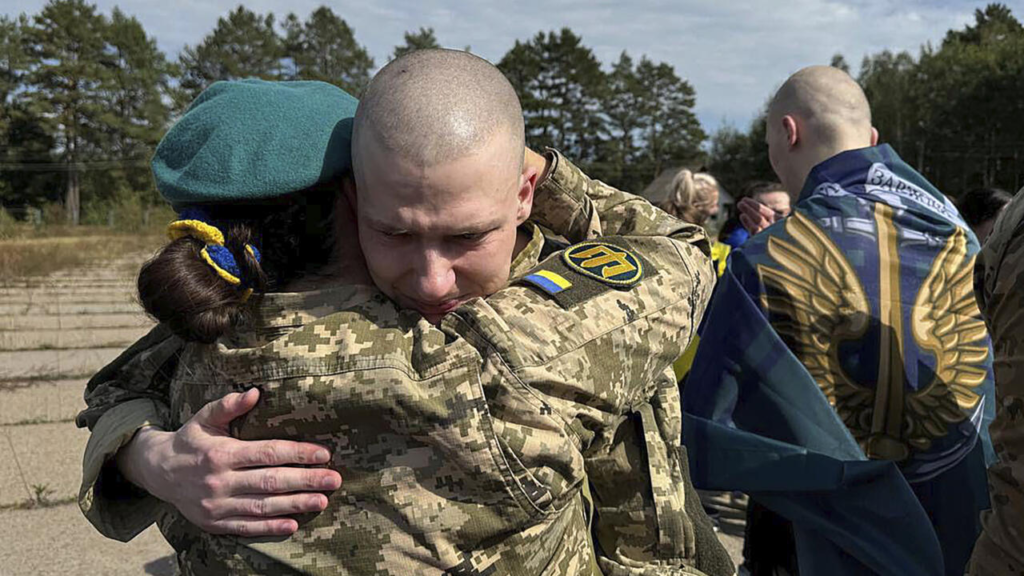
Among the released Ukrainians were 23 soldiers from the Azov Brigade, a renowned military unit that played a significant role in the defense of Mariupol during the siege.
The three-month-long defense of Mariupol by Ukrainian forces, including the Azov brigade, has been recognized as a symbol of resistance against the Russian invasion. Their release is a significant morale boost for Ukraine, reinforcing the narrative of resilience among its forces.
Read : Russia Could Conduct a Nuclear Test if Ukraine Attacks Using Western-supplied Weapons
The Russian Defence Ministry stated that the 103 Russian soldiers who were freed had been captured in Ukraine’s Kursk region, which has witnessed a series of cross-border skirmishes in recent months.
Ukraine’s military incursion into this border region, beginning in August, resulted in the capture of these soldiers, further demonstrating the tit-for-tat nature of this ongoing war.
Zelensky’s Response and Ukrainian Morale
Following the exchange, Ukrainian President Volodymyr Zelensky took to social media to express his gratitude and pride in the efforts of his combat forces. “Our people are home,” he wrote on Telegram, announcing the successful return of 103 Ukrainian soldiers. Zelensky credited the operation in Russia’s Kursk region for boosting Ukraine’s bargaining position in securing the release of its soldiers.
In his nightly address, Zelensky expressed deep appreciation for his forces’ bravery and the hard work of the negotiating teams involved in securing the prisoner exchanges. He emphasized that operations like the one in Kursk have proven critical in pushing forward these negotiations.
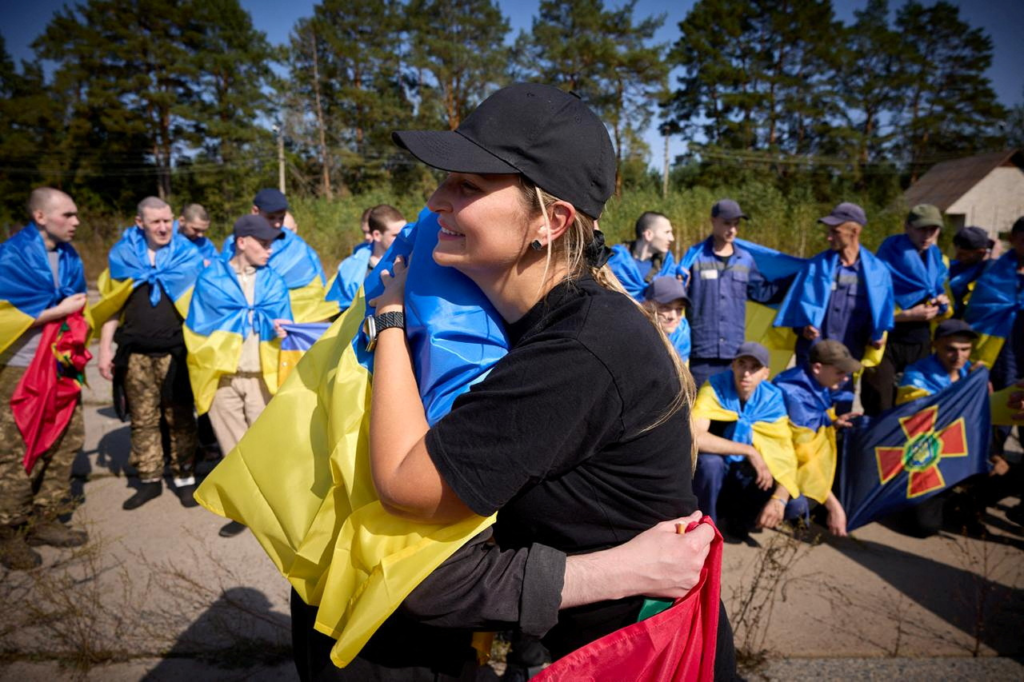
The images shared by Zelensky depicted the emotional return of Ukrainian servicemen, many wrapped in the national blue and yellow flag, hugging comrades and reconnecting with loved ones over mobile phones. These powerful images highlighted the human aspect of war and the emotional toll it has taken on soldiers and their families.
Russia’s Position and Military Strategy
While the prisoner exchange was significant for Ukraine, it also holds substantial implications for Russia. The 103 Russian soldiers returned home were largely taken during Ukraine’s incursions in the Kursk region, a sensitive border area between the two countries.
Russia has been grappling with increasing cross-border operations from Ukraine in recent months, complicating the broader battlefield dynamics.
The decision to engage in another round of prisoner exchanges, coming just one day after a similar swap, reflects the Kremlin’s recognition of the importance of such exchanges in maintaining morale among Russian forces. It also suggests that Russia is keen to show its citizens that it is actively working to bring captured soldiers back home.
Russia’s Defence Ministry, however, has remained relatively quiet regarding the details of the negotiations leading to the exchange, focusing instead on celebrating the return of its captured soldiers.
This marks the third prisoner swap since Ukraine began its incursion into the Kursk region in August, demonstrating the strategic importance of the region in the ongoing military chess game between Moscow and Kyiv.
The Role of the United Arab Emirates in Mediation
One of the notable aspects of this exchange is the role of the United Arab Emirates in mediating the negotiations between Russia and Ukraine. According to the UAE’s state news agency, WAM, this was the eighth mediation effort by the UAE since the beginning of 2024.
The involvement of a neutral third party like the UAE has helped facilitate these exchanges, ensuring that both sides remain committed to honoring the agreements despite the broader hostilities.
The UAE’s continued diplomatic involvement highlights its emerging role as a mediator in the international arena, particularly in conflicts that require sensitive and impartial negotiation tactics.
As the war continues to escalate, the mediation efforts of countries like the UAE are becoming increasingly important in keeping channels of communication open between Russia and Ukraine, at least on humanitarian issues like prisoner exchanges.
The Broader Context of the Russia-Ukraine War
Since Russia’s full-scale invasion of Ukraine in February 2022, the conflict has become one of the most significant and destructive wars in recent European history. Both sides have endured heavy casualties, and tens of thousands of soldiers and civilians have been killed or displaced due to the ongoing fighting.
Prisoner exchanges have become one of the few points of negotiation where both sides can find common ground. These exchanges, which have occurred frequently throughout the conflict, have provided moments of relief for the families of captured soldiers. At the same time, they have allowed each side to regain vital military personnel needed to continue their respective war efforts.
Ukrainian human rights ombudsman Dmytro Lubinets stated that, so far, Kyiv has secured the return of 3,672 Ukrainians in 57 separate prisoner exchanges since the war began. This figure underscores the importance of these exchanges for Ukraine, as the country works to recover as many of its captured soldiers as possible.
The ongoing Russia-Ukraine war continues to evolve, with no end in sight. However, exchanges like the one that occurred on Saturday highlight a rare avenue of cooperation between the two nations. Despite the continued fighting and deep hostilities, prisoner swaps offer a glimmer of hope for the thousands of soldiers still held captive on both sides.
The release of 206 prisoners in just two days underscores the strategic importance that both Russia and Ukraine place on securing their captured personnel.
These exchanges not only boost the morale of returning soldiers but also provide a sense of closure and relief to their families. For Ukraine, the return of its soldiers who defended Mariupol and other key areas is a symbol of resistance and resilience in the face of continued aggression.
As the war stretches on, the role of neutral mediators like the UAE will continue to be critical in facilitating these exchanges and ensuring that the humanitarian aspect of the conflict remains a priority, even in the midst of intense fighting. For now, the successful return of 206 prisoners offers a brief respite in an otherwise bleak and protracted conflict between Russia and Ukraine.