

The aviation industry experienced a moment of intense drama when a Russia Plane Catches Fire-made Sukhoi Superjet 100 upon landing at Antalya Airport, Turkey. Operated by Azimuth Airlines, the plane was carrying 89 passengers and six crew members from Sochi, a popular Russian resort city.
Fortunately, all onboard were safely evacuated, with no reported injuries. This incident, captured in a widely circulated video, underscores the challenges facing modern aviation and the crucial importance of emergency preparedness and rapid response.
Russia Plane Catches Fire: What Happened?
On Sunday evening, a Sukhoi Superjet 100 operated by Azimuth Airlines landed at Antalya Airport at 9:34 p.m. local time. Shortly after touching down, the aircraft’s left engine caught fire, prompting an immediate emergency response.
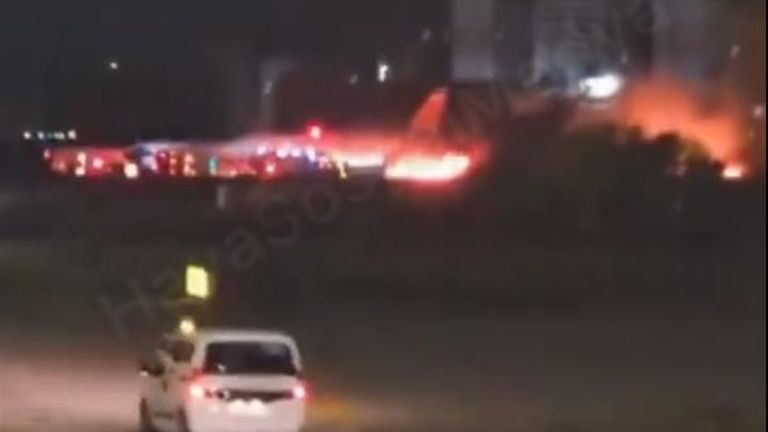
According to Turkey’s transportation ministry, the pilot had made an emergency call, alerting airport authorities to the situation. Rescue and firefighting teams quickly arrived on the scene and extinguished the flames.
A video posted by the aviation news outlet Airport Haber shows flames erupting from the left side of the aircraft, with emergency crews dousing the fire.
Read : British Soldier Fighting for Ukraine Captured by Russian Forces in Kursk
Passengers were seen evacuating via emergency slides, some carrying their personal belongings. Despite the chaotic scene, the evacuation was orderly, and all passengers and crew members safely exited the plane without injuries.
BREAKING A Russian Azimuth Airlines Sukhoi SuperJet 100 is in fire at Antalya Airport pic.twitter.com/0n14i0MXpH
— AIRLIVE (@airlivenet) November 24, 2024
The cause of the fire remains under investigation. While no official conclusions have been drawn, Azimuth Airlines reported that the plane encountered wind shear during landing, which may have contributed to the rough touchdown.
Wind shear—a sudden change in wind speed or direction—can pose significant challenges for pilots, especially during takeoff and landing.
Safety Measures and Emergency Response
The swift response by airport authorities and the crew’s effective management of the situation were crucial in preventing a potential disaster. Firefighting teams were on the scene within minutes, demonstrating the importance of well-trained emergency personnel and robust airport safety protocols. The fact that all 95 people on board were evacuated without injury speaks to the high standards of safety and preparedness at Antalya Airport.
Emergency evacuations are always complex operations. In this case, passengers used emergency slides to exit the aircraft quickly. Evacuations require not only efficient coordination by the crew but also cooperation from passengers.
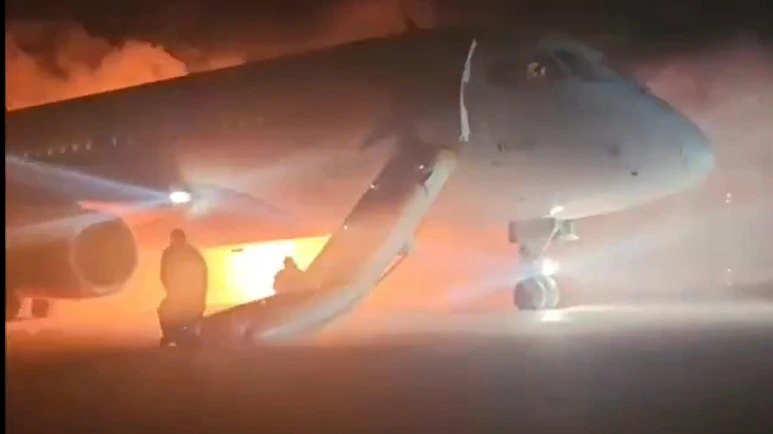
Videos of the incident show some passengers carrying luggage as they evacuated—a behavior that can slow down the process and pose additional risks. Aviation authorities frequently emphasize the importance of leaving personal belongings behind during evacuations to ensure a swift and safe exit.
The incident also highlights the critical role of pilots in managing emergencies. The decision to make an emergency call and the crew’s calm handling of the situation were instrumental in ensuring the safety of everyone on board.
Modern aircraft are equipped with advanced safety systems, but human factors—such as the crew’s training and decision-making—remain central to aviation safety.
Challenges Facing Russian Aviation
This incident comes at a challenging time for Russian aviation. Western sanctions imposed after Russia’s 2022 invasion of Ukraine have severely impacted the country’s airline industry. Sanctions have limited access to new aircraft, spare parts, and maintenance services from Western manufacturers, forcing Russian airlines to rely heavily on domestic aircraft like the Sukhoi Superjet 100.
The Sukhoi Superjet 100, developed by Russia’s United Aircraft Corporation, was designed to reduce the country’s dependence on foreign aircraft. However, the model has faced various technical issues and operational challenges since its introduction.
Maintenance and spare parts for these aircraft can be difficult to obtain, especially under the current sanctions. This raises concerns about the long-term safety and reliability of Russia’s aviation fleet.
A Sukhoi Superjet 100-95LR from Sochi, Russia caught fire while landing at Antalya airport in Turkey. Sunday Nov 24. pic.twitter.com/4Kn6PInQ6r
— Moises Ganga (@gangamoises) November 24, 2024
Flight tracking data from FlightRadar24 indicates that the aircraft involved in the Antalya incident was seven years old. While this is relatively young for a commercial jet, the lack of access to high-quality maintenance services and parts can exacerbate wear and tear, increasing the risk of mechanical failures.
Russia’s Federal Aviation Authority, Rosaviatsiya, has launched an investigation into the incident. This investigation will likely focus on determining whether mechanical issues, pilot error, or external factors like wind shear played a role in the engine fire. The findings could have significant implications for the future of Russian aviation, especially regarding the continued use of the Sukhoi Superjet 100.
The Broader Implications for Aviation Safety
Incidents like the one in Antalya serve as a stark reminder of the inherent risks in air travel and the importance of robust safety protocols. While aviation remains one of the safest modes of transportation, emergencies can and do happen. The key to minimizing their impact lies in preparedness, training, and rapid response.
Airports worldwide invest heavily in emergency response infrastructure and training. Antalya Airport’s handling of this incident demonstrates the value of these investments. The quick deployment of firefighting teams and the successful evacuation of passengers highlight the importance of having well-rehearsed emergency procedures in place.
For passengers, this incident underscores the importance of following safety instructions and remaining calm during emergencies. Evacuating an aircraft is a high-pressure situation, and every second counts. Leaving personal belongings behind and following the crew’s instructions can make the difference between life and death.
The aviation industry continually learns from incidents like this one. Investigations often lead to improvements in safety protocols, aircraft design, and crew training. As Rosaviatsiya investigates the Antalya incident, the findings could contribute to broader efforts to enhance aviation safety, both in Russia and globally.
The fire on the Russian Sukhoi Superjet 100 in Antalya was a frightening incident, but it ended without loss of life, thanks to the quick response of airport authorities and the crew.
This event serves as a reminder of the critical importance of emergency preparedness in aviation. It also highlights the challenges facing Russian aviation in the wake of Western sanctions, raising questions about the long-term safety and reliability of the country’s aircraft fleet.
As investigations continue, the aviation industry will be watching closely. The lessons learned from this incident could lead to improvements in safety protocols and operational practices, helping to prevent similar events in the future. For passengers, it is a reminder to always prioritize safety and follow crew instructions during emergencies.
Ultimately, incidents like this one reinforce the need for ongoing vigilance and investment in aviation safety. The goal is always the same: to ensure that every flight ends with all passengers and crew members safely on the ground.