
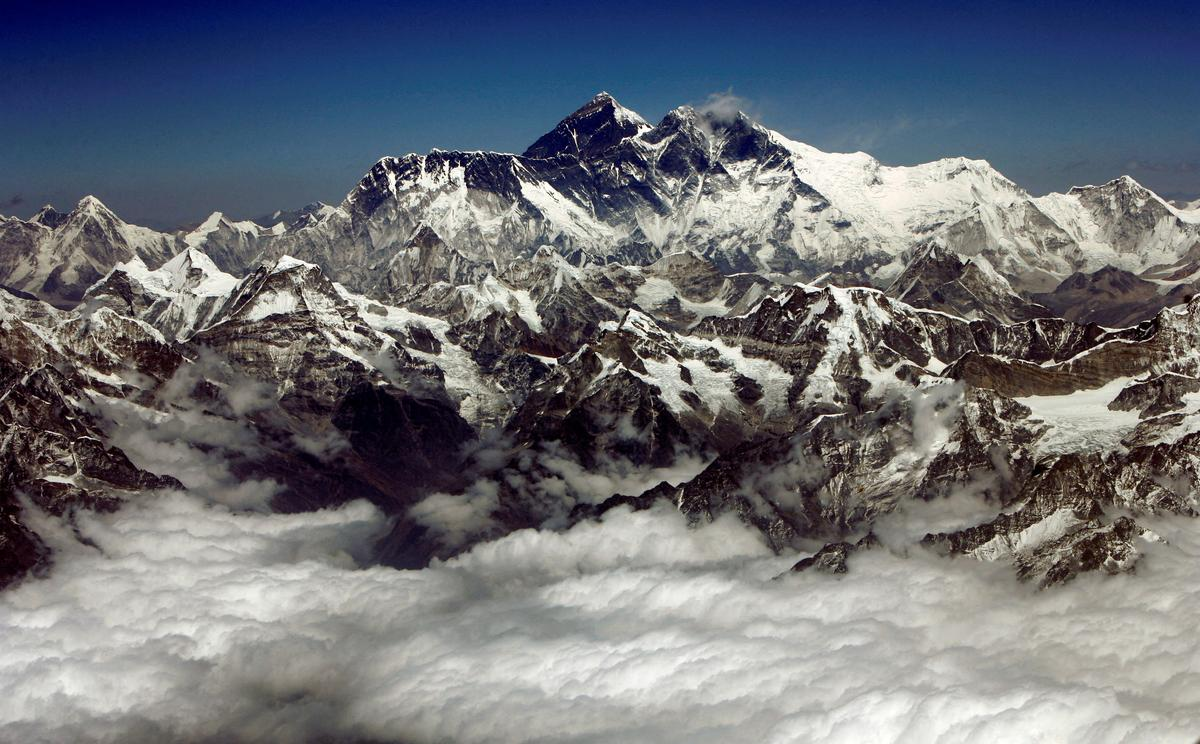
Tragedy struck on Mount Dhaulagiri, the world’s seventh-highest peak, as five Russian climbers lost their lives after slipping and falling during an autumn expedition. The climbers, who had been missing since Sunday, were discovered by a rescue helicopter on Tuesday, marking another heartbreaking moment in the perilous world of high-altitude mountaineering.
Located in Nepal, Mount Dhaulagiri, standing at a staggering 26,788 feet, has long been a formidable challenge for even the most experienced mountaineers. This tragic event serves as a somber reminder of the dangers that climbers face on these colossal peaks.
The ill-fated group had embarked on their journey during Nepal’s autumn climbing season, which typically attracts fewer climbers compared to the more popular spring season. Autumn climbs are often chosen by mountaineers seeking less crowded routes, but the dangers remain ever-present.
Read : Mount Everest is Growing 0.08 Inches Per Year Because of Kosi and Arun River
Permit fees are also lower during this season, making it an attractive option for climbers on a budget. However, as this tragedy has shown, the perils of climbing Mount Dhaulagiri during autumn are no less severe than in the busier spring months.
Read : Exploring the Mystical Beauty of Mount Tongariro: New Zealand’s Iconic Volcano
The Russian climbers had split into two groups during their ascent. Two of them successfully reached the summit, while the remaining climbers had to turn back before reaching the peak. Unfortunately, communication was lost between the climbers and their team members stationed at the base camp.
Radio contact was their lifeline, but as they descended, no further communication was received. Concern mounted, and their absence triggered a rescue mission.

Rescue efforts began immediately after the climbers were reported missing, with a helicopter scouring the slopes of Dhaulagiri for any sign of the group. On Tuesday, the grim discovery of the bodies was made by the rescue team, confirming the worst fears of those waiting at base camp.
However, the recovery of the bodies poses significant challenges. Bringing the bodies down from the mountain would require extensive planning, manpower, and equipment, given the treacherous conditions on the mountain.
This tragic incident adds to a growing list of mountaineering accidents in recent months. In October of the previous year, renowned Russian climber Nadezhda Oleneva also fell to her death while attempting to scale Mount Dhaulagiri. These incidents underscore the inherent risks involved in climbing the world’s highest peaks, even for seasoned professionals.
For many climbers, the thrill of conquering a towering mountain like Dhaulagiri comes with the acceptance of these risks. Yet, each tragedy brings into sharp focus the fine line between success and disaster in the extreme sport of high-altitude mountaineering.
Mount Dhaulagiri, located in the Dhaulagiri mountain range in north-central Nepal, is a part of the Himalayas, the world’s highest mountain range. Its name, derived from the Sanskrit words “dhaula” meaning dazzling, and “giri” meaning mountain, reflects its stunning appearance.
The mountain is known for its steep ridges and dramatic ascents, making it one of the more challenging peaks to climb. First summited in 1960 by a Swiss-Austrian team, Dhaulagiri has since become a sought-after destination for elite climbers looking to test their skills on its treacherous slopes.
However, Dhaulagiri is notorious for its difficult terrain and unpredictable weather. The mountain is frequently shrouded in thick clouds, and climbers often face strong winds and sudden temperature drops.
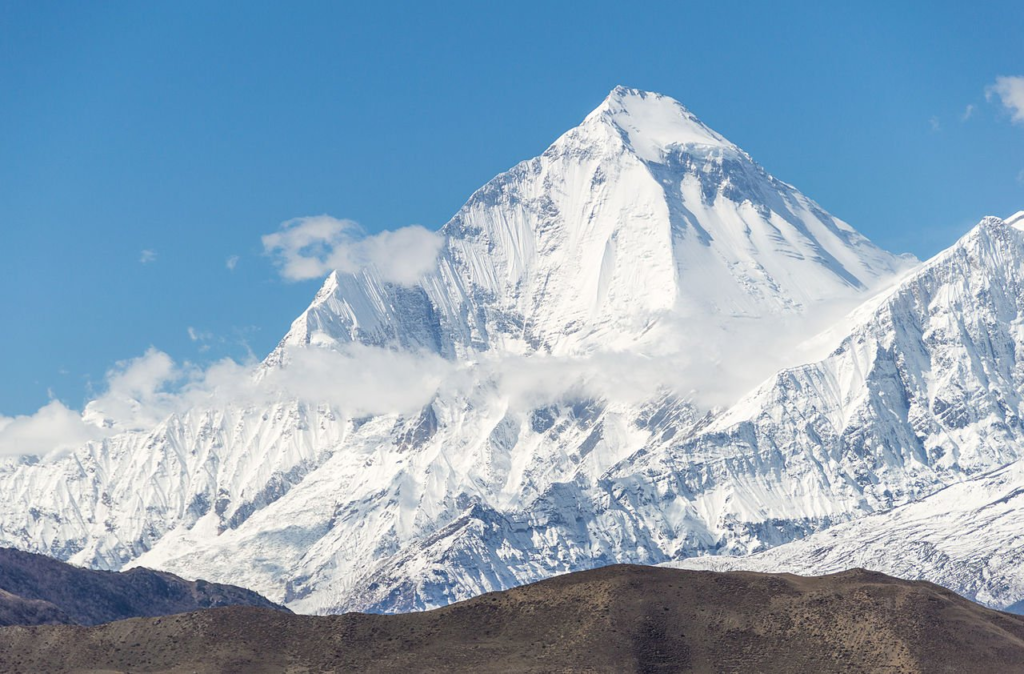
Avalanches and rockfalls are constant threats, making each step toward the summit a perilous one. It is these dangers that have claimed the lives of many climbers over the years, including the five Russian mountaineers who perished this week.
Despite the risks, Mount Dhaulagiri continues to attract climbers from around the world. Its relative isolation compared to peaks like Mount Everest and its technical challenges make it a favorite for those looking for a more difficult and less commercialized climb.
However, the challenges posed by this massive peak are not to be underestimated. Dhaulagiri has one of the highest fatality rates among the eight-thousanders—mountains that exceed 8,000 meters (26,247 feet) in height—further emphasizing the dangers inherent in such expeditions.
The autumn climbing season in Nepal, though less popular than the spring, still sees a significant number of climbers attempting to summit the country’s towering peaks. The weather during this season is generally more stable than in the monsoon months, but conditions can still be highly unpredictable.
In addition to lower permit fees, many climbers choose autumn for the quieter trails and fewer crowds at the base camps. However, as evidenced by the recent tragedy on Dhaulagiri, the challenges of high-altitude climbing remain constant, regardless of the season.
For the Russian mountaineers, this expedition was meant to be an achievement of a lifetime, a chance to conquer one of the world’s highest and most difficult peaks. The deaths of these climbers have cast a pall over the mountaineering community, both in Russia and globally.
Details about the individual climbers and their backgrounds have not been released, but the loss of life in such a tragic manner is a profound reminder of the hazards faced by those who seek to push the limits of human endurance.
The world of high-altitude climbing is one of triumph and tragedy. Each successful ascent is a testament to human perseverance and determination, while every loss serves as a reminder of the unforgiving nature of these mountains.
Dhaulagiri, like its Himalayan neighbors, offers breathtaking views and the allure of standing atop one of the world’s highest points, but it also demands respect for the dangers it presents.
In recent years, mountaineering accidents have garnered increased attention, particularly as more climbers take on the challenges of the eight-thousanders.
In the French Alps, where five climbers died just a few weeks ago, and in the Mont Blanc massif, where multiple fatalities occurred last month, the risks associated with high-altitude climbing are becoming all too familiar.
The mountaineering community is often tight-knit, and each loss reverberates through its members, reminding them of the fragile nature of life in the high mountains.

The bodies of the five Russian climbers remain on the slopes of Dhaulagiri, and discussions about their retrieval are ongoing. Recovering bodies from such extreme altitudes is a complex and dangerous task that requires careful coordination and significant resources.
In many cases, the bodies of climbers who die on these peaks are left where they fell, a stark and sobering reality of high-altitude mountaineering. The decision to retrieve the bodies will depend on a range of factors, including weather conditions, available manpower, and the risks involved in the operation.
The deaths of these Russian climbers highlight the precarious nature of life on the world’s highest peaks. For those who dare to venture into these mountains, the rewards are immense, but the risks are equally great.
Mount Dhaulagiri, with its dazzling peaks and deadly slopes, remains both a beacon of achievement and a symbol of the dangers inherent in the pursuit of mountaineering greatness.
As the autumn climbing season continues, climbers will undoubtedly proceed with caution, aware of the tragedy that has unfolded on Dhaulagiri. Yet, for many, the draw of the mountain will remain irresistible.
The desire to conquer one of the world’s highest and most challenging peaks is a powerful motivator, and despite the dangers, climbers will continue to flock to Dhaulagiri in search of adventure, achievement, and the chance to stand on top of the world.