
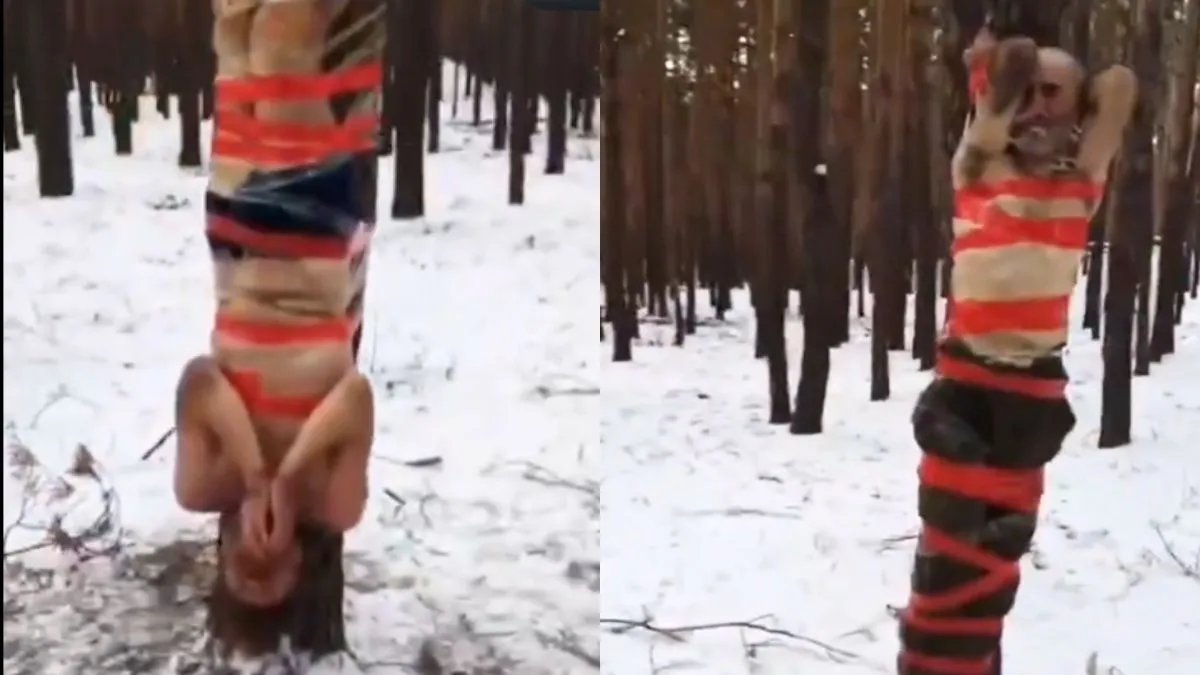
A graphic video circulating widely on social media has reignited global scrutiny of alleged abuses within the Russian military during its ongoing war in Ukraine. The short but disturbing clip, reportedly showing Russian Commanders Taping Half-Naked Soldiers to Trees in freezing conditions while being verbally and physically abused by a commanding officer, has provoked outrage, condemnation, and renewed debate over discipline, coercion, and human rights within Russia’s armed forces.
Although the authenticity of the footage has not been independently verified, its rapid spread and the context in which it emerged have made it a focal point in discussions about the conduct of Russian commanders and the pressures faced by frontline troops. As the war grinds on with no clear end in sight, the video has become emblematic of broader allegations that punishment, humiliation, and violence are being used to enforce obedience among soldiers. The footage surfaced amid a period of intensified fighting and diplomatic deadlock between Moscow and Kyiv.
It also appeared against a backdrop of earlier investigative reports from Russian independent media and testimonies from former servicemen describing harsh internal discipline and abuse. Together, these elements have elevated the clip from a shocking social media post to a symbol of deeper structural issues within the Russian military system. Understanding what the video shows, how it fits into existing reports, and why it has resonated so strongly requires a careful examination of both the content itself and the broader wartime context in which it emerged.
What the Viral Video Shows and How It Emerged
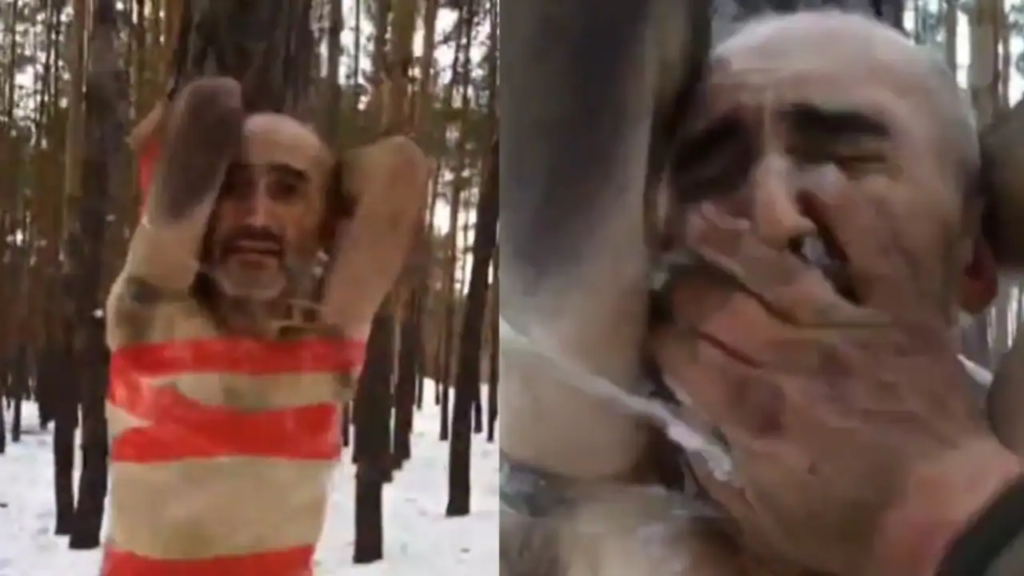
The video in question is a 28-second clip shared by the pro-Ukrainian Telegram channel Exilenova+. It appears to depict two Russian soldiers tied upside down to trees in a snow-covered forest. The men are wearing only their underwear despite the visibly cold environment, suggesting freezing temperatures. A voice believed to belong to a senior officer can be heard berating them while shoving snow into one of the soldiers’ mouths. The soldiers audibly apologize, with one saying, “I’m sorry, it won’t happen again,” before the abuse continues.
According to the audio cited by TVP World, the officer accuses the men of attempting to abandon their positions without authorization and of refusing to follow orders. “These idiots tried to leave their positions without permission, refusing to follow orders,” the voice shouts. He then demands that they “work properly, without excuses,” framing the punishment as a disciplinary measure meant to deter disobedience.
While the identities of the soldiers, the commander, and the exact location remain unknown, several media outlets have reported that the punishment was allegedly imposed after the soldiers failed to reach a destination they had been ordered to move to. The New York Post noted that the circumstances surrounding the clip could not be independently verified, a caveat echoed by other outlets. Nonetheless, the imagery and audio were sufficiently explicit to trigger widespread condemnation online.
Russian Discipline, Putin-Style:
— EuroPost Agency (@EuroPostAgency) January 26, 2026
New recruits in the Russian army were tied upside down to a tree their punishment for fleeing frontlines in fear of death.
A brutal reminder of how fear not morale rules the ranks.#Europost pic.twitter.com/mfmZhVPvLm
The video’s impact has been amplified by its timing and distribution. Telegram has become a major platform for wartime information, propaganda, and leaks related to the conflict in Ukraine, often circulating raw footage long before traditional media can verify or contextualize it. In this environment, shocking visuals tend to gain traction quickly, especially when they appear to confirm existing narratives about abuse or brutality. For many viewers, the clip reinforced perceptions of a military struggling with morale, discipline, and internal cohesion.
Allegations of Abuse and Discipline Within the Russian Military
The viral video did not emerge in isolation. For more than two years, allegations of abuse within Russia’s armed forces have surfaced repeatedly, particularly as the war in Ukraine has placed sustained pressure on manpower, logistics, and morale. In October 2025, the Russian independent outlet Verstka published testimonies from former servicemen who described a culture in which beatings, humiliation, and even torture were allegedly used to punish soldiers who refused to participate in assaults or who disobeyed orders.
Read : Who Is Anna Saparina, the Russian Influencer Who Vacuum Sealed Her Son in a Plastic Bag For Click?
According to those accounts, disciplinary practices often went far beyond formal military regulations. Former soldiers claimed that commanders resorted to physical violence, public shaming, and psychological intimidation to maintain control over units operating under extreme stress. These testimonies painted a picture of a force where fear, rather than professionalism or cohesion, was sometimes used as a tool to compel obedience.
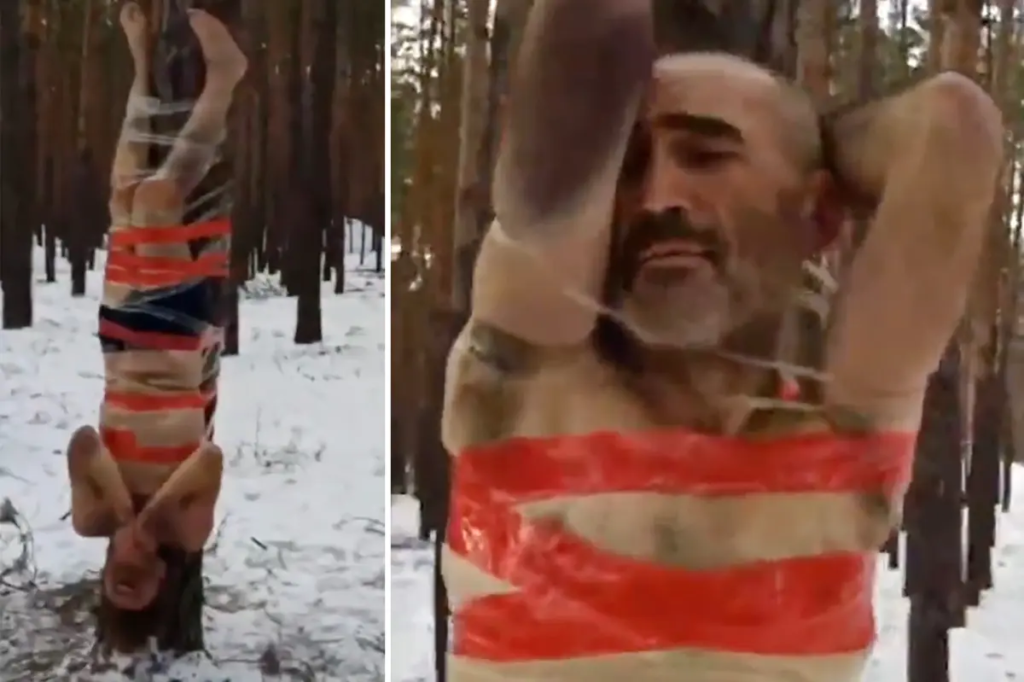
The video showing soldiers tied to trees in freezing conditions appears to align with these broader allegations. While a single clip cannot establish systemic abuse on its own, it has been interpreted by many observers as visual corroboration of claims that have circulated for months. The method of punishment depicted in the video, involving exposure to cold, physical restraint, and verbal degradation, echoes historical accounts of harsh disciplinary measures used in various conflicts, often in violation of international humanitarian standards.
It is important to note that Russia’s Ministry of Defense has not publicly commented on the specific video. In previous instances, Russian authorities have either denied allegations of abuse, dismissed them as enemy propaganda, or declined to address them directly. This pattern of response has contributed to skepticism among international observers and has left independent journalists relying heavily on leaked footage and firsthand testimonies to document conditions within the ranks.
The persistence of such allegations has raised questions about the long-term effects on the Russian military’s effectiveness. Analysts have argued that coercive discipline can undermine trust between soldiers and commanders, exacerbate desertion, and weaken unit cohesion. In a prolonged conflict where morale is already strained, reports of internal abuse risk further destabilizing an already burdened force.
Why the Video Resonated Amid the Broader Ukraine War
The widespread reaction to the video cannot be separated from the broader context of the war in Ukraine. The conflict has been marked by heavy casualties, repeated mobilization efforts, and entrenched political positions that have left little room for compromise. As fighting continues, both sides have intensified strikes and maintained hardline stances on territorial control.
The incident surfaced shortly after reports that Russian forces launched overnight strikes on Kharkiv and Odesa, injuring at least 44 civilians, including children and a pregnant woman. Such reports have kept international attention focused on the human cost of the war, not only for civilians but also for soldiers on both sides. Against this backdrop, a video depicting alleged abuse of Russian troops by their own commander added another layer to the narrative of suffering and brutality associated with the conflict.
Political rhetoric has further sharpened the contrast. Russian President Vladimir Putin has stated that Russia would not withdraw its troops unless Ukraine agrees to cede territory. Ukrainian President Volodymyr Zelensky has firmly rejected those demands, emphasizing that Ukraine has no legal or moral right to give up its land. “We have no right to give anything away — not under our laws, not under international law, not under moral law,” Zelensky said in December, underscoring the entrenched positions that continue to fuel the war.
Within this climate, the viral video has been interpreted by some as evidence of the strain placed on Russian forces tasked with sustaining operations under difficult conditions and uncompromising leadership. For critics of the Kremlin, the footage symbolizes a system that prioritizes obedience at any cost. For supporters of Ukraine, it reinforces arguments that the Russian military relies on fear rather than legitimacy to maintain its fighting force.
At the same time, the lack of independent verification highlights the challenges of assessing information during wartime. Disinformation, propaganda, and selective editing are all risks in a conflict where narratives are as contested as territory. Even so, the resonance of the video lies less in what can be conclusively proven and more in how closely it aligns with existing reports and perceptions.
Ultimately, the clip has become a powerful, if unverified, representation of allegations that have circulated throughout the war: that behind the front lines, discipline within the Russian military may be enforced through extreme and abusive measures. As the conflict continues with no clear resolution, such images are likely to persist, shaping public opinion and reinforcing scrutiny of how armies treat not only their enemies, but also their own soldiers.