
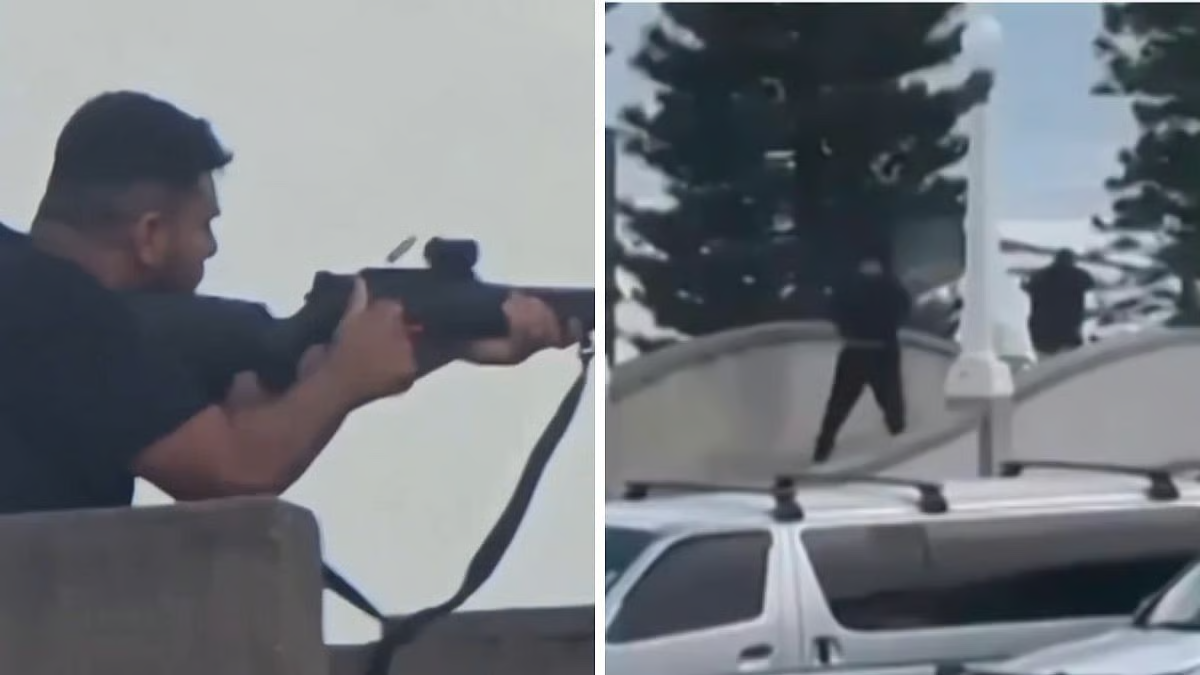
The mass shooting at Sydney’s Bondi Beach has emerged as one of the most devastating acts of violence in Australia in nearly three decades, shattering the sense of safety in a country long defined by strict gun control laws and low rates of firearm-related crime. The attack unfolded during a public Jewish celebration marking the beginning of Hanukkah, transforming what was meant to be a festive gathering into a scene of chaos, fear, and irreversible loss.
According to police and government officials, at least 15 people were killed and dozens more injured when two gunmen opened fire near the shoreline, where thousands had gathered on a summer evening. Authorities have identified the attackers as a father and son, Sajid Akram, 50, who was fatally shot by police, and his son Naveed Akram, reported by police to be 24 years old, who survived after being wounded and taken into custody. The incident has drawn international condemnation, intensified scrutiny of extremist threats, and ignited renewed debate over antisemitism, radicalisation, and public security in Australia.
The Attack at Bondi Beach and the Events of the Evening
The violence erupted shortly after 6:45 p.m. at Bondi Beach, one of Australia’s most iconic public spaces, as crowds lingered after a warm summer day. Among them were hundreds of people attending the “Chanukah by the Sea” event, organised to celebrate the first night of the eight-day Hanukkah festival. Police estimates indicated that around 1,000 people were present at the targeted gathering, while thousands more were scattered across the beach, nearby parks, and surrounding streets.
Witness accounts described a sudden and sustained barrage of gunfire lasting approximately ten minutes. Panic spread rapidly as families, swimmers, and bystanders fled across the sand and into nearby neighbourhoods. Video footage circulating online showed people running from the shoreline in bathing suits as shots rang out, while other clips appeared to capture two men dressed in dark clothing firing long guns from an elevated footbridge leading toward the beach area. Although police have not officially confirmed the exact weapons used, visual evidence suggested a combination of a bolt-action rifle and a shotgun.
Emergency services responded swiftly, deploying large numbers of police officers, paramedics, and tactical units. One of the gunmen, later identified as Sajid Akram, was shot dead by police during the confrontation. His son, Naveed Akram, sustained gunshot wounds and was transported to hospital under police guard, where he remained under treatment as investigators continued questioning. Authorities later confirmed that they were confident only two attackers were involved, after initially assessing the possibility of a third accomplice.
Pakistan 🇵🇰 origin father Sajid Akram, 50, and his 24-year-old son Naveed carried out the deadly ☪️ terrorist shooting at Bondi Beach.
— విష్ణు వర్ధన్ రెడ్డి-विष्णु वर्धन रेड्डी🇮🇳 🚩 (@vishnureddy_899) December 15, 2025
Pakistani 🇵🇰 nationals; Sajid, on a tourist visa, held a legal license for 6 firearms—all used in the terror attack.
Horrific 🇵🇰father-son duo… pic.twitter.com/fV2RMYWmt5
Amid the violence, an act of individual bravery stood out. A man later identified by relatives as Ahmed al Ahmed, a local fruit shop owner, was seen in broadcast footage tackling and disarming one of the attackers. After wresting control of the weapon, he was shown pointing it away before placing it on the ground. New South Wales Premier Chris Minns publicly praised him as a “genuine hero,” and a fundraising campaign established in his name raised more than A$200,000 within a day, reflecting widespread public gratitude for his intervention.
Profiles of the Alleged Attackers and Investigative Findings
Police identified the alleged attackers as members of the same family, a revelation that intensified public shock. Sajid Akram, aged 50, was described by investigators as a long-term resident of Australia who had arrived in 1998 on a student visa. According to Australia’s Home Minister Tony Burke, his visa status later transitioned to a partner visa in 2001, followed by resident return visas that allowed him to remain in the country.
Sajid was reportedly a small business owner, running a fruit shop, and had legally held a gun licence for approximately ten years, a fact that has prompted questions about oversight and monitoring within Australia’s licensing system. His son, Naveed Akram, identified by police as 24 years old despite some early reports citing him as younger, was an Australian-born citizen. Investigators said he had previously worked as a bricklayer but had been laid off around two months prior to the attack after his employer became insolvent.
Read : Shotton Colliery Village Christmas Tree Cut Down Hours After Lights Switch-On
According to a report citing an Indian Intelligence Bureau official, Naveed had been examined by Australian intelligence authorities approximately six years earlier for suspected links to the Islamic State group. While no charges were brought at that time, the official suggested that Naveed may have deliberately kept a low profile after coming under scrutiny, waiting for what he perceived as an opportune moment to carry out the attack.

The attackers were reported to be of Pakistani origin, according to international media citing U.S. intelligence officials briefed on the investigation. Images of Sajid Akram’s New South Wales driver’s licence circulated widely on social media, prompting further online speculation after observers noted that he appeared to be wearing a green shirt resembling a Pakistani cricket team jersey. Australian authorities have cautioned against drawing conclusions from such imagery, emphasising that the investigation is focused on actions and intent rather than ethnic or national background.
Police also revealed that one of the gunmen was known to security services, although New South Wales Police Commissioner Mal Lanyon stated that there had been no specific intelligence indicating a planned attack of this nature. A raid was conducted at the family’s home in Bonnyrigg, a suburb approximately 36 kilometres west of Sydney’s central business district, with a heavy police presence and cordons placed around neighbouring properties as investigators searched for evidence and sought to determine whether others had assisted or influenced the attackers.
Victims, Community Impact, and National and Global Response
The human toll of the Bondi Beach shooting has been profound. Authorities confirmed that those killed ranged in age from 10 to 87 years old, underscoring the indiscriminate nature of the attack. At least 42 others were hospitalised, several in critical condition, as medical teams worked through the night and into the following days. Among the dead was Rabbi Eli Schlanger, an assistant rabbi at Chabad of Bondi and one of the organisers of the Hanukkah event. Chabad, an Orthodox Jewish movement with a global presence, confirmed his death, describing him as a dedicated community leader deeply involved in outreach and religious life.
Read : Trio Jailed for Life After 60-Year-Old Barry Dawson Shot Dead Through His Living Room Window
Eyewitness testimony conveyed the trauma experienced by those present. An 18-year-old lifesaver, Trent Tur, told reporters that he had been in the water when the shooting began and described seeing people lying injured on the ground, including a child who had been shot. Such accounts have resonated widely across Australia, reinforcing the sense that a rare and devastating form of violence had intruded into everyday public life.
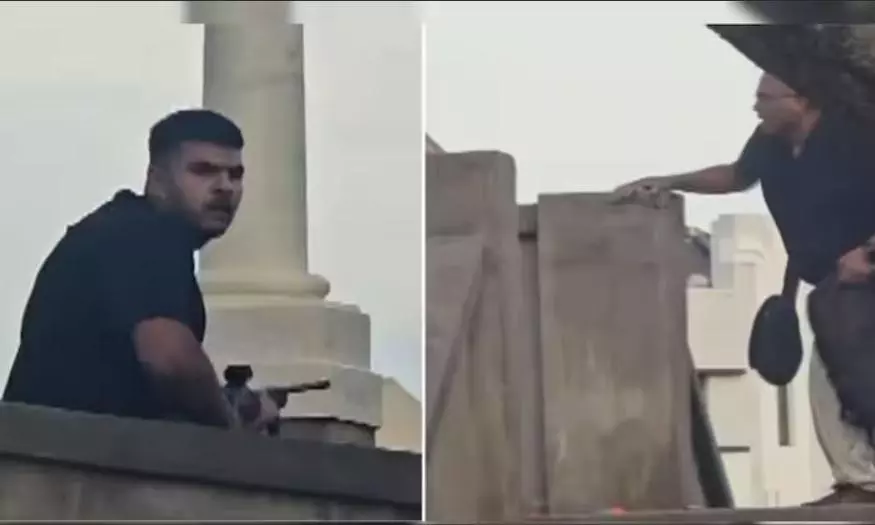
Political leaders responded with strong condemnation. Prime Minister Anthony Albanese visited the scene the following morning, laying flowers near the site of the attack as mourners placed candles and Israeli and Australian flags along the beachfront. He described the shooting as a “dark moment for our nation” and characterised it as an act of terrorism and antisemitism, pledging that authorities would do everything necessary to combat hatred and protect vulnerable communities.
Albanese also confirmed that several world leaders, including U.S. President Donald Trump, French President Emmanuel Macron, and Indian Prime Minister Narendra Modi, had expressed solidarity and condolences. International reaction highlighted broader concerns about rising antisemitism. Israeli Prime Minister Benjamin Netanyahu stated that he had previously warned Australian leaders that policy positions on Palestinian statehood could exacerbate antisemitic sentiment, a claim that added a geopolitical dimension to domestic discussions.
In Australia, Jewish community leaders emphasised unity and resilience, with Rabbi Mendel Kastel, whose brother-in-law Rabbi Schlanger was among the victims, urging people to resist anger and collective blame and instead focus on community support and healing. The Bondi Beach attack has been described by officials as the worst mass shooting in Australia since the 1996 Port Arthur massacre, which led to sweeping gun law reforms.
Its occurrence has prompted renewed examination of how extremist ideologies take root, how individuals under prior security scrutiny are monitored, and how public events can be safeguarded without undermining openness and social cohesion. As investigations continue and court proceedings loom for the surviving suspect, the nation remains focused on mourning the victims, supporting the injured, and grappling with the implications of an act of violence that has left a lasting scar on Australia’s collective consciousness.
Hey everyone, heard some buzz about 6gbetcasino and decided to give it a try. It’s got a slick interface and a ton of different games to choose from. Had a good time so far. You can find them here: 6gbetcasino!
**mitolyn**
Mitolyn is a carefully developed, plant-based formula created to help support metabolic efficiency and encourage healthy, lasting weight management.