
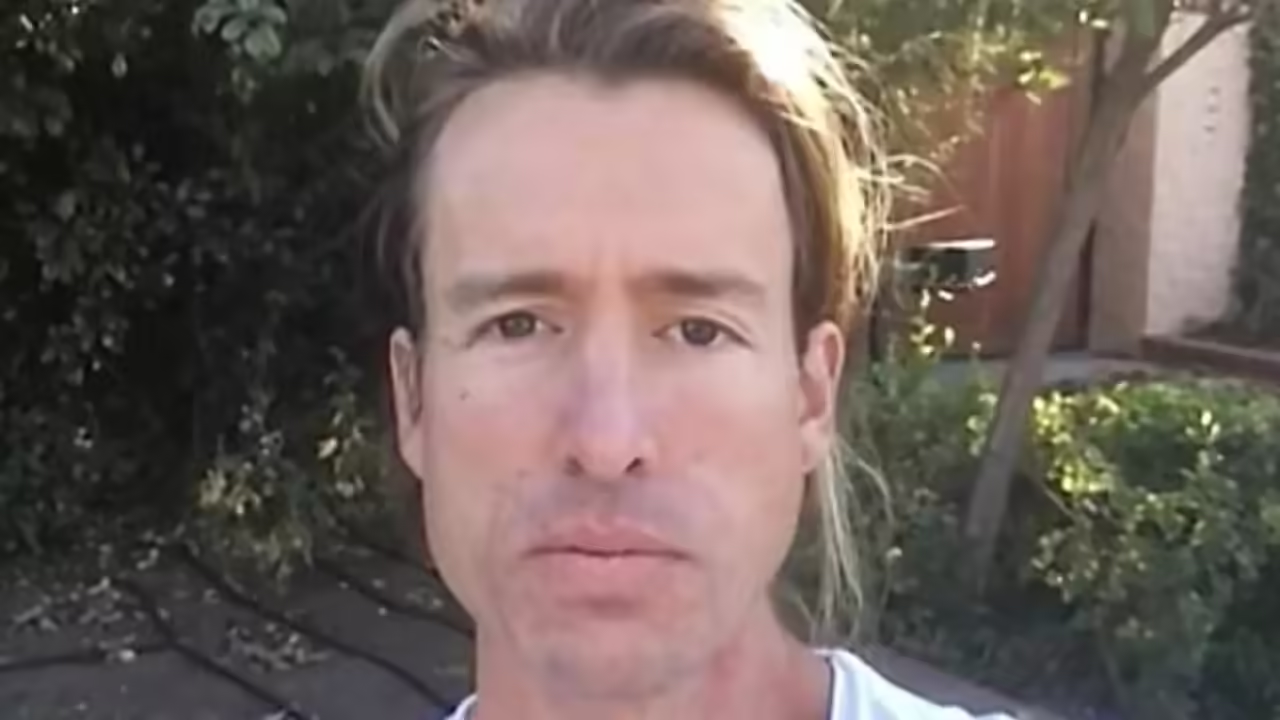
In one of Los Angeles’ most chilling and deeply unsettling murder cases in recent history, 37-year-old Samuel Bond Haskell, accused of brutally murdering his wife and her parents, has died by suicide in jail while awaiting trial. The alleged triple homicide rocked the Tarzana neighborhood and gained nationwide media attention due to the grotesque nature of the crimes and Haskell’s high-profile family background. With his death, questions now loom over justice denied, the psychological state of the accused, and the future of the surviving family members—especially his three children.
A Family Torn Apart by Tragedy
The tragic story began on November 6, 2023, in a quiet family home located in the Tarzana neighborhood of Los Angeles. Authorities allege that on that day, Samuel Haskell murdered his wife, Mei Haskell, 37, along with her mother, 64-year-old Yanxiang Wang, and stepfather, 72-year-old Gaoshan Li. All three victims lived together with Haskell and his children under one roof.
Just two days later, on November 8, Samuel Bond Haskell was arrested after police uncovered a series of damning evidence that pointed towards premeditated and grisly acts of violence. According to the Los Angeles County District Attorney’s office, the series of events following the murders reflected a chilling attempt to dispose of the bodies and cover up the crime.
Prosecutors stated that the day after the killings, Haskell hired day laborers and paid them $500 to remove heavy plastic trash bags from the residence. The laborers reportedly became suspicious after noticing what appeared to be human remains inside the bags. They returned both the bags and the money to the house and promptly alerted police. However, by the time officers arrived at the property, both the bags and Haskell were gone.
Read : Transport Minister Roman Starovoit Dies by Suicide Hours After Being Fired by Putin
The situation escalated quickly when a beheaded torso was discovered in a dumpster later that same day. The torso was later confirmed to belong to Mei Haskell, further intensifying the investigation. Prosecutors subsequently revealed that they had obtained video footage of Haskell placing a black trash bag into a dumpster and transferring other trash bags between his wife’s Tesla and a rented SUV. These surveillance clips became a critical part of the evidence tying Haskell to the crimes.
Read : Shocking Pentagon Study Found That More U.S. Soldiers Died by Suicide Than Combat from 2014 to 2019
Investigators soon searched the family’s home and discovered eight large plastic bags containing bloody towels, bedding, a machete, a large machine saw, a blood-covered plywood board, and walking canes believed to belong to the elderly victims. While the bodies of Wang and Li have not been recovered, forensic testing matched blood found on a knife and gun in the rented SUV to all three victims.
The High-Profile Background and Legal Developments
One of the many factors that thrust this case into the national spotlight was Samuel Haskell’s family background. He was the son of Sam Haskell, a prominent figure in the American entertainment industry. The elder Haskell is an Emmy-winning television producer and a former executive with the powerful William Morris talent agency. This connection sparked intense media interest, and the Haskell name became linked not only with show business but also with a grisly criminal case.
Samuel Bond Haskell had pleaded not guilty to three counts of murder and was held without bail. His next pretrial hearing had been scheduled for Monday, July 15, 2025. His attorney, Joe Weimortz, indicated that Haskell had been deeply concerned about the publicity the trial would attract, particularly the potential impact on his children.

In an interview with NBC4, Weimortz stated that Samuel Bond Haskell had been willing to waive both a preliminary hearing and a jury trial to avoid what he saw as a looming media spectacle. “He was not afraid of prison,” Weimortz said. “He was afraid of the media circus and what it would do to his children.”
The case was already shaping up to be emotionally intense, with graphic evidence expected to be presented in court. District Attorney Nathan Hochman expressed frustration and disappointment after Haskell’s suicide, stating that the act had deprived the victims’ families of a chance to face the accused and find closure through the legal process.
Hochman emphasized that Samuel Bond Haskell had denied justice not only to the deceased but also to their grieving relatives and the broader community watching the case unfold. Samuel Haskell was found dead in his jail cell in downtown Los Angeles on Saturday, July 13, 2025.
Authorities quickly ruled the death a suicide, although additional investigations into the circumstances of his death are expected. No specific details about the method of suicide or the conditions within the jail have been made public. An email request for comment from Haskell’s family and legal team has not yet received a response.
Justice Denied and the Aftermath
The death of Samuel Bond Haskell by suicide leaves a gaping hole in what would have been one of California’s most high-profile trials in recent years. Many now view his suicide not just as a personal act of desperation but as a calculated escape from accountability. Legal experts suggest that while the overwhelming amount of forensic and digital evidence would likely have led to a conviction, the absence of a trial now ensures that some questions will remain unanswered forever.
District Attorney Hochman’s statement emphasized the sense of unfinished justice. “The victims’ families were denied their opportunity to confront the man accused of these horrifying acts,” he said. “His suicide has robbed the community of due process and has left a cloud over an already devastating tragedy.”
The case has also raised broader questions about how high-profile inmates are monitored in custody. Given the public interest in the case and the emotional toll of the charges, some observers have questioned whether jail authorities should have been more vigilant in monitoring Haskell’s mental health. It remains unclear whether he had shown signs of suicidal ideation in the days leading up to his death or if he had been under any form of suicide watch.

The most heartbreaking aspect of this story remains the fate of the couple’s three children, now left orphaned by a series of unimaginable events. Social services have not released information on their current whereabouts or custody status, likely out of privacy concerns. However, it is known that Haskell had been staying at an Airbnb with the children in the days following the alleged murders. The trauma faced by these children—losing both parents, two grandparents, and being the center of a media frenzy—cannot be overstated.
Beyond the immediate family, the case has sent shockwaves through the Tarzana neighborhood and beyond. Neighbors described the Haskell family as quiet and seemingly loving, with no visible signs of tension or domestic unrest. The abrupt transformation from an ordinary family life to an alleged triple homicide left many stunned and searching for answers.
Even with Samuel Bond Haskell’s death, the evidence gathered by investigators paints a gruesome picture. The use of power tools to dismember bodies, the attempt to dispose of remains in trash bags and dumpsters, and the effort to mislead laborers all point to a deeply disturbed mind. While his suicide prevents the full narrative from being told in court, the facts laid out by prosecutors remain stark and horrifying.
For now, the focus turns to healing for the surviving members of the extended family, the friends of the victims, and a public still reeling from the details of the crime. Though the criminal trial will never see its day in court, the tragedy will not be easily forgotten. It is a painful reminder of how quickly a family can be shattered, and how justice, once within reach, can slip away when the accused chooses death over accountability.