

Sara Hooker found herself at the center of unexpected global attention not because of a groundbreaking artificial intelligence breakthrough or a major industry announcement, but because of an unusually relatable experience: being stuck in traffic. The Adaption Labs CEO had travelled to New Delhi to attend the India AI Impact Summit, an event that brought together policymakers, researchers, entrepreneurs, and global technology leaders to discuss the evolving future of artificial intelligence. Among the summit’s most prestigious events was an exclusive gala dinner hosted for select delegates, a gathering intended to celebrate innovation and foster high-level dialogue.
Hooker had received an invitation to this high-profile evening, positioning her among a select circle of influential voices shaping the AI landscape. Yet despite the significance of the event and her role as an invited guest, circumstances outside her control intervened. Heavy traffic, security restrictions, and road closures in central Delhi turned what should have been a short journey into a four-hour standstill. Eventually, she abandoned the attempt and returned to her hotel, ordering room service instead.
Her account of the experience quickly circulated online, drawing widespread interest. While the traffic disruption itself was not unusual for a major city hosting a high-security event, the episode highlighted both the prominence of Hooker in the global AI community and the everyday unpredictability of international travel, even for elite summit attendees. The attention generated by the incident has prompted many to ask a broader question: who exactly is Sara Hooker, and why does her presence at events like the AI Impact Summit carry such weight?
A Leading Voice in Responsible Artificial Intelligence
Sara Hooker is widely regarded as one of the most influential researchers and entrepreneurs working at the intersection of artificial intelligence development and ethical implementation. As co-founder and CEO of Adaption Labs, she leads an organization focused on building advanced machine learning systems while addressing critical challenges related to fairness, efficiency, and real-world deployment. Her work has consistently emphasized the importance of making AI systems not only powerful but also accountable and accessible.
Hooker’s academic and professional journey reflects a deep commitment to bridging theoretical research and practical application. Trained in machine learning and data science, she built her reputation through research that examines how AI models behave in real-world environments, particularly when systems are deployed beyond controlled laboratory conditions. Her work frequently explores how algorithms can be made more robust, transparent, and equitable across diverse populations and use cases.
One of the defining themes of her career has been responsible AI development. While much of the technology sector has historically focused on performance metrics such as speed and accuracy, Hooker has emphasized the broader social and technical implications of AI deployment. Her research has examined issues such as algorithmic bias, system interpretability, and the environmental cost of large-scale machine learning models. By highlighting these dimensions, she has contributed to a growing movement within the technology community that seeks to balance innovation with accountability.
Read : Who is Matt Schlicht, Octane AI CEO Behind Viral AI-Only Social Network Moltbook?
Her leadership at Adaption Labs reflects these priorities. The company operates in a rapidly evolving landscape where organizations across industries are integrating AI into critical operations, from healthcare diagnostics and financial systems to logistics and public infrastructure. Under Hooker’s direction, the company has positioned itself as both a developer of advanced technology and an advocate for responsible implementation practices. This dual focus has helped establish her as a respected figure among policymakers, researchers, and industry executives alike.
Read : 8-Year-Old Pekingese Wild Thang Wins 2024 World’s Ugliest Dog Contest
Beyond corporate leadership, Hooker is also known for her role in shaping broader conversations about AI governance and global cooperation. She frequently participates in international conferences, advisory panels, and policy discussions aimed at defining the ethical and regulatory frameworks that will guide the technology’s future. Her presence at the India AI Impact Summit was therefore consistent with her long-standing engagement in global dialogue around artificial intelligence and its societal implications.
The AI Impact Summit and a Night That Didn’t Go as Planned
The India AI Impact Summit was designed as a major platform for collaboration between government leaders, technology companies, and academic institutions. Hosted at Bharat Mandapam in New Delhi, the event featured panel discussions, technical sessions, and networking opportunities focused on the transformative potential of artificial intelligence. For visiting delegates, the summit represented not only a professional gathering but also a diplomatic and cultural experience, with carefully organized events highlighting India’s role in shaping the future of emerging technologies.
Among these events was the invitation-only gala dinner intended to bring together prominent participants for informal dialogue. Such gatherings often play an important role in international conferences, offering opportunities for high-level networking that can lead to research collaborations, investment partnerships, and policy initiatives. For many attendees, including Hooker, the dinner represented both an honor and an opportunity to engage with fellow leaders in a more personal setting.
According to her account, the evening began routinely. After attending sessions during the day, Hooker returned to her hotel to change into formal attire for the gala. However, the return journey to the venue proved far more complicated than expected. Extensive security arrangements, road closures, and traffic congestion created a gridlock that trapped vehicles for hours.

The situation was compounded by additional restrictions in the surrounding area. Public transportation access was limited, with nearby metro stations closed. App-based cab services were unable to enter certain zones. Many attendees found themselves without viable transportation options and, in some cases, resorted to walking considerable distances in an attempt to reach accessible roads.
For Hooker, the delay stretched to nearly four hours. Eventually, the time required to reach the venue made attendance impractical. She returned to her hotel late in the evening and ordered a traditional Indian meal from room service. Sharing a photograph of the dinner online, she described the experience with a tone that balanced disappointment and humor, noting that she had been equally honored to enjoy the meal after such a long wait.
Her post resonated widely, in part because it illustrated the contrast between the prestige of the invitation and the mundane reality of traffic congestion. The story quickly became a talking point among summit participants and observers, capturing the unpredictability that can accompany large-scale international events.
Global Attention, Urban Realities, and the Human Side of Tech Leadership
The incident drew attention not merely because a summit attendee missed a dinner, but because it underscored the intersection of global technology leadership and everyday urban realities. High-profile conferences often operate within tightly controlled logistical environments, yet they remain subject to the infrastructure constraints of the cities that host them. In major metropolitan centers, especially those managing heightened security during international gatherings, transportation disruptions are not uncommon.
Hooker’s experience became emblematic of this broader dynamic. Her social media account provided a firsthand glimpse into how even carefully planned events can be shaped by local conditions such as traffic management and security protocols. The widespread sharing of her story reflected both curiosity about the summit and a degree of relatability; many people recognized the familiar frustration of being delayed by congestion, regardless of the occasion’s importance.
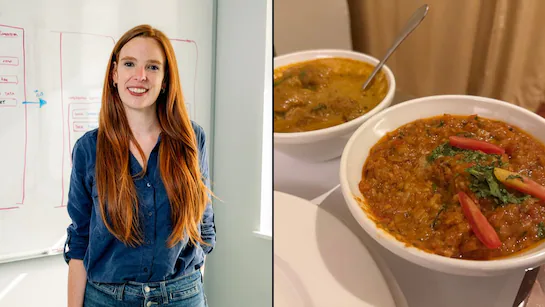
The episode also highlighted the visibility that comes with leadership in emerging technology fields. As a prominent AI researcher and entrepreneur, Hooker’s experiences attract attention beyond the immediate context. Her online commentary effectively turned a logistical inconvenience into a global anecdote about international conferences, urban infrastructure, and the unpredictable nature of travel.
For observers within the technology sector, the incident served as a reminder that the individuals shaping advanced technologies operate within ordinary human circumstances. The same professionals who design complex machine learning systems must still navigate airports, traffic systems, and event schedules. The juxtaposition of cutting-edge innovation and everyday logistical challenges added an element of human perspective to discussions often dominated by technical abstraction.
More broadly, the episode contributed to public conversation about the practical challenges of hosting major international events in densely populated cities. Road closures, security zones, and restricted access are common features of high-level gatherings, yet their impact on mobility can be significant. For visiting delegates unfamiliar with local transportation patterns, these disruptions can be especially difficult to anticipate.
Despite missing the gala, Hooker’s participation in the summit itself remained significant. Her presence at the event reflected her standing within the global AI community and her ongoing engagement in discussions shaping the technology’s future. The traffic delay, while widely discussed, represented only a small moment within a broader professional context defined by research, leadership, and international collaboration.
In the end, the episode offered a glimpse into the realities of global technology engagement: ambitious conferences, influential participants, carefully planned schedules, and, occasionally, unexpected detours. For Sara Hooker, a figure known for navigating complex technological systems, the evening became memorable not for policy discussions or networking opportunities, but for an extended standstill on the streets of New Delhi and a late-night hotel meal that replaced a seat at one of the summit’s most exclusive tables.