
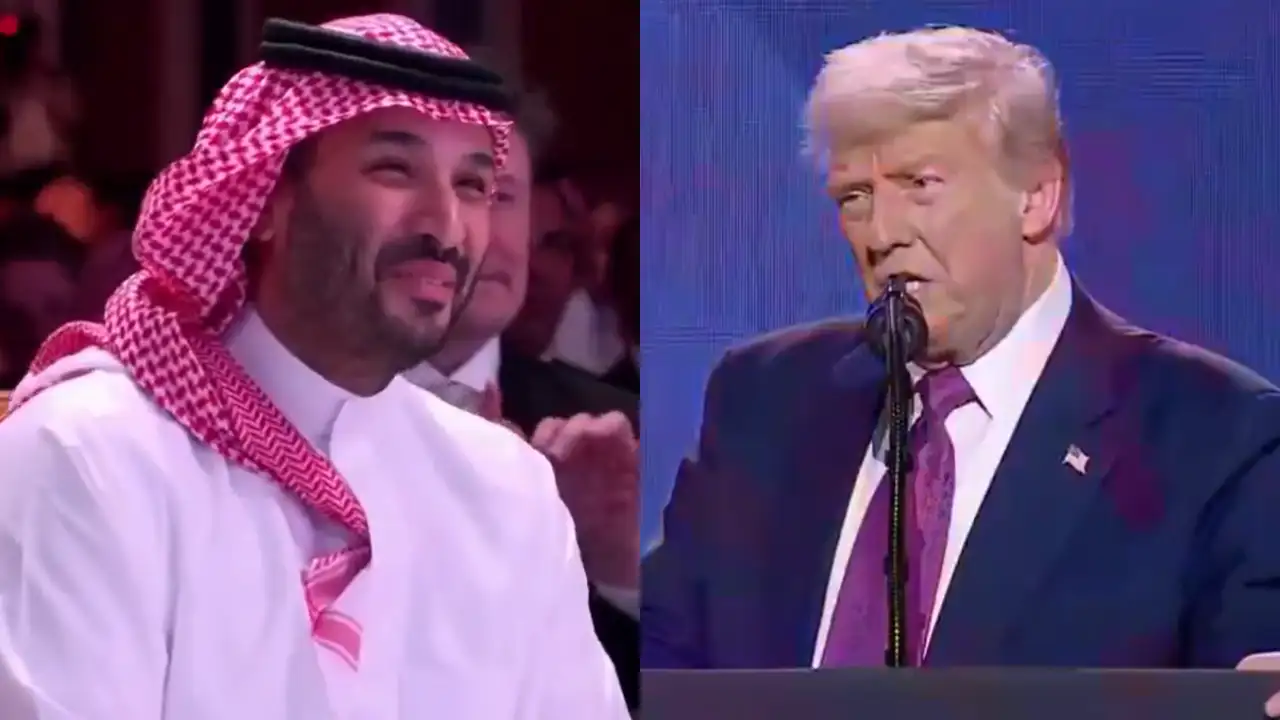
During a high-profile gathering of global business leaders in Riyadh, U.S. President Donald Trump delivered a speech that was both a tribute to Saudi Arabia’s transformation and a personal nod to its de facto ruler, Crown Prince Mohammed bin Salman (MBS).
In a moment that captured the audience’s attention, Trump posed an unusual question to MBS: “Mohammed, do you sleep at night? How do you sleep?” The quip, laced with admiration for MBS’s ambitious reforms, drew laughter from the crown prince and a standing ovation from the crowd.
The exchange underscored the strengthening ties between the U.S. and Saudi Arabia under Trump’s second term, while also highlighting the complexities of their relationship amid economic ambitions, geopolitical strategies, and lingering human rights concerns.
Trump’s Praise: A Personal and Political Statement
Trump’s speech in Riyadh was a masterclass in blending personal charisma with political messaging. His question to MBS about sleep was not just a lighthearted jest but a deliberate acknowledgment of the crown prince’s relentless drive to transform Saudi Arabia into a global business hub.
By saying, “He tosses and turns like some of us, tosses and turns all night… It’s the ones who don’t toss and turn, they’re the ones who will never take you to the promised land,” Trump painted MBS as a visionary leader whose restlessness fuels progress. The audience’s enthusiastic response and MBS’s laughter signaled a mutual appreciation that transcended formal diplomacy.
The American president’s admiration extended beyond the quip. Trump lauded Saudi Arabia’s achievements under MBS’s leadership, declaring, “Critics doubted it was possible, what you’ve done, but over the past eight years, Saudi Arabia has proved the critics totally wrong.”
He even admitted, “I like him a lot. I like him too much,” a statement that underscored the personal rapport between the two leaders. This public endorsement was a significant moment, as it marked Trump’s commitment to a “close relationship” with Saudi Arabia, a partnership he views as central to his foreign policy agenda.
However, Trump’s speech notably omitted any mention of human rights concerns, including the 2018 killing of Washington Post journalist Jamal Khashoggi, which remains a stain on Saudi Arabia’s international reputation.
Read : Saudi Arabia’s ‘Sleeping Prince’ Al-Waleed Turns 36 While Still in Coma
While MBS has denied involvement and pointed to reforms like expanding women’s rights as evidence of progress, critics argue that these changes are superficial, overshadowed by ongoing crackdowns on dissent and political freedoms. Trump’s silence on these issues drew criticism from U.S. lawmakers, human rights groups, and foreign policy analysts, who accused him of prioritizing economic and strategic interests over moral accountability.
'How do you sleep at night? You toss and turn all night'
— RT (@RT_com) May 13, 2025
This is how Trump praises MBS for his leadership in the Middle East pic.twitter.com/qSowfjXTd1
The decision to lift sanctions on Syria, announced during the summit at the request of MBS and Turkey’s President Recep Tayyip Erdogan, further highlighted Trump’s willingness to align with MBS’s regional priorities.
His quip, “Oh, what I do for the crown prince,” was a playful yet telling remark, signaling that the U.S. is prepared to make significant concessions to strengthen ties with Saudi Arabia. This move, while geopolitically strategic, intensified debates about the ethical implications of Trump’s foreign policy.
Strategic and Economic Stakes: A Mutually Beneficial Alliance
At the heart of Trump’s engagement with MBS lies a shared vision of economic and geopolitical dominance. For Trump, the trip to Riyadh was an opportunity to secure major economic wins and reassert U.S. influence in the Middle East. For MBS, partnering with the U.S. offers access to advanced technology, military support, and a powerful ally to bolster Saudi Arabia’s modernization efforts and regional leadership.
The summit saw Trump tout a $142 billion defense agreement and a $600 billion Saudi investment package spanning artificial intelligence, infrastructure, and energy. These deals are emblematic of the economic synergy between the two nations.
The defense agreement strengthens Saudi Arabia’s military capabilities, aligning with U.S. interests in maintaining a strong counterbalance to regional rivals like Iran. The investment package, meanwhile, positions Saudi Arabia as a key player in cutting-edge industries, while offering U.S. companies lucrative opportunities in the kingdom’s rapidly diversifying economy.
Trump’s description of Saudi Arabia as “the center of the world” reflects the kingdom’s growing stature as a global business hub, a transformation driven by MBS’s Vision 2030 initiative. Launched in 2016, Vision 2030 aims to diversify Saudi Arabia’s oil-dependent economy through investments in technology, tourism, and renewable energy.
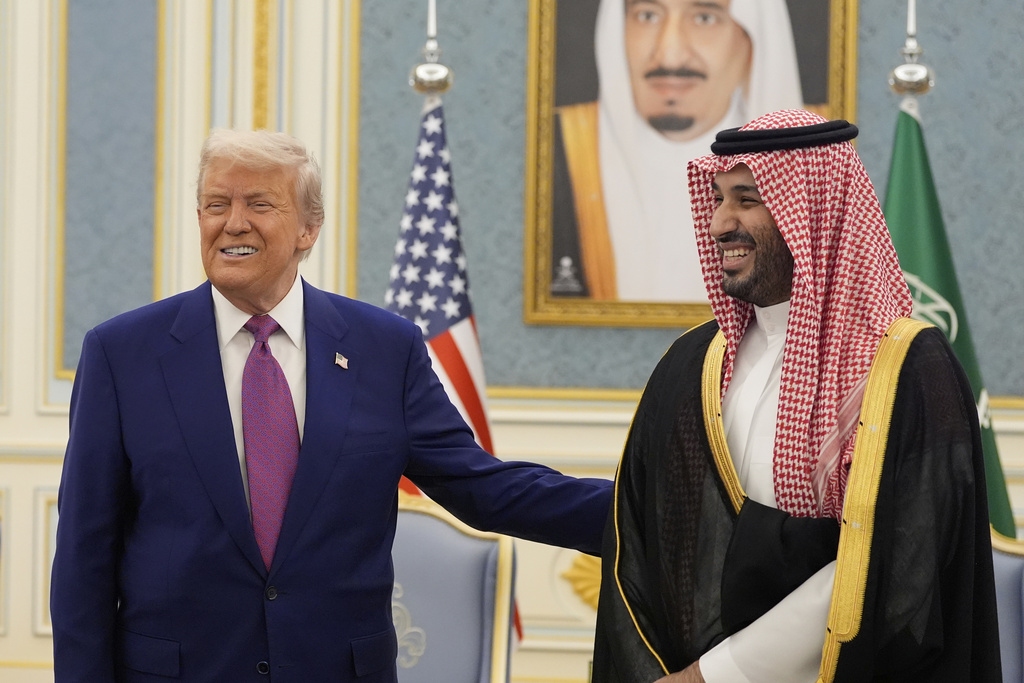
Riyadh’s emergence as a destination for international summits, such as the one Trump attended, is a testament to the success of these efforts. By aligning with MBS’s vision, Trump hopes to secure a share of the economic benefits while reinforcing U.S. leadership in the region.
However, the deepening U.S.-Saudi alliance has sparked concerns about its long-term implications. Critics argue that Trump’s focus on economic and military cooperation overlooks the risks of empowering a regime with a questionable human rights record.
The $142 billion defense deal, for instance, raises questions about the potential misuse of advanced weaponry in regional conflicts, such as the ongoing war in Yemen. Similarly, the $600 billion investment package, while economically promising, could entrench Saudi Arabia’s influence in global markets without addressing governance reforms.
Despite these concerns, the mutual benefits of the U.S.-Saudi partnership are undeniable. For Trump, the alliance offers a chance to deliver on campaign promises of economic growth and job creation. For MBS, it provides the international legitimacy and resources needed to sustain his ambitious reforms. The question remains whether this partnership can deliver lasting stability or if it will exacerbate tensions in an already volatile region.
A Shift from the Biden Era: From Pariah to Partner
Trump’s warm embrace of MBS stands in stark contrast to the approach of his predecessor, Joe Biden, who took office with a pledge to hold Saudi Arabia accountable for its human rights record.
In 2019, Biden vowed to make the kingdom a “pariah” on the global stage, citing the Khashoggi killing and other abuses. This rhetoric reflected a broader push by the Biden administration to prioritize human rights and democratic values in U.S. foreign policy.
However, geopolitical realities soon forced a recalibration. The 2022 Russian invasion of Ukraine triggered a surge in global oil prices, underscoring the importance of Saudi Arabia as a key oil producer. Recognizing the need for cooperation, Biden visited Riyadh in July 2022, where he met MBS and exchanged a fist bump that drew scrutiny for appearing overly friendly.
White House aides defended the gesture as a precaution against COVID-19, but the visit signaled a pragmatic shift in U.S. policy. Despite Biden’s earlier criticisms, the U.S. needed Saudi Arabia’s cooperation to stabilize energy markets and counterbalance Iran’s influence.
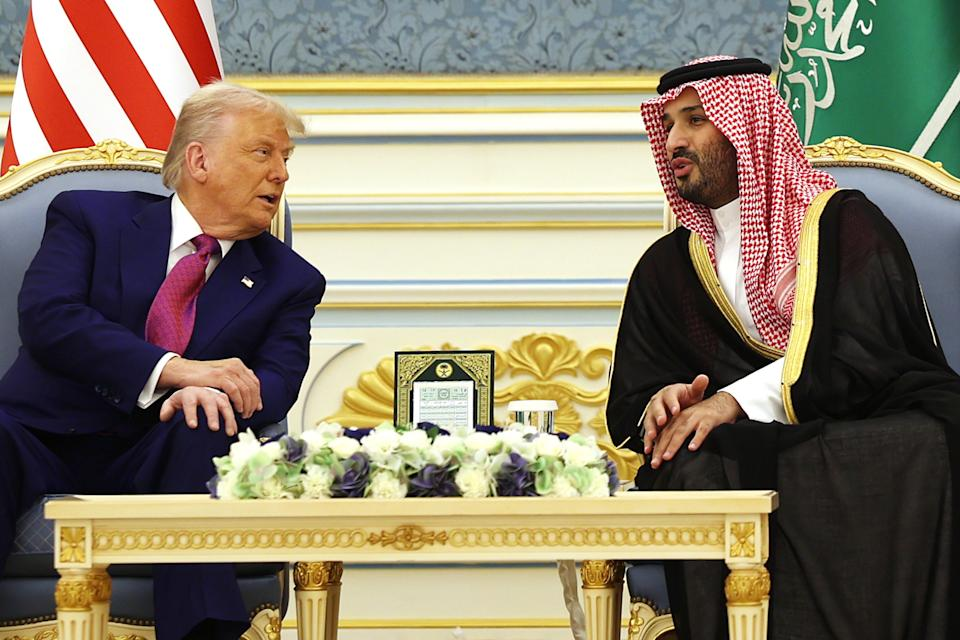
Trump’s approach, by contrast, is unapologetically transactional. His decision to lift sanctions on Syria, his effusive praise for MBS, and his focus on blockbuster economic deals reflect a return to the dealmaking style that defined his first term.
Unlike Biden, who grappled with balancing human rights concerns and strategic imperatives, Trump appears unburdened by such considerations. His speech in Riyadh made no reference to Khashoggi or other human rights issues, a choice that aligns with his broader foreign policy of prioritizing economic and security interests.
This shift has significant implications for U.S.-Saudi relations and the broader Middle East. Trump’s alignment with MBS could strengthen the U.S. position in the region, particularly in countering Iran and securing energy supplies.
However, it risks alienating allies who prioritize human rights and could embolden authoritarian regimes to act with impunity. The standing ovation Trump received in Riyadh suggests that his approach resonates with Saudi Arabia’s elite, but it remains to be seen whether it will translate into broader regional stability.
Trump’s question to MBS—“Mohammed, do you sleep at night? How do you sleep?”—was more than a rhetorical flourish; it was a window into the personal and political dynamics shaping U.S.-Saudi relations.
His effusive praise, strategic dealmaking, and departure from Biden’s human rights-focused rhetoric signal a new chapter in the partnership between Washington and Riyadh. While the alliance promises significant economic and geopolitical benefits, it also raises questions about the trade-offs of prioritizing pragmatism over principle.
As Trump and MBS deepen their collaboration, the world will be watching to see whether their shared vision delivers the “promised land” Trump alluded to or whether it sows the seeds for future challenges.
For now, the laughter shared between the two leaders in Riyadh reflects a moment of mutual confidence, but the path ahead will test the resilience of their partnership in a region fraught with complexity.