
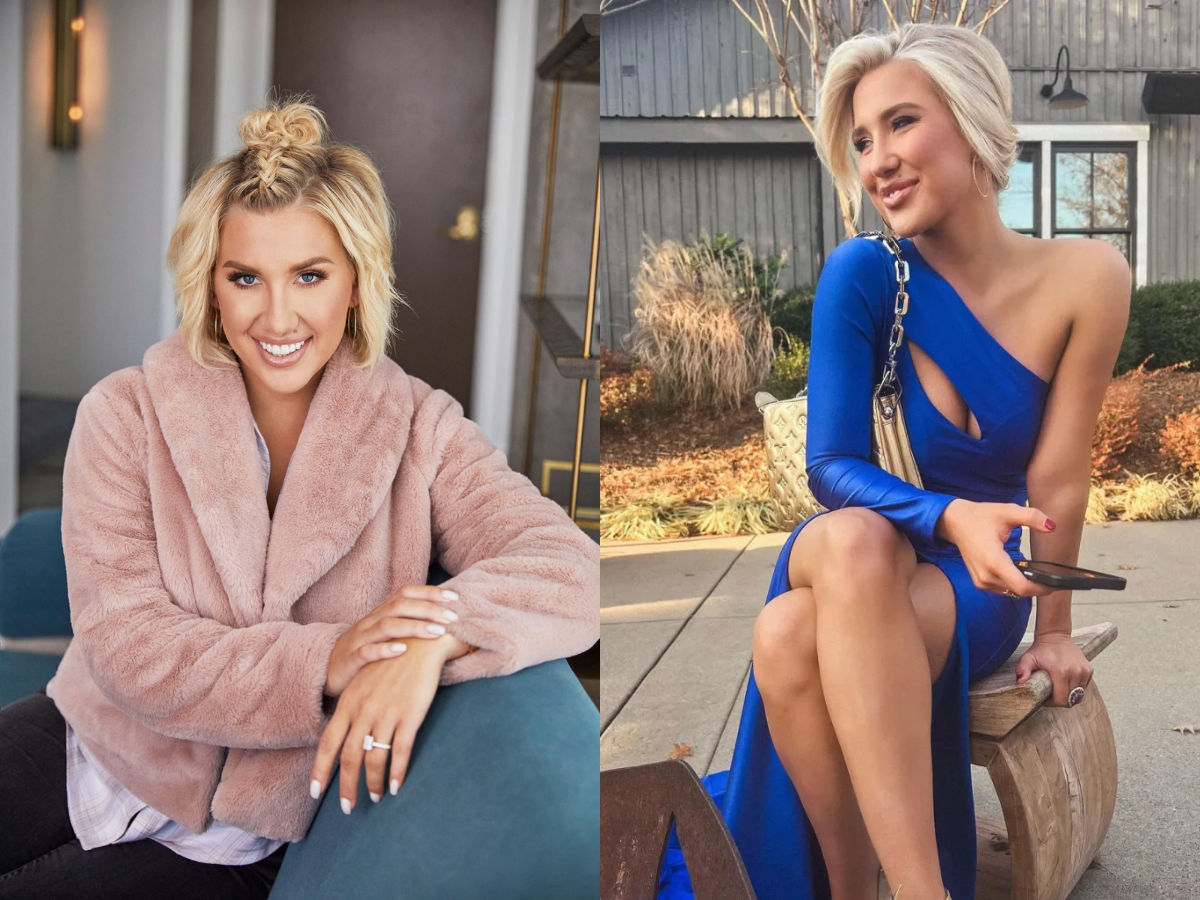
Savannah Chrisley has long been a recognizable figure in American reality television, but her recent appearance as a guest host on daytime talk television has placed her at the center of an intense political and cultural debate. Her comments defending Donald Trump during an on-air discussion about racism sparked widespread criticism, particularly because the exchange occurred during Black History Month. The moment quickly circulated across social media platforms, drawing sharp reactions from viewers who viewed her remarks as ill-timed, politically charged, or poorly argued.
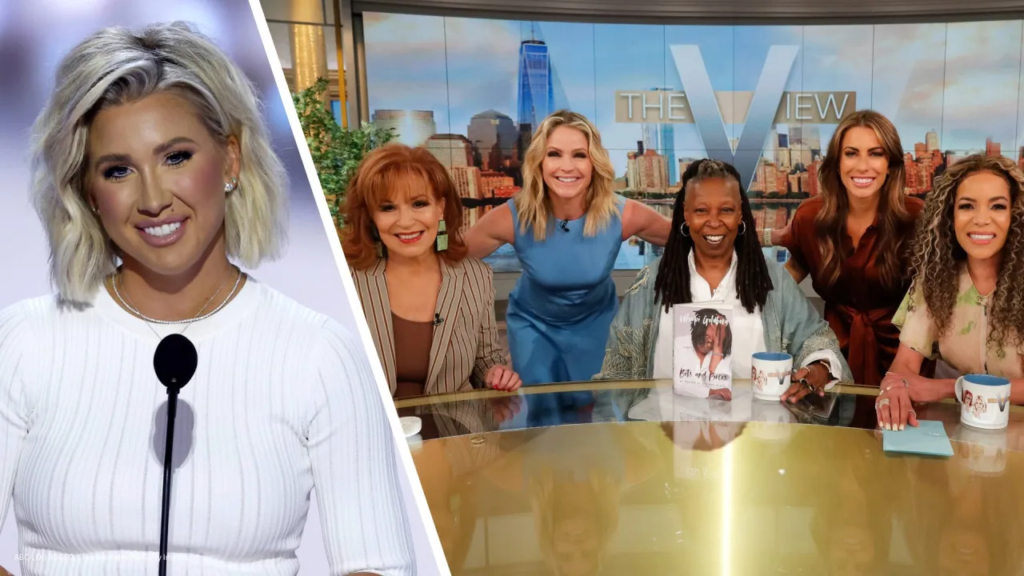
Others framed the controversy within a broader narrative about celebrity influence, political loyalty, and the role of personal experience in shaping public commentary. Chrisley’s guest-host appearance on The View was meant to be temporary, filling in while regular panelist Alyssa Farah Griffin was on maternity leave. Yet her presence on the show quickly became a focal point of public debate, not only because of her political stance but also because of her family’s widely publicized legal history and recent presidential pardons.
The combination of celebrity visibility, partisan politics, and a highly sensitive cultural conversation created a moment that drew attention far beyond the usual daytime television audience. Her on-air exchange with Sunny Hostin crystallized the controversy. When Hostin asserted that Trump is racist, Chrisley repeatedly and emphatically rejected the claim. The conversation quickly became heated, and clips of the exchange spread online within hours.
Many critics argued that Chrisley’s insistence reflected partisan talking points rather than thoughtful engagement with the topic. Others viewed the moment as a reflection of broader tensions in American political discourse, where discussions about race, identity, and leadership often become deeply polarized. To understand why the backlash has been so intense, it is important to examine Chrisley’s background, the nature of the televised confrontation, and the broader context in which her comments were received.
Public Identity, Family Legacy, and Rise to Reality TV Fame
Savannah Chrisley first gained national recognition through her family’s reality television series Chrisley Knows Best, which aired on USA Network. The show followed the daily lives of the Chrisley family, portraying an affluent Southern household defined by strong personalities, family drama, and an emphasis on lifestyle and image. Over time, Chrisley developed her own public persona as a confident, outspoken, and media-savvy young woman navigating fame within a highly visible family dynamic.
Central to that public narrative were her parents, Todd Chrisley and Julie Chrisley, who served as the central figures of the series. Their legal troubles dramatically altered both the show’s trajectory and the family’s public image. Federal convictions related to bank fraud, wire fraud, and tax evasion brought intense scrutiny, ultimately leading to the show’s end and reshaping how the family was perceived in popular culture.
The situation shifted again when Trump granted pardons to Todd and Julie Chrisley in 2025. The pardons reintroduced the family into national political conversation and strengthened their public alignment with the former president. Savannah Chrisley became one of the most visible voices expressing gratitude and support, speaking openly about the pardons in interviews and on her podcast. This alignment positioned her not simply as a reality television personality but as a participant in political discourse shaped by personal experience.
Her growing presence in media commentary reflected a broader trend in which public figures from entertainment increasingly engage in political discussion. However, unlike long-established political commentators, Chrisley’s authority in such debates has often been questioned. Critics have argued that her political advocacy stems primarily from personal loyalty rather than policy knowledge or ideological consistency. Supporters, on the other hand, have framed her as someone speaking authentically from lived experience, particularly regarding the justice system and executive power.
I'm dying at the hosts of The View going innnnnnn on guest-host Savannah Chrisley for saying Donald Trump isn't racist. they tore her ass up lol
— Spencer Althouse (@SpencerAlthouse) February 19, 2026
Savannah: What's so hard for me to witness is people stating that the president is a racist…he saved one of my best friends' lives,… pic.twitter.com/yzL0n0lsGO
This combination of celebrity, personal narrative, and political alignment created a foundation for heightened public scrutiny when she entered a setting like The View, where political discussion is central and confrontation among hosts is common. Her transition from reality television personality to participant in high-profile political debate marked a significant shift in how audiences interpreted her role in public life.
The View Confrontation and the Politics of Public Disagreement
Chrisley’s guest-hosting role placed her within a format designed for lively debate, but her exchange with Hostin became a defining moment of her appearance. The discussion centered on Trump’s approach to race and public recognition of Black history, a topic already charged with emotional and political significance. When Hostin characterized Trump as racist, Chrisley interrupted to reject the claim repeatedly, asserting with certainty that he was not.
The intensity of the exchange drew attention not only because of the disagreement itself but because of how it unfolded. Viewers observed a sharp contrast in rhetorical style: Hostin presented her position as a matter of established fact, while Chrisley responded with emphatic denial rather than detailed counterargument. For many observers, the exchange illustrated broader patterns in contemporary political discourse, where opposing sides often rely on categorical assertions rather than shared evidence.
Read : Airbnb Host Kevin Dale Westerhold Arrested After Engaging in Lewd Behavior at Windsor Hills Resort
The conversation also revealed the dynamics of live television debate. The presence of other hosts, including Whoopi Goldberg, contributed to a rapid-fire environment in which interruptions and overlapping commentary are common. Such settings can amplify disagreement and create moments that appear more confrontational when viewed in isolation through short video clips.
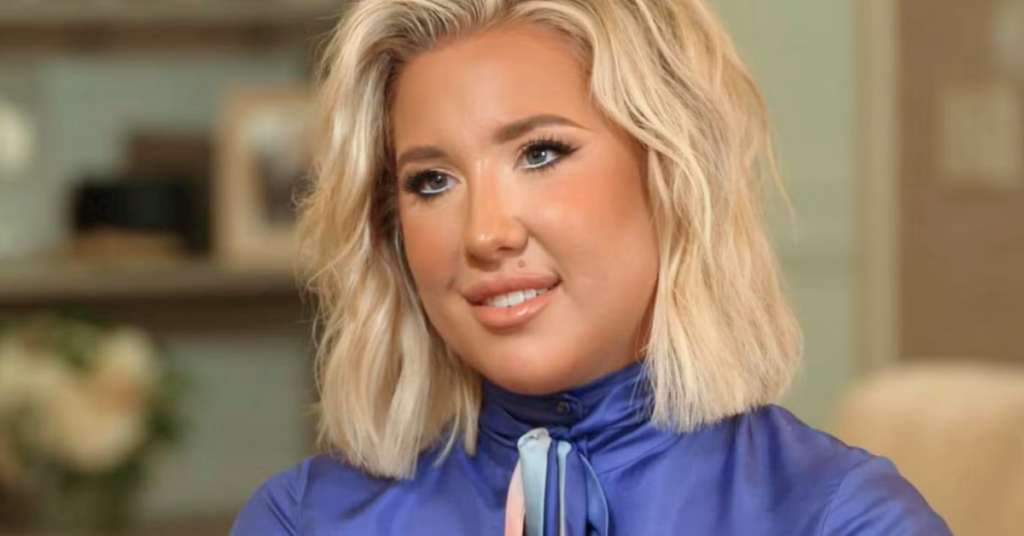
Public reaction to the exchange was swift and intense. Social media platforms filled with criticism of Chrisley’s defense of Trump, with many viewers arguing that her comments were especially inappropriate during Black History Month. Others focused less on the substance of her argument and more on her debating style, describing her responses as rehearsed or lacking nuance. Some commentators framed her participation as evidence of broader cultural polarization, suggesting that celebrity guest hosts can intensify ideological divisions when entering politically charged conversations.
The controversy extended beyond a single exchange. Earlier in the week, Chrisley had made an inaccurate claim about Alexandria Ocasio-Cortez becoming the Democratic Party’s next presidential nominee, a statement quickly corrected on air. This incident contributed to a growing perception among critics that she was unprepared for the show’s political discussions. As a result, her defense of Trump did not occur in isolation but within an accumulating narrative about credibility, expertise, and readiness for public debate.
Why the Backlash Intensified and What It Reveals About Public Expectations
The backlash to Chrisley’s comments cannot be explained solely by disagreement over Trump. Instead, it reflects an intersection of timing, identity, and audience expectations. The discussion took place during Black History Month, a period when public attention is particularly focused on historical and contemporary issues of race. For many viewers, defending Trump against accusations of racism in that context appeared dismissive or insensitive, regardless of the specific arguments presented.
Read : Brianna Aguilera’s Family Files $1M Lawsuit Against Tailgate Hosts for Overserving Alcohol to Minor
Another factor shaping the reaction was the perception of personal interest. Because Trump had pardoned her parents, critics argued that Chrisley’s defense of him was not politically neutral. The connection between private benefit and public advocacy raised questions about motivation, credibility, and impartiality. Even if her views were sincerely held, the personal dimension made them more controversial.
Celebrity culture also played a significant role. Reality television personalities often build their public identity through entertainment rather than policy analysis. When such figures enter political debate, audiences may judge them according to different standards. Some expect careful research and measured argumentation, while others expect emotional authenticity. When those expectations clash, reactions can be particularly strong.
The structure of social media further amplified the response. Short video clips, reaction posts, and commentary threads created an environment in which nuanced discussion became secondary to immediate judgment. The speed and scale of online reaction transformed a television debate into a broader cultural flashpoint.
At the same time, the controversy reflects ongoing debates about who has authority to speak on political issues. Chrisley framed her participation as stepping outside her comfort zone and embracing opportunities to learn. Critics interpreted the same participation as evidence of insufficient preparation. This tension mirrors larger questions about whether public discourse should prioritize openness to diverse voices or expertise grounded in knowledge and experience.
Her appearance on The View thus became more than a temporary guest-hosting role. It evolved into a moment that highlighted how celebrity, politics, personal history, and cultural timing can converge to create intense public reaction. The response to her comments reveals not only disagreement with her defense of Trump but also broader anxieties about representation, credibility, and the boundaries between entertainment and political discourse.
As long as Chrisley remains publicly aligned with Trump and continues to participate in political conversations, the scrutiny surrounding her statements is likely to persist. The intersection of personal loyalty, media visibility, and national political tension ensures that her public remarks will continue to be interpreted within a framework shaped by both her family’s history and the polarized environment in which contemporary political debate unfolds.