
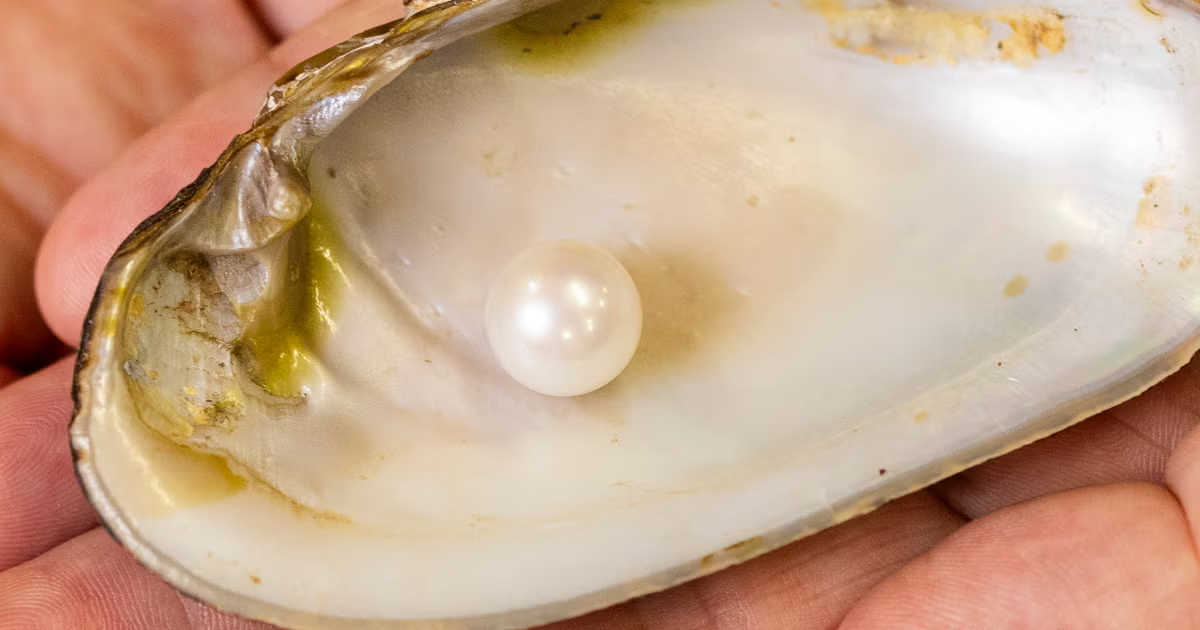
In the heart of Edinburgh’s National Museum of Scotland, a tiny treasure has captured the imagination of visitors and historians alike. On September 18, 2025, the Abernethy Pearl—a flawless, perfectly round freshwater gem discovered nearly six decades ago—made its permanent debut in the Restless Earth gallery. Measuring just 11 millimeters in diameter and weighing 43.6 grains, this unassuming orb represents a slice of Scotland’s wild past, a time when rivers teemed with life and hidden jewels. It’s the largest freshwater pearl found in Scotland in over 400 years, a remarkable survivor from an era that’s now vanished.
This isn’t just any pearl; it’s a symbol of resilience and rarity. Formed inside the shell of a freshwater mussel, the Abernethy Pearl’s journey from the depths of the River Tay to a glass case in one of Europe’s premier museums underscores the fragile beauty of Scotland’s natural heritage. Discovered in 1967 by the last of Scotland’s professional pearl fishers, William “Bill” Abernethy, it was donated to the nation just last year after fetching nearly £94,000 at auction. Now, as it gleams under soft museum lights, it invites us to reflect on the rivers that shaped a nation and the environmental challenges that threaten to silence them forever.
For those wandering the museum’s halls, the pearl’s arrival feels like unearthing a secret. Nestled beside its original mussel shell, it shimmers with a subtle pinkish iridescence that shifts with every angle—a quality that sets it apart from its more irregular cousins. Principal Curator of Earth Systems at National Museums Scotland, Dr. Rachel Walcott, describes it as “one of a kind,” a specimen so exceptional that it wouldn’t stand a chance of forming in today’s polluted waters. As Scotland grapples with climate change and habitat loss, the Abernethy Pearl stands as both a celebration and a cautionary tale, reminding us of what we’ve gained and what we stand to lose.
The Serendipitous Discovery: Bill Abernethy’s River Legacy
Picture a crisp autumn day in 1967, along the banks of the River Tay in Perthshire. The water rushes with the quiet determination of Scotland’s ancient waterways, carrying secrets accumulated over centuries. Into this scene steps Bill Abernethy, a wiry man in his forties, waders pulled high against the chill, his eyes sharp from a lifetime scanning mussel beds. Born in 1925, Bill was the final guardian of a trade as old as the hills themselves—pearl fishing, a craft passed down from father to son in the misty glens of the Scottish Highlands.
Bill’s father had taught him the art young, instilling not just the mechanics of prying open shells but a profound reverence for the river’s rhythms. “You learn to read the water,” Bill once recalled in interviews, his voice gravelly with years of stories untold. Pearl fishing wasn’t a pursuit for the impatient; it demanded patience, intuition, and a gambler’s luck. Only one in every 5,000 freshwater mussels harbors a pearl, and even fewer yield gems of any worth. Bill, however, had an uncanny knack. Over decades, he plucked dozens from the Tay and its tributaries, each a small victory against the odds. But nothing prepared him for that fateful mussel.
He spotted it by the subtle warp in its shell—a telltale sign of irregularity inside, like a whisper from the riverbed. With practiced hands, he wedged his knife and cracked it open. There, nestled in the soft tissue, lay the Abernethy Pearl: luminous, spherical, and improbably large. Bill’s astonishment was palpable; even for a veteran like him, this was unprecedented. “I knew it was special the moment I saw it,” he later shared, holding the pearl up to the light as if still marveling at its glow. At 43.6 grains—roughly equivalent to the weight of a small grape seed—it dwarfed anything in his collection.
The River Tay, Scotland’s longest, has long been a cradle for such wonders. Flowing 118 miles from the Highlands to the North Sea, its clear, peaty waters once supported thriving populations of Margaritifera margaritifera, the freshwater pearl mussel. These bivalves, ancient as the dinosaurs in evolutionary terms, filter gallons of water daily, acting as nature’s purifiers. Bill’s find wasn’t mere luck; it was the culmination of a life immersed in this ecosystem.
A 'one-of-a-kind' freshwater pearl that is the largest found in Scotland for more than 400 years has gone on display at the National Museum of Scotland.https://t.co/4xDMeEa9Wa pic.twitter.com/48BGCLP4ce
— STV News (@STVNews) September 18, 2025
He never revealed the exact spot— a fisherman’s code, perhaps, or a nod to the mussel’s vulnerability. Bill continued his work until the late 1960s, but by then, the rivers were changing. Pollution from agriculture and industry crept in, and overfishing cast long shadows. When Bill passed away in 2021 at 96, he left behind not just a pearl, but a poignant chapter in Scotland’s story.
What makes the Abernethy Pearl’s discovery even more poignant is its estimated age. Experts believe it took around 80 years to form, meaning it began its slow accretion sometime in the 1880s, during Queen Victoria’s reign. Imagine: a tiny irritant—a grain of sand or parasite—lodged in the mussel, coated layer by layer in nacre, the iridescent mineral that gives pearls their luster. Through world wars, industrial revolutions, and the dawn of the modern age, it grew undisturbed, a silent witness to history. Bill’s hands, callused from countless shells, liberated it just as the world it knew began to fade.
A National Treasure: From Private Hands to Public Glory
Fast-forward to 2024, and the Abernethy Pearl emerges from obscurity once more, this time at a Sotheby’s auction in Edinburgh. The room buzzes with anticipation as bids climb, culminating in a final hammer fall at £93,600. The buyer? Not a collector seeking seclusion, but Alastair Wood Tait, a retired jeweler with a lifetime’s passion for Scottish gems. For 40 years, Tait crafted jewelry from the nation’s minerals—cairngorms, Iona marbles, and yes, the occasional river pearl. As a volunteer at National Museums Scotland, he knew the pearl’s true home wasn’t a velvet-lined drawer, but a place where thousands could marvel at it.
“I spent my career working with Scottish gemstones, and the Abernethy Pearl is the finest I’ve ever seen,” Tait said upon the donation. Unlike the baroque, asymmetrical forms common in freshwater pearls, this one is a near-perfect sphere, its surface blushing with pink undertones that dance in the light. “It’s got that wonderful iridescence—pinky-white, ethereal almost.” His gesture ensures the pearl joins the museum’s vast collection of over 12 million objects, from Viking hoards to dinosaur fossils. Acquired as museum reference G.2025.11.1, it’s displayed alongside its host mussel (G.2025.11.2.1), evoking the moment of discovery.
The handover ceremony was understated, befitting a gem born of quiet rivers. Dr. Walcott accepted it with gratitude, noting its rarity: the largest since the Kellie Pearl of 1621, a 34.12-grain behemoth believed to grace the Scottish crown jewels today. That 17th-century find, unearthed near the River Tay as well, fueled tales of royal intrigue—James VI reportedly gifted it to Anne of Denmark. The Abernethy, though, carries a modern mystique, bridging eras. In the Restless Earth gallery, it sits amid exhibits on geology and ecology, a bridge between Scotland’s natural and cultural histories.
Tait’s donation speaks to a broader ethos at NMS: making heritage accessible. The museum, which draws over 2 million visitors annually, uses such artifacts to spark conversations. The pearl isn’t cordoned off in a vault; it’s there for school groups to ponder, families to photograph, and scholars to study. Its arrival coincides with renewed interest in Scotland’s watery past—exhibitions on ancient hoards and Cold War relics nearby underscore the nation’s layered narrative. Yet, for all its glamour, the pearl’s placement is deliberate: in a gallery titled “Restless Earth,” it prompts questions about sustainability, a theme echoing through the halls.
Echoes of a Vanished World: Conservation Lessons from a Pearl
As visitors lean closer to the case, the Abernethy Pearl whispers of worlds lost. Once, Scotland’s rivers pulsed with millions of freshwater pearl mussels, supporting an industry that exported gems across Europe from the 15th century onward. Kings and queens adorned themselves with Tay pearls; Mary Queen of Scots reportedly wore them in her hair. But by th-*9e 20th century, the tide turned. Between 1970 and 1998, when pearl fishing was finally banned, mussel populations vanished from two rivers or tributaries annually. Today, Scotland hosts about half the world’s remaining freshwater pearl mussels, yet they teeter on extinction.
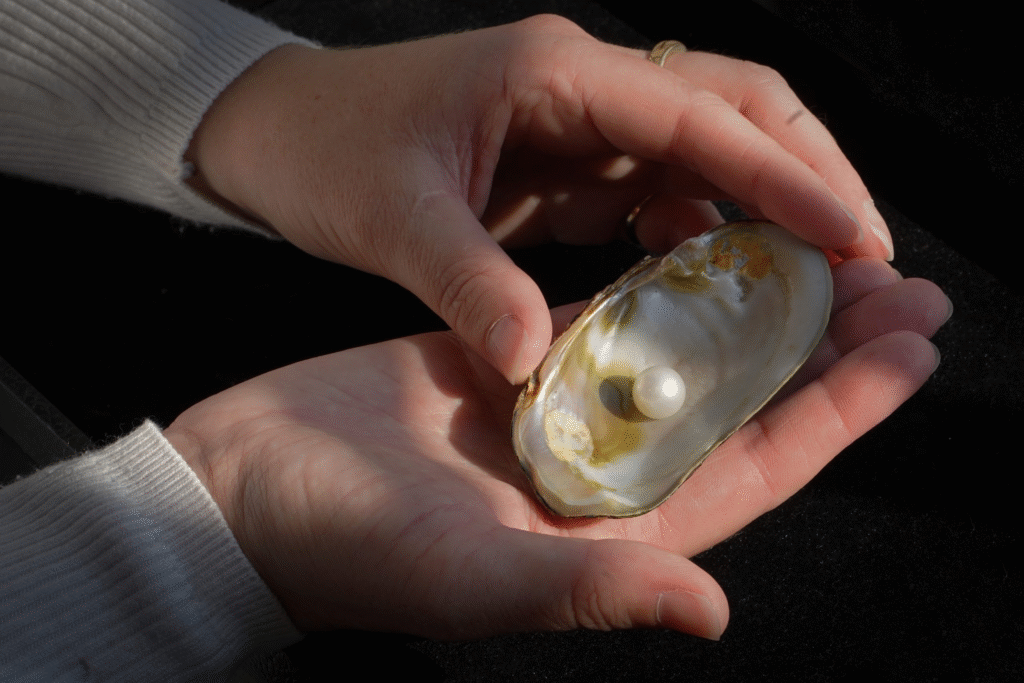
Dr. Walcott likens them to “canaries in the coal mine” for river health. These filter-feeders, which can live over 100 years, demand pristine conditions: cool, oxygen-rich waters free from sediment and toxins. Agriculture runoff, urban development, and climate-driven temperature spikes have decimated habitats. The Abernethy Pearl’s 80-year gestation? Impossible now, Walcott asserts. “We simply wouldn’t have that undisturbed water anymore.” Its mussel host, a survivor from Victorian times, embodies this loss—a relic of ecosystems that once thrived without interference.
Conservation efforts are underway, but they’re an uphill battle. Organizations like the Rivers Trust and Scottish Natural Heritage run restocking programs, breeding mussels in hatcheries and reintroducing them to cleansed stretches of river. Success stories exist: the River South Esk has seen populations rebound through volunteer-led cleanups. Yet, threats persist. Overfishing in the past stripped beds bare, and invasive species like the zebra mussel now compete for space. The pearl fishing ban, while necessary, closed a chapter on a cultural practice that sustained Highland families for generations.
Bill Abernethy’s life bridges this divide. An environmentalist at heart, he advocated for river stewardship, his boots worn from patrolling banks as much as fishing them. “The rivers gave me everything,” he said in a 2010s documentary, his eyes on the horizon. The pearl, in his name, honors that legacy while urging action. At NMS, it educates: plaques nearby detail mussel biology, pollution impacts, and ways to get involved—from supporting clean-water initiatives to mindful land use.
In a broader sense, the Abernethy Pearl challenges us to value the unseen. Scotland’s rivers aren’t just scenic backdrops; they’re lifelines, filtering 50 liters of water per mussel daily, sustaining salmon, otters, and human communities. As global warming alters flow patterns, gems like this one remind us of our stewardship role. Visitors leaving the gallery might carry more than a memory—they might carry a resolve to protect the next hidden treasure.
The Abernethy Pearl’s display marks not an end, but a beginning. In its quiet luster, we see Scotland’s past glory and future imperative. It’s a call to preserve the restless earth that birthed it, ensuring rivers run clear for generations. As the light catches its pink hue one last time, it poses a simple question: What stories will our waters tell tomorrow?
References:
Isle capri casino
References:
https://notes.io/ecenS
References:
Legal and illegal steroids
References:
http://219.157.255.213:25311/zenaidamurakam
References:
Global gaming expo
References:
https://isowindows.net/user/dangergirdle6/
References:
Rapid tone weight loss side effects
References:
https://www.sg-friedersdorf.de/Home/index.php/;focus=STRATP_com_cm4all_wdn_Flatpress_11400423&path=?x=entry:entry240906-095025%3Bcomments:1
References:
Where do i buy steroids
References:
https://www.heizaer.ch/index.php/;focus=HSTPTP_com_cm4all_wdn_Flatpress_8970636&path=&frame=HSTPTP_com_cm4all_wdn_Flatpress_8970636?x=entry:entry251123-182947%3Bcomments:1
References:
Best steroid for lean mass
References:
http://121.41.95.54:3000/lizacoane0007
References:
Risks of anabolic steroids
References:
https://videyme.online/@jthnatasha0752?page=about
References:
Safe anabolic supplements
References:
https://www.latflex.net/@madeleinezgo06?page=about
References:
Best muscle building steroids
References:
https://git.barneo-tech.com/sabrinajmp6021
References:
Deca durabolin price
References:
http://www.cn8610086.cn:3000/shirleycowlish
References:
Human growth steroid
References:
http://66.179.208.56:3001/dirkronan03705
References:
Anabolic steroids for horses
References:
http://39.100.117.84:3000/meredithsheffi/app.venusroyale.date2012/wiki/Buy-Testosterone-Enanthate-online%2C-cheap-injection-for-sale
References:
T bol steroid
References:
http://git.zltest.com.tw:3333/michealschiffe
Hello, i think that i saw you visited my web site so i came to return the favor.I’m attempting
to find things to enhance my site!I suppose its ok
to use a few of your ideas!!
References:
https://analnoe.com/user/novelhub6/