

The wrongful death lawsuit filed by Scott Mariani in Bergen County has drawn national attention to the circumstances surrounding the tragic lightning strike that fatally injured his 28-year-old son, Simon Mariani, during a summer golf tournament in New Jersey. The legal complaint, lodged on 3 December, outlines a series of alleged failures by the owners and operators of Ballyowen Golf Club, part of the Crystal Springs Resort complex, accusing them of not taking appropriate steps to protect players despite indications that severe weather was approaching.
The case has raised wider questions about lightning-safety protocols at outdoor sporting events, the responsibilities of course management during rapidly shifting weather conditions, and the emotional toll borne by families who witness such unthinkable tragedies firsthand. For the Marianis, the loss is deeply personal, devastating, and compounded by the belief that safety measures could have prevented Simon Mariani’s death.
Allegations of Negligence and Claims of Inadequate Weather Monitoring
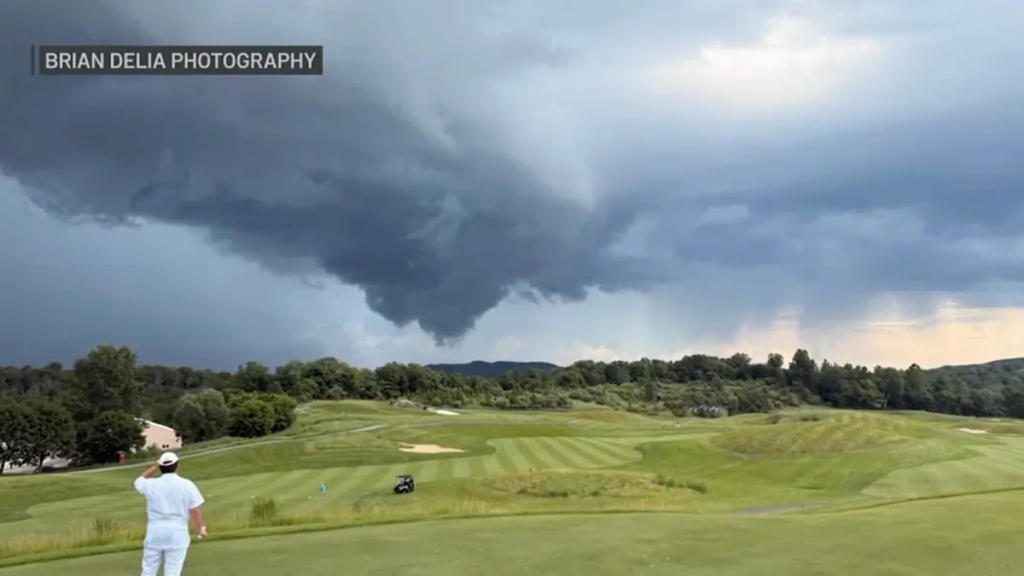
According to the lawsuit, the events of 8 July unfolded during the 36-hole Ironman Tournament, a competitive event that demands long hours of play across the expansive Ballyowen course. Simon Mariani, a graduate of the University of Notre Dame and a New York City professional, was participating when a fast-moving storm advanced on the area.
The complaint asserts that the course operators failed to adequately monitor developing weather activity or to warn players about the potential for lightning, despite indications that conditions were becoming increasingly dangerous. It alleges that Ballyowen Golf Club neglected to implement standard lightning-safety practices that many outdoor sports venues typically follow, such as suspending play as soon as storms form within a dangerous radius.
The suit further claims that lightning-warning protocols were either insufficient or entirely absent. While the club reportedly sounded alarms and horns once the storm began to escalate, the lawsuit argues that these warnings came too late to protect the golfers already spread across the course’s wide terrain. The delay in suspending play allegedly left participants exposed during a period when they should have been directed to shelter or evacuated from open areas immediately.
Read : Angelo Theodosiou Charged After 58-Year-Old Wife Dies in Golf Cart Crash
The legal filing contends that had management been more proactive in monitoring incoming weather and enforcing a clear evacuation plan, Simon Mariani might have been removed from the unprotected area before the fatal lightning strike occurred. The allegations portray a scenario in which misjudgment or lack of proper protocol created conditions in which players were left vulnerable.
Read : Trump Challenges Biden to Golf Match with $1 Million Charity Bet
In wrongful death cases involving environmental hazards, the central question often becomes whether a foreseeable threat was handled with the level of caution expected from a facility hosting a public event. Here, the lawsuit argues that the storm’s rapid development did not absolve the resort of the responsibility to anticipate dangerous weather patterns on a day when dozens of players were engaged in a lengthy outdoor competition.
The Final Moments on the Course and the Emotional Toll on the Family
A particularly harrowing aspect of the lawsuit relates to the experience of Simon Mariani’s father, Scott Mariani, who was present at the golf course when the lightning struck. According to the complaint, he witnessed the exact moment his son was hit and immediately understood the severity of the injuries. The filing describes the profound emotional trauma Scott Mariani endured, stating that he suffered “severe and foreseeable emotional distress” after observing the incident and its aftermath.
Wrongful death cases occasionally include such claims when close family members have direct sensory perception of the event causing a loved one’s fatal injuries, and the suit emphasizes this immediate and devastating impact on Scott Mariani. In addition to the emotional suffering described, the complaint states that Simon himself experienced “severe pain, anguish, and fear of impending death” in the moments following the lightning strike.
Although emergency personnel arrived quickly—first police, followed by paramedics—Simon ultimately required evacuation by airlift to Cooperman Barnabas Hospital. Despite medical intervention, he succumbed to his injuries a week later, dying on 15 July. The timeline presented in the lawsuit suggests that Simon survived initially but endured significant suffering before his death, contributing to the damages sought by his family.
The inclusion of these details underscores the argument that the tragedy was both preventable and deeply traumatic. The emotional trauma described in the case aligns with what many families experience when confronted with catastrophic accidents in public settings. Witnessing such an incident can lead to long-lasting psychological effects, and the lawsuit’s emphasis on Scott Mariani’s contemporaneous awareness of the event highlights the intensity of the emotional damage he experienced.
Simon Mariani’s biography, as included in the complaint and subsequent reporting, paints a picture of a highly accomplished and well-rounded young man. A graduate of the University of Notre Dame with degrees in accounting, economics, and business, he was building a promising career in New York City. Outside of his professional life, he enjoyed art, the outdoors, and spending time with his family. These reflections, often presented in wrongful death filings, help illustrate the depth of the loss experienced by loved ones and can also influence assessments of non-economic damages such as loss of companionship and life potential.
Lightning Safety, Outdoor Sports, and Broader Context in New Jersey
The tragedy involving Simon Mariani did not occur in isolation. During the same month as the Ballyowen incident, another lightning strike at a New Jersey archery range killed one person and injured thirteen others. While the odds of being struck by lightning remain statistically low—less than one in a million according to the Centers for Disease Control and Prevention—the July incidents served as a reminder that severe weather in the region can change rapidly and pose substantial risks to individuals participating in outdoor activities.
Read : 5-Year-Old Boy Dies After Wall Collapses on Him at Sidcup Family Golf Course in London
Nationally, lightning safety experts emphasize that most victims are struck not during thunderstorms at their peak intensity, but in the early or late stages when people underestimate the danger. Golf courses, athletic fields, and other open-air venues carry heightened risks because participants are often far from safe shelter. As a result, many facilities implement stringent policies that require suspension of play as soon as lightning is detected within a set radius, sometimes as large as ten miles. These policies typically rely on real-time weather tracking systems or lightning-detection technologies that alert staff before a storm becomes immediately threatening.

The lawsuit against Ballyowen Golf Club challenges whether comparable systems or protocols were in place on the day of the Ironman Tournament. Although the resort reportedly sounded warnings once the storm intensified, the complaint argues that these responses were reactive rather than preventive. Proper lightning-safety management frequently involves anticipating conditions rather than waiting for visible storm development, especially during organized events where participants are scattered across large properties.
In addition to operational protocols, evacuation procedures play a crucial role in protecting outdoor participants. Courses are expected to provide golfers with clear instructions on where to go, how to exit the course safely, and how quickly they need to act. The lawsuit contends that Ballyowen failed to provide “timely or adequate evacuation instructions,” suggesting that confusion or lack of direction may have contributed to the time golfers remained exposed. Assessing whether the club followed industry standards for lightning-response planning will likely be central to the legal proceedings.
Historically, lightning-related lawsuits have often hinged on whether an event host responded appropriately to known risks. Cases involving educational institutions, sports leagues, or recreational facilities sometimes focus on whether a reasonable person in the same position could have anticipated the danger and acted differently. The Marianis’ lawsuit appears positioned within this framework, asserting that the storm’s approach should have prompted earlier action.
The broader community response to the tragedy reflects both sorrow for the Mariani family and renewed attention to safety procedures across outdoor recreation venues. As thunderstorms become increasingly unpredictable due to shifting climate patterns, experts have stressed the importance of proactive weather monitoring. In regions where summer storms form and dissipate rapidly, reliance on visual cues alone may not be sufficient. Technology-based monitoring systems, staff training, and conservative decision-making—erring on the side of suspending play—are often recommended.
The legal process ahead will likely examine not only the specific actions taken by Ballyowen staff that day but also how those actions compare to industry norms. The statements from Crystal Springs Resort have yet to be made publicly available, with The Independent reporting that it reached out for comment. Their response, as well as the findings that emerge during litigation, may help determine whether the incident reflects an isolated misjudgment or a broader gap in safety practices.
As the case proceeds, it highlights the delicate balance between recreational enjoyment and safety responsibilities in environments where natural hazards, though statistically rare, can have catastrophic consequences. For the Mariani family, the lawsuit represents both a search for accountability and a way to ensure that such tragedies prompt deeper consideration of how outdoor events prepare for and respond to rapidly changing weather conditions.
**mitolyn official**
Mitolyn is a carefully developed, plant-based formula created to help support metabolic efficiency and encourage healthy, lasting weight management.