

In a dramatic case that highlights the lengths organised crime groups will go to in order to bypass law enforcement, two men from Scotland have been jailed after attempting to smuggle a huge quantity of cannabis into the United Kingdom.
Scott McSeveney and Steven Lawson’s plot to hide £1.5 million worth of cannabis inside crates of watermelons was ultimately foiled, leading to their arrest, conviction, and sentencing. Their case has drawn attention to the persistent threat of drug smuggling and the crucial role of collaboration between agencies in tackling organised crime.
The Elaborate Smuggling Operation and Its Unravelling
The plan was bold and elaborate. Scott McSeveney, a 37-year-old from Shotts, North Lanarkshire, masterminded a scheme to smuggle a large quantity of cannabis from Spain to Scotland.
Understanding the need for a trusted transporter, Scott McSeveney enlisted 48-year-old Steven Lawson, an HGV company owner from the same town, to physically carry out the risky transportation.
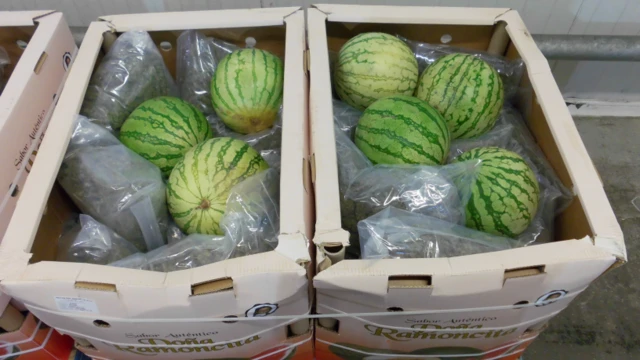
Lawson, using his legitimate transport business as cover, set off from the UK in July 2020 to travel to Benicassim, Spain. There, he collected the illicit cargo that was cunningly concealed within 30 pallets of watermelons. The smugglers hoped that hiding the cannabis among the fruit would help it pass undetected through border checks.
However, the plan quickly unravelled. Border Force officers stationed at the Eurotunnel port in France noticed an “anomaly” in Lawson’s load. Suspicious, they conducted a search and uncovered a significant haul: 159 packages of cannabis weighing a combined 155 kilograms hidden within the watermelon crates. Although the drugs had a wholesale value of around £604,200, authorities noted that their street value could have reached a staggering £1.59 million if sold in smaller quantities.
The discovery led to Lawson’s immediate arrest. Subsequent investigations linked Scott McSeveney directly to the smuggling attempt. Police Scotland’s Organised Crime Partnership and the National Crime Agency (NCA) played a vital role in piecing together the operation, ensuring that both men were swiftly brought to justice.
The Court Proceedings and Sentences Handed Down
Following their arrests, both Scott McSeveney and Steven Lawson faced serious charges related to drug trafficking and organised crime activities. McSeveney, acknowledging his role, pleaded guilty at the High Court in Glasgow on March 20 to charges involving the supply and sale of controlled drugs. Recognised as the architect of the smuggling operation, he was handed a prison sentence of eight years and two months.
Steven Lawson, who initially denied involvement, was found guilty after a trial at the same court on April 4. The jury was presented with compelling evidence of his role in facilitating the transportation of the drugs. Lawson was sentenced to five years in jail for his part in the crime.
Two men involved in a plot to bring over £1.5 million of cannabis to Scotland hidden in a load of watermelons have been jailed.
— National Crime Agency (NCA) (@NCA_UK) April 25, 2025
FULL STORY ➡️ https://t.co/82m69tht75 pic.twitter.com/UZY0CyYddN
During sentencing, the Crown Office and Procurator Fiscal Service (COPFS) highlighted the critical partnership between the NCA, Border Force, and Police Scotland in successfully disrupting the smuggling attempt. Sineidin Corrins, depute procurator fiscal for serious casework at COPFS, emphasised that the collaborative effort had prevented a large quantity of harmful drugs from reaching communities across Scotland.
Authorities pointed out that the cannabis haul, if it had made it to the streets, would have caused immense harm, fueling addiction, violence, and further criminal activities. Their successful interception represented a significant victory against the supply networks that threaten public health and safety.
Additionally, both McSeveney and Lawson were made subject to Serious Crime Prevention Orders, to last three years following their release from prison. They will also face confiscation proceedings under the Proceeds of Crime Act, which aims to recover the financial gains they illegally amassed through their criminal activities.
Organised Crime, Technology, and the Battle Against Smuggling
The case of Scott McSeveney and Lawson sheds light on the evolving tactics used by organised crime groups and the challenges faced by law enforcement. Notably, McSeveney was found to have used Encrochat, an encrypted messaging service widely employed by criminals to coordinate illicit activities.
Investigators discovered he had been communicating extensively through Encrochat about various methods to traffic cannabis across Europe, including modifying HGVs to conceal drugs more effectively.
The use of encrypted communication platforms has become a significant obstacle for law enforcement worldwide. Organised crime networks often operate across borders, leveraging technology to coordinate their activities and evade detection. However, law enforcement agencies have adapted in turn, employing sophisticated surveillance, intelligence-sharing, and investigative techniques to counteract these threats.
Donald Lawrie, NCA operations manager, remarked that Scott McSeveney’s extensive use of encrypted messaging demonstrated his deep involvement and experience in drug trafficking. The fact that their plan was still foiled despite these precautions is a testament to the diligence and effectiveness of the joint operations conducted by the NCA, Border Force, and Police Scotland.
The broader fight against drug smuggling requires not only technological capabilities but also strong inter-agency collaboration. By working together, agencies can pool resources, share intelligence, and conduct joint operations that are critical in dismantling organised crime groups and intercepting illicit cargo before it reaches its intended destinations.
The successful prosecution of McSeveney and Lawson serves as a powerful reminder that no matter how sophisticated the criminal strategy may be, determined and coordinated law enforcement efforts can prevail. It also sends a clear message to those involved in serious organised crime: attempts to profit from the suffering of others will not go unpunished.
Scott McSeveney and Steven Lawson’s attempt to smuggle £1.5 million worth of cannabis into the UK hidden inside watermelons ultimately ended in failure and significant prison sentences. Their story highlights both the audacity of criminal enterprises and the vital role of law enforcement agencies in protecting communities from the devastating effects of drug trafficking.
While organised crime continues to evolve, so too do the efforts of those tasked with disrupting it. Through intelligence sharing, technological advancements, and persistent vigilance, agencies like the NCA, Border Force, and Police Scotland have shown that they remain a formidable barrier to the ambitions of drug traffickers.
With their convictions and the ensuing confiscation proceedings under Proceeds of Crime legislation, Scott McSeveney and Lawson’s criminal dreams have been thoroughly dismantled. The streets of Scotland are undoubtedly safer for it, and the agencies involved can claim a well-earned victory in the ongoing battle against organised crime.