
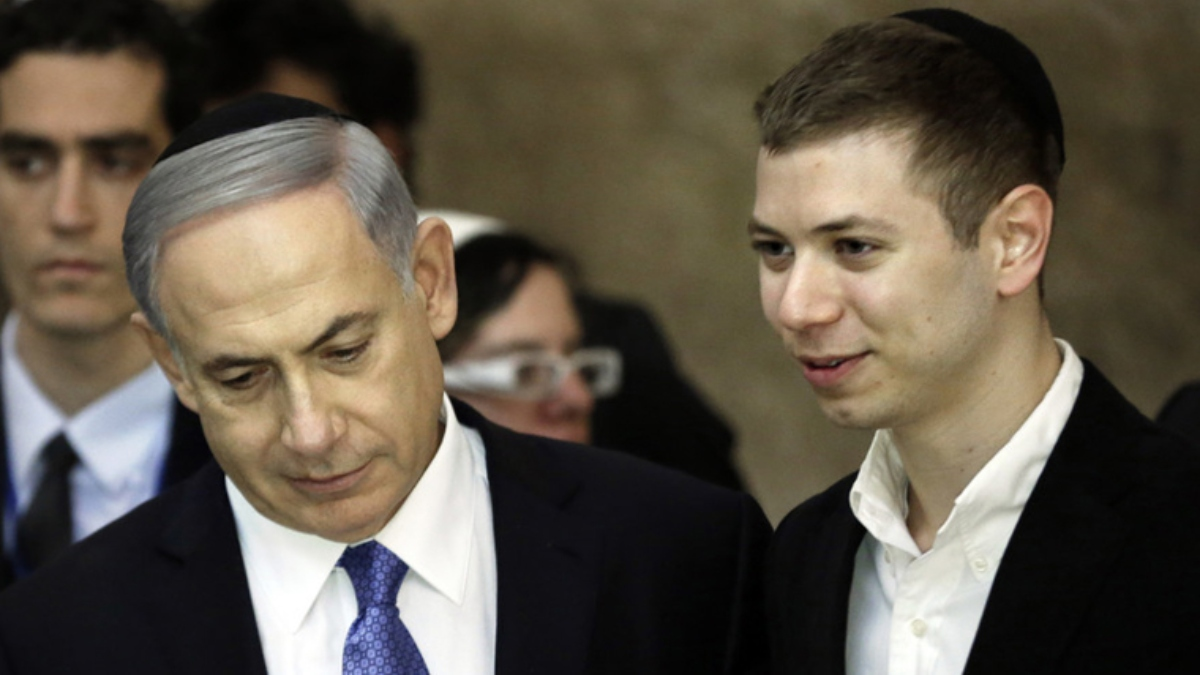
Tensions between Israel and France intensified after Yair Netanyahu, the outspoken son of Israeli Prime Minister Benjamin Netanyahu, issued a scathing social media rebuke of French President Emmanuel Macron.
The outburst followed Macron’s public expression of support for the recognition of a Palestinian state — a move he said could take place within months and potentially be formalized during an upcoming UN conference in New York this June.
The French president’s comments were framed as a renewed push toward a two-state solution, a path he described as the only viable option for lasting peace in the region.
Macron’s post on X stated, “Yes to a Palestinian state without Hamas,” emphasizing the conditions of a lasting ceasefire, the release of all hostages, and increased humanitarian aid. “I support the legitimate right of Palestinians to a state and to peace, just as I support the right of Israelis to live in peace and security,” he said.
However, the post did not sit well with Yair Netanyahu, who retaliated in a fiery post of his own, accusing France of colonial hypocrisy and calling for the independence of multiple French territories, including New Caledonia and Corsica. “Stop the neo imperialism of France in West Africa!” he added.
Macron’s Vision of Peace and Statehood
French President Emmanuel Macron has been increasingly vocal in recent months about France’s position on the Israeli-Palestinian conflict. In a televised interview, Macron said, “We must move towards recognition, and we will do so in the coming months.”
His remarks pointed to France’s intent to join or perhaps lead a broader international movement in support of Palestinian statehood. According to Macron, this is not merely a symbolic gesture but a strategic diplomatic approach to promote stability and peace in the Middle East.
He outlined a plan that involves co-hosting a major international conference in June, in collaboration with Saudi Arabia, which would aim to solidify mutual recognition between various international actors and the two states in question.
The French President also framed the move as essential in France’s efforts to combat those who deny Israel’s right to exist, citing Iran specifically. By recognizing a Palestinian state, Macron argued, France would strengthen its credibility in standing against threats to Israel while also advocating for Palestinian rights.
Read : Gaza Ceasefire at Risk as Netanyahu Threatens to Pull Out if Hostages Not Released
Macron’s position reflects a growing sentiment in parts of the international community that continued stagnation in the Israeli-Palestinian peace process serves no one.
Screw you! Yes to independence of New Caledonia! Yes to independence to French Polynesia! Yes to independence of Corsica! Yes to independence of the Basque Country! Yes to independence of French Guinea! Stop the neo imperialism of France in west Africa! https://t.co/Vwa3a8fN2c
— Yair Netanyahu🇮🇱 (@YairNetanyahu) April 12, 2025
The humanitarian crisis in Gaza, regional instability, and a lack of political resolution have all contributed to the urgency felt by some world leaders to take concrete steps. His assertion that “we truly need peace” was a call to action aimed at reviving a political process that has long been dormant.
Yair Netanyahu’s Rebuttal and Nationalist Rhetoric
Yair Netanyahu’s furious response was as emotional as it was political. The younger Netanyahu has a long history of controversial statements and aggressive social media activity, often voicing opinions even more hardline than those of his father.
His response to Macron’s post was nothing short of explosive. By listing territories under French governance and calling for their independence, Yair Netanyahu sought to draw a parallel between France’s international stance and its own territorial and colonial legacy.
“Screw you!” he wrote at the start of his post, setting the tone for a series of pointed attacks. “Yes to independence of New Caledonia! Yes to independence of French Polynesia! Yes to independence of Corsica! Yes to independence of the Basque Country! Yes to independence of French Guinea! Stop the neo imperialism of France in west Africa!”
The post resonated with nationalist supporters in Israel, many of whom see foreign support for a Palestinian state as undermining Israeli sovereignty and security.
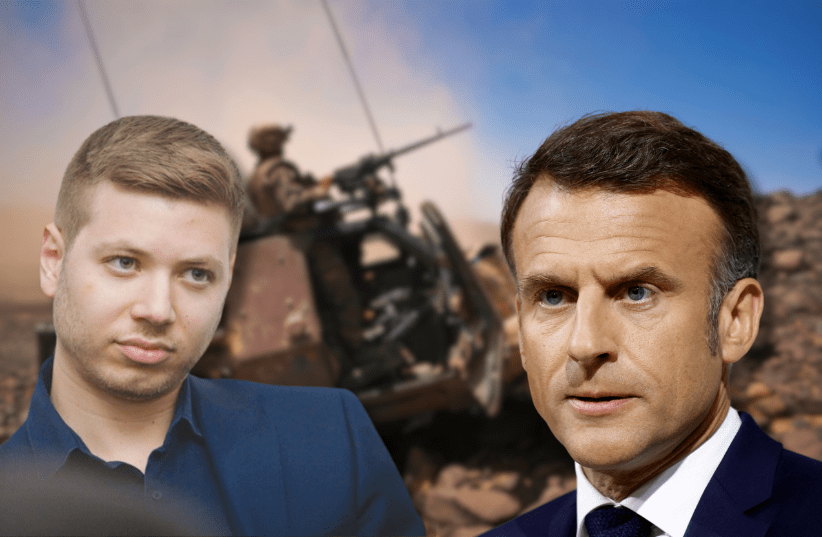
Yair’s comments weren’t limited to his opinion on Macron’s policy but reflected a broader frustration with international pressures on Israel regarding the Palestinian issue. For many in Israel’s political right, foreign support for a Palestinian state is viewed as interference, especially amid ongoing conflict and threats from groups like Hamas.
Yair’s post also underlined how deeply personal and emotional this issue is for many Israelis, particularly those who feel the world does not fully appreciate the existential threats the country faces.
Global Reactions and the Road Ahead
Macron’s statement drew mixed reactions globally. On one side, many European nations and organizations praised the French President’s initiative as a much-needed step in the long-stalled peace process. On the other, pro-Israel groups and figures criticized it for potentially rewarding violence and ignoring the complexities of Hamas’ role and the lack of unity within the Palestinian leadership.
Hamas, for its part, welcomed the move. A spokesperson for the group called Macron’s remarks “an important step that, if implemented, would constitute a positive shift in the international position towards the legitimate national rights of our Palestinian people.”
This endorsement, however, complicates matters for Macron, who specified that any recognition must come with clear opposition to Hamas. The fact that Hamas still welcomed the gesture could feed into criticism that the recognition might inadvertently embolden extremist elements.

The Israeli government has yet to officially respond to Macron’s interview, but with Yair Netanyahu’s outburst gaining significant media attention, it is clear that the sentiment within the Prime Minister’s inner circle is one of strong disapproval. Whether Benjamin Netanyahu himself will echo his son’s words or distance the official Israeli position from Yair Netanyahu’s personal rhetoric remains to be seen.
The broader question is whether Macron’s proposed recognition will mark a real turning point or merely become another symbolic gesture in a long history of failed diplomatic efforts.
Past attempts to unilaterally recognize Palestine have faced backlash, and any move by France will likely provoke diplomatic ripples across Europe, the Middle East, and even in the United States, where the debate over Israel-Palestine remains deeply divisive.
At the core of this latest controversy is the enduring impasse that has defined the Israeli-Palestinian conflict for decades. Despite repeated efforts at peace, both sides remain deeply entrenched in their positions.
Macron’s proposal seeks to break that deadlock, but it’s clear from Yair Netanyahu’s reaction and the broader political climate in Israel that such moves are likely to generate intense pushback.
In a region where emotions run high and history is never forgotten, a single social media post can ignite international debate. Yair Netanyahu’s “Screw you!” may have been written in the heat of the moment, but it speaks volumes about the deep rifts that still exist — not just between Israelis and Palestinians, but also between those trying to mediate peace from afar and those living with the consequences on the ground.