
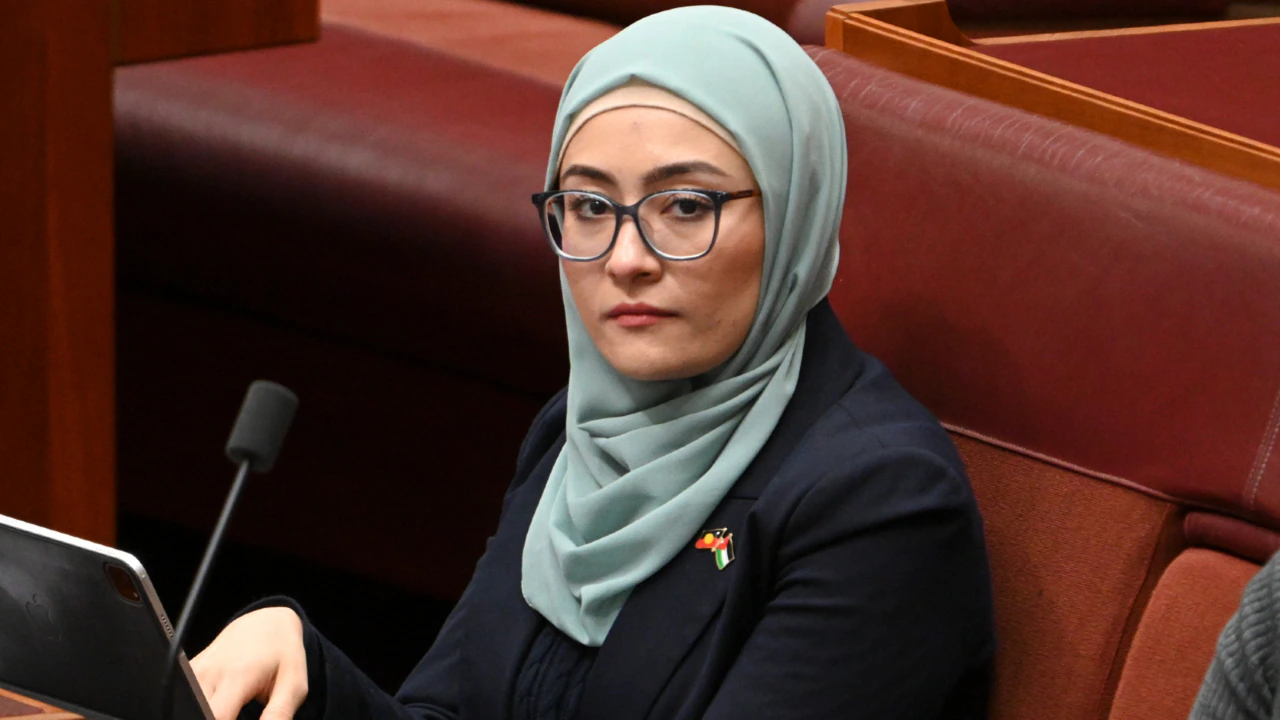
In a striking development that has reignited discussions about workplace culture in Australia’s Parliament House, Independent Senator Fatima Payman has lodged a formal complaint with the Parliamentary Workplace Support Service (PWSS) against a senior male colleague.
The complaint centers on alleged sexually suggestive and culturally insensitive remarks made at an official parliamentary function, including a comment urging her to “drink some wine and dance on the table.” Payman, the first hijab-wearing senator in Australian history and a Muslim who abstains from alcohol for religious reasons, described the remarks as deeply inappropriate and alienating.
This incident underscores ongoing concerns about misconduct, bullying, and alcohol-fueled behavior in Australia’s political sphere, issues that were starkly highlighted by a 2021 review following allegations by former political staffer Brittany Higgins.
The Alleged Incident and Senator Payman’s Response
Senator Fatima Payman, a 30-year-old independent senator from Western Australia, revealed the disturbing incident during an interview with the Australian Broadcasting Corporation’s (ABC) Triple J Hack program. She recounted attending a social function tied to official parliamentary business when an older male colleague, who she described as significantly intoxicated, made a series of inappropriate comments.
The most egregious of these was, “Let’s get some wine into you and see you dance on the table.” For Payman, who does not consume alcohol due to her Muslim faith, the remark was not only sexually suggestive but also culturally insensitive, as it disregarded her religious and personal boundaries.
Payman responded assertively at the time, telling the colleague, “Hey, I’m drawing a line, mate,” signaling her discomfort and establishing a clear boundary. She emphasized the importance of such directness, stating, “Being clear is being kind. You actually are helping somebody understand what your boundaries are by speaking up.”
Following the incident, she escalated the matter by filing a formal complaint through the PWSS, an independent body established to address workplace misconduct in Parliament House. Payman noted that the PWSS handled her complaint promptly and supportively, ensuring she felt “looked after and taken care of” throughout the process.
Read : Winery Dogs Could Be the Saviors of Disease-Threatened Global Wine Production
She also revealed that the PWSS had spoken to the accused colleague, and she received an undertaking that she would not have to work directly with him in parliamentary business. However, she noted that the colleague had not apologized, despite her encountering him again in Parliament House.
Read : Sipping Around the Globe: Seven Countries that Consume the Most Wine
While the exact timing of the incident remains undisclosed, Payman indicated it occurred in 2023, during her tenure as a Labor senator. The identity of the male colleague has not been publicly revealed, and Payman has chosen not to disclose further details about him. This incident has added to the growing scrutiny of parliamentary workplace culture, particularly in light of Payman’s status as a trailblazer.
Born in Afghanistan and arriving in Australia as a refugee, she made history in 2022 as the first hijab-wearing senator in the Australian parliament. Her election at the age of 27 also marked her as one of the youngest senators in the nation’s history, amplifying her visibility and the significance of her allegations.
A Persistent “Boys’ Club” Culture in Parliament
The allegations brought by Senator Payman are not an isolated case but part of a broader pattern of workplace misconduct within Australia’s Parliament House. In 2021, former political staffer Brittany Higgins alleged she was raped by a colleague in a parliamentary office, a revelation that sparked nationwide protests and prompted a comprehensive review of parliamentary workplace culture.
The review, conducted by Sex Discrimination Commissioner Kate Jenkins, painted a damning picture of an environment rife with heavy drinking, bullying, and sexual harassment. It described Parliament House as a “boys’ club” where inappropriate behavior, often fueled by alcohol, was normalized, and power imbalances exacerbated misconduct.
The establishment of the PWSS in response to the Higgins case was a direct attempt to address these systemic issues. According to its most recent annual report, published in October 2024, the PWSS managed 339 cases between 2023 and 2024. Of these, 30 cases involved serious allegations of rape, sexual assault, harassment, stalking, or intimidation, while 33 were related to bullying.
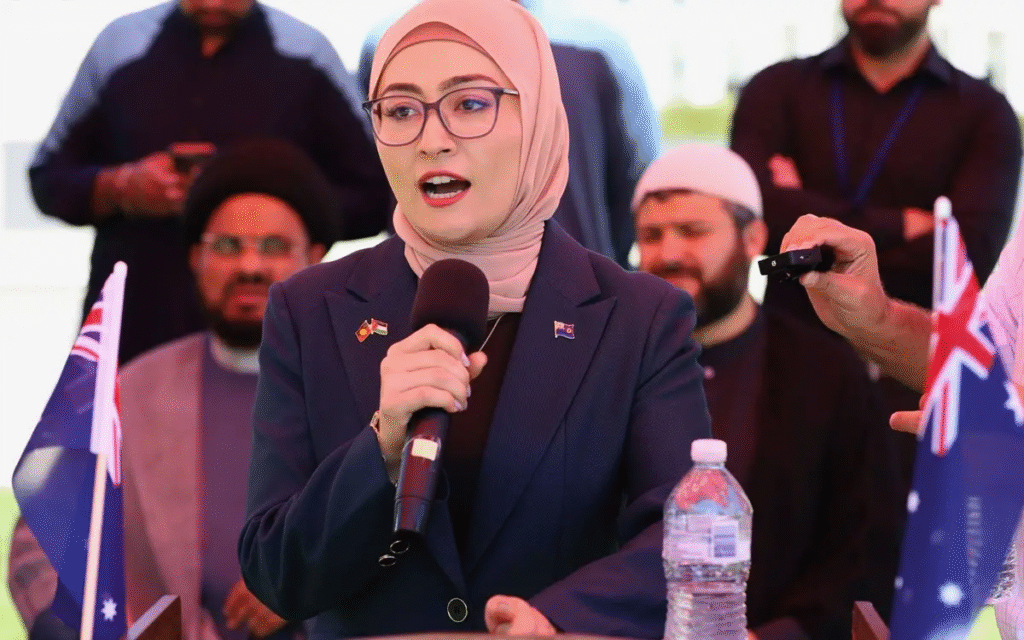
Approximately one in five cases dealt with issues tied to alcohol, drugs, mental health, or family and domestic violence, and one in four involved workplace conflicts. These statistics highlight the scale of the challenge, with only a small fraction of cases—17 in total—involving parliamentarians directly, underscoring that much of the misconduct involves staff hired to support political duties.
Payman’s complaint has reignited calls for cultural reform within Parliament House. In her interview, she described the environment as “very much like a boys’ club” that needs to be called out and changed. Her experience of feeling “singled out” due to her Muslim faith and cultural background adds a layer of racial and religious insensitivity to the allegations, raising questions about the inclusivity of the parliamentary workplace.
As Australia’s first hijab-wearing senator, Payman has been a vocal advocate for diversity and inclusion, and her allegations highlight the additional challenges faced by culturally diverse parliamentarians, particularly women, in navigating a predominantly white, male-dominated institution.
Broader Implications and Payman’s Political Journey
Senator Payman’s complaint comes at a time when she has already established herself as a prominent and sometimes controversial figure in Australian politics. Elected in 2022 as a Labor senator for Western Australia, she made headlines for her outspoken advocacy on issues such as Palestinian rights and workplace reforms.
In 2024, she parted ways with the Labor Party after accusing it of failing to adequately support Palestinians in the Gaza conflict, a move that led to her suspension from the party and her eventual resignation to sit as an independent. This decision positioned her as a key player on the Senate crossbench, where she has continued to push for human rights and cultural inclusivity.
Her complaint against her colleague is likely to amplify her advocacy for a safer and more respectful parliamentary workplace, particularly for women and minority groups. It also underscores the ongoing need for systemic change, as the issues identified in the 2021 Jenkins review persist.
The PWSS, while a step forward, is not without its limitations. Payman herself acknowledged that “PWSS isn’t perfect, but they’re doing their best,” suggesting that while progress has been made, more robust measures are needed to dismantle the entrenched culture of misconduct.
The incident also raises questions about accountability for parliamentarians. Unlike staff, who face clearer disciplinary pathways, elected officials operate in a more complex space where political dynamics and public perception play significant roles.
The fact that Payman’s accused colleague has not apologized and that his identity remains undisclosed highlights the challenges of addressing misconduct at the parliamentary level. It also fuels public demand for greater transparency and stricter consequences for inappropriate behavior, particularly when it involves culturally or religiously insensitive remarks.
Payman’s case is likely to have broader political ramifications as Australia approaches its next federal election. Her decision to launch her own political party, Australia’s Voice, in October 2024, signals her intent to continue shaping the political landscape.
The party aims to field candidates in states like New South Wales and Victoria, targeting voters disillusioned with the major parties, particularly in areas with significant Muslim populations. Her allegations of misconduct may bolster her appeal among constituents who value her commitment to calling out injustice, but they could also intensify scrutiny of her actions and motives, as seen in previous controversies, such as her comments about women’s rights in Iran earlier in 2025.
Senator Fatima Payman’s formal complaint against a male colleague for urging her to “drink some wine and dance on the table” has brought renewed attention to the persistent issues of sexual harassment, bullying, and cultural insensitivity in Australia’s Parliament House.
Her courageous decision to speak out, coupled with her swift action to file a complaint through the PWSS, underscores her commitment to challenging the “boys’ club” culture that continues to plague the parliamentary workplace. As Australia’s first hijab-wearing senator and a young Muslim woman of Afghan heritage, Payman’s experience highlights the unique challenges faced by diverse parliamentarians in an environment that has historically struggled with inclusivity.
The incident is a stark reminder of the findings of the 2021 Jenkins review, which exposed a culture of heavy drinking and misconduct in Parliament House. While the establishment of the PWSS marks progress, Payman’s allegations suggest that more work is needed to ensure a safe and respectful workplace for all.
Fatima Payman’s story is not just about one inappropriate remark but about the broader fight for systemic change in Australian politics. As she continues her political journey as an independent senator and leader of Australia’s Voice, Payman’s actions are likely to inspire further calls for accountability and reform, ensuring that the voices of women and minorities are not only heard but respected in the halls of power.