
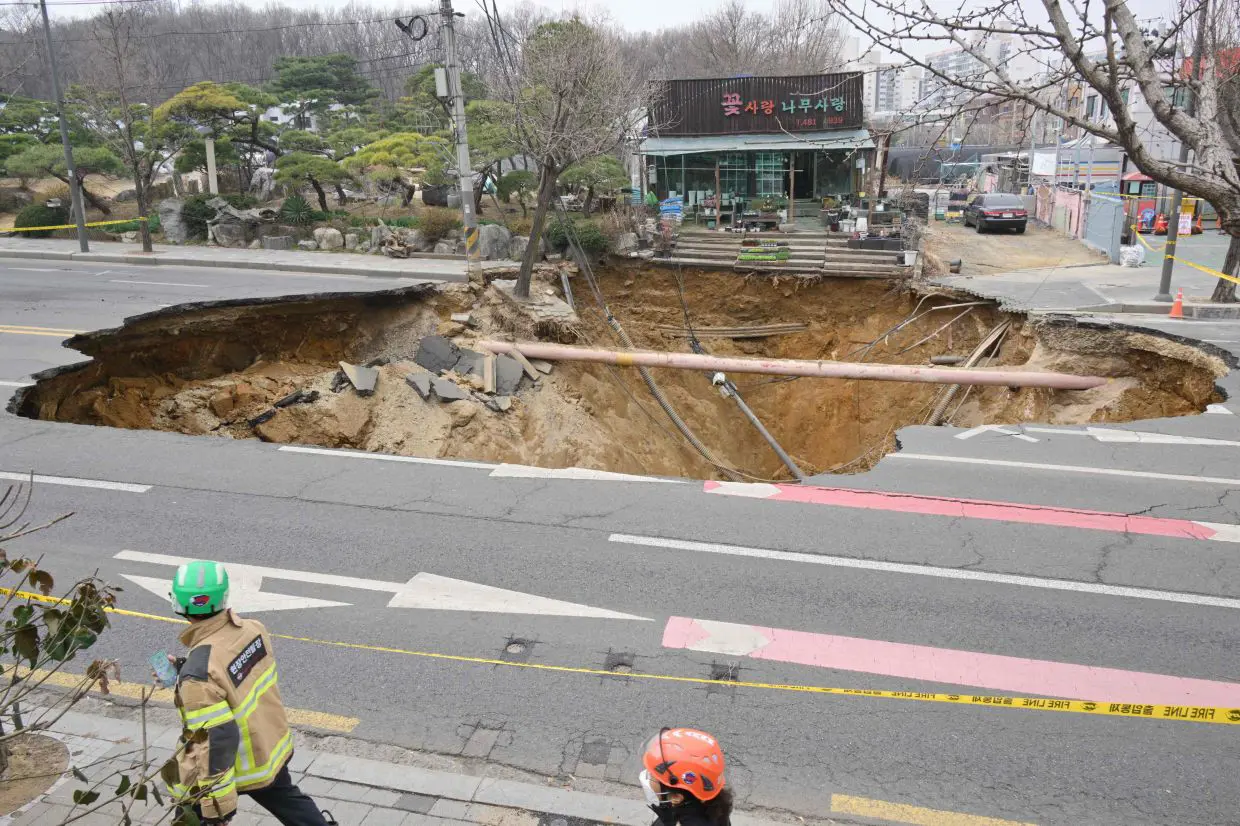
A tragic incident unfolded in South Korea, when a Seoul Motorcyclist fell into a massive sinkhole and was found dead after an 18-hour search. The sinkhole, which measured approximately 65 feet wide and 65 feet deep, suddenly opened up at an intersection in the Myeongil-dong neighborhood, swallowing the victim and causing injuries to another individual.
This disaster has raised concerns about infrastructure stability and the potential risks of sudden ground collapses in urban areas.
The Tragic Incident and Search Efforts
The accident occurred on Monday afternoon when the sinkhole unexpectedly formed beneath a busy intersection in eastern Seoul. The victim, a man in his 30s, was riding his motorcycle when he plunged into the deep chasm.
Dashcam footage from a nearby vehicle captured the terrifying moment, showing a car barely escaping the collapse before the motorcyclist fell in. A woman driving a van was also affected but sustained only minor injuries.
Rescue teams were immediately dispatched to the site to locate the missing motorcyclist. The complexity of the search operation was evident as first responders had to deal with water, debris, and unstable ground conditions.
Emergency officer Kim Chang Seob explained that it took nearly 18 hours to recover the victim due to the amount of sediment and water that needed to be removed. Excavators, shovels, and other equipment were used in the operation, with workers carefully navigating the dangerous terrain to ensure their safety while searching for the victim.
Read : Second Sinkhole Appears in Godstone Village of Surrey 2 Days After First Collapse
Before discovering the man’s body, rescuers found his motorcycle and cell phone buried beneath the rubble. He was later recovered wearing his helmet and motorcycle boots. The recovery efforts were broadcast on television, emphasizing the difficulty of the operation and the urgency of the situation.
The Cause of the Sinkhole and Public Concerns
Authorities have launched an investigation into the cause of the massive sinkhole, though no definitive conclusions have been reached yet. Sinkholes in urban areas can be triggered by a variety of factors, including underground water leaks, construction activities, natural erosion, or aging infrastructure.
Seoul has experienced several sinkhole incidents in the past, often linked to underground development projects or weakened soil conditions. The city’s rapid urbanization and extensive subway system have led to significant underground modifications, which can sometimes result in unexpected collapses.
A motorcyclist was killed after a massive sinkhole suddenly opened on a six-lane road in eastern Seoul.
— CGTN Europe (@CGTNEurope) March 26, 2025
Dash cam footage shows traffic moving normally—until the ground collapses beneath him.
The 20-meter-deep sinkhole took search teams 18 hours to recover his body.
An… pic.twitter.com/Rjvyqm57JQ
In this case, investigators will likely examine nearby construction sites, underground water pipes, and geological conditions to determine what caused such a catastrophic ground failure.
The incident has sparked concerns among Seoul residents about the safety of city streets and infrastructure. South Korea has invested heavily in urban development, but such disasters highlight the need for stricter monitoring and maintenance of roads and underground structures.
Many are now questioning whether more preventive measures should be implemented to detect weak ground areas before they lead to such deadly accidents.
Government Response and Future Preventive Measures
Following the tragedy, Seoul city officials have pledged to conduct thorough inspections of infrastructure across the city. Authorities plan to assess other intersections, bridges, and underground tunnels to ensure they remain structurally sound. The government is also expected to review construction regulations and safety protocols to prevent similar incidents in the future.
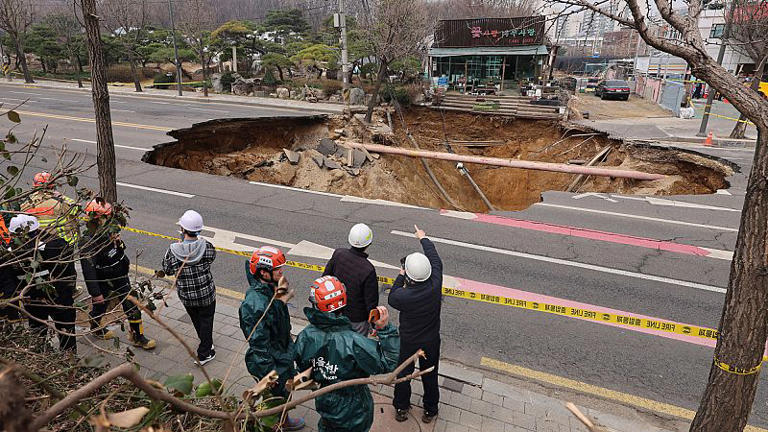
Sinkholes can often be detected early through regular geological surveys and monitoring of underground spaces. Advanced technology, such as ground-penetrating radar and subsurface imaging, can be utilized to identify weak soil areas before collapses occur.
Implementing stricter regulations on construction projects, ensuring proper water drainage systems, and reinforcing aging roads can also help mitigate sinkhole risks.
Public safety remains a top priority, and the Seoul Metropolitan Government is likely to face pressure to take immediate action. While this tragic event has claimed one life, it has also served as a wake-up call for officials to address the potential dangers lurking beneath the city’s roads.
Residents are demanding transparency regarding the findings of the investigation, along with assurances that preventive measures will be put in place to safeguard against future disasters.
The devastating loss of the motorcyclist and the alarming nature of the incident have left many shaken. As the city moves forward with its investigation and safety initiatives, it is crucial to learn from this event and strengthen urban infrastructure to prevent further tragedies.
The motorcyclist’s death serves as a somber reminder of the unpredictable hazards that can arise in fast-growing metropolitan areas, emphasizing the need for vigilance, preparedness, and proactive urban planning.