
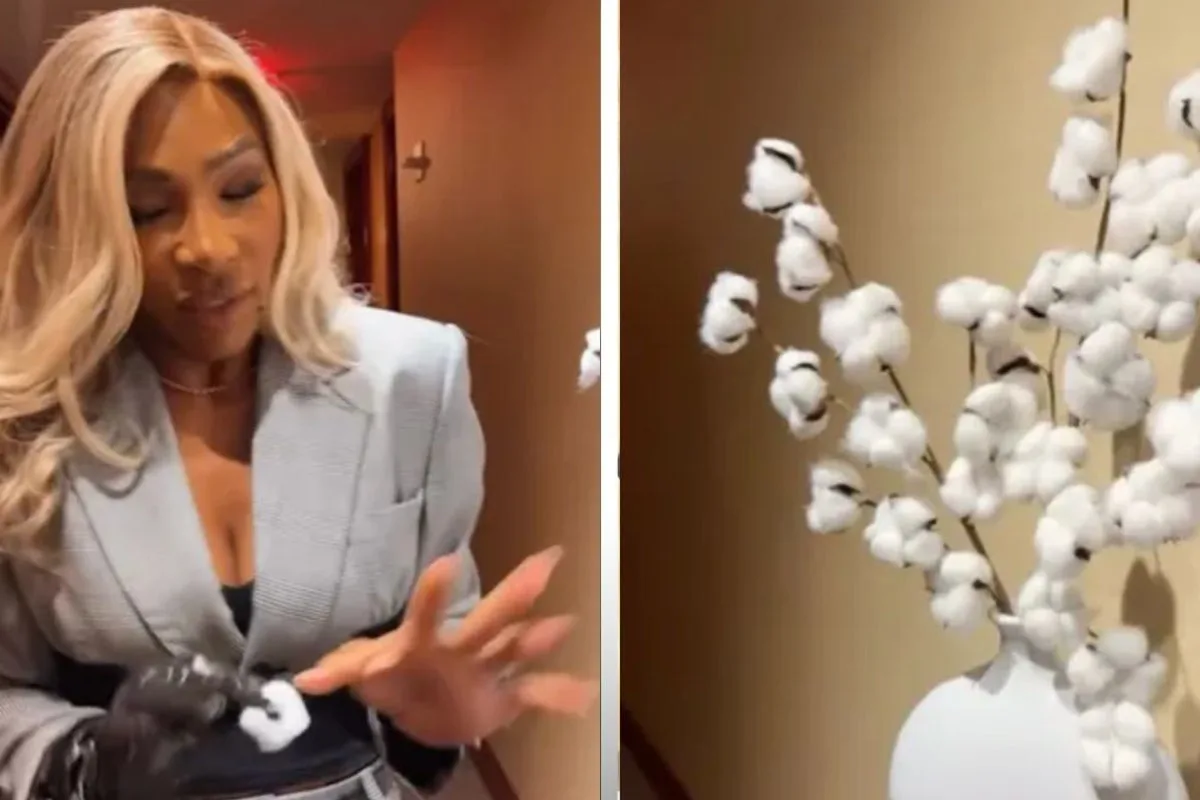
In a moment that has ignited widespread conversation, tennis legend Serena Williams voiced her discomfort over a cotton plant used as hallway decoration in a New York City hotel. The incident, shared via her Instagram Stories on September 25, 2025, highlights ongoing sensitivities around symbols tied to America’s painful history of slavery and racial injustice.
As a Black woman who has long navigated the intersections of sports, fame, and identity, Williams’ candid reaction underscores how everyday decor can evoke deep emotional responses. This isn’t just a celebrity anecdote—it’s a reminder of the cultural weight carried by seemingly innocuous items like cotton, which powered the transatlantic slave trade for centuries. Serena Williams, fresh from a high-profile event, turned a personal encounter into a public dialogue, prompting both support and debate across social media.
The Incident Unfolds in the Hotel Hallway
The episode began innocently enough during Serena Williams’ stay in Manhattan, where she was promoting her involvement in the SKIMS x Nike collaboration. On the evening of September 25, as she made her way to the elevator, Williams spotted the offending display: a vase filled with stems bearing fluffy white cotton bolls, placed casually on a side table in the corridor. The 43-year-old athlete, mother of two and global icon, paused to film the moment, her expression shifting from casual to visibly unsettled.
In the first Instagram Story clip, Serena Williams pans the camera toward the plant and addresses her 17 million followers directly: “Alright, everyone. How do we feel about cotton as decoration?” Her tone is light but probing, inviting collective reflection. She continues, “Personally, for me, it doesn’t feel great.” The video captures her walking past the display, the soft lighting of the upscale hotel hallway contrasting sharply with the stark symbolism of the cotton. It’s a brief, unscripted share—typical of Williams’ social media style, which blends vulnerability with empowerment.
Not content to leave it at a passing comment, Williams posted a follow-up Story moments later. In this one, she reaches out and plucks a single cotton boll from the stem, holding it up to the light. She rubs it gently against her manicured nail, her face contorting into a subtle shudder. “It feels like nail polish remover cotton,” she remarks, referencing the sterile, disposable pads used in everyday beauty routines. The gesture humanizes the moment; it’s not just about the plant’s appearance but its tactile reminder of something utilitarian and detached. Serena Williams doesn’t name the hotel, preserving a layer of discretion, but the opulent setting suggests a luxury property in the heart of New York—perhaps near the event venues in Midtown or SoHo.
This wasn’t a planned critique but a spontaneous reaction from someone whose life has been marked by trailblazing. Serena Williams, who retired from professional tennis in 2022 after 23 Grand Slam singles titles, has since pivoted to business ventures, including her stake in the Miami Dolphins and her role as an ambassador for brands like SKIMS. Her New York trip was tied to the launch of “Bodies at Work,” a SKIMS film featuring her in Nike apparel, hosted by Kim Kardashian on September 24 at the upscale Four Twenty Five venue.
Photos from the event show Serena Williams radiant in a sleek ensemble, mingling with Kardashian sisters Khloé and Kim, celebrating a partnership that merges athleticism and fashion. Yet, just a day later, this hotel hallway detour pulled her back to a more introspective space. The cotton plant, likely intended as a nod to rustic or farmhouse chic—a trend in interior design—landed differently in Williams’ eyes.
Serena Williams gets triggered by a cotton plant at her luxury hotel
— Amiri King (@AmiriKing) September 26, 2025
These people are so fu#%ing insufferable and performative
Acting triggered with a $250m net worth and a long blonde wig is wild
You crip-walked at the Super Bowl and your sister was killed by crips
Sit down pic.twitter.com/Ej1yDaDl6u
Cotton’s history in the United States is inseparable from the brutality of enslavement: from the 17th century onward, millions of Africans and their descendants were forced to harvest it under horrific conditions on Southern plantations. This labor fueled the nation’s economy, embedding the crop in narratives of exploitation and resistance. For Black Americans, encountering cotton in decorative contexts can trigger associations with that legacy, transforming a vase of stems into a vessel of unresolved trauma. Serena Williams’ response, though understated, echoes broader conversations about cultural sensitivity in hospitality and design.
Public Reactions: Support, Skepticism, and Broader Debate
Serena Williams’ videos spread like wildfire, amassing views and sparking a polarized online discourse by September 26. Supporters flooded her comments and reposts with empathy, viewing her words as a necessary call for mindfulness. “As a Black woman, I get it—some things just hit different,” one Instagram user wrote, sharing a story of similar unease at a wedding decorated with cotton wreaths. Another praised her poise: “Serena doesn’t have to explain herself; she’s lived it.”
These voices frame the incident as part of a larger pattern where microaggressions in elite spaces—hotels, events, boardrooms—perpetuate subtle exclusions. For many, Serena Williams’ platform amplifies what marginalized communities whisper about daily: the need for institutions to interrogate their choices through an equitable lens. On the flip side, detractors dismissed her reaction as overblown or performative. Social media, particularly X (formerly Twitter), became a battleground for sarcasm. “Wait until she finds out SKIMS uses cotton in some of their clothing,” quipped one user, highlighting the irony given Williams’ endorsement of the brand, which incorporates cotton blends in many items.
Another commented, “It kinda looks nice to me. Nobody told her to pick it!” Critics accused her of “race-baiting” or seeking attention, with remarks like, “Serena please stop being dumb. If it offends you so much, you better be sure not to wear cotton clothes.” Some even invoked historical detachment: “Gram wasn’t a slave. Neither was Serena. The cotton isn’t evil. The victimization is.” These responses reveal a generational and ideological divide, where one side sees hypersensitivity and the other, willful ignorance.

The debate extended beyond personal jabs to questions of intent versus impact. Was the hotel’s decor a tone-deaf oversight by designers chasing aesthetic trends, or an unconscious echo of colonial aesthetics? Interior experts chimed in on TikTok, noting cotton’s popularity in “Southern Gothic” or “boho” styles, often sourced from farms without regard to symbolism. One viral thread dissected how luxury brands like Ralph Lauren have long romanticized agrarian motifs, glossing over their racial undertones. Meanwhile, allies pointed to precedents: in 2018, a Mississippi restaurant faced backlash for cotton-stuffed centerpieces at a dinner honoring Black lawmakers, leading to swift apologies and redesigns.
Serena Williams herself has not elaborated further, allowing the conversation to unfold organically. Her history of advocacy—from speaking on pay equity in tennis to supporting Black-owned businesses—lends weight to her voice without needing elaboration. This incident mirrors past moments, like her 2018 US Open controversy or critiques of media portrayals, where her reactions fuel national reckonings. As one analyst noted in a reposted article, “Serena’s power lies in her authenticity; she doesn’t manufacture outrage but names it when it arrives.”
Historical Context and Implications for Cultural Sensitivity
To grasp the depth of Serena Williams’ discomfort, one must confront cotton’s indelible role in American history. Introduced to the colonies in the 1600s, cotton became “king” by the 19th century, with production soaring from 3,000 bales in 1790 to over 4 million by 1860—almost entirely through enslaved labor. Plantations in states like Mississippi and Alabama relied on the crop’s profitability, enforcing a system of chattel slavery that dehumanized millions.
The boll weevil infestation of the early 1900s and mechanization later shifted the industry, but the scars remain: sharecropping trapped Black families in debt peonage, and cotton’s imagery permeates cultural memory, from spirituals like “Pick a Bale of Cotton” to films depicting the antebellum South.

In contemporary settings, this history clashes with decor trends. Farm-to-table aesthetics, inspired by Pinterest boards and HGTV shows, often feature raw cotton as a symbol of natural simplicity. Yet, for descendants of those who picked it under duress, it’s a visceral trigger. Psychologists term this “racial trauma response,” where symbols evoke intergenerational pain. Serena Williams’ shudder—rubbing the boll like a swab—evokes not just texture but erasure: the sanitized version of a brutal past.
The implications ripple outward. Hotels, as public-facing luxury spaces, bear responsibility for inclusive design. Past scandals, like the 2020 backlash against a Houston boutique hotel’s cotton boll installations, led to policy shifts: sensitivity training for staff and diverse curation panels. Serena Williams’ post could prompt similar introspection in New York, a city that prides itself on progressivism yet grapples with gentrification and inequality. Broader society might reflect on commodifying history—whether in fashion (cotton tees from fast fashion) or events (cotton candy at festivals).
Ultimately, this moment reinforces Serena Williams’ role as a cultural barometer. At 43, she’s no longer just the athlete who dominated courts; she’s a matriarch shaping narratives on race, body positivity, and resilience. Her SKIMS work, for instance, champions inclusive sizing, countering industries that once sidelined her figure. By naming her unease, she invites empathy over erasure, urging a world where decor doesn’t demand disclaimers.