

A dream vacation turned into a nightmare for Michelle Wilson, a 52-year-old British mother of three, who alleges she was Sexually Assaulted While Parasailing in Tunisia by a parasailing operator. The traumatic incident, which occurred during a family holiday booked through EasyJet, has sparked outrage and raised serious concerns about the safety of tourists, particularly women, in popular holiday destinations.
Wilson’s harrowing experience, detailed in her interviews with media outlets, underscores the vulnerability of travelers in situations where they are physically constrained and isolated, such as during a parasailing ride. This blog delves into the details of the incident, the broader implications for tourist safety, and the ongoing investigations by authorities and EasyJet.
Sexually Assaulted While Parasailing in Tunisia
Michelle Wilson, a carer from Southport, Merseyside, had planned a relaxing family getaway with her 17-year-old daughter, her 16-year-old twin sons, and a friend of her daughter. The £6,000 (approximately $8,000) EasyJet package holiday was meant to be a memorable summer escape before her children returned to school. Among the activities planned was a tandem parasailing ride, an exhilarating experience that promised stunning views of the Tunisian coastline. However, what should have been a thrilling adventure turned into a terrifying ordeal.
Wilson had initially intended to parasail alongside a friend, but staff at the water sports center informed her that windy conditions required them to ride separately, each accompanied by an operator. Her friend went first and reported having a great time, noting a clear distance between herself and her operator. Wilson, observing from the beach, felt reassured by her friend’s positive experience. However, her own ride was starkly different.
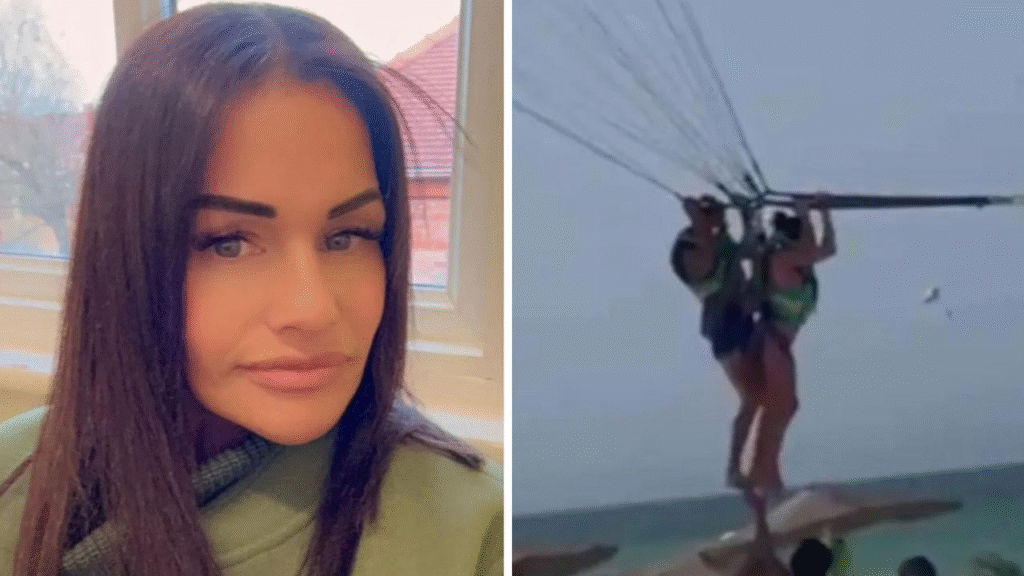
Strapped into a harness with a young male operator, estimated to be in his early twenties, Wilson alleges that the man began to behave inappropriately shortly after takeoff. “I could feel the back of my bikini bottoms being pulled, and he was pulling the strap,” she recounted. “He must have been tightening the harness to get me closer.”
She described how the operator’s legs were straddled around her, with one hand on the parachute and the other free, which he allegedly used to touch her leg and grope her. “He was groping me and moving back and forth into me and talking to me in Arabic,” Wilson recounted. “I felt him pressing against me. I kept arching my back. I felt violated and dirty and was scared.”’
The assault, occurring hundreds of feet in the air, left Wilson feeling helpless and trapped. Unable to escape or communicate effectively due to the operator speaking only Arabic, she endured the ordeal until the ride ended. Upon landing, Wilson was visibly shaken and burst into tears.
NEW: British mother claims she was s*xually assaulted mid air by a parasail operator while parasailing in Tunisia, Africa.
— Collin Rugg (@CollinRugg) August 6, 2025
52 year old Michelle Wilson says she was assaulted by the operator while strapped into the harness as they soared through the air.
“I could feel… pic.twitter.com/uDOs98wucf
She immediately reported the incident to the water sports center’s manager and then to the local police in Sousse, describing the experience as a sexual assault rather than the casual “banter” she might have expected in a foreign country. “As women, you expect a bit of banter from men in these countries, but this wasn’t banter, it was a sexual assault,” she emphasized.
The incident not only marred Wilson’s vacation but also left her unable to enjoy the remainder of her trip. The emotional toll of the assault, coupled with the fear and humiliation she experienced, cast a shadow over what was meant to be a joyful family holiday.
The Broader Issue of Tourist Safety
Wilson’s allegations highlight a critical issue: the safety of tourists, particularly women, in popular vacation destinations. Sousse, located approximately 86 miles south of Tunis, is a well-known coastal city famed for its sandy beaches, historical sites like the Great Mosque, and vibrant nightlife. It attracts thousands of tourists annually, many of whom participate in water sports and adventure activities like parasailing.
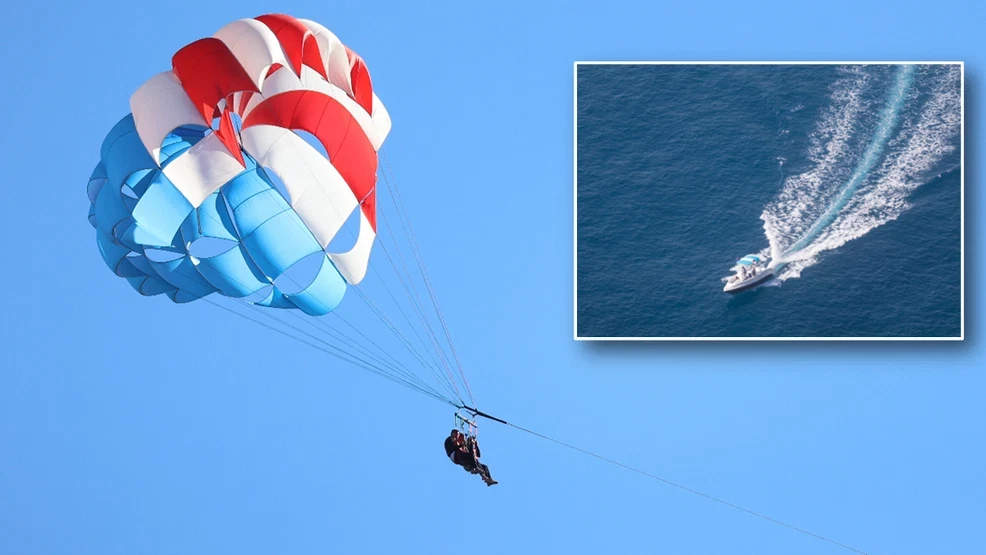
However, Wilson’s experience raises questions about the oversight and regulation of such activities, especially when they involve close physical proximity between operators and participants. The nature of parasailing, where participants are strapped into a harness and suspended in the air, inherently places them in a vulnerable position.
This vulnerability is compounded when operators are not properly vetted or trained to maintain professional boundaries. Wilson’s case suggests a lapse in safety protocols, as her friend’s uneventful ride with a different operator indicates that the issue may not be systemic but rather tied to individual behavior. Nonetheless, the incident underscores the need for stricter regulations, thorough background checks for operators, and clear guidelines to ensure participant safety.
Moreover, Wilson’s comment about expecting “a bit of banter” reflects a broader cultural challenge faced by female travelers. While she clarified that the operator’s actions went far beyond harmless flirtation, her statement points to the normalization of certain behaviors in tourist-heavy regions.
This normalization can create an environment where inappropriate conduct is dismissed or overlooked, leaving victims feeling dismissed or unsupported. Studies have shown that sexual violence during international travel is not uncommon, often perpetrated by strangers or recent acquaintances in tourist settings. This statistic highlights the underreported prevalence of such incidents and the need for greater awareness and prevention measures.
Wilson’s experience also draws attention to the challenges of seeking justice in a foreign country. Language barriers, cultural differences, and varying legal systems can complicate the process of reporting and addressing sexual assault. Wilson’s decision to immediately report the incident to local police and involve her insurance company and the UK Foreign Office demonstrates her determination to seek accountability. However, without formal confirmation from Tunisian authorities regarding the operator’s reported arrest, the resolution of the case remains uncertain.
Investigations and Accountability
Following the incident, multiple entities have become involved in addressing Wilson’s allegations. EasyJet, the travel company through which Wilson booked her holiday, issued a statement emphasizing that “the safety and wellbeing of our customers is a priority.” The company is actively supporting Wilson and collaborating with its local hotel partner to investigate the reports.
This response indicates a commitment to addressing the incident, but it also raises questions about the vetting process for third-party activity providers, such as the water sports center in Sousse. The UK Foreign Office and Wilson’s insurance company are also assisting with the case, providing support and guidance as she navigates the aftermath of the assault.
Wilson believes the operator has been arrested, though local authorities have not publicly confirmed this. The lack of official updates from Tunisian police highlights the challenges of transparency and communication in cross-border investigations. For Wilson, the involvement of British authorities offers a layer of reassurance, but the emotional and psychological impact of the incident persists.
The case has sparked significant outrage, particularly on social media, where users have expressed horror at the idea of an assault occurring mid-air, with no possibility of escape. The unique circumstances of the incident—being strapped to an operator hundreds of feet above the ground—amplify the sense of violation and helplessness. Public reaction has also fueled calls for greater accountability in the tourism industry, particularly for activities that place participants in vulnerable positions.
EasyJet’s investigation, in collaboration with its local partners, will likely focus on the water sports center’s practices, including how operators are selected, trained, and monitored. The outcome of this investigation could set a precedent for how travel companies address allegations of misconduct by third-party providers. Additionally, the case may prompt broader discussions about the responsibility of tour operators to ensure the safety of their clients, especially in high-risk activities like parasailing.
Wilson’s determination to pursue justice reflects her resolve not to let the incident be swept under the rug. “I’m not going to stop and will wait till the end to see if the suspect gets punished,” she stated. Her courage in speaking out about the assault, despite the emotional toll, serves as a powerful reminder of the importance of amplifying victims’ voices and holding perpetrators accountable.
Michelle Wilson’s alleged sexual assault while parasailing in Tunisia is a stark reminder of the vulnerabilities faced by tourists, particularly women, in unfamiliar environments. Her traumatic experience, marked by feelings of violation, fear, and helplessness, underscores the need for stronger safety measures in the tourism industry.
The ongoing investigations by EasyJet, British authorities, and Wilson’s insurance company highlight the complexity of addressing such incidents across borders, but they also offer hope for accountability and justice. The incident has cast a shadow over Wilson’s $8,000 family vacation, leaving her unable to enjoy what was meant to be a joyful getaway.
Her story serves as a call to action for the tourism industry to prioritize participant safety, implement rigorous oversight of activity providers, and foster an environment where inappropriate behavior is neither normalized nor tolerated. As Wilson awaits the outcome of the investigations, her bravery in sharing her experience sheds light on a critical issue and inspires others to advocate for change.