

A former employee of the DeKalb County Jail is facing a wide range of felony charges after authorities allege she improperly accessed a coworker’s work account and redirected the employee’s paycheck to a bank account that did not belong to the victim. The case, which is now moving through the legal system, has raised serious questions about internal access controls, employee trust, and the responsibilities held by public officers within county institutions.
According to law enforcement records and statements from officials, the alleged actions did not stem from a sophisticated cyberattack but instead involved misuse of legitimate workplace access, making the case particularly significant for public-sector accountability.
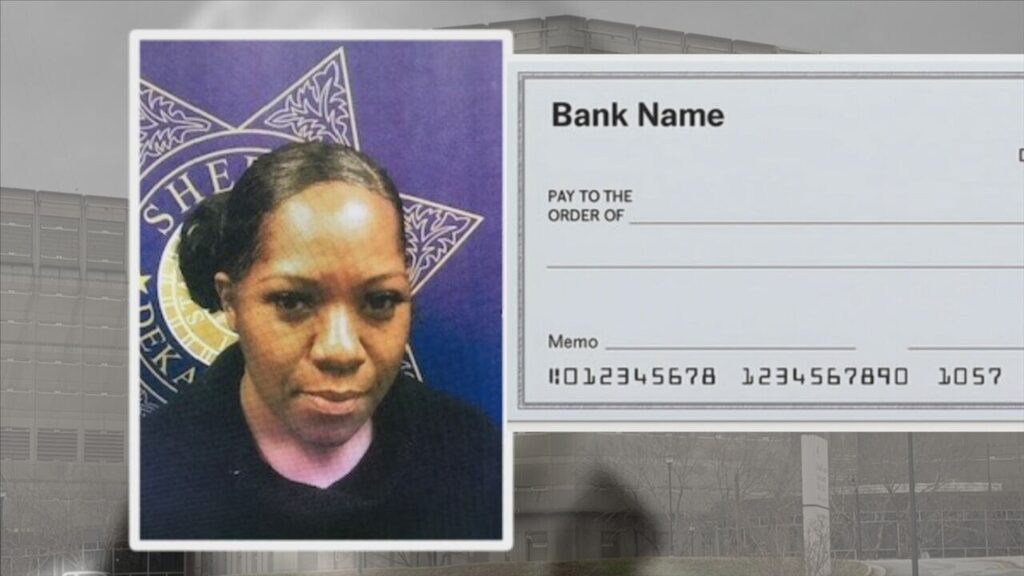
Shalanda Williams, who is no longer employed by the DeKalb County Sheriff’s Office, has been charged with felony theft by taking, identity fraud, multiple computer-related offenses, and violating her oath as a public officer. Investigators say the alleged incident involved the manual alteration of sensitive payroll information, resulting in a coworker’s paycheck being diverted without her knowledge. The incident underscores the vulnerabilities that can arise when internal safeguards fail or are exploited by those entrusted with system access.
Allegations and Timeline of the Investigation
According to a DeKalb County police incident report obtained by CBS News Atlanta, the investigation began on Oct. 24, after the affected employee contacted authorities to report suspicious changes to her payroll account. The victim told investigators that on Oct. 2, someone accessed her work account using her credentials and manually altered her banking and routing information. As a result, her paycheck was redirected to a different bank account that did not belong to her.
The victim stated that she discovered the issue when she noticed irregularities in her expected pay and promptly reported the matter to the DeKalb County Sheriff’s Office Human Resources Department. After reviewing the situation, the department determined that the changes were not the result of an external cyberattack. Instead, officials concluded that the modifications were made by someone who had direct access to the system and the authority to make such changes.
Human Resources officials advised the employee to file a police report, triggering a formal investigation by DeKalb County police. The report indicates that the alterations were made manually, suggesting deliberate action rather than automated or malicious software activity. Investigators focused on individuals who had access to internal systems capable of changing payroll information, eventually identifying Shalanda Williams as a suspect.
Read : Swiss Court Jails UK’s Richest Family Hinduja for Exploiting Indian Domestic Workers
The report does not specify how Williams allegedly obtained the victim’s credentials or whether shared systems or insufficient access restrictions played a role. Authorities have also not publicly detailed whether additional safeguards were bypassed or whether other employees may have had similar access. However, officials emphasized that the incident appeared to be isolated and internal rather than part of a broader breach.
Criminal Charges and Legal Implications
Shalanda Williams is charged with several serious offenses, reflecting both the financial nature of the alleged crime and the misuse of computer systems. The charges include felony theft by taking and identity fraud, which address the alleged redirection of funds and unauthorized use of another person’s identifying information. In addition, Williams faces multiple computer-related charges, including computer theft, computer invasion of privacy, computer forgery, and computer trespass.
These computer-related charges indicate that prosecutors believe the alleged conduct involved deliberate and unlawful manipulation of digital systems. Under Georgia law, such offenses can carry significant penalties, particularly when they involve sensitive personal information or government systems. The charge of violating her oath as a public officer further underscores the seriousness of the allegations, as it suggests that Shalanda Williams is accused not only of committing a crime but also of breaching the ethical and legal obligations associated with public service.

Jail records show that Shalanda Williams was arrested on Nov. 20 and later released on bond. The terms of her bond have not been publicly detailed, and no court dates have been announced in publicly available records as of the latest reporting. Williams has not publicly commented on the charges, and it is not known whether she has entered a plea.
The DeKalb County Sheriff’s Office confirmed through a spokesperson that Williams is no longer employed by the department. Officials declined to provide additional details about the circumstances of her departure or how she allegedly gained access to the victim’s account. As the case proceeds, prosecutors will likely need to establish not only that Williams accessed the account but also that she did so intentionally and for personal gain.
Broader Concerns About Internal Access and Accountability
The case has drawn attention to broader concerns about internal access controls within government agencies, particularly those that manage sensitive employee data such as payroll information. While much public focus on data security centers on external hacking threats, this incident highlights the risks posed by insiders who may already have authorized access to critical systems.
In this case, officials determined early on that the payroll changes were not part of a cyberattack. That conclusion suggests that existing security systems may be more effective at detecting external threats than internal misuse. Experts in public-sector cybersecurity often emphasize the importance of strict access controls, regular audits, and monitoring of employee activity to reduce the risk of insider abuse.
The alleged actions also raise questions about how employee credentials are protected and whether additional safeguards, such as multi-factor authentication or real-time alerts for payroll changes, could prevent similar incidents. While no information has been released indicating systemic weaknesses, the incident may prompt internal reviews or policy changes within the DeKalb County Sheriff’s Office and other county departments.
For public employees, the charge of violating an oath as a public officer carries particular weight. Public trust depends on the expectation that government workers will act with integrity, especially when handling confidential information. Allegations involving misuse of that trust can have lasting consequences beyond the immediate legal case, including reputational damage to institutions and increased scrutiny of internal procedures.
As the legal process continues, the case against Shalanda Williams will be evaluated in court, where evidence and testimony will determine the outcome. Regardless of the verdict, the incident serves as a reminder that internal controls and ethical accountability are as critical as defenses against external threats. The case underscores the importance of maintaining robust safeguards to protect employees and public institutions from financial and privacy violations originating from within.
Hey, gurucasinogratis is where it’s at if you want to compare casinos. I found a new one with their help that I really like. Check out gurucasinogratis, save yerself some time.
Heya i’m for the first time here. I found this board and I find It truly useful & it helped me out much. I hope to give something back and help others like you helped me.