

A police officer in New York has been placed on modified duty following the fatal shooting of a raccoon that authorities say aggressively charged toward people on a public boardwalk at Rockaway Beach. The incident, which occurred early Thursday morning, has drawn attention because it involved the discharge of a service weapon in a crowded recreational area and prompted an internal review by the police department’s Force Investigation Division.
While officials emphasize that no members of the public were injured, the episode raises broader questions about how law enforcement responds to unexpected wildlife encounters in urban environments and how such actions are assessed under departmental policies. According to a police department spokesperson, the shooting took place around 7:45 a.m. after a 911 call reported a vicious animal on the boardwalk.
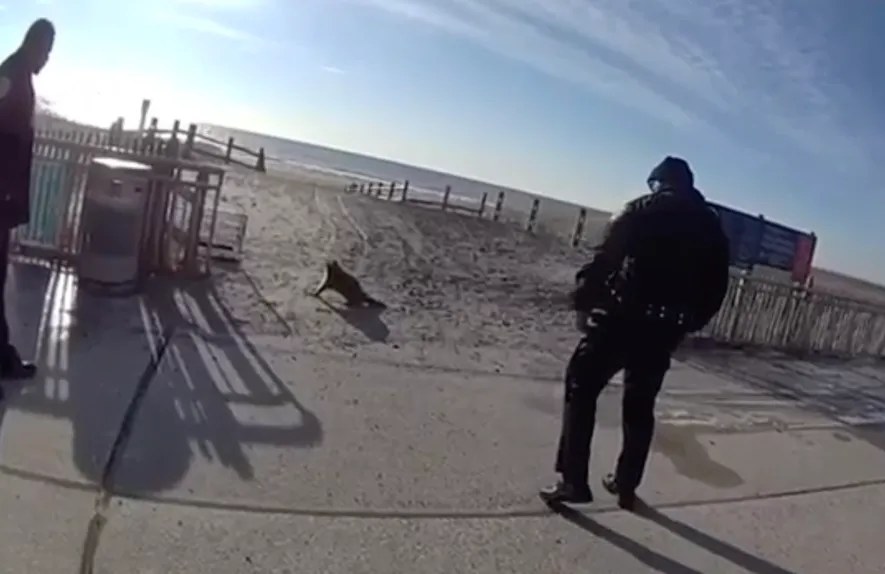
Officers responding to the call attempted to manage the situation by moving the raccoon away from pedestrians and toward what they believed would be a safer location. During that effort, the animal allegedly charged, leading one officer to fire his weapon. The raccoon was struck and killed, and authorities said there were no injuries to people in the vicinity. As with all incidents involving the discharge of a firearm by an officer, the matter is now under formal review.
Details of the Rockaway Beach Incident
The incident unfolded during the morning hours, a time when the Rockaway Beach boardwalk is frequented by joggers, dog walkers, and local residents beginning their day. Police say the call to 911 described a raccoon behaving aggressively, prompting officers to respond out of concern for public safety. Wildlife sightings are not uncommon in coastal areas of New York City, but reports of aggressive behavior heighten the perceived risk, particularly in areas with significant foot traffic.
Upon arrival, officers reportedly attempted to usher the raccoon away from the boardwalk rather than immediately resorting to lethal force. This approach suggests an initial effort to de-escalate the situation and reduce the likelihood of harm to both people and the animal. However, police say the situation changed abruptly when the raccoon charged toward people. At that point, one officer discharged his firearm, fatally striking the animal.
Read : 20-Year-Old Woman Gets Addicted to Drinking Petrol: “It Cures the Depression”
The officer involved has not been publicly identified, a standard practice while investigations are ongoing. No information has been released regarding how many shots were fired or the precise distance between the officer and the animal at the time of the shooting. Officials have also not confirmed whether the raccoon will be tested for rabies, though such testing is often considered when animals display unusual aggression, particularly in urban settings.
Modified Duty and the Investigation Process
Following the shooting, the officer was placed on modified duty while the incident is reviewed. Modified duty typically means the officer is temporarily reassigned to non-patrol or administrative responsibilities and does not carry a firearm during that period. Police departments often take this step as a precautionary measure after any discharge of a service weapon, regardless of whether a person was injured.
The New York Police Department’s Force Investigation Division is leading the review. This division is tasked with examining incidents in which officers use force, especially when firearms are involved, to determine whether actions complied with department policy and training. Investigators generally review body-worn camera footage if available, radio transmissions, witness statements, and physical evidence from the scene.
The review process does not automatically imply wrongdoing. Instead, it serves as an internal accountability mechanism designed to ensure transparency and adherence to established standards. Depending on the findings, the department could conclude that the officer acted appropriately under the circumstances, recommend additional training, or, in rare cases, pursue disciplinary action. The outcome of such reviews can take weeks or months, depending on the complexity of the case and the availability of evidence.
Public Safety, Wildlife Encounters, and Broader Implications
The Rockaway Beach shooting highlights the challenges police face when dealing with wildlife in densely populated urban areas. Raccoons, while common in many parts of New York City, can pose risks if they are sick, injured, or habituated to human environments. Aggressive behavior in raccoons is often associated with illness, including rabies, though not all aggressive animals are infected.
Read : What Is Chagas Disease Caused by Kissing Bugs That Is Spreading in the US?
Urban wildlife management typically involves coordination between law enforcement, animal control agencies, and public health officials. In many situations, animal control specialists are better equipped to handle wildlife encounters using specialized tools and training. However, police officers are often the first responders to 911 calls involving immediate threats, particularly when the animal is in a public space with potential for rapid escalation.
The incident also raises questions about the appropriate use of force continuum when the threat is an animal rather than a person. Police training primarily focuses on human interactions, and while officers receive some instruction on dealing with animals, encounters like this can present split-second decisions with limited options. The presence of bystanders, the unpredictability of an aggressive animal, and concerns about disease transmission all factor into those decisions.
Public reaction to the shooting has been mixed, reflecting broader debates about policing, animal welfare, and safety. Some community members emphasize the need to protect people in public spaces, while others question whether non-lethal alternatives could have been used. The department’s investigation is expected to address these issues by examining whether established protocols were followed and whether alternative responses were feasible under the circumstances.
As urban areas continue to intersect with wildlife habitats, incidents like the one at Rockaway Beach are likely to remain a point of discussion for city officials, law enforcement agencies, and residents alike. The outcome of the review may influence future training or policies related to wildlife encounters, with the goal of balancing public safety, officer safety, and humane treatment of animals.
Its like you read my mind You appear to know so much about this like you wrote the book in it or something I think that you can do with a few pics to drive the message home a little bit but other than that this is fantastic blog A great read Ill certainly be back