
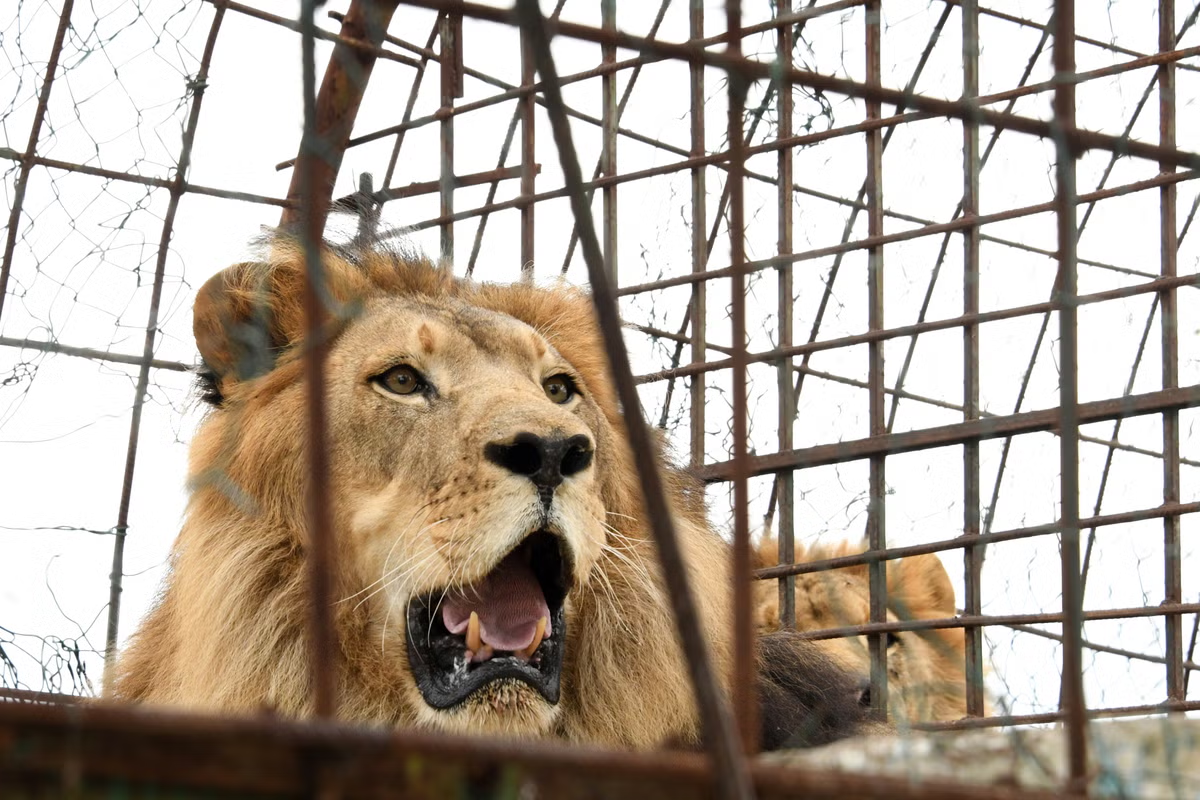
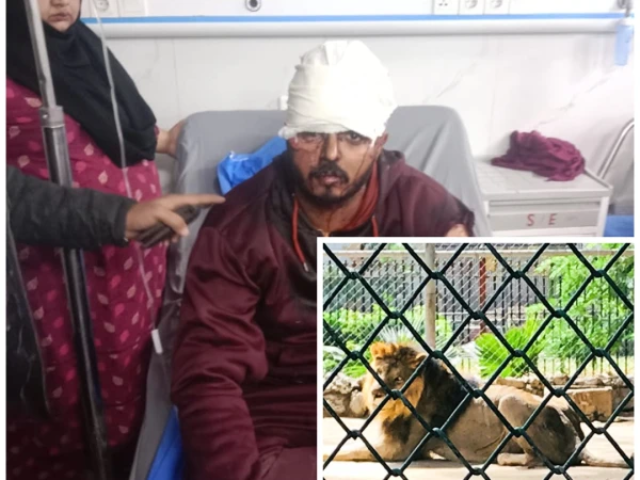
In an alarming incident that has captured widespread attention, a young Pakistani man named Muhammad Azeem was left severely injured after a lion mauled him while he was Shooting TikTok Video with Caged Lion.
This unfortunate event, which took place in the bustling city of Lahore, Punjab, sheds light on several critical issues including animal welfare, social media influence, and the legal loopholes surrounding wildlife ownership in Pakistan.
The Incident: Shooting TikTok Video with Caged Lion
Muhammad Azeem, in his late 20s, made a grave decision to enter a lion’s cage at a breeding farm in Lahore’s densely populated Sabzazar area without the owner’s consent. His intention was to create content for TikTok, a platform known for its short, engaging videos that often go viral.
As Azeem approached the lion with his smartphone, hoping to capture a moment that would thrust him into social media stardom, the lion, reacting instinctively to an intruder in its space, attacked.
Read : UK Extracted $64.82 Trillion from India During Colonial Era: Oxfam Report
Azeem suffered severe injuries to his head, face, and arms, prompting an immediate rescue by the farm owner who rushed him to Jinnah Hospital where he was reported to be in critical condition.
This incident not only highlights the lengths to which individuals might go for social media recognition but also brings to the forefront the inherent dangers of interacting with wild animals, especially in environments not suited for such interactions. T
he allure of quick fame can blind individuals to the very real risks involved, turning a moment of perceived entertainment into a life-threatening scenario.
Legal and Ethical Implications
The aftermath of this harrowing event has sparked a significant response from local authorities and animal rights activists. The Punjab Wildlife Department was quick to initiate legal proceedings against the farm owner, indicating a potential cancellation of the breeding farm’s license.
This response comes in the wake of recent amendments to the Wildlife Act 1974, which aim to tighten regulations on keeping big cats like lions, tigers, and cheetahs. These amendments include strict prohibitions on filming with these animals for social media, emphasizing the need for safety and ethical treatment of wildlife.
Moreover, the incident has reignited debates about the ethics of keeping wild animals as pets or in private zoos. In Pakistan, there’s a cultural phenomenon where wealthy individuals often house exotic animals to signify status or for entertainment, often without adequate facilities or knowledge of animal behavior.
This practice, which lacks significant legal scrutiny until recently, has led to numerous incidents where animals escape or attack, endangering human lives and the welfare of the animals themselves.
The case of Muhammad Azeem is a stark reminder of why laws must not only be written but enforced. The lack of regulation and oversight has allowed a culture where human safety and animal well-being are secondary to social media trends or personal vanity.
The legal action against the farm owner could set a precedent, pushing for more stringent checks, better education on animal handling, and perhaps, a cultural shift in how Pakistan views its interaction with wildlife.
Social Media’s Role and Responsibility
The rise of platforms like TikTok has undeniably transformed how content is created and consumed, emphasizing brevity and immediacy over depth and safety. This incident underscores a darker side of social media’s influence, where the pursuit of likes, shares, and followers can lead to reckless behavior.
Social media platforms have a responsibility to moderate content that encourages dangerous activities. However, the onus also falls on creators to exercise judgment. The desire to go viral should not come at the cost of personal safety or the ethical treatment of animals.
Education on digital citizenship needs to extend beyond privacy and cyberbullying to include the implications of our actions in the digital space, especially when they involve living beings.

Furthermore, this incident might prompt a broader discussion on how social media can be used as a tool for positive change. Instead of glorifying risky behaviors, users and platforms could champion content that educates about wildlife conservation, animal rights, and the dangers of human-wildlife interaction.
Public figures, influencers, and educators could leverage these platforms to disseminate knowledge, thereby fostering a culture of respect for nature rather than one of exploitation for personal gain.
while Muhammad Azeem’s ordeal is a tragic reminder of the perils of social media fame-chasing, it also offers a moment for reflection and action. Legal reforms, public education, and responsible use of social media platforms are essential to prevent such incidents in the future.
As we move forward, it’s crucial that society values human life and animal welfare over the ephemeral thrill of digital recognition. This incident should not only be a lesson in personal responsibility but also a catalyst for systemic change in how we interact with the natural world, both in real life and through the screens that connect us.