
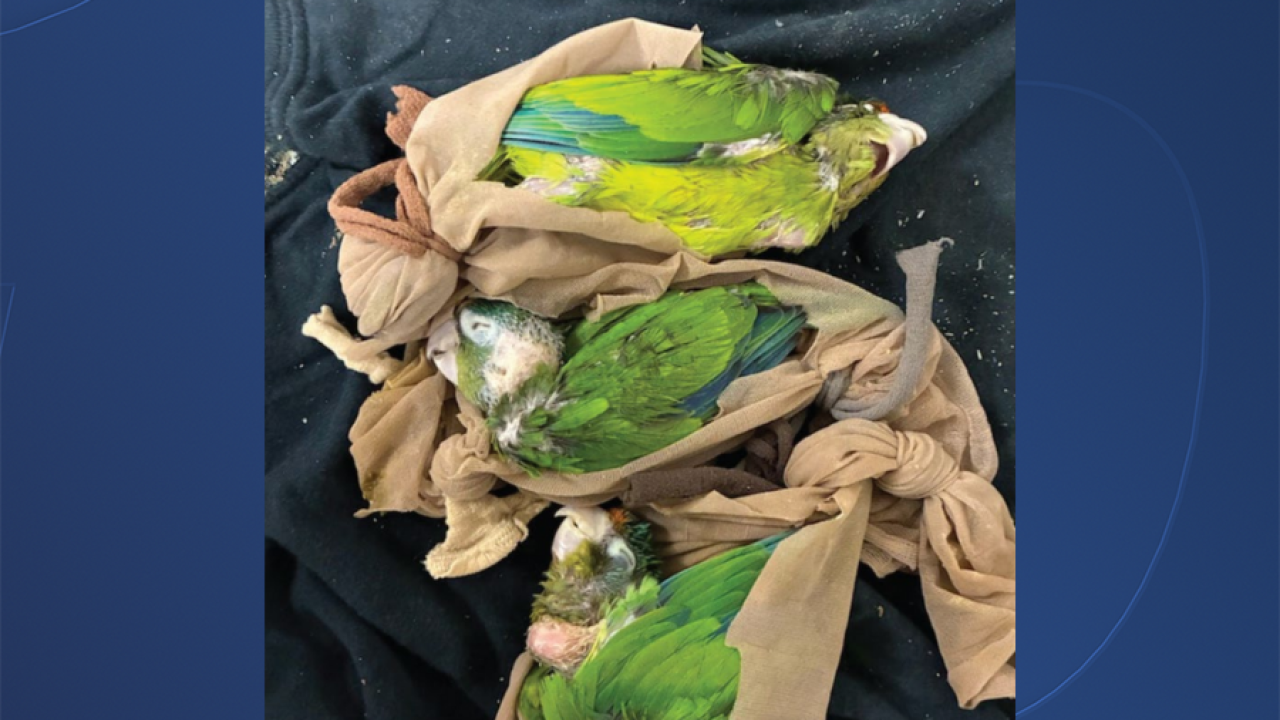
A strange and unsettling incident recently unfolded at the Otay Mesa Port of Entry in California, where a 51-year-old man was caught attempting to smuggle parrots into the United States in one of the most unusual ways imaginable.
According to U.S. Customs and Border Protection (CBP), the man tried to hide six live Parrots Found Stuffed Into His Boots while crossing from Mexico into California. The case has raised alarm not only for its shocking nature but also for the health risks posed by smuggling live animals across international borders.
The incident occurred on April 30 as the suspect sought legal entry into California. During routine inspection procedures, CBP officers became suspicious after noticing what they described as “unusual clothing bulges” around the man’s ankles.
Upon asking him to exit his vehicle, the officers examined him more closely and were stunned to find live birds carefully crammed inside his boots. While the parrots were alive, they were clearly in distress, and the conditions were entirely unsafe for transporting any animal.
A Shocking Discovery During Border Inspection
It didn’t end there. Once the man was detained for further questioning, CBP officers decided to search his vehicle thoroughly. Their instincts proved correct—an additional six birds were discovered hidden inside the vehicle, two of which had already died.
The remaining four were found alive but were clearly under severe stress. This brought the total number of smuggled birds to twelve, making it one of the more concerning attempts of wildlife smuggling encountered in recent months.
The incident immediately drew attention from multiple agencies. CBP officials underscored the health dangers associated with smuggling birds across borders. Not only do such actions endanger the lives of the Parrots involved, but they also pose significant biosecurity threats to agriculture and wildlife in the United States.
Birds can carry a wide array of diseases, including avian influenza (bird flu), Newcastle disease, and psittacosis, any of which could have serious consequences if introduced into native bird populations or livestock sectors.
Read : Birds by Joe 2 Owner Shot in Face with Crossbow by Regular Customer
Sidney Aki, Director of Field Operations for CBP in San Diego, addressed the issue publicly, emphasizing the gravity of the offense. “The smuggling of birds is extremely dangerous,” Aki said. “Birds can also be hosts for a variety of diseases that can threaten native wildlife and U.S. agricultural industries, potentially causing widespread economic consequences.”
Read : The Top 10 Birds with the Smallest Populations in the World: A Critical Conservation Call
His statement reflects growing concerns among officials regarding the illegal trafficking of exotic animals, a practice that not only violates federal law but also severely undermines global conservation efforts.
Legal and Ethical Concerns Around Wildlife Smuggling
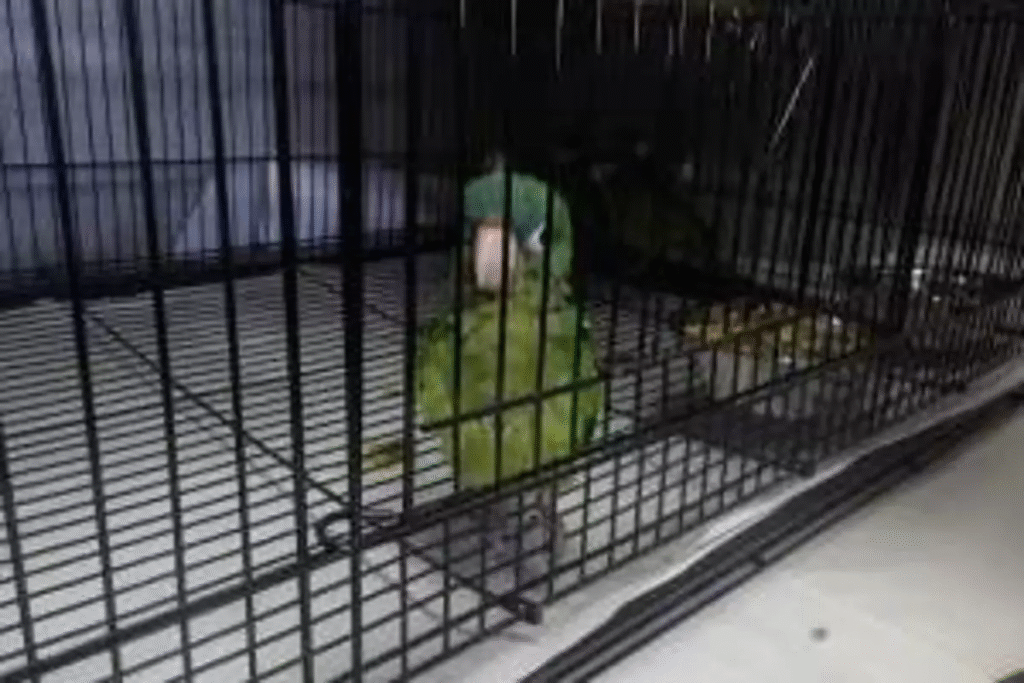
The man was taken into custody and could face multiple charges, including violations of the Lacey Act, which prohibits the illegal trade of wildlife, and other federal statutes related to the importation of animals. The surviving birds were immediately placed under quarantine by the U.S. Department of Agriculture’s Veterinary Services division.
This quarantine is essential to ensure that the birds do not carry diseases that could potentially spread to humans or native animals. The ethics surrounding the illegal wildlife trade are deeply troubling. Smugglers often treat animals as mere commodities, ignoring the cruelty and harm inflicted upon them in the process.
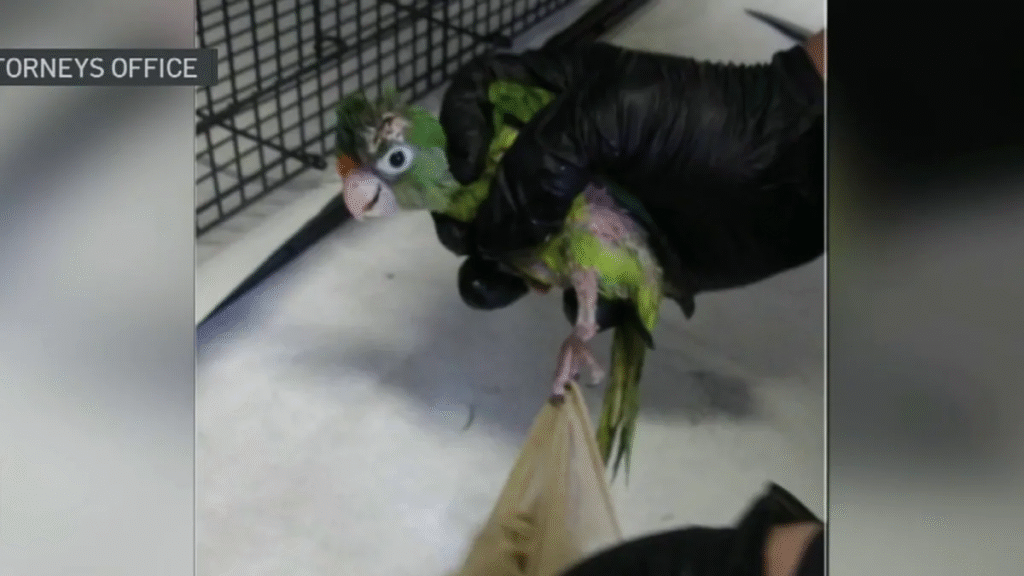
Stuffing parrots into tight spaces like boots, where they cannot breathe properly or move, causes extreme trauma and often leads to death. Many of these animals never survive the journey, and those that do are typically in poor health, both physically and mentally.
This case also highlights how lucrative the illegal pet trade has become. Exotic birds like parrots are often sold at high prices on the black market, particularly in regions where they are not native and are considered status symbols.
Parrots, especially those with bright plumage and the ability to mimic human speech, are in high demand, but the cost of obtaining them illegally is too often paid in animal suffering and biodiversity loss.
A Pattern of Wildlife Smuggling at U.S. Borders
What makes this case even more concerning is that it is not an isolated event. Earlier this month, another individual was caught trying to bring 16 parakeets and three chickens into the United States at the San Ysidro Port of Entry, not far from Otay Mesa. In that case, the animals were hidden under a blanket in two cages and were only discovered when officers noticed the blanket moving.
These back-to-back incidents reveal a disturbing trend—smuggling animals across the U.S.-Mexico border is becoming increasingly common. Whether for profit or for personal possession, these illegal attempts show a blatant disregard for animal welfare and public safety. They also demonstrate the challenges CBP and other agencies face in curbing the flow of illegal wildlife trade through U.S. borders.
CBP has enhanced its training and technology to better detect these activities. Officers now use a combination of X-ray scanners, trained canine units, and manual inspections to catch smugglers who go to great lengths to hide their illicit cargo. Still, the creative lengths to which some individuals go—like concealing live parrots in footwear—continue to surprise even the most seasoned border agents.
Authorities say it is crucial for the public to understand the far-reaching implications of wildlife smuggling. It’s not just about breaking the law; it’s about introducing diseases, undermining conservation efforts, and inflicting suffering on sentient beings. The risk is not just to the animals, but to ecosystems and economies that can be devastated by invasive species and zoonotic diseases.
Efforts to combat wildlife smuggling require international cooperation, public awareness, and stricter penalties. Enforcement agencies are often hampered by limited resources and the difficulty of tracking these trades, which are often part of larger criminal networks. Governments and organizations are therefore calling for stronger cross-border collaboration and education campaigns to help reduce demand for illegally obtained animals.
In the meantime, the confiscated parrots will remain under quarantine while authorities determine their health status and origins. If they are healthy, some may be sent to sanctuaries or rehabilitation centers. Unfortunately, the outcome for many smuggled animals is grim—even if they survive the journey, they may never recover from the trauma they’ve endured.
This case serves as a grim reminder of the often-overlooked issue of animal trafficking. It shows just how desperate and cruel smuggling tactics can be, and why continued vigilance is needed at all ports of entry. It’s not just about protecting borders; it’s about protecting life in all its forms—from the smallest parrot in a boot to the broader ecological systems at risk.