
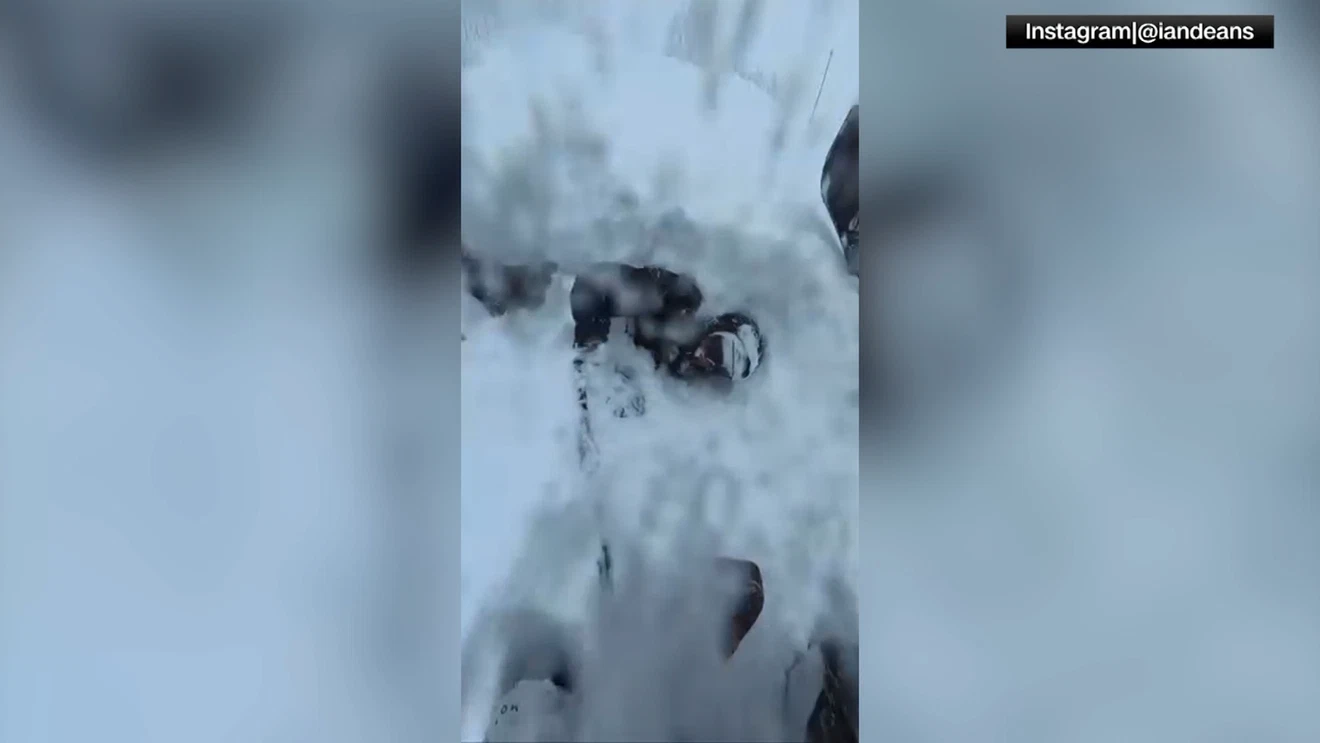
An ordinary day on the slopes turned into a life-threatening ordeal for experienced skier Tony Christensen, who unexpectedly plunged eight feet into a hidden void after the snow beneath him collapsed. The incident, which occurred at White Pass, underscores the unpredictable dangers that can arise even in controlled, in-bounds skiing environments. What began as a routine traverse between runs quickly escalated into a tense survival situation, highlighting both the risks posed by unstable snowpack conditions and the importance of preparedness in winter sports.
Christensen had been skiing alongside his son-in-law, following visible tracks left by other skiers. The terrain appeared stable, and there were no immediate warning signs of danger. However, without any indication, the snow beneath him suddenly gave way, sending him falling backward into a dark, narrow hole. The unexpected collapse left him trapped in a confined space, surrounded by loose snow and exposed to the chilling presence of running water from a nearby creek. The incident serves as a stark reminder that even well-traveled paths can conceal hidden hazards, particularly during periods of fluctuating weather and inconsistent snowpack formation.
A Sudden Collapse in Familiar Terrain
The moment the snow gave way was abrupt and disorienting. Tony Christensen described how he had been moving across the slope when the surface beneath him simply collapsed, offering no time to react or brace himself. The fall was not only physically jarring but also psychologically unsettling, as he found himself suddenly engulfed in darkness with limited visibility and mobility. The hole he fell into was approximately eight feet deep, creating a confined environment where any additional snow movement could have worsened the situation.
Despite being an experienced skier, Christensen was confronted with a scenario that few anticipate when skiing within designated resort boundaries. The presence of a concealed void beneath the snow points to underlying environmental factors, such as weak layers in the snowpack or gaps formed around natural features like creeks and fallen logs. These hidden pockets can remain undetected until pressure from above causes them to collapse, creating dangerous traps for unsuspecting skiers.
As he landed inside the hole, Christensen quickly became aware of the sound of running water, which soon began to soak his clothing. The combination of cold water and limited space increased the urgency of the situation, as prolonged exposure could have led to hypothermia. The confined environment also posed the risk of further collapse, which could have buried him deeper or restricted his ability to breathe. In such conditions, maintaining composure and acting quickly becomes critical for survival.
Quick Thinking and Survival Techniques
Faced with a potentially life-threatening situation, Christensen relied on a survival technique he had previously taught to his family. Recognizing the risk of additional snow collapsing into the hole, he instinctively positioned his arms in front of his face to create an air pocket. This simple yet effective measure can be crucial in preventing suffocation in snow-related accidents, where compacted snow can quickly limit airflow.
His ability to recall and apply this technique under pressure played a significant role in stabilizing his condition while awaiting rescue. By creating space around his face, he ensured that he could continue breathing even if more snow shifted into the hole. Additionally, he used a nearby log to brace himself, preventing further sliding into the water below. These actions demonstrated not only presence of mind but also the value of prior knowledge and preparation in emergency situations.
Read : Ian Deans Rescues Skier Trapped Upside Down in Deep Snow at Summit at Snoqualmie
Meanwhile, his son-in-law, who had been skiing nearby, was unable to assist directly due to the unstable conditions. Attempting a rescue without proper support could have triggered additional collapses, potentially endangering both individuals. This highlights a critical aspect of backcountry and even in-bounds safety: sometimes the safest course of action is to avoid immediate intervention and instead seek trained assistance.
Read : Streets of Mexico City Covered in Ice Amid Heatwave
Fortunately, help came from an unexpected source. Skiers riding a chairlift above the area noticed the situation and began calling out to determine if assistance was needed. Their awareness and willingness to respond played a crucial role in initiating the rescue process. Once alerted, ski patrol teams were dispatched to the scene, arriving within approximately 20 minutes.
Rescue Efforts and Changing Snow Conditions
The arrival of ski patrol marked a turning point in the incident. Equipped with the necessary tools and training, the rescue team was able to safely extract Christensen from the hole without causing further instability. Their response demonstrated the importance of having trained professionals available in ski areas, capable of handling emergencies that may arise even in monitored environments.
Christensen’s experience also sheds light on broader environmental conditions affecting mountain regions. Recent weather patterns have contributed to rapid changes in snowpack stability, with significant fluctuations observed over short periods. Data indicates that snow levels in nearby areas have decreased noticeably within just a couple of days, suggesting that the underlying structure of the snowpack may be weak and inconsistent.
Such conditions can create hidden voids and weak layers beneath the surface, increasing the likelihood of collapses similar to the one Christensen experienced. Heavy snowfall followed by temperature changes can prevent the snow from forming a solid, cohesive base, leaving gaps around natural features like rocks, trees, and streams. These gaps can remain concealed beneath fresh snow, posing risks to skiers who may unknowingly traverse over them.
The incident highlights the need for heightened awareness among skiers, particularly during periods of rapidly changing weather. Even within resort boundaries, where terrain is generally managed and monitored, natural factors can still introduce unpredictable hazards. Skiers are encouraged to remain cautious, stay informed about current conditions, and be prepared for unexpected situations.
Christensen’s ordeal ultimately ended without serious injury, but it serves as a powerful reminder of the importance of vigilance, preparedness, and quick thinking. His experience underscores that while skiing offers excitement and adventure, it also demands respect for the environment and an understanding of the risks involved.