
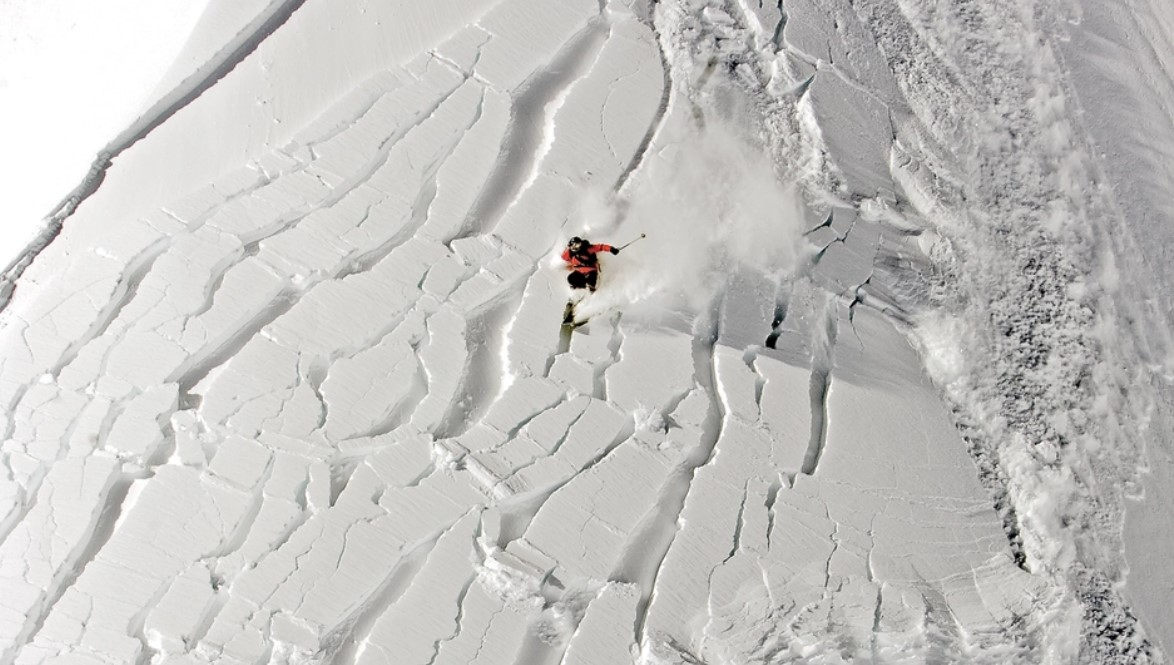
A dramatic backcountry skiing incident in Banff National Park has drawn renewed attention to the risks that exist just beyond managed ski area boundaries. A single skier triggered an avalanche on a popular backcountry run near Lake Louise, was swept hundreds of meters downhill, and survived without injury. The event, captured on video and later released by Parks Canada, has been widely shared because of both the intensity of the slide and the remarkable outcome.
While the skier’s survival has been described as fortunate, authorities stress that the incident underscores how quickly conditions can turn dangerous in unmanaged avalanche terrain, even for experienced and well-prepared skiers. The avalanche occurred on January 20 on a run known as “Vortex,” located outside the official boundary of the Lake Louise Ski Area in Banff National Park.
According to Parks Canada, the skier triggered a Size 2 avalanche while descending a west-facing slope at an elevation of approximately 2,450 meters. The slide carried the skier to the bottom of the valley, where he was partially buried in snow. Parks Canada’s Visitor Safety Team later confirmed that the skier was buried up to his waist but did not suffer injuries. The incident has since been used by Parks Canada as a real-world example of the unpredictable nature of avalanche hazards outside controlled ski environments.
The circumstances surrounding the avalanche, including the experience level of the skiers involved and the proximity to a major ski resort, highlight why public safety agencies continue to emphasize education, preparation, and caution when venturing beyond resort boundaries. Although the outcome was positive in this case, officials have been clear that similar incidents often end very differently.
Skier triggers Size 2 avalanche on unmanaged backcountry terrain
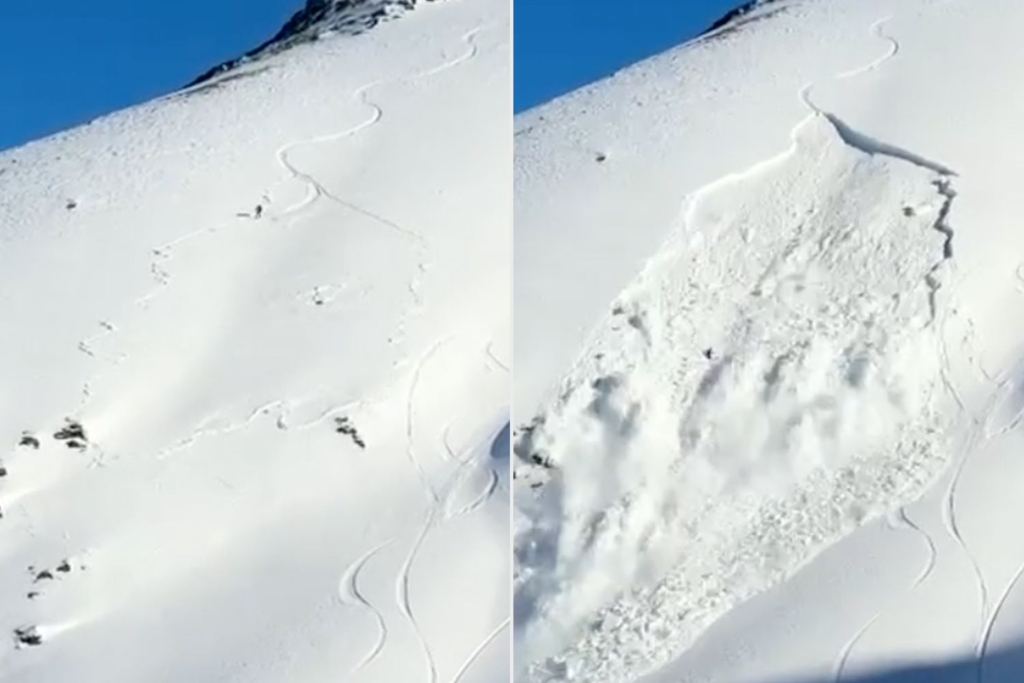
Parks Canada stated that the avalanche was classified as a Size 2, meaning it was large enough to bury, injure, or kill a person. While not among the largest avalanche categories, a Size 2 slide is still considered extremely dangerous, particularly when it occurs on steep terrain with a defined runout zone. In this incident, the skier was descending from a west-facing slope on the Vortex backcountry run when the snowpack failed and released beneath him.
Video footage of the incident was recorded by the skier’s partner, who was positioned in what Parks Canada described as a safe location. The footage shows the moment the slope fractures and begins to slide, rapidly accelerating downhill. Within seconds, the skier is caught and carried by the moving snow, disappearing from view as the avalanche funnels into the valley below. The video has since circulated widely, serving as a visual reminder of how quickly an avalanche can develop and how little time a skier has to react once the snow starts moving.
According to Parks Canada, the skiers involved were experienced and well-equipped, traveling with avalanche safety gear and following common best practices such as descending one at a time and selecting a safe regroup location. These precautions are often emphasized in avalanche education courses as ways to reduce exposure and improve survival odds. However, the agency noted that even with these measures in place, the risk cannot be eliminated when traveling in avalanche terrain.
Video captured the moment a skier triggered an avalanche while backcountry skiing at Banff National Park in Alberta. Thankfully, the skier was okay. pic.twitter.com/RoFNNGYKlF
— AccuWeather (@accuweather) January 27, 2026
When Parks Canada’s Visitor Safety Team arrived at the scene, they found the skier at the bottom of the valley, partially buried in snow up to his waist. The fact that the skier was not fully buried likely contributed to his ability to survive without injury. Full burial significantly reduces survival chances due to trauma and suffocation risks, particularly if a victim is not located and excavated quickly by companions. In this case, the skier’s partner was able to maintain visual contact with the avalanche path and alert authorities promptly.
Authorities did not report any secondary avalanches in the area during the response, and no other individuals were involved in the slide. While the outcome was positive, Parks Canada emphasized that the incident could easily have resulted in serious injury or death under slightly different conditions.
The role of ski area boundaries and avalanche management
One of the key points emphasized by Parks Canada following the incident is the sharp contrast between conditions inside and outside ski area boundaries. Within the Lake Louise Ski Area, avalanche hazards are actively managed through a combination of snowpack monitoring, controlled avalanche release, slope closures, and patrol oversight. Once skiers cross the boundary into backcountry terrain, these safety measures no longer apply.
Read : Female Mauled by Snow Leopard After Approaching It to Take a Photo
Parks Canada warned that many skiers underestimate how quickly conditions can change when leaving a resort’s managed environment. Snow stability, wind loading, temperature variations, and recent snowfall can all vary dramatically over short distances. A slope that appears stable from above or from within the ski area may behave very differently once a skier commits to a descent outside the boundary.
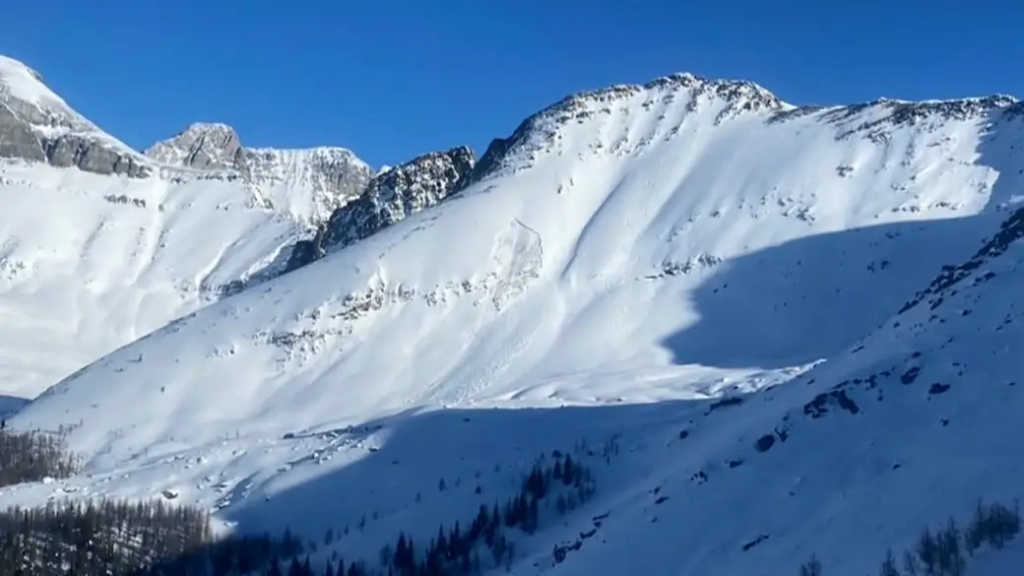
In its statement, Parks Canada noted that skiers do not need to travel deep into remote wilderness to encounter serious avalanche risk. In many cases, dangerous terrain lies immediately adjacent to resort boundaries, making it easily accessible but no less hazardous. This proximity can create a false sense of security, particularly for skiers who are accustomed to resort skiing and may assume that nearby slopes are subject to similar controls.
The agency reiterated that avalanche signage placed at ski area boundaries is intended to clearly communicate the transition into unmanaged terrain. These signs are not advisory in nature but are meant to mark a clear change in risk level. Parks Canada cautioned that skiers should never pass beyond avalanche warning signage unless they are properly trained, equipped, and prepared to assess and manage avalanche hazards independently.
The Lake Louise area, like many regions in the Canadian Rockies, is known for complex snowpack structures that can persist for extended periods. Weak layers buried beneath more recent snowfall can remain unstable for weeks or months, increasing the likelihood of human-triggered avalanches. West-facing slopes, such as the one involved in this incident, can be particularly sensitive to changes in temperature and solar radiation, which can further destabilize the snowpack.
Why experience and preparation do not eliminate risk
CBC reported that Parks Canada described the skiers involved as experienced and well-equipped, a detail that has prompted discussion within the backcountry skiing community. Experience and equipment, while essential, do not guarantee safety in avalanche terrain. Even highly skilled skiers and snowboarders can misjudge conditions or encounter unexpected snowpack behavior.
Read : Postal Worker Sian Spence Arrested After Pepper Spraying Dogs While Delivering Mail
Avalanche safety gear, including transceivers, probes, and shovels, is designed primarily to improve rescue outcomes after an avalanche occurs. While such equipment can significantly increase survival chances, it does not prevent avalanches from happening in the first place. Education in snowpack assessment, terrain analysis, and decision-making is equally important, but even comprehensive training cannot eliminate uncertainty in natural environments.
Parks Canada used the incident to reinforce broader safety messaging aimed at backcountry users of all experience levels. The agency encouraged skiers to familiarize themselves thoroughly with terrain before entering it, consult up-to-date avalanche forecasts, and adjust plans based on current conditions rather than expectations or prior experience. It also stressed the importance of conservative decision-making, particularly during periods of elevated avalanche danger.
The video of the Lake Louise incident illustrates how rapidly a situation can escalate, leaving little opportunity for corrective action. Once the snow began to slide, the skier had no realistic means of escaping the avalanche path. This reality underscores why many avalanche professionals emphasize avoidance as the most effective safety strategy. Choosing lower-angle terrain, avoiding known avalanche paths, and respecting hazard ratings are often more effective at reducing risk than relying on rescue equipment alone.
In its public statement, Parks Canada also reminded skiers that conditions outside ski area boundaries are not monitored or mitigated by patrols. Rescue response times in backcountry areas can be longer, and weather or terrain may complicate access for emergency teams. While the skier in this case was located and assessed without delay, authorities noted that similar incidents in more remote locations can have far more severe outcomes.
The Lake Louise avalanche incident ultimately ended without injury, but Parks Canada has been clear that the result should not be interpreted as reassurance. Instead, it serves as a cautionary example of how quickly and unexpectedly avalanches can occur, even close to major ski resorts and among experienced individuals. As winter recreation continues to grow in popularity, officials hope that sharing real-world incidents like this one will encourage skiers to approach backcountry terrain with heightened awareness and respect for the inherent risks involved.