
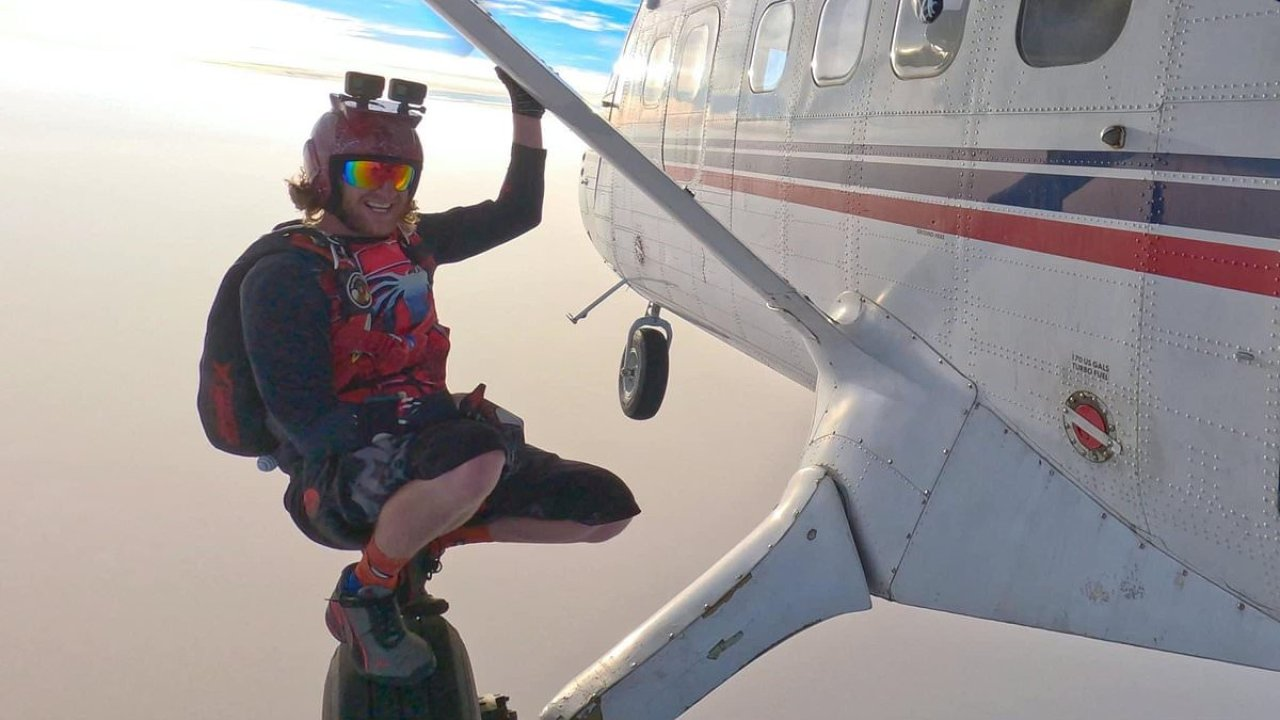
In a tragic incident that has stunned the Nashville skydiving community, 35-year-old instructor Justin Robert Fuller lost his life during a tandem jump on Saturday afternoon. Fuller, a resident of Murfreesboro, Tennessee, became separated from his tandem rig and fell from the sky without a parachute, according to the Metro Nashville Police Department. The accident occurred near John C. Tune Airport, where operations were being conducted by Go Skydive Nashville.
Authorities confirmed Justin Robert Fuller’s death after his body was recovered in a wooded area off the 4800 block of Ashland City Highway. This event marks a rare and devastating mishap in a sport known for its stringent safety protocols, prompting immediate investigations by federal agencies.
The Federal Aviation Administration has taken the lead in probing the circumstances surrounding the fatality, focusing on the equipment and procedures involved. Preliminary reports from police indicate no immediate evidence of equipment failure, but the exact cause of the separation remains under review. Justin Robert Fuller’s passing has left fellow skydivers, friends, and family grappling with the sudden loss of a highly regarded professional who had dedicated years to the adrenaline-fueled world of freefall. As details emerge, the incident serves as a stark reminder of the inherent risks in extreme sports, even for seasoned experts.
The Incident: A Tandem Jump Turns Deadly
The sequence of events unfolded rapidly during what was intended to be a routine tandem skydive for a 46-year-old student and his instructor. According to Metro Nashville Police, Justin Robert Fuller and the student boarded a plane operated by Go Skydive Nashville at John C. Tune Airport. Three other skydivers had successfully jumped and landed without issue earlier in the flight. As the final pair prepared to exit, their tandem rig— a specialized harness system that securely attaches the student to the instructor— reportedly became caught on the edge of the aircraft’s exterior.
In the critical moments following the exit, Justin Robert Fuller and the student became stuck on the side of the plane. Eyewitness accounts from the ground and initial police statements describe how the pair struggled briefly before a separation occurred. The student remained attached to the rig, allowing the main parachute to deploy partially. However, Fuller was detached entirely, plummeting to the ground without any parachute deployment. The fall occurred over a rural, wooded expanse near Ashland City Highway, complicating immediate search and recovery efforts.
Emergency responders were alerted shortly after the plane landed safely back at the airport. The Nashville Fire Department and Metro Police dispatched teams, including a helicopter unit, to scour the area. The student, meanwhile, descended into the treetops, where he remained suspended for several hours. Firefighters executed a high-angle rescue using a pulley system, extracting the individual around 4 p.m. local time. The student was described as awake, alert, and in stable condition upon rescue and was transported to a nearby hospital for precautionary evaluation. No injuries were reported beyond minor abrasions from the entanglement.
Read : 32-Year-Old Jade Damarell Deliberately Dies in Skydiving Accident Despite Experience
Justin Robert Fuller’s body was located later that afternoon by the police helicopter crew in a clearing within the dense woods. The discovery site was approximately one mile from the student’s landing spot, underscoring the chaotic trajectory of the fall. Coroners pronounced Fuller dead at the scene, with the cause of death attributed to blunt force trauma from the impact. The plane involved in the jump, a twin-engine Cessna certified for skydiving operations, taxied back without incident, and all onboard personnel were accounted for safely.
Read : Top Ten Must-Visit Monsoon Destinations
This tandem setup is standard for novice jumpers, where the instructor controls the equipment while strapped to the student’s back. The rig includes a large main canopy and a reserve parachute, both managed by the professional. Sources close to the investigation noted that the recovered harness from the student showed no signs of malfunction or breakage, raising questions about the precise mechanics of the detachment. Weather conditions at the time were clear with light winds, ruling out environmental factors as a primary contributor.
Background on Justin Robert Fuller: A Veteran of the Skies
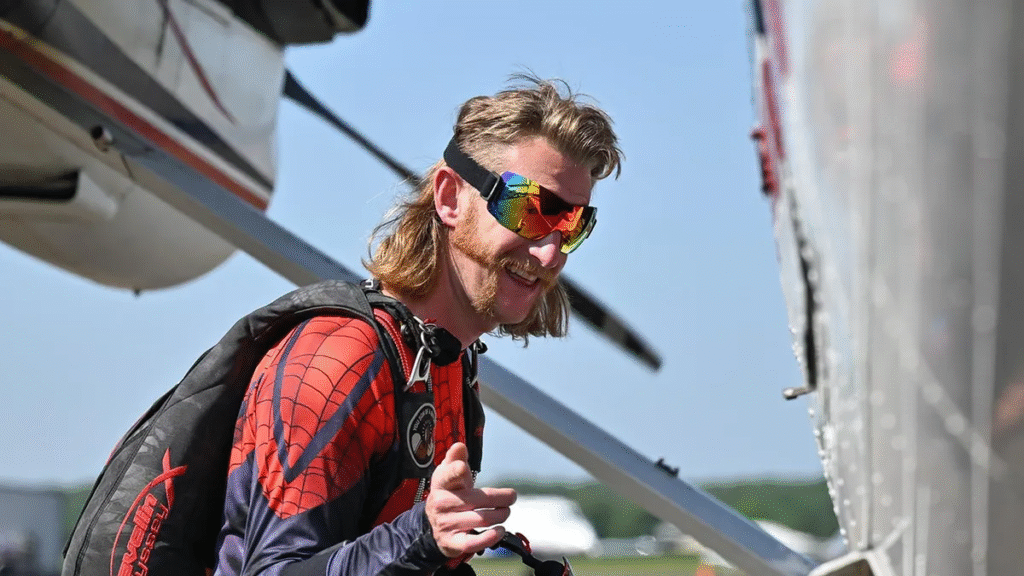
Justin Robert Fuller was more than just an instructor; he was a pillar in Tennessee’s skydiving circles, known for his expertise and infectious enthusiasm. At 35 years old, the Murfreesboro native had amassed over 5,000 jumps in his career, a testament to his commitment to the sport. Friends and colleagues affectionately called him “Spidey,” a nod to his agility and spider-like prowess in navigating the air. Fuller had recently transitioned to Go Skydive Nashville, announcing on social media just weeks prior that he was “very excited about this next chapter.” His previous role at another local outfit involved training military personnel, where he honed skills in high-stakes aerial maneuvers.
Justin Robert Fuller’s journey into skydiving began in his early twenties, driven by a passion for adventure that extended beyond the drop zone. He was certified as a tandem instructor by the United States Parachute Association, adhering to rigorous standards that include annual equipment inspections and recurrent training. Those who knew him described a man whose positive outlook was as reliable as his freefall form. “He was my instructor, and one of the absolute best,” one former student shared in a public tribute. Fuller’s social media profiles brimmed with photos of mid-air formations, ground crews celebrating safe landings, and motivational posts about embracing life’s thrills.

In the tight-knit skydiving community, Justin Robert Fuller stood out for his mentorship role. He often volunteered for safety seminars, emphasizing gear checks and emergency protocols to newcomers. His experience training special forces operatives highlighted his technical acumen, particularly in handling malfunctions under pressure. At the time of the incident, Fuller was in peak professional form, having logged dozens of tandem jumps that month alone. Colleagues at Go Skydive Nashville praised the company’s maintenance regimen, noting that all gear undergoes meticulous pre-flight scrutiny. Fuller’s death, therefore, strikes as an anomaly in a career marked by precision and precaution.
Beyond the cockpit, Fuller balanced his high-flying life with community involvement in Murfreesboro. He coached youth adventure programs and advocated for accessible extreme sports. His nickname “Spidey” extended to personal lore, with friends joking about his uncanny ability to “stick the landing” every time. Tributes pouring in since Saturday paint a portrait of a selfless figure whose lessons in resilience will endure. One peer reflected, “Your infectious positive approach to life… is one of the best gifts I’ll carry with me until we meet again.” Justin Robert Fuller’s legacy, built on thousands of safe descents, now serves as a poignant counterpoint to the single, unforeseen error that claimed him.
Investigation Underway: Safety Protocols and Community Response
The Metro Nashville Police Department has classified the incident as an accident, but the FAA’s involvement signals a comprehensive review of operational standards. Investigators are examining flight logs, witness statements from the aircraft, and forensic analysis of the tandem rig. Key focus areas include the door mechanism of the Cessna, potential snags on external protrusions, and the dynamics of the exit sequence. Go Skydive Nashville has cooperated fully, suspending tandem operations pending clearance while affirming that their equipment is “meticulously maintained.” No citations or violations have been issued at this stage.
Skydiving fatalities are exceedingly rare, with the USPA reporting a success rate exceeding 99.9% annually. Tandem jumps, designed for safety, account for fewer than 1% of incidents. Experts attribute most mishaps to human factors rather than gear failure, such as improper body positioning during exit. In this case, the intact student harness suggests the separation may have stemmed from an unusual torque or clip disengagement. The FAA’s probe could take weeks, potentially leading to enhanced guidelines for exit procedures in twin-rig configurations.
Nashville’s skydiving hubs, including those at Humphreys County Airport, have rallied in response. Instructors from rival operations like Music City Skydiving held an impromptu vigil Sunday, sharing stories of Justin Robert Fuller’s camaraderie. Community leaders stress that such events, while heartbreaking, reinforce the sport’s emphasis on redundancy—dual parachutes, altimeters, and automatic activation devices. “It’s a total freak accident,” one veteran instructor remarked, echoing sentiments that this was an outlier in a disciplined field.
As the investigation progresses, questions linger about preventive measures. The USPA mandates video recording for tandems, which may yield crucial footage from the student’s helmet cam. Broader implications could include retrofits for aircraft doors or refined harness designs. For now, the focus remains on supporting Justin Robert Fuller’s loved ones, with a memorial jump planned for next weekend to honor his spirit. This tragedy underscores skydiving’s dual nature: a pursuit of exhilaration shadowed by vigilance. Fuller’s untimely end, while devastating, amplifies calls for unwavering adherence to protocols, ensuring his expertise echoes in safer skies ahead.