
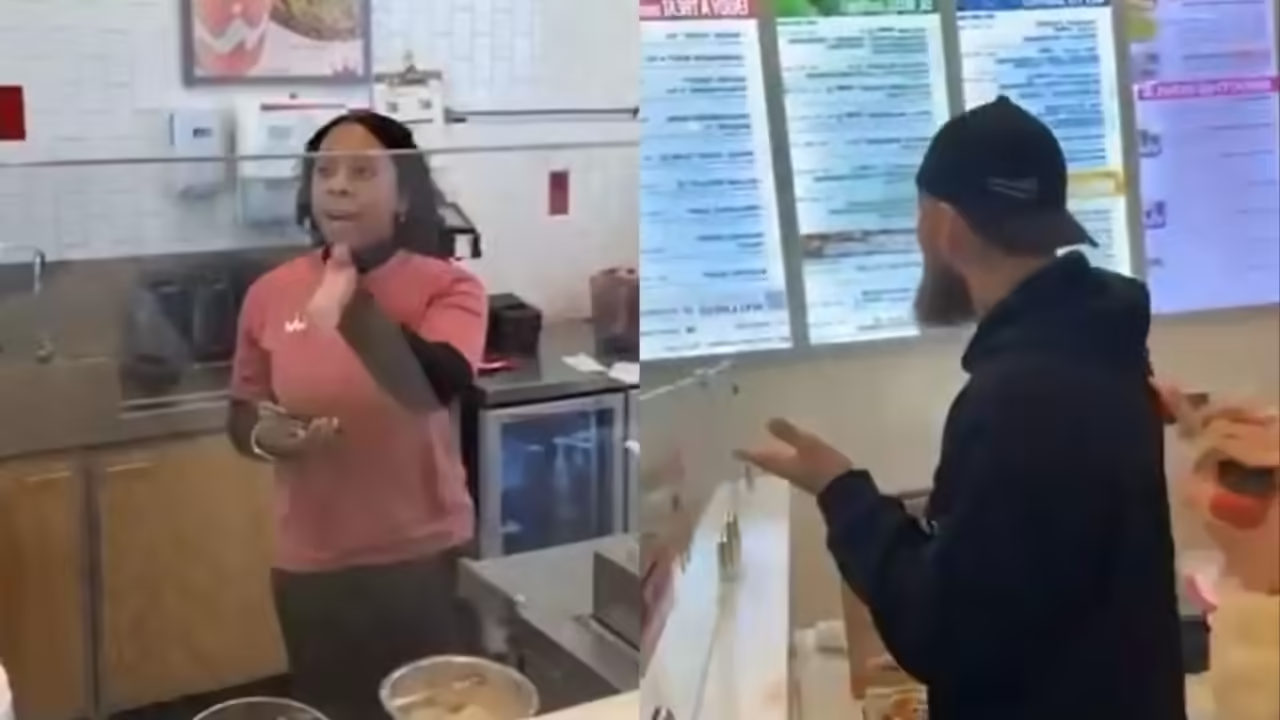
A Michigan smoothie shop became the center of a national debate after two employees refused to serve a customer wearing a hoodie supporting President Donald Trump. The incident, which took place at a franchised Smoothie King location in Ann Arbor, quickly gained widespread attention after a video of the encounter was shared online. Within days, millions of viewers had watched the exchange, sparking intense discussions about discrimination, political expression, workplace conduct, and the rights of both customers and employees.
Following an internal investigation, the franchise owner terminated the two employees involved and announced mandatory retraining for staff. The episode illustrates how quickly localized disputes can escalate in the digital era and highlights the challenges businesses face in maintaining neutrality in a politically polarized climate.
The Incident and Viral Fallout
The controversy began when Erika Lindemyer and her husband, Jake, visited the Ann Arbor Smoothie King location. According to a video Erika posted on social media, the couple attempted to order smoothies but were told by two employees that they felt uncomfortable serving Jake because he was wearing a hoodie supporting President Donald Trump. In the video, Erika questioned the employees about the refusal, stating that they had simply come in for a smoothie and were denied service due to the hoodie. She described the action as discrimination.
One employee responded that they were uncomfortable serving the couple, while another stated that Trump discriminates against them. During the exchange, Jake asserted that discrimination is a crime, and one of the employees replied that they had the right to refuse service. Jake countered that refusal based on political views was not permissible. The brief interaction, captured on video, ended with the couple leaving the store.
The video rapidly spread across social media platforms, amassing approximately 4.5 million views on Facebook within two days. It was widely shared, reposted, and discussed across various online communities. Supporters of the couple argued that businesses should not deny service based on political beliefs or attire, while others defended the employees, citing their discomfort and the broader context of political tensions. The employees were described as people of color in the video, a detail that added another layer to the conversation about race, politics, and personal expression.
In addition to Erika’s video, a separate video appeared on TikTok from a young woman claiming to be one of the employees involved. In her post, she explained that her coworker told the couple the hoodie made them uncomfortable. She stated that they informed the customers of their right to refuse service and told them to have a good day. In another clip, the employee’s perspective of the incident was shown, including a moment where she said, “We’re not serving Trump supporters.” These additional videos further fueled debate, as viewers interpreted the exchange through their own political and social lenses.
Read : Republican VP Pick Vance Calls UK ‘First Islamist Country to Get Nuclear Weapon’, Faces Backlash
The speed and scale of the online reaction underscored how quickly local disputes can become national stories. Social media platforms amplified the situation beyond the confines of Ann Arbor, drawing attention from individuals who otherwise would have had no connection to the store or the parties involved. The viral nature of the content intensified pressure on the franchise owner and the corporate brand to respond decisively.
Corporate Response and Terminations
In response to the incident, Smoothie King issued a public statement addressing the matter. The company emphasized its commitment to ensuring that its stores remain places free of discrimination, where guests and team members are treated with care and respect. After conducting an investigation into the events at the Michigan location, the franchise owner took what the company described as immediate action. The two employees involved in the refusal of service were terminated.
The statement clarified that the Ann Arbor store is a franchised location, meaning it is owned and operated independently under the brand’s larger corporate umbrella. Nonetheless, the corporate office worked alongside the local franchise owner in reviewing the incident. The company also confirmed that representatives had reached out to the customer to apologize for the experience.
Read : SoFi Stadium Third-Party Employee Fired After Threatening to Call ICE on Latino Concertgoers
Beyond the terminations, the franchise owner announced mandatory retraining for all employees at the location. This retraining would focus on guest experience standards and reinforce expectations regarding customer service and nondiscrimination. By implementing retraining measures, the franchise signaled an effort not only to address the specific incident but also to prevent similar occurrences in the future.
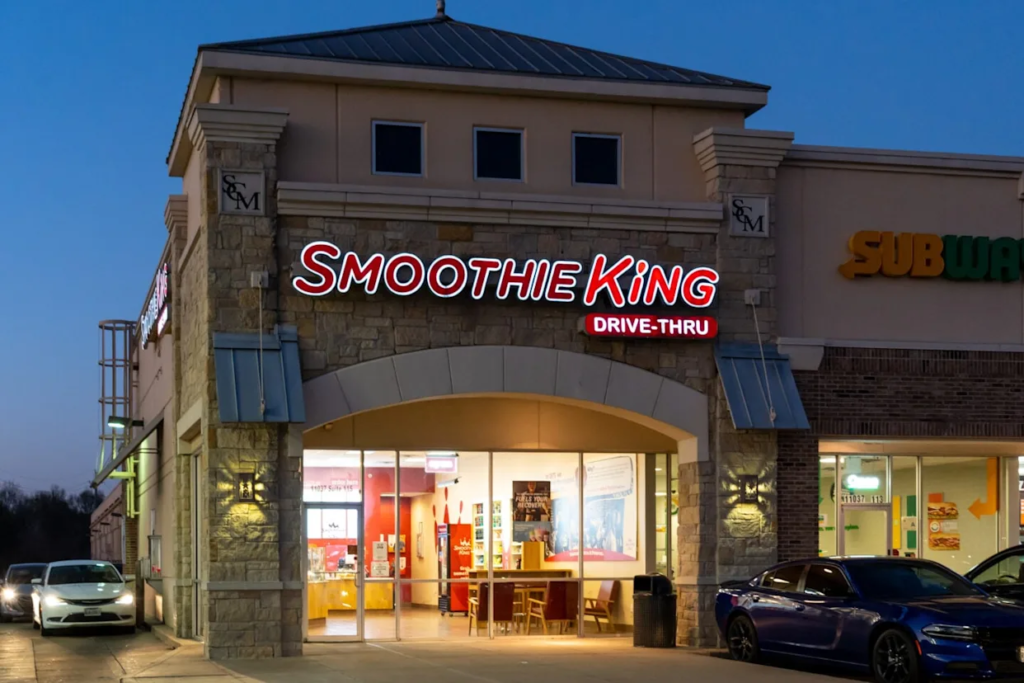
Erika Lindemyer publicly reacted to the news of the firings by commenting on Smoothie King’s statement on social media, using celebratory emojis including a muscle, heart, fire, and an American flag. Her response reflected satisfaction with the outcome and reinforced the political undertones that had defined the incident from the start.
For Smoothie King, the decision to terminate the employees represented a clear stance in favor of maintaining uniform service standards across its locations. Corporate brands often prioritize consistency and the protection of their reputation, particularly when viral controversies threaten public perception. The swift action demonstrated an effort to contain reputational damage and reassure customers that personal political affiliations would not influence service at their establishments.
Broader Implications for Political Expression and Service Rights
The incident has sparked renewed discussion about the boundaries between personal beliefs and professional responsibilities in customer-facing roles. In the United States, businesses generally have the right to refuse service under certain conditions, but federal and state laws prohibit discrimination based on protected characteristics such as race, religion, national origin, and sex. Political affiliation, however, is not uniformly protected under federal anti-discrimination statutes, and legal interpretations can vary by jurisdiction.
The employees’ assertion that they had the right to refuse service reflects a common misunderstanding about how such policies operate in practice. While businesses may establish certain guidelines for refusing service, those guidelines typically relate to safety concerns, disruptive behavior, or violations of store policy rather than personal political expression. For large franchises, adherence to standardized customer service policies is often mandatory to maintain brand consistency.
Read : 22-Year-Old Shayne Vaccaro Charged with Attempted Murder After Stabbing KFC Employee
At the same time, the incident highlights the complex emotional landscape that surrounds contemporary politics. For some individuals, political symbols such as clothing or campaign merchandise are viewed as expressions of identity and free speech. For others, those same symbols may evoke feelings of exclusion, discrimination, or hostility. This clash of perceptions can create tension in everyday interactions, including routine commercial transactions.
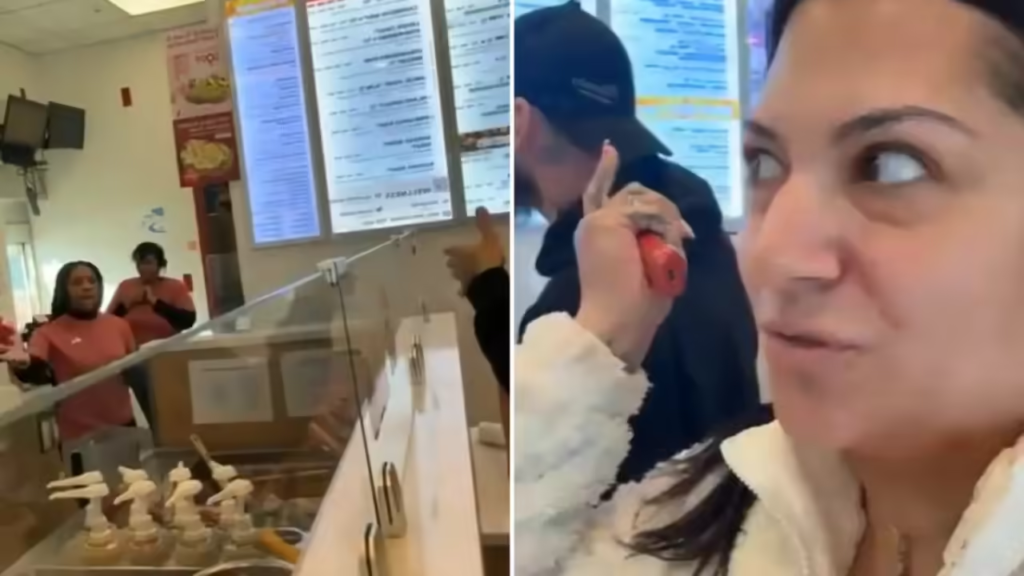
Employers face the difficult task of balancing employees’ personal feelings with their professional obligations. Workers may experience discomfort when confronted with political messaging they strongly oppose, yet customer service roles require maintaining neutrality and professionalism. Companies often address this challenge through training programs that emphasize respectful engagement, conflict de-escalation, and adherence to nondiscrimination principles.
The widespread reaction to the Smoothie King incident illustrates how businesses increasingly operate under the scrutiny of social media audiences. A single interaction, recorded on a smartphone, can shape public narratives and influence corporate decision-making. Brands must navigate these situations carefully, weighing legal considerations, public relations impacts, and internal policies.
In a broader sense, the episode reflects the growing overlap between political identity and everyday consumer experiences. Clothing, accessories, and merchandise associated with political figures can transform routine transactions into symbolic encounters. As political polarization continues to influence social dynamics, similar conflicts may arise in various settings, from restaurants and retail stores to public events and service providers.
For businesses, the central takeaway is the importance of clear policies and consistent enforcement. Transparent guidelines about customer service expectations help reduce ambiguity for employees and provide a framework for addressing disputes. For customers, the situation serves as a reminder that personal expression, while legally protected in many contexts, can sometimes generate friction in shared public spaces.
The Ann Arbor Smoothie King incident ultimately resulted in the termination of two employees and a reaffirmation of the company’s nondiscrimination policies. It also contributed to an ongoing national conversation about political expression, workplace conduct, and the responsibilities that accompany customer-facing roles in a highly polarized society.