

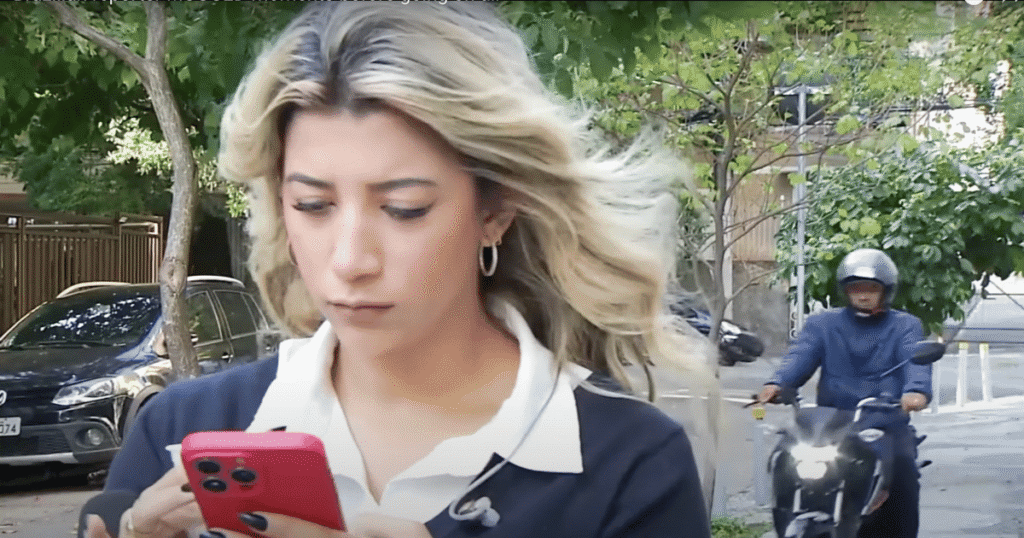
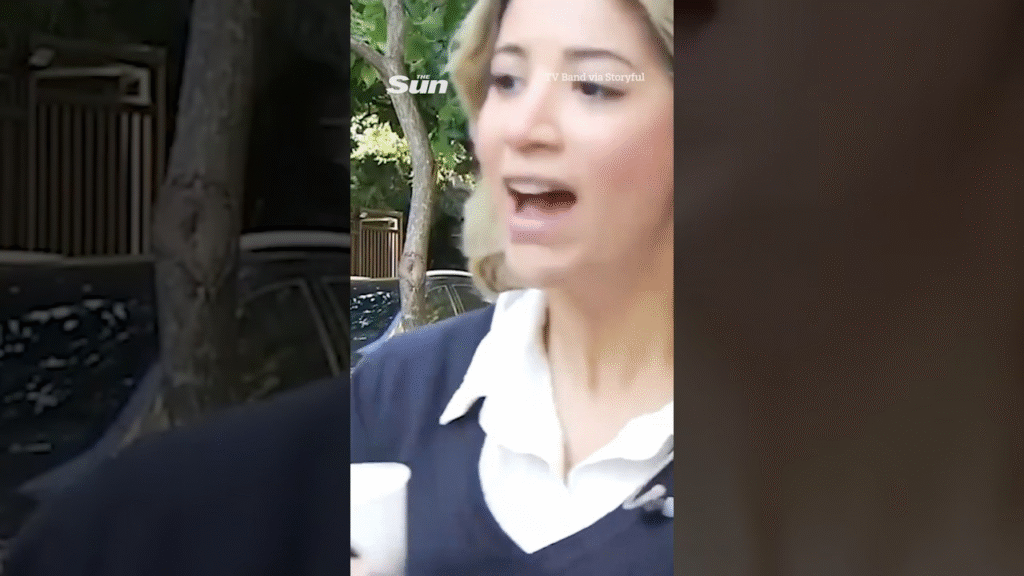
In a shocking incident that unfolded live before rolling cameras, Brazilian TV reporter Clara Nery narrowly escaped a robbery attempt just seconds before she was scheduled to go live on air. The reporter, working for the Brazilian network Band Rio, was preparing for a live broadcast in Rio de Janeiro when an unidentified man on a motorbike drove by and attempted to snatch her phone right out of her hand.
The harrowing moment was captured entirely on camera, highlighting not only the dangers that journalists face in their day-to-day assignments but also the growing concerns about street crime in Brazil’s urban centers. The footage shows Clara standing in front of the camera crew, microphone in hand, when the motorcyclist makes a sudden approach.
With lightning speed, he tries to grab her phone and flee, but Clara’s swift reaction and a bit of luck prevented the robbery from being successful. The man, startled or clumsy in execution, drops the phone and immediately flees the scene. Clara later confirmed through a post on Instagram that she was unharmed and had managed to recover her cellphone.
The attempted robbery, though unsuccessful, has sparked nationwide conversations about the safety of media professionals and the alarming increase in street crimes in major Brazilian cities.
Clara’s composure following the incident has drawn admiration from viewers and colleagues alike. While she was visibly shaken, she remained calm, later using social media to thank the public and the authorities for their support. Her courage and professionalism under pressure have become a talking point in Brazil and beyond, turning what could have been a tragic moment into one of resilience and unity.
An Attack Caught on Camera: The Incident Unfolds Live
The incident took place in Rio de Janeiro, one of Brazil’s most vibrant yet crime-affected cities. Clara Nery, a field reporter for Band Rio, was minutes away from going live when the robbery attempt occurred. The camera was already rolling, preparing for the broadcast, capturing the sudden and frightening moment in full view.
In the video, Clara can be seen standing with her phone in hand, likely coordinating with the studio or reviewing her script, when a man on a motorbike zooms into the frame and lunges toward her. His goal: snatch the phone and vanish.
The attacker’s attempt was foiled, possibly due to Clara’s reflexes or a miscalculation on his part. The phone slipped from his grasp and fell to the ground. Without retrieving it, the would-be thief rode off hastily, leaving the phone behind. Clara, visibly stunned, quickly assessed the situation and held herself together, later remarking that the “important thing is that everything turned out okay.”
Read : 23-Year-Old Reporter Punched During Live Interview on Harlem Street
While she was physically unharmed, the psychological impact of being targeted during a live work assignment cannot be underestimated. It highlights how precarious working conditions have become for journalists who often operate in public spaces and are vulnerable to unpredictable threats. Clara’s case is just one of many, yet it’s particularly striking because it happened in front of a live broadcast setup.
Thief on a motorbike tried to snatch a Brazilian reporters phone just before she went live on air pic.twitter.com/Y2IKJGOkgq
— Catch Up Bites (@catchupbites) August 4, 2025
Following the incident, Clara posted the video on Instagram along with a message thanking her coworkers, the Military Police, and the Civil Police for their immediate support. She also appealed to the public to help identify the suspect, noting that the motorcycle’s license plate had been deliberately obscured with a piece of cardboard — a clear sign of premeditation. Her call to action — “Let’s share his face, he wants to be known” — was a rallying cry that resonated with many.
The Surge in Street Crime in Rio de Janeiro
Clara’s ordeal comes against the backdrop of a concerning surge in street crimes, particularly phone thefts, in Rio de Janeiro. According to The Nightly, citing the Rio de Janeiro Public Security Institute, more than 2,300 phones were reported stolen in June 2025 alone — a staggering 27% increase compared to the same month in 2024, when 1,808 phones were stolen. These figures underscore a growing crisis that is impacting everyday citizens and professionals alike.
Rio de Janeiro, while known globally for its stunning beaches, iconic Christ the Redeemer statue, and vibrant culture, also grapples with deep-rooted social and economic inequalities. These challenges often manifest in high crime rates, particularly in areas with limited police presence or insufficient security measures. The brazenness of the attempted robbery on Clara Nery, in broad daylight and in front of a camera crew, reflects the confidence that some criminals have in escaping justice.
This surge in thefts is not an isolated trend. Many cities across Brazil have reported increases in crimes involving mobile devices, which are easy to steal and resell. For many criminals, snatching a phone is a quick and profitable crime. Unfortunately, the repercussions for the victims go beyond material loss — it often includes trauma, loss of vital information, and in some cases, even violence.
Despite the presence of both the Military Police and Civil Police, many Brazilians express concerns about how these crimes are handled. Clara herself commented on this issue, noting that even if the thief is arrested, there’s a strong chance he might be released after only a few days.
This revolving door of justice fuels public frustration and contributes to a sense of impunity among offenders. As Clara stated, “We trust the work of the Military Police and the Civil Police. We have no doubt that he will be found and arrested. It remains to be seen whether, once arrested, his detention will be upheld.”
The Risks of Journalism and the Spirit of Resilience
Journalism, especially field reporting, has always involved a level of risk. From war zones to natural disasters, journalists are often on the front lines to bring news to the public. But the kind of danger Clara Nery faced is uniquely insidious because it blends into everyday life. A routine assignment in the city turned into a moment of terror, not because of political unrest or environmental danger, but because of an opportunistic crime.
Yet Clara’s response to the incident is a testament to the resilience and courage that define many in her profession. Instead of retreating into fear, she shared her experience publicly, thanked those who supported her, and turned the spotlight on the issue of public safety. Her story has become more than just a news item — it is now a part of a larger conversation about how to protect citizens and journalists alike.
Her appeal to identify the suspect and her open support for the police investigation shows a commitment not just to justice for herself, but to broader social accountability. Clara’s decision to post the video and message publicly likely encouraged others who have experienced similar incidents to come forward, creating a ripple effect that could lead to greater awareness and potentially policy action.
In a country where many feel powerless against rising crime, Clara Nery’s calm and assertive handling of the situation is a powerful example of how public figures can lead by example. Her ordeal may have been terrifying, but her response has been nothing short of inspiring.
Moreover, the media coverage surrounding the event may put pressure on local authorities to take more decisive action. Increased surveillance, improved community policing, and stricter consequences for repeat offenders are all potential steps that could emerge from the visibility of this case. If the suspect is identified and held accountable, it may offer a measure of justice not only for Clara but also for countless others affected by similar crimes.
As Clara continues her work in journalism, she does so now with a story of her own — one that she never intended to report, but that nonetheless has become a significant chapter in her career. Her grace under pressure and willingness to speak out are qualities that elevate her beyond her role as a reporter to someone who now symbolizes journalistic courage and civic responsibility.
While this incident serves as a stark reminder of the dangers lurking even in the most routine of tasks, it also illuminates the strength and solidarity that can emerge in the aftermath. Clara Nery has turned a frightening experience into a platform for dialogue, advocacy, and resilience — proving once again that sometimes, the most powerful stories are the ones we live ourselves.