
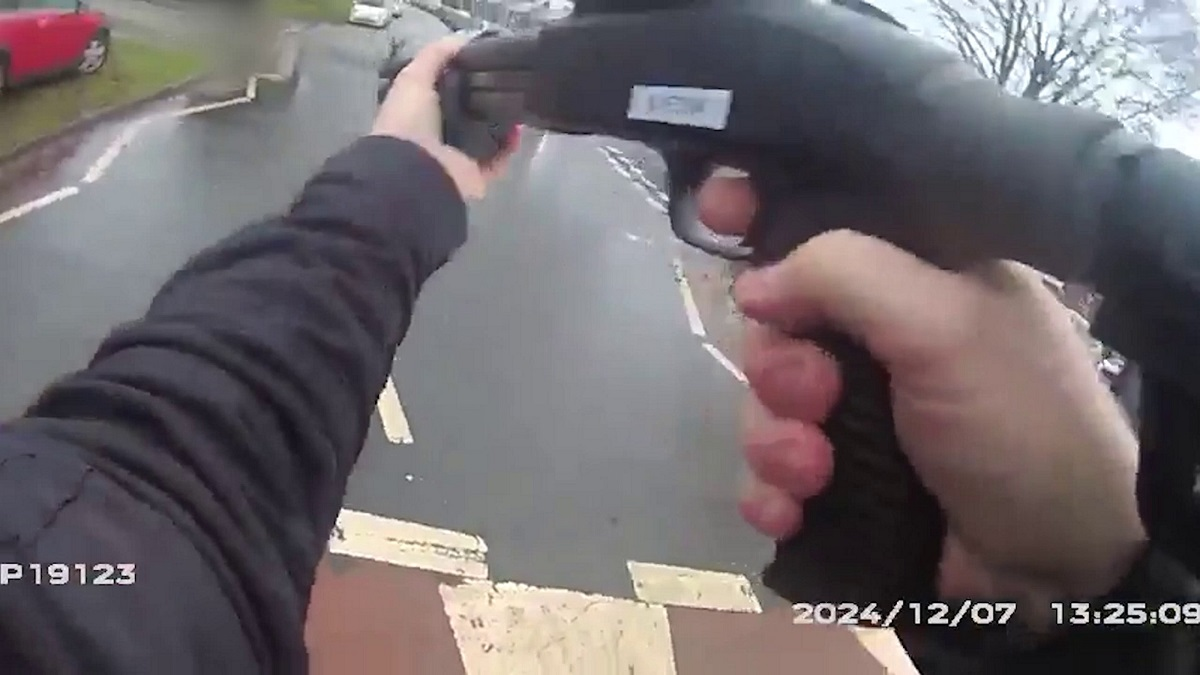
The tragic death of a three-year-old XL Bully named Ghost in Sheffield has reignited national debate over the police use of lethal force against dogs and the controversial restrictions surrounding the breed. On 7 December 2024, Ghost was shot multiple times by armed officers after escaping from his owner’s home and allegedly attacking a woman on a quiet residential street in Hillsborough.
His owner, 31-year-old Sophie Zaherali of Dykes Hall Road, has since been found guilty of owning a dog dangerously out of control, though she continues to insist that her beloved pet was wrongfully killed. The case, which has drawn intense public scrutiny, exposes the growing tension between community safety, police decision-making, and the rights of dog owners under the Dangerous Dogs Act.
The Day Ghost Was Shot: A Chaotic Scene in Hillsborough
It was a cold winter afternoon in Sheffield when multiple 999 calls alerted police to reports of an aggressive dog roaming loose near Dyke Hall Road. Witnesses described seeing a large grey and white XL Bully—later identified as Ghost—approaching pedestrians and other dogs without a lead or muzzle. One woman reported that the animal had bitten her arm, while another said it had acted aggressively towards her while she was walking her own pet. Within minutes, an armed response unit from South Yorkshire Police was dispatched to the scene.
Bodycam footage later shown in court revealed officers arriving on the residential street, loading their shotguns, and taking aim at the animal. In the 17-second clip, Ghost is seen moving toward two individuals before an officer fires three rounds. As the wounded dog lay on the road, another shot from a pistol was used to “end its suffering.” The footage, which prosecutors said captured the officers’ “split-second decision” to protect the public, has since become the subject of controversy after defence lawyers argued that Ghost was not acting dangerously in the moments before he was killed.
According to prosecutors, the incident unfolded after Sophie Zaherali had rushed inside her home to attend to her young child, who was suffering from a medical emergency. In her panic, she reportedly failed to close the door properly, allowing Ghost to escape. It was only when a neighbour shouted after hearing gunfire that Sophie realised her dog had gotten out. By then, it was too late—Ghost was already dead.
Witness accounts presented in Sheffield Magistrates’ Court painted a picture of confusion and fear. A driver who happened upon the scene described seeing the large dog “jumping up” on its hind legs toward two women who clutched their small dogs above their heads in panic. Officers later testified that they had received multiple reports of injuries and that Ghost had been behaving aggressively. One officer, whose identity was kept confidential for security reasons, said that as Ghost ran towards him, he believed there was a serious and immediate risk to human safety. The officer stated, “It was not an easy decision, but I had to protect the public.”
Read : 8-Year-Old Pekingese Wild Thang Wins 2024 World’s Ugliest Dog Contest
However, under cross-examination, a second officer admitted that the footage shown from his colleague’s bodycam did not clearly show Ghost acting dangerously at the time of the shooting. The conflicting accounts have fuelled criticism of the police response and raised questions about whether lethal force was necessary in this case.
Court Proceedings and Sophie Zaherali’s Defence
The three-hour trial at Sheffield Magistrates’ Court delved deeply into both the circumstances surrounding Ghost’s death and the legal obligations of owners of banned breeds. Prosecutor Justin Bullas told the court that Ghost was an XL Bully, a breed type prohibited under the Dangerous Dogs Act unless exempted through an official certificate. Although Sophie Zaherali had previously obtained such an exemption, the certificate had lapsed because she failed to provide proof that Ghost had been neutered—a key requirement under the law. This lapse meant that Ghost was, at the time of the incident, technically not legally exempt, even though Zaherali had taken steps to comply in the past.
Bullas described Ghost as a powerful dog weighing nine stone and argued that, regardless of intent, the animal posed a potential danger to the public when roaming unrestrained. He emphasised that police received several calls reporting injuries, and their decision to deploy armed officers was in accordance with risk assessment protocols. “The officers acted on the information available to them at the time,” he said. “They were told the dog had attacked people. Under those circumstances, they had to take immediate action.”
For her part, Sophie Zaherali maintained that Ghost was not a violent animal. Through her defence counsel, Connie Coombs, she argued that the dog had simply been excited and playful, not aggressive. Coombs questioned the reliability of witness accounts and suggested that the bystanders’ “defensive postures” could easily have been misinterpreted by police as signs of danger. She also noted that the video footage did not show Ghost biting or lunging at anyone. “The footage speaks for itself,” Coombs said. “There is no evidence of dangerous behaviour in the seconds before the fatal shots were fired.”
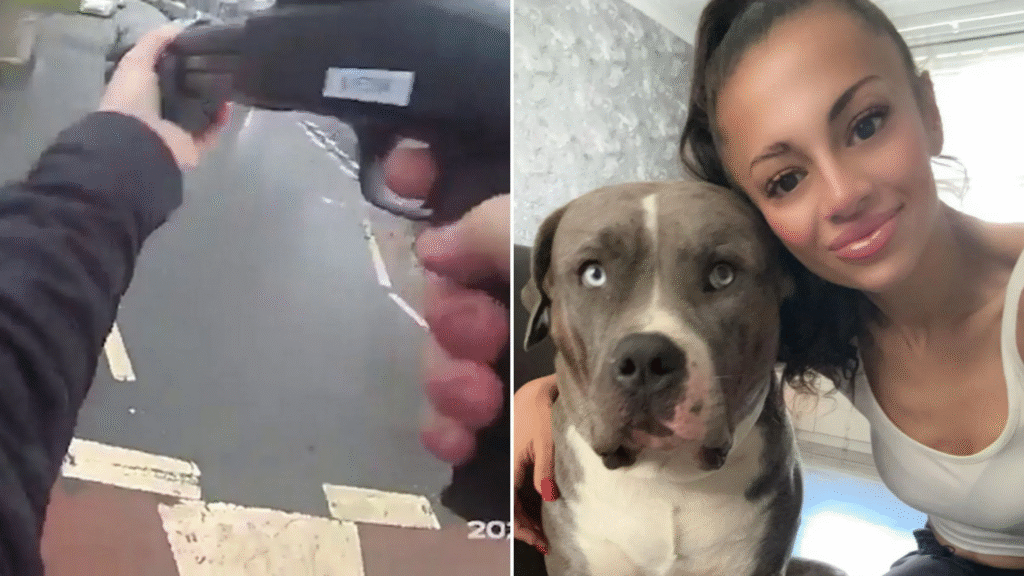
During her testimony, Sophie Zaherali became emotional as she recounted the events of that day. She explained that she had run inside to help her child, who was having a seizure, and had no idea the door had been left ajar. By the time she realised what had happened, armed officers were already at the scene. “Ghost was like my baby,” she said through tears. “They murdered him in cold blood. He was innocent. Even one of the officers said he wasn’t acting dangerously.”
The court also heard that Sophie Zaherali had later posted a series of angry messages on social media directed at the officer who shot her dog. She pleaded guilty to a charge of malicious communications for those posts but insisted her emotions had been driven by grief and shock.
In delivering his verdict, District Judge Tim Spruce acknowledged the distressing nature of the incident but concluded that the legal definition of “dangerously out of control” had been met. He stated that Ghost’s behaviour—running loose, jumping up at people, and causing fear—fell within the meaning of the statute, regardless of whether he had inflicted serious injury. However, Judge Spruce made clear that he was not considering a custodial sentence and adjourned sentencing to 16 December to allow for pre-sentencing reports.
Aftermath, Public Reaction, and Calls for Reform
The case has sparked strong public reaction, with divided opinions over whether police were justified in using lethal force. Animal welfare advocates and XL Bully supporters have rallied behind Zaherali, arguing that Ghost’s death exemplifies what they see as heavy-handed enforcement of dog control laws. Many online commentators have echoed Zaherali’s accusation of “cold-blooded murder,” pointing out that the dog had not been proven to have injured anyone before being shot. Others, however, have defended the police, noting that officers faced a fast-moving and potentially dangerous situation and acted within established protocols to protect the public.
South Yorkshire Police issued a statement after the trial reaffirming that the decision to shoot Ghost was not taken lightly. “The decision to shoot a dog is one never taken lightly by our officers,” the force said. “They are highly trained and carry out risk assessments and observations of the tactics available to them and the situation they are in. Our aim will always be to safely contain any animal, but the safety of the community and officers is always our priority.”
Despite those assurances, Sophie Zaherali has vowed to campaign for changes to the law. She has called for what she refers to as the “Ghost Act,” a proposed legal reform that would restrict officers from using firearms against dogs without first conducting a thorough on-site assessment. The proposed act, she says, would also make it possible to prosecute officers who wrongfully kill dogs without clear evidence of imminent danger. “I just want to make sure no other family has to go through this,” she told reporters. “Ghost’s death cannot be for nothing.”
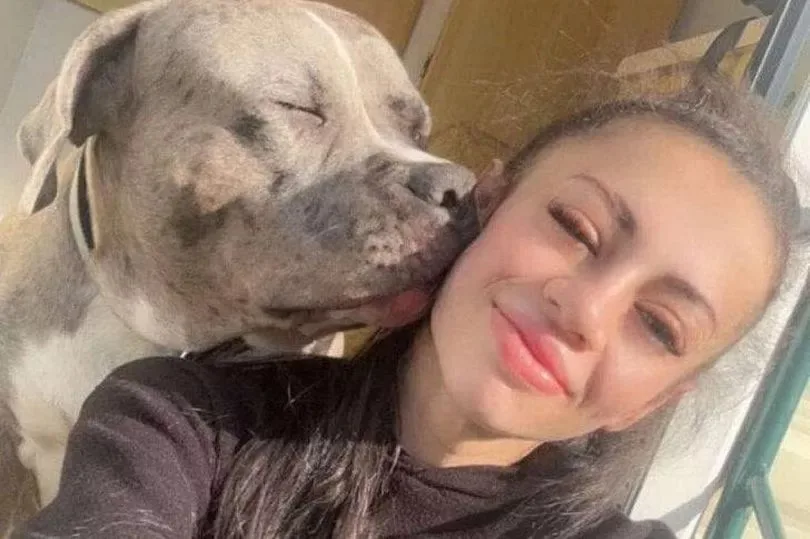
Adding to her distress, Sophie Zaherali has claimed that she is still waiting for Ghost’s body to be returned to her nearly a year after the shooting. She says police have repeatedly promised to release the remains but have not followed through. “We just want to put him to rest,” she said. “They’ve led me on so many times, saying I’ll get him back, but I’m still waiting. All I want is closure.”
The debate surrounding the case also intersects with the broader controversy over the UK government’s decision to ban XL Bullies under the Dangerous Dogs Act. Supporters of the ban argue that the breed’s size and strength make it a public safety risk, pointing to several high-profile fatal attacks. Critics, however, claim that the ban unfairly targets specific breeds rather than irresponsible owners and that the focus should be on behaviour and training rather than appearance.
In the months since Ghost’s death, numerous dog welfare groups have cited the case as an example of why breed-specific legislation should be reviewed. They argue that cases like Zaherali’s demonstrate the emotional toll and potential injustice inflicted on responsible owners who have taken measures to comply with the law. “This was a preventable tragedy,” one animal rights advocate said. “Better training, clearer protocols, and non-lethal intervention options could save both lives and livelihoods.”
The aftermath of Ghost’s shooting continues to reverberate through Sheffield and beyond, leaving lingering questions about accountability, fairness, and compassion. For Zaherali, the fight is not over. She remains determined to seek justice for Ghost and to ensure that his death prompts a broader conversation about how authorities handle similar situations in the future. Whether her efforts will result in legislative change remains to be seen, but one thing is certain: Ghost’s story has become a powerful symbol in the ongoing struggle to balance public safety with humane treatment of animals.
**prostadine**
prostadine is a next-generation prostate support formula designed to help maintain, restore, and enhance optimal male prostate performance.
Thank you for another informative web site. Where else could I get that type of info written in such an ideal way? I’ve a project that I am just now working on, and I’ve been on the look out for such information.
Great beat ! I would like to apprentice whilst you amend your website, how could i subscribe for a weblog site? The account helped me a applicable deal. I were tiny bit acquainted of this your broadcast provided bright clear idea