
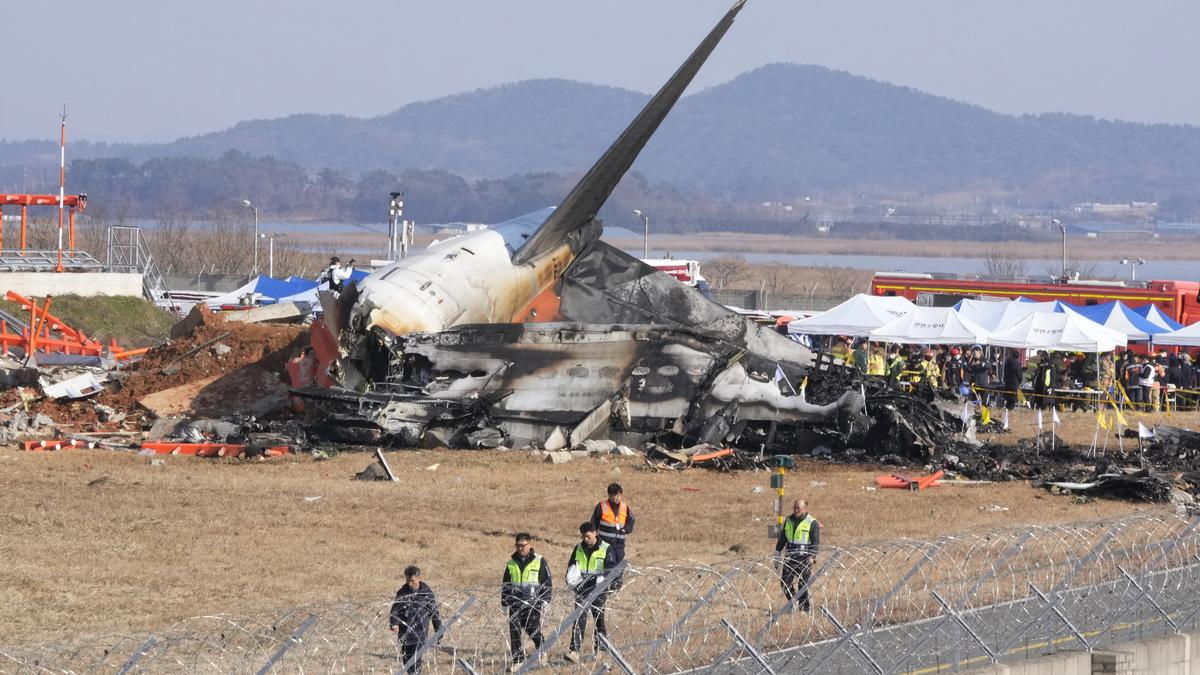
A tragic South Korean Plane Crash has left 179 people presumed dead, turning a routine flight into an unimaginable catastrophe. Families and officials alike are grappling with the aftermath of the incident, which has cast a shadow over the aviation community.
A Catastrophic Incident Unfolds
The Jeju Air flight, a Boeing 737-800, was en route from Bangkok, Thailand, to Muan, South Korea. Shortly after 9 a.m., as it approached Muan International Airport, the plane attempted to land but tragically crashed into a fence. Eyewitnesses recounted seeing the aircraft descending, only to notice flames and hear a loud explosion.
Visual evidence from the scene reveals the horrifying sequence of events. The plane skidded off the runway, crashed, and immediately erupted into flames, producing a thick plume of black smoke.
The charred tail section was one of the few recognizable remnants of the plane. Reports indicate that the aircraft attempted a belly landing without fully extending its landing gear, which likely compounded the devastation.
Investigators are exploring multiple factors, including bird strikes and weather conditions, as potential causes. Locals reported seeing flames in the jet’s engine before the crash and hearing a series of explosions.
Read : Canada Plane Catches Fire at Airport Hours After South Korean Plane Crash Tragedy: Watch
An eyewitness described the sound of “metal scraping” and noted the plane’s ascent before it descended, leading to the fatal impact.
Messages of Desperation and Grief
As news of the crash broke, stories from the victims’ families began to emerge. One particularly haunting detail involved a passenger who sent a text message to their family, saying, “Should I say my last words?” This chilling message, received minutes before the crash, highlighted the passengers’ awareness of the dire situation.
Read : Top 100 news of 2024
The scene at Muan International Airport was filled with distraught families searching for answers about their loved ones. The youngest passenger was a three-year-old child, while the oldest was a 78-year-old man, adding to the poignancy of the tragedy.
Tragic plane crash in South Korea: 179 dead, 2 survivors out of 181 onboard.
— Devil Wicked (@YoWickedd) December 29, 2024
The crash occurred when the plane’s landing gear failed to deploy, leaving it without brakes to slow down. As a result, it collided with a wall at near full speed. pic.twitter.com/CWKjHZdeg7
Reports also suggest that there were two Thai nationals among the passengers, prompting swift responses from the Thai government.
Thai Prime Minister Paetongtarn Shinawatra extended condolences to the victims’ families and urged immediate assistance for the Thai passengers. The South Korean government has since shifted from rescue to recovery operations, scouring nearby areas for bodies that might have been thrown from the plane due to the force of the impact.
Jeju Air’s Response and Aviation Safety Concerns
Jeju Air, the airline operating the ill-fated flight, issued an official apology for the crash, expressing their commitment to supporting the victims’ families and cooperating with investigators. CEO Kim E-Bae stated that the aircraft had no history of accidents or malfunctions, emphasizing that the airline would prioritize the needs of the bereaved.
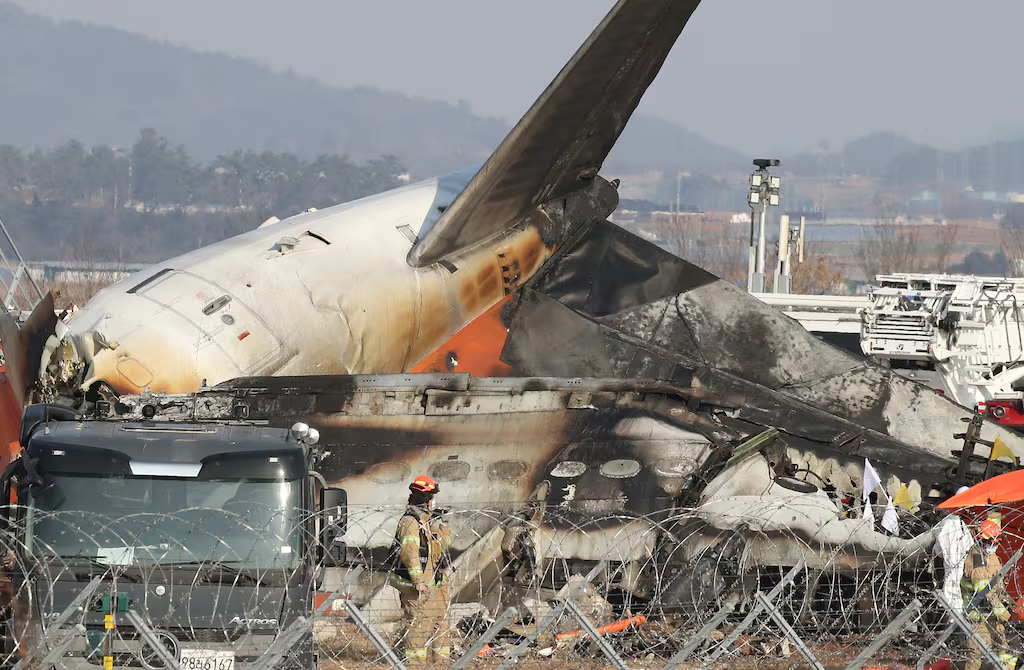
The crash has prompted the suspension of all domestic and international flights at Muan International Airport, further intensifying concerns about aviation safety. The incident also raises questions about the protocols for dealing with bird strikes and adverse weather conditions, which are being considered as possible contributors to the tragedy.
As the investigation continues, the aviation community and the public are left to reflect on the vulnerability of air travel. The crash serves as a somber reminder of the importance of stringent safety measures and the unpredictable nature of emergencies.