
SpaceX launches India’s heaviest satellite, GSAT-20, marking a major milestone in strengthening India’s communication infrastructure. This advanced satellite promises to enhance connectivity across the nation and remote regions, reinforcing India’s presence in the global space sector.
A Groundbreaking Collaboration Between ISRO and SpaceX
The successful launch of the GSAT-20 satellite underscores the growing collaboration between SpaceX and the Indian Space Research Organisation (ISRO).
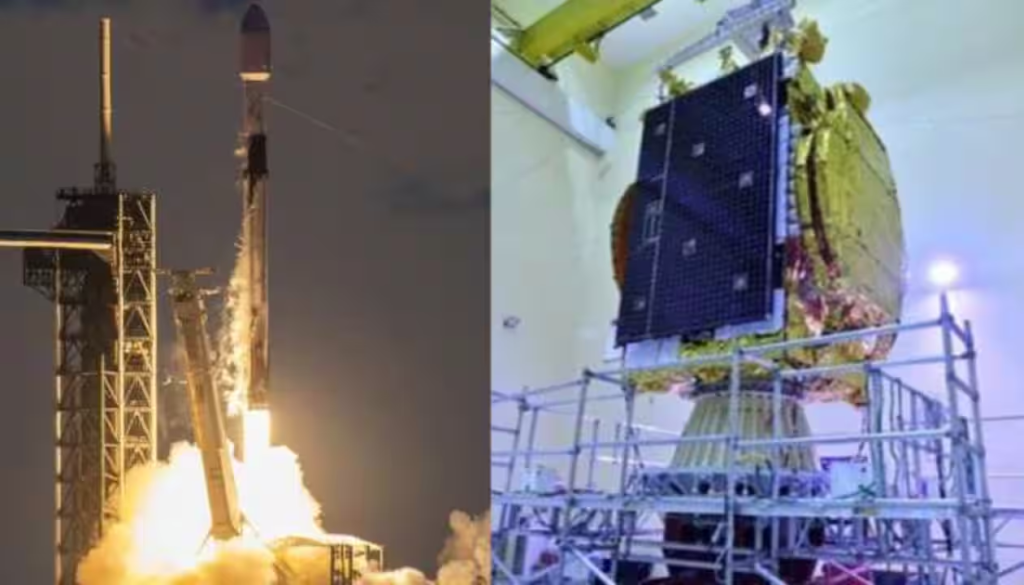
The satellite was launched from Canaveral Space Force Station in Florida using SpaceX’s Falcon 9 rocket. Weighing 4,700 kilograms, GSAT-20 is India’s heaviest communication satellite to date, and its deployment demonstrates the synergy between cutting-edge technology and international cooperation.
ISRO’s decision to partner with SpaceX was primarily driven by GSAT-20’s size and weight. Currently, India’s indigenous launch vehicles, like the GSLV Mark-3 (commonly referred to as ‘Bahubali’), have a payload capacity of up to 4,100 kilograms, which falls short for this mission.
Read : Delhi to San Francisco in 40 Minutes: Now Possible with SpaceX Starship
SpaceX’s Falcon 9, capable of carrying up to 8,300 kilograms to geostationary transfer orbit (GTO), proved to be the ideal launch vehicle for this ambitious project.
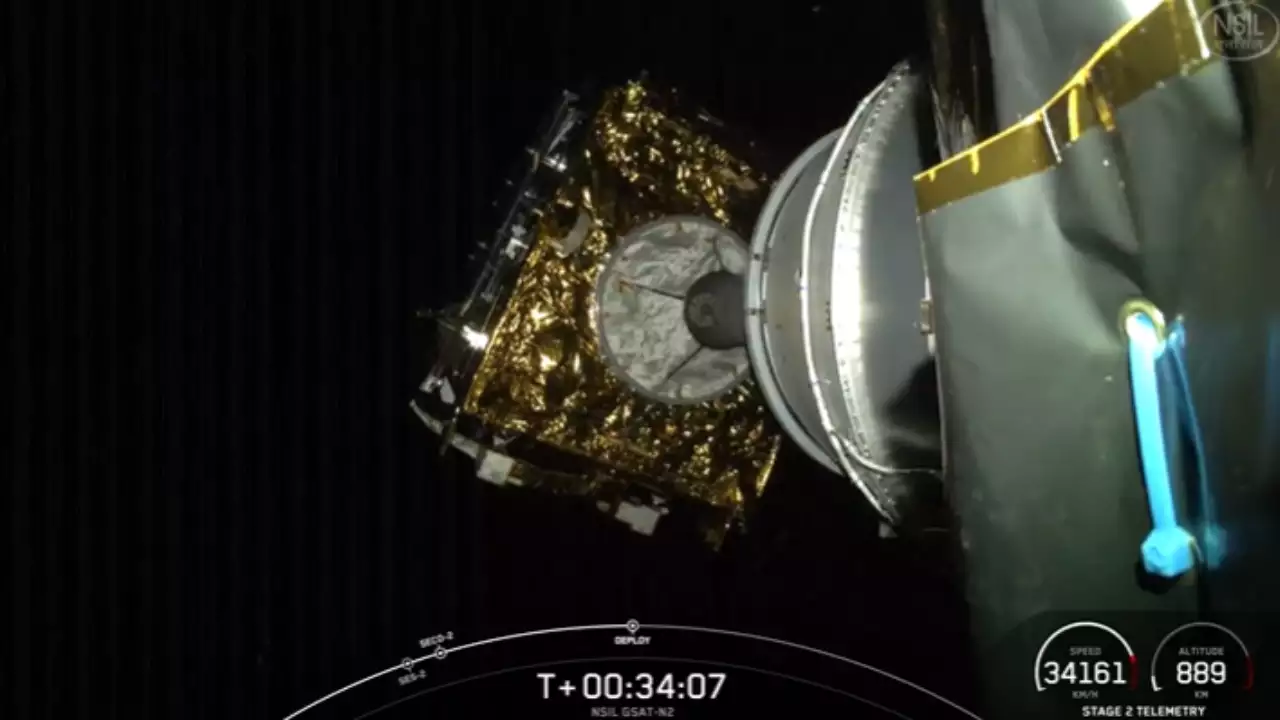
Deployment of @NSIL_India GSAT-N2 confirmed pic.twitter.com/AHYjp9Zn6S
— SpaceX (@SpaceX) November 18, 2024
This partnership also signifies a shift in ISRO’s strategy for launching heavier satellites. Until now, India has relied on the French company Arianespace for such missions. The successful GSAT-20 launch with SpaceX not only marks a new chapter in India’s space endeavors but also paves the way for future collaborations in advanced satellite technology.
GSAT-20: Revolutionizing Communication Infrastructure
The GSAT-20 satellite is a technological marvel, designed to transform India’s communication capabilities. Equipped with Ka-Ka band high-throughput technology, the satellite features 32 beams that ensure seamless coverage across the entire country.
Its advanced design extends connectivity to remote regions, including the Andaman and Nicobar Islands and Lakshadweep, which often face challenges in accessing reliable communication services.

GSAT-20’s versatile functionality supports a wide range of services, including broadband internet, in-flight connectivity, maritime communications, and cellular backhaul. These features are critical for bridging the digital divide in India, particularly in underserved rural and remote areas.
The satellite’s expected lifespan of 14 years ensures long-term benefits for millions of users. By enhancing broadband penetration and enabling high-speed internet access in isolated regions, GSAT-20 will play a pivotal role in India’s digital transformation journey.
ISRO’s Vision for the Future
While the successful launch of GSAT-20 represents a significant achievement, ISRO is already looking ahead to further advancements in satellite technology and launch capabilities.
The organization is developing its Next Generation Launch Vehicle (NGLV), which will have the capacity to carry payloads of up to 10,000 kilograms into GTO. This ambitious project aims to position India as a global leader in satellite launches and space exploration.
The NGLV is expected to enable ISRO to undertake more complex missions independently, reducing reliance on international partners for heavy payload launches. Such advancements will not only boost India’s self-reliance in space technology but also create opportunities for international collaborations and commercial satellite launches.
The GSAT-20 mission exemplifies ISRO’s commitment to enhancing India’s space capabilities while leveraging international expertise. By working with SpaceX, ISRO has demonstrated its adaptability and willingness to collaborate for achieving larger goals, reinforcing its position as a key player in the global space industry.
The launch of GSAT-20 by SpaceX marks a historic moment for India’s space and communication sectors. This advanced satellite, designed to enhance connectivity and support diverse communication services, is a testament to ISRO’s vision and the power of international collaboration.
As India continues to invest in satellite technology and develop its launch capabilities, missions like GSAT-20 will play a crucial role in transforming the nation’s communication infrastructure and bridging the digital divide. This achievement sets the stage for more ambitious projects, reinforcing India’s position as a leader in the global space community.