
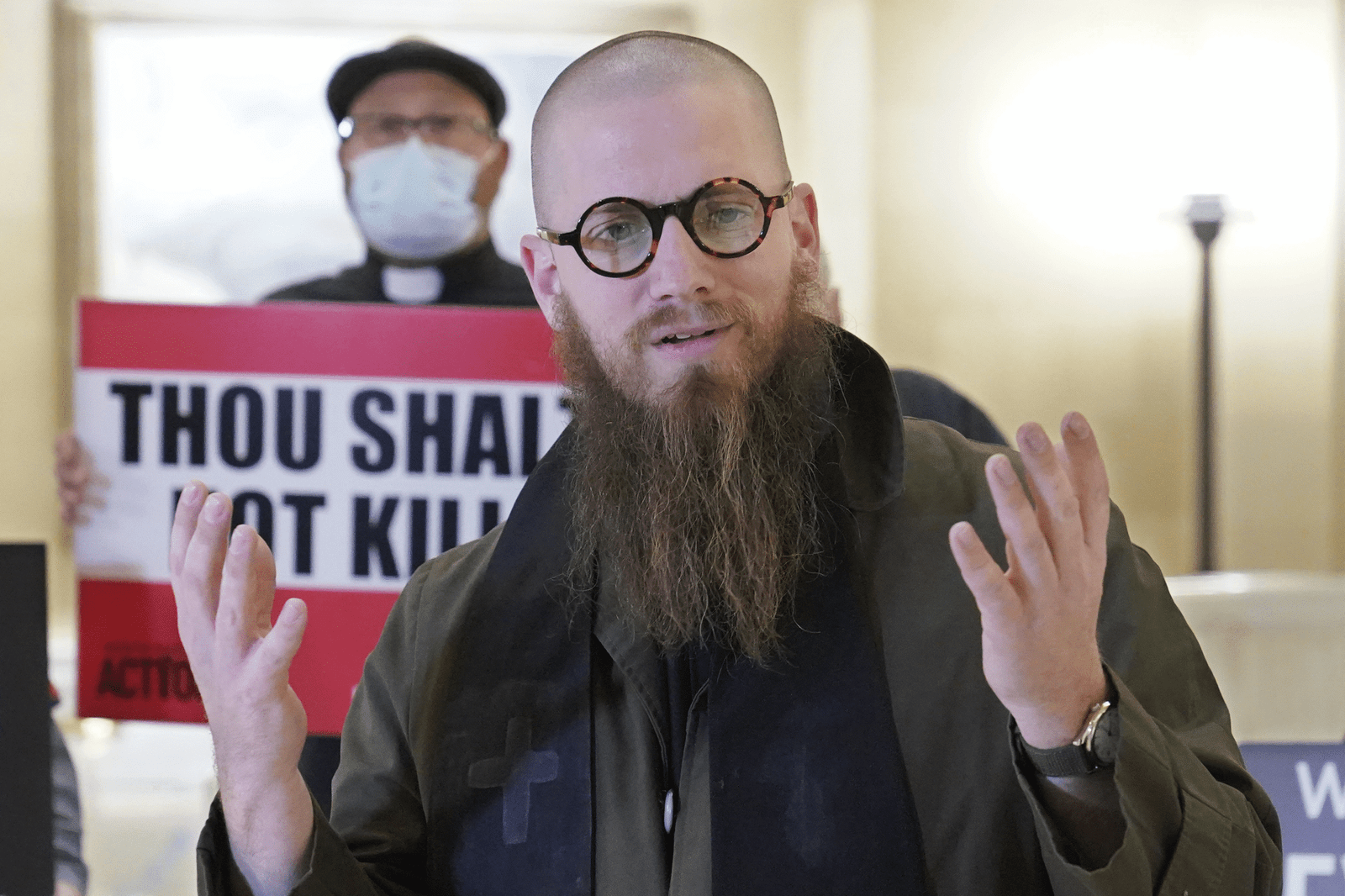
In a world where justice is often measured by retribution and finality, there are few who choose to walk alongside those society has condemned. Rev. Jeff Hood, a theologian, spiritual adviser, and passionate advocate against the death penalty, is one such rare figure.
Recently nominated for the Nobel Peace Prize, Hood’s nomination brings attention not just to his work, but to the quiet, often unseen acts of compassion that take place within the shadows of the justice system. His mission, deeply rooted in love, peace, and spirituality, challenges the very essence of what society views as justice and redemption.
Hood’s life work takes him to the very edge of human experience—into the execution chambers where lives are ended in the name of justice. Since a 2022 ruling by the U.S. Supreme Court allowed spiritual advisers to be present during executions, Hood has accompanied nine inmates during their final moments.
His presence, however, is not merely ceremonial; it is an embodiment of empathy, spirituality, and the unwavering belief that every life, even those society casts aside, has inherent dignity.
A Journey of Faith, Education, and Radical Compassion
Jeff Hood’s path to becoming a spiritual companion on death row began with a strong academic and theological foundation. Educated at Auburn University, the Southern Baptist Theological Seminary, and the Candler School of Theology at Emory University, Hood’s academic credentials reflect a life dedicated to understanding and interpreting spirituality in the context of human struggle and liberation.
In addition to his theological studies, he also completed multiple units of Clinical Pastoral Education at a Level I trauma center in Fort Worth, Texas—experiences that would later prepare him for the deeply emotional and psychological terrain of death row ministry.
Ordained in 2006 at the Rock Baptist Church in Rex, Georgia, and later incardinated into the Old Catholic priesthood at Saint Miriam Parish and Friary in 2022, Hood has long served within diverse religious traditions. But it is his commitment to walking with the most marginalized—especially death row inmates—that distinguishes his ministry.
Read : Is Imran Khan Nominated for the Nobel Peace Prize Again?
Jeff Hood believes his mission is to become the best friend of those who are nearing the end of their lives, forming deep emotional and spiritual bonds that transcend judgment and offer a final sense of connection and peace.
Read : Japan is Selling the Electric Spoon for “Healthier Eating”: Here’s How It Works
“My job is to come into their lives when they have six to three months left to live and become their best friend,” Hood has said. “I become their best friend in order to be their best friend when they die.” These words reflect the soul of his mission: to love those whom society has abandoned, to see the divine in those deemed irredeemable, and to provide comfort in life’s darkest hours.
Witnessing Death, Delivering Peace
Being present during executions is not for the faint of heart. For Hood, the experience is both devastating and sacred. As a spiritual adviser, he stands beside men who are facing the final moments of their lives, many of whom have long grappled with guilt, regret, fear, and hope. Jeff Hood sees this time not as an end, but as a final opportunity to affirm humanity, to bring peace into a space defined by violence, and to hold space for redemption.
The emotional and psychological toll of witnessing nine executions is unfathomable. Yet for Hood, each one is a moment of profound spiritual connection. “The greater honor for me is the opportunity to witness God’s love flow in and out of the lives of those we marginalize and oppress here in the land of the living,” he once told USA TODAY. His presence in the execution chamber is an act of radical love—a refusal to let anyone die alone or unloved.
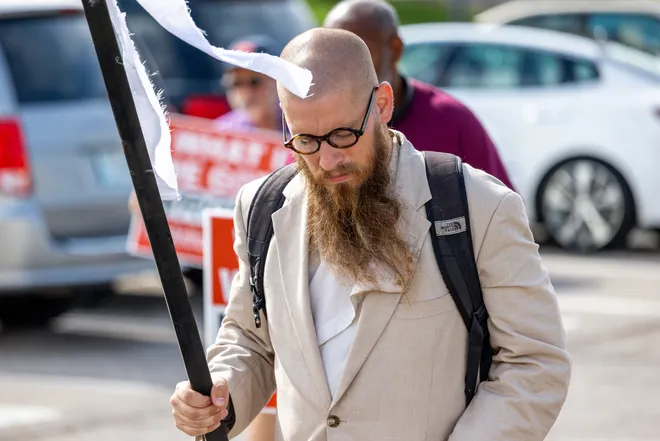
His work has touched not only the lives of inmates but also the families and loved ones they leave behind. Noa Dubois, the wife of former Texas death row inmate Steven Nelson, spoke of how Jeff Hood’s guidance helped her husband face his final days with a sense of peace and clarity.
“Am I a good person? How can I achieve redemption? Is there hell? Is there heaven?” These are the questions Nelson grappled with—questions that Jeff Hood gently helped him navigate. Even after Nelson’s execution, Dubois and Hood remained in touch, bound by shared grief and spiritual understanding.
“It’s proof of understanding and humanity to have the connection with spirituality to put aside people’s actions and just still love them,” Dubois said, capturing the essence of Hood’s ministry in a country that often struggles to reconcile justice with compassion.
A Nobel Nomination Rooted in Quiet Revolution
The Nobel Peace Prize, awarded to those who have made significant contributions to peace, is often associated with large-scale political efforts or international diplomacy. However, Rev. Jeff Hood’s nomination by David Lemley, a professor of religion at Pepperdine University, reminds the world that peace can also be forged in the smallest, most intimate spaces—between a dying man and the person who holds his hand.
Lemley described Hood’s work as “peace for peace’s sake,” emphasizing that the nomination reflects a personal understanding of peace that is about presence, love, and justice—not in the legal sense, but in the spiritual.
“I believe Dr. Hood’s person and work are worthy of the committee’s consideration as an example of bringing both the peace that flows from honoring the dignity of disenfranchised people, and the peace that flows through the channel of one human spirit to another,” Lemley wrote in his nomination letter.
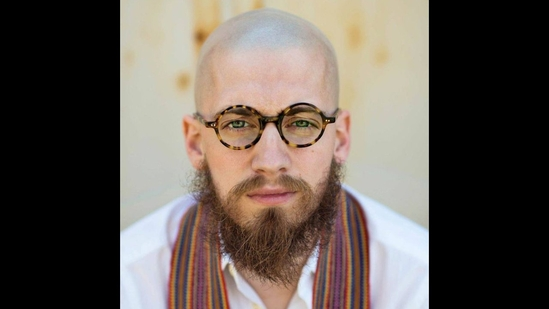
Rev. Hood’s legacy is not just in the lives he has touched directly but in the challenge he poses to broader society. His work invites Americans to rethink capital punishment, to reflect on what justice should look like, and to consider whether redemption and forgiveness have any place in the justice system. His nomination for the Nobel Peace Prize is a powerful acknowledgment of the deep spiritual and moral questions that surround state-sanctioned executions.
He has also made contributions through writing, having authored over 100 books, including The Courage to Be Queer, which won acclaim as one of the best religion books of 2016 by the Independent Publishers Book Awards. His writings, like his ministry, focus on liberation, spirituality, and the intersection of faith and social justice.
He has served in leadership roles for organizations like the Texas Coalition to Abolish the Death Penalty and the Fellowship of Reconciliation USA, further amplifying his influence in the movement for systemic change.
In October, the world will learn whether Rev. Jeff Hood will receive the Nobel Peace Prize. Regardless of the outcome, his nomination stands as a testament to the power of love, the importance of presence, and the profound peace that can emerge even in the most tragic of circumstances. It is a reminder that the work of peace is not always loud or global—it can be quiet, local, and deeply personal.
Rev. Jeff Hood’s life and mission challenge the idea that people are the sum of their worst actions. He brings humanity into the execution chamber, offering grace in the place of finality, and reminds us all that no one is beyond love.
Through his presence, through his faith, and through his unwavering commitment to those society forgets, Hood has not only transformed the lives of the condemned—he has transformed the very meaning of peace.