
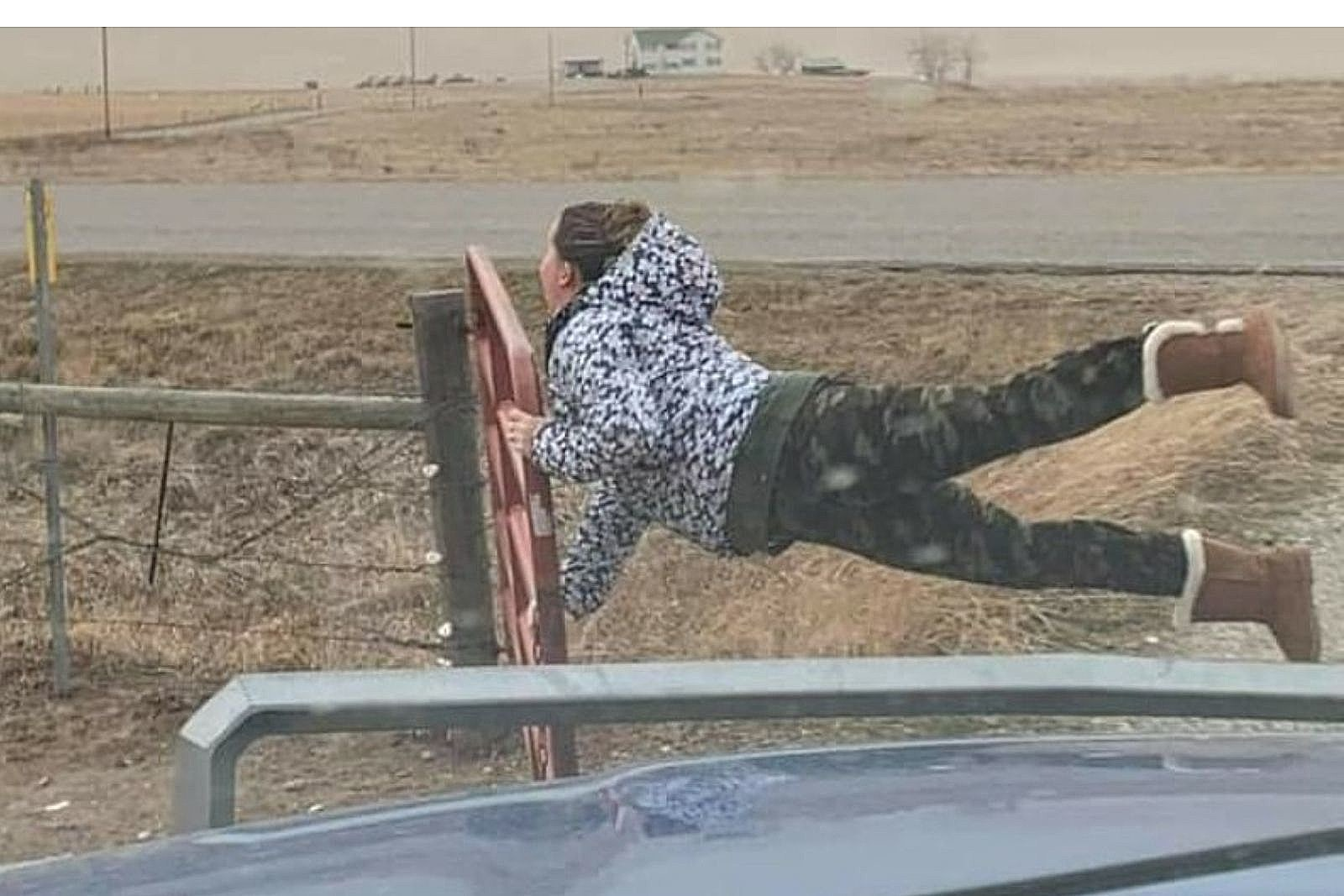
On April 11, 2025, China issued a startling weather advisory, urging millions across multiple provinces to Stay Indoors or Risk Being Blown Away by ferocious winds.
The National Meteorological Center’s alert, widely broadcast by state media, included an unusual warning: individuals weighing less than 110 pounds could be “easily blown away” by gusts exceeding 100 kilometers per hour (62 mph).
This rare and powerful storm, driven by a cold front clashing with warm air masses, has disrupted transportation, closed schools, and heightened safety concerns, particularly for children and lighter adults.
A Gale Force Crisis Grips the Nation
The storm’s reach is staggering, impacting over 400 million people across more than a dozen provinces, including Beijing, Shanghai, Tianjin, and coastal areas like Zhejiang and Fujian. The National Meteorological Center reported winds hitting Force 9 on the Beaufort scale—severe gales capable of uprooting trees and damaging structures—with gusts in Jiangsu and Shandong clocked at 117 km/h (73 mph).
Inland regions like Inner Mongolia and Gansu faced blinding dust storms, reducing visibility to under 100 meters in some areas. By April 12, the storm had grounded over 300 flights, with Beijing Capital International Airport canceling 45% of its schedule. High-speed rail services between major cities slowed, and highways in Hebei and Shanxi closed due to debris and overturned vehicles.
Urban centers felt the chaos acutely. In Shanghai, parks and tourist sites like the Bund shut down, while Tianjin suspended outdoor construction after scaffolding collapsed, injuring two workers. Schools in affected provinces shifted to online learning, and state media urged residents to secure loose objects like bicycles and flowerpots.
Tragically, two fatalities were reported in Henan, where a billboard collapsed, and a child in Shandong was hospitalized after being struck by a falling branch. The advisory’s focus on those under 110 pounds stemmed from concerns for primary school children, many of whom weigh 30-40kg, and petite adults, who risked being knocked over or lifted by sudden gusts.
Read : Pro-Palestinian Protesters Wearing Kaffiyeh Scarves And Masks Stormed Manhattan’s Barnard College
Videos on Douyin showed pedestrians struggling against winds in Nanjing, with one clip of a woman clinging to a pole going viral, amplifying public awareness. The government’s response was swift and coordinated.
Read : ISS Shares Video of Hurricane Beryl from 400 km Above Space: Watch
The Ministry of Emergency Management deployed 1,200 personnel to clear roads and assist stranded travelers, while the China Coast Guard increased patrols to aid fishing vessels caught in rough seas. President Xi Jinping called for “all-out efforts” to protect vulnerable populations, reflecting China’s centralized approach to disaster management.
However, the storm disrupted spring planting in rural areas, threatening crops like wheat and corn, and caused power outages for 150,000 households in Liaoning. As the cold front moves eastward, forecasters warn that coastal flooding may compound the chaos by Sunday, particularly in low-lying areas of Zhejiang.
The Science of the 110 pounds Warning
The advisory’s focus on body weight, while eye-catching, is rooted in physics and meteorology. Winds exceeding 100 km/h exert significant force, measured in Newtons, on any object in their path. For a person weighing 110 pounds, a 117 km/h gust generates roughly 600 Newtons of force—enough to destabilize or lift someone with insufficient grip or footing.
Dr. Liu Wei, a meteorologist at Peking University, explained to CCTV that children and lighter adults, with lower centers of gravity and less muscle mass, are particularly vulnerable. “A 35kg child faces the same wind force as a 70kg adult but has half the strength to resist,” Liu noted. This risk is heightened on open streets, bridges, or near high-rise buildings, where wind tunnels amplify gusts.

The 110 pounds threshold, though seemingly arbitrary, aligns with safety protocols for extreme weather. In Japan, similar warnings for typhoons often reference children under 40kg, and China’s advisory likely drew from such models. The Meteorological Center’s data showed that 60% of primary school students in urban areas weigh below 110 pounds , making them a key concern.
Posts on Weibo questioned the specificity, with some users joking about “eating more to stay grounded,” but experts defended it as a practical guideline. The warning also considered secondary risks: lightweight individuals could be struck by flying debris, like signs or branches, which caused 12 injuries in Beijing alone by April 12.
Climate patterns fueled this storm’s intensity. A potent cold front from Siberia collided with warm, moist air from the South China Sea, creating a volatile pressure gradient. The El Niño cycle’s lingering effects, noted by the World Meteorological Organization, have amplified Asia’s extreme weather this year, with China seeing a 20% rise in gale-force events since 2024.
Dust storms in Xinjiang, where visibility dropped to 50 meters, reflect desertification worsened by drought, while coastal gales signal shifting jet stream patterns. These factors suggest such warnings may become more common, challenging China’s infrastructure and preparedness.
Public Safety and Global Reflections
The storm’s fallout has sparked a broader conversation about safety and resilience. China’s rapid urbanization—70% of its 1.4 billion people live in cities—means millions face weather risks in dense, exposed environments.
The government’s advisory, while effective in reducing casualties, exposed gaps. Rural areas like Gansu lacked real-time alerts, leaving farmers vulnerable, and small businesses in Tianjin reported losses from unforecasted closures.
The 110 pounds warning, though scientifically valid, confused some residents, with Shanghai’s elderly seeking clarification on hotlines. State media’s blanket coverage, including animated PSAs showing children being blown away, was criticized for alarmism but praised for clarity.
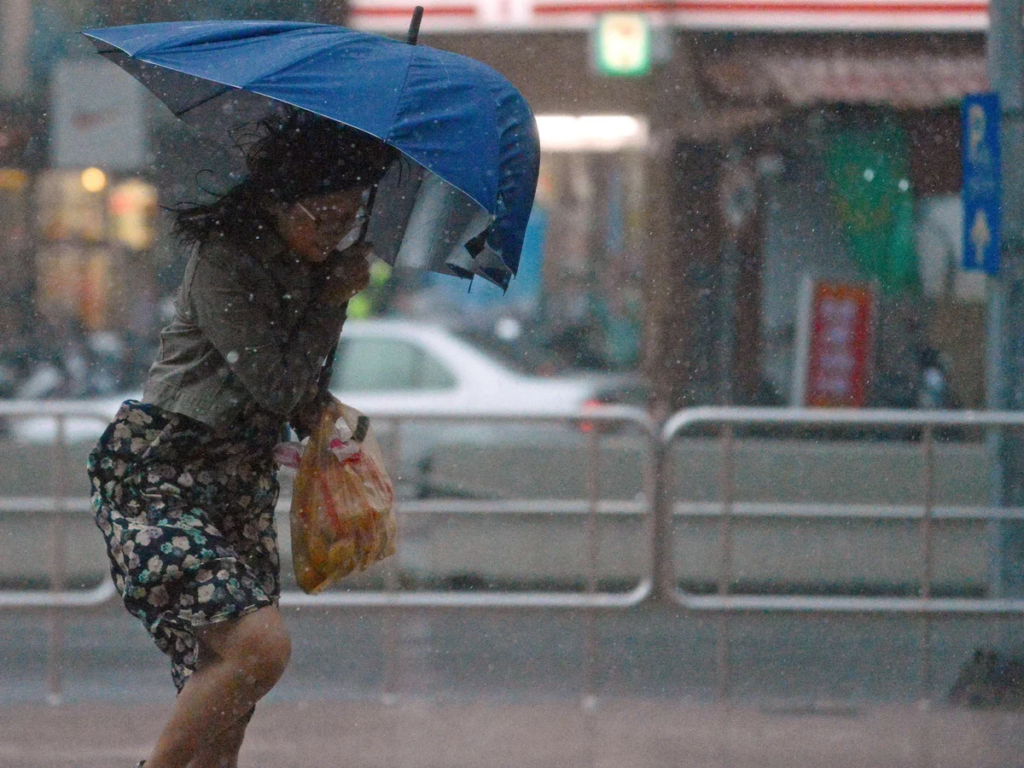
Globally, the advisory drew fascination and skepticism. Outlets like CNN and The Guardian highlighted its specificity, with meteorologists noting it’s rare for weight-based guidance in Western alerts. Social media on X buzzed with reactions—some mocked it as “China’s wind diet plan,” while others admired its proactive tone.
The storm’s timing, during a holiday travel rush, amplified its impact, stranding 2 million passengers. Comparisons to Australia’s 2024 cyclone warnings, which lacked such detail, fueled debates about balancing precision with panic.
China’s approach—centralized, data-driven, and slightly paternalistic—contrasts with decentralized systems elsewhere, offering lessons in crisis communication.
The incident underscores climate change’s growing toll. China, the world’s largest carbon emitter, faces increasing pressure to adapt. Its $400 billion investment in weather resilience since 2020, including 5,000 new monitoring stations, helped mitigate this storm’s damage, but rising sea levels and desertification loom large.
For individuals under 110 pounds, the warning was a stark reminder of nature’s power, but for all, it highlighted vulnerability in a warming world. As China braces for more gales, the balance between precaution and normalcy remains delicate.
The storm’s legacy will linger beyond Sunday. Families mourn the Henan victims, farmers assess crop losses, and cities rebuild. Shapiro’s call for unity echoes here—weather knows no politics, and safety demands collective action.
The 110 pounds warning, quirky yet grounded, may fade, but its message endures: in nature’s fury, preparation is survival. As China looks to the skies, it carries a lesson for the world—respect the wind, or it will carry you away.