

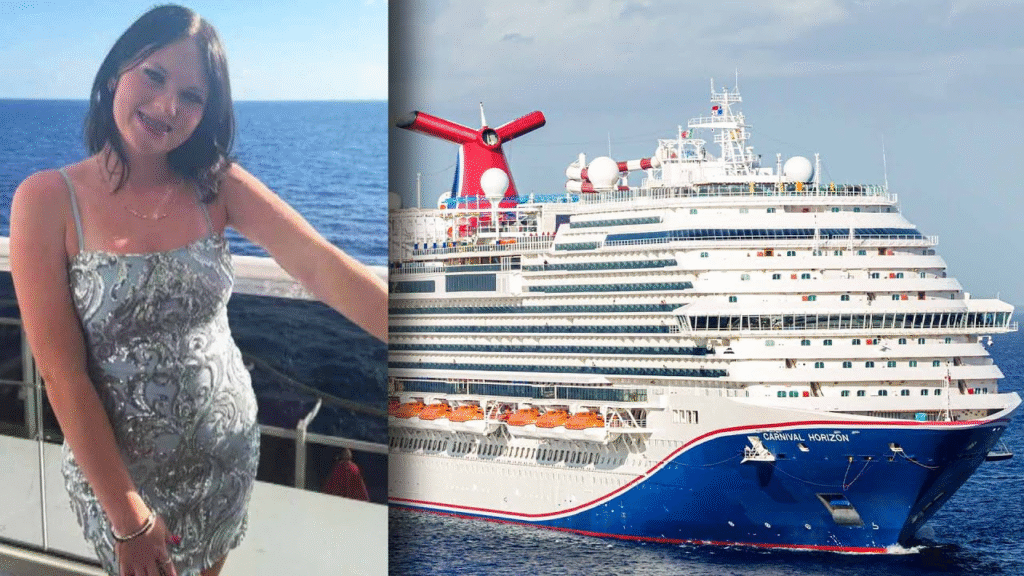
The death of 18-year-old Florida high school senior Anna Kepner aboard the Carnival Horizon on 8 November has drawn national attention, not only for the disturbing circumstances of how she was found but also for the devastating emotional toll now facing her family.
What began as a celebratory multigenerational vacation meant to cement new traditions for a blended family has instead become a tragedy in which relatives now fear they may have lost two children. As investigators continue examining the circumstances of Anna Kepner’s asphyxiation, her grandparents and other family members are speaking publicly about the events that unfolded, the information they were provided by authorities, and the deeply complex emotions they are now confronting.
Early Findings and the Investigation’s Direction
Authorities initially described Anna Kepner’s death as sudden, though details soon emerged that pointed to suspected foul play. According to national reports and comments shared with ABC News, Anna was discovered under a bed in one of the ship’s staterooms. She had been wrapped in a blanket and covered with life vests, raising immediate concerns about the manner in which her body was concealed.
Investigators later indicated she died from asphyxiation caused by a bar hold, with bruising visible on one side of her neck. While the Miami-Dade medical examiner has not yet confirmed the official cause or manner of death, investigators relayed their preliminary assessment to the family. Notably, the initial report indicated no signs of sexual assault, and at the time, there were reportedly no drugs or alcohol detected in Anna Kepner’s system.
Both autopsy and toxicology results remain pending, and authorities have not released a timeline for when they expect final documentation. The FBI, which handles deaths involving U.S. citizens in international waters, has so far stated only that it is investigating the “sudden death.” No information has been provided regarding potential arrests or future steps.
The direction of the investigation shifted significantly for the public when Anna Kepner’s grandparents shared that authorities had told them her 16-year-old stepbrother was a suspect. This revelation emerged during an interview with ABC News in which the family detailed what they had learned after speaking with investigators. Anna’s stepmother, Shauntel Hudson, also appeared to acknowledge this development indirectly when she requested a delay in a pending custody hearing, citing that one of her minor children could soon face criminal charges.
More than two weeks after the body of Anna Kepner was found in her cabin aboard a Carnival cruise, her death has been ruled a homicide. In an exclusive interview with ABC News' @VictorOquendo, her grandparents speak out about their heartbreaking loss. https://t.co/yf9jsdAZo7 pic.twitter.com/FVQBmdecUJ
— World News Tonight (@ABCWorldNews) November 25, 2025
The disclosure that Anna Kepner’s stepbrother was under investigation quickly added layers of complexity to the incident. It also raised immediate questions about the events that took place inside the cabin, the state of their relationship, and what might have led to the fatal confrontation. Although the FBI has remained silent, family accounts have provided the only window into the personal and emotional dynamics preceding Anna’s death.
Family Reactions and Insights from Those Closest to Anna
The news that Anna Kepner’s stepbrother was being considered a suspect left the Kepner family grappling with profound grief coupled with an overwhelming sense of uncertainty. Her grandparents, Barbara and Jeffrey Kepner, expressed that the tragedy effectively meant they had lost two grandchildren, regardless of whether charges are ultimately filed. Their comments underscored the impossible position in which the family finds itself: mourning the loss of an 18-year-old whose life was only beginning while simultaneously fearing the permanent emotional and legal consequences for a younger boy they also loved.
Barbara Kepner described how her grandson had been distraught and “an emotional mess” after Anna Kepner’s death. She said he had been temporarily hospitalized for psychiatric observation and spoke to law enforcement during the investigation. According to her recollection, the boy said he could not remember what happened during the critical period leading to Anna’s death, insisting this was his truth. Such statements, while highly concerning, appear to reflect the genuine confusion and psychological upheaval he experienced in the immediate aftermath.
Read : 80-Year-Old Suzanne Rees Dies After Being Left Behind By Cruise Ship on Lizard Island
Despite the gravity of the situation, Anna Kepner’s grandparents repeatedly emphasized that the family did not draw rigid distinctions between blood relatives and step-siblings. They described the two teenagers as exceptionally close. Barbara recalled them behaving like typical siblings who cared about each other appropriately, while Jeffrey reiterated that their family dynamic was built on inclusivity, not division. The family had long considered themselves a cohesive blended unit, making the implications of the investigation all the more painful.
Further insights into the relationship between Anna Kepner and her stepbrother came from Anna’s ex-boyfriend, Jim Thew, who told local media that Anna had previously confided in him about feeling uncomfortable around the younger boy. His comments suggested that there may have been warning signs pointing to tension or unease, though the nature and extent of those concerns remain unclear. Whether these earlier observations are relevant to the investigation has not been addressed by authorities, and relatives have not publicly commented on them.
The day the tragedy unfolded marked the beginning of what was expected to be a memorable new tradition for the Kepner family. Three generations had set out together for the trip: Anna’s grandparents, her father, her stepmother, and all six of the children from both marriages. The group occupied three staterooms on the vast vessel, which carries nearly 4,000 passengers. For a family that had already worked to form healthy bonds after blending households, this vacation was meant to mark the start of a shared annual experience. Instead, it became the scene of an unimaginable loss.
As investigators continued questioning passengers and reviewing evidence, the family attempted to process the shock while still aboard the ship. Barbara recounted how her grandson had spoken to her in his own words, trying to explain that he could not recall the events that took Anna Kepner’s life. She said she believed he was telling the truth as he understood it. Although devastated, she also acknowledged that knowing more about what caused Anna’s death provided a small measure of clarity, though it offered no comfort capable of easing the sorrow of their loss.
The Broader Emotional and Legal Uncertainty Ahead
The circumstances of Anna Kepner’s death have created an agonizing landscape for her family, dominated by legal uncertainty, unanswered questions, and emotional devastation. They have expressed frustration at the lack of information from federal authorities, a reality that often accompanies ongoing investigations but which can be particularly challenging for families desperate for clarity. With no official suspect named, no charges filed, and no final autopsy report, the family now finds itself awaiting updates that may dramatically shape the future of those involved.
The potential involvement of a minor complicates the investigation further. Juvenile suspects are often afforded procedural protections that limit what investigators can publicly disclose. Additionally, the intersection of juvenile justice issues with a case occurring aboard a cruise ship, involving federal jurisdiction, and potentially crossing international boundaries makes the legal process more complex than standard criminal investigations on land.

For the family, the possibility that Anna’s stepbrother could face criminal charges evokes competing emotions of loyalty, protectiveness, and grief. Barbara and Jeffrey Kepner emphasized that they are not in a position to accuse the boy, acknowledging that without knowing precisely what happened in that room, they cannot draw conclusions. They also reiterated that they believe Anna and her stepbrother genuinely cared for each other as siblings, despite the suspicions now surrounding his involvement.
Meanwhile, the community of Titusville, where Anna Kepner lived and attended high school, continues to mourn the loss of a young woman described as bright, active, and deeply involved in cheerleading. Her death has resonated widely not only because of the shocking circumstances but also because it occurred in what was expected to be a celebratory setting. The intersection of family bonding, vacation, and tragedy has amplified the emotional impact, leaving friends, classmates, and neighbors struggling to reconcile the abrupt end to a promising life.
The full legal picture will remain uncertain until the FBI and the medical examiner finalize their findings. Whether the asphyxiation was the result of intentional harm, tragic accident, or another form of physical interaction is a question that remains central to the investigation. The family acknowledges that no matter what authorities eventually conclude, the loss they have endured is permanent and unalterable.
The death of Anna Kepner aboard the Carnival Horizon stands as a heartbreaking reminder of how a single moment can irreversibly alter family bonds and expectations for the future. As authorities continue their investigation, the Kepner family must navigate the intersecting paths of grief, love, legal uncertainty, and the emotional fallout of losing one child while facing the possibility of severe consequences for another.
Topical CBD https://www.cornbreadhemp.com/products/full-spectrum-cbd-gummies offerings have carved out a unique niche in skincare and muscle support. Creams, salves, and roll-ons convey cannabidiol directly to designated areas, offering localized relief without entering the bloodstream. Athletes, blue-collar laborers, and anyone experiencing somatic tension favor this straightforward application technique. Combined with elements like menthol or arnica, topical mixtures provide a relieving multi-layered approach to relief.