
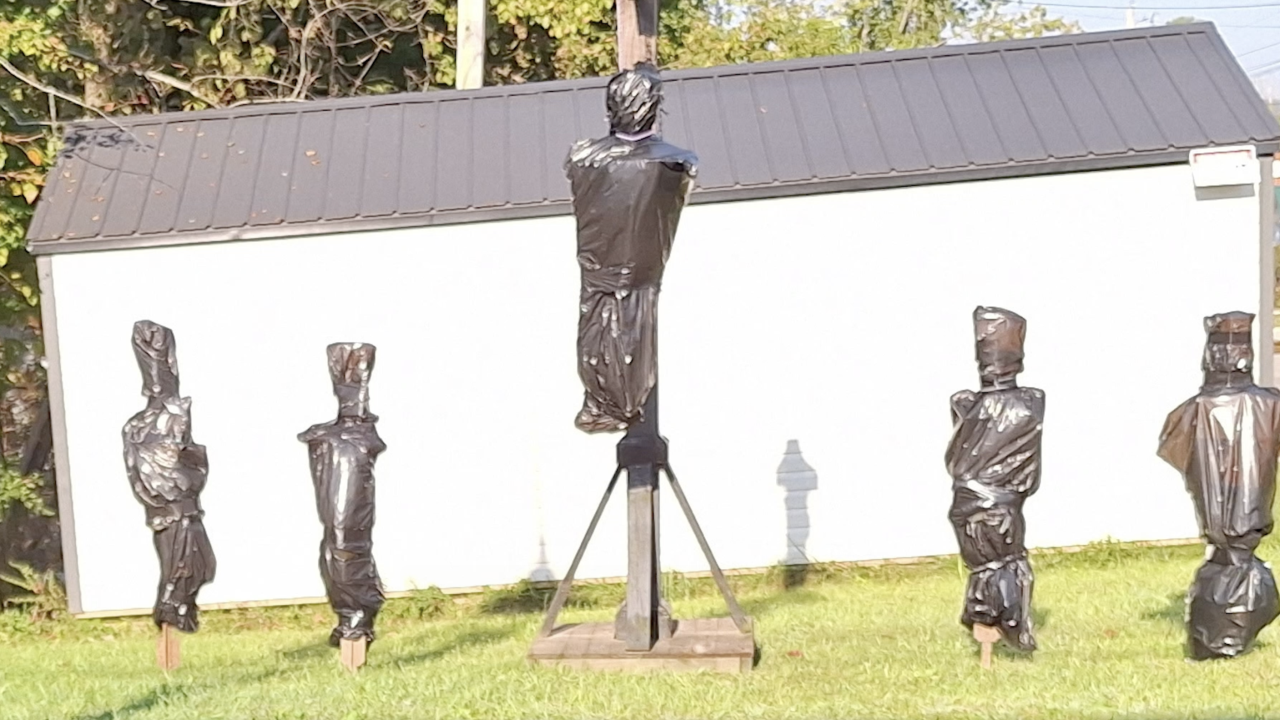
In a shocking incident that has rattled the small town of Stanton, Kentucky, authorities arrested 58-year-old resident Stephan Marcum on October 4, 2025, following complaints about his front-yard Halloween decorations. The display featured five fake bodies wrapped in black trash bags, each labeled with the titles of local government officials, including a simulated hanging that prompted swift police action. Marcum faces charges of third-degree terroristic threatening and intimidating a participant in the legal process, highlighting escalating tensions between residents and city leadership in Powell County. The arrest underscores the fine line between free expression and perceived threats in politically charged environments, especially as Halloween approaches and communities brace for seasonal displays.
Kentucky State Police responded to the scene on Court Street around 2 p.m. after receiving a report of potential witness intimidation and terroristic threatening from Commonwealth’s Attorney Miranda King. Upon arrival, troopers documented the setup: four of the figures were staked into the ground, while one dangled from an elevated position with a rope around its neck. The hanging effigy bore the label “District Judge,” evoking imagery of lynching that immediately raised alarms among officials and passersby. The other bags were marked “Mayor,” “Zoning Mgr.,” “C.A.”—referring to County Attorney—and “SIS,” possibly shorthand for a specific administrative role.
Marcum, who resides at the property, declined to discuss the decorations with investigators, stating he had nothing to say about his Halloween setup. Authorities seized the items as evidence and transported them to Kentucky State Police Post 8 in Morehead for further analysis. He was booked into the Powell County Detention Center that same day, where he remains held on a $5,000 cash bond. Court records indicate no immediate court date has been scheduled, but the case is expected to proceed in Powell County District Court, potentially involving testimony from affected officials.
Local law enforcement emphasized that while Halloween decorations often push creative boundaries, this installation crossed into criminal territory due to its direct targeting of public servants. “The specificity of the labels and the violent implications left no room for interpretation as mere festivity,” a police spokesperson noted in the arrest citation. The incident occurred amid broader national discussions on political intimidation, with similar cases reported in rural areas where disputes over zoning and ordinances have fueled public displays of frustration.
The Incident Unfolds: From Yard Setup to Police Response
The controversial display appeared in Marcum’s yard sometime before October 4, catching the attention of drivers and residents in Stanton’s quiet Court Street neighborhood. Stanton, a town of about 2,700 people nestled in the Appalachian foothills roughly 45 miles southeast of Lexington, is known for its tight-knit community and annual Halloween events. However, this year’s preparations took a dark turn when Marcum’s setup became visible to the public.
Eyewitness accounts describe the figures as life-sized dummies or mannequins stuffed into heavy-duty trash bags, propped up in a mock crime scene arrangement. The hanging element, secured to a tree or porch overhang, featured a noose-like rope that simulated execution, a detail that Commonwealth’s Attorney King cited in her complaint to police. King, who identified her own title “C.A.” on one of the bags, reported the matter directly to a state trooper, expressing concerns for her safety and that of colleagues. “As elected officials, we serve the public, but threats disguised as decor cannot be tolerated,” King stated in a brief comment to local media following the arrest.
Read : Ankola: The Halloween Capital of the World
Kentucky State Police, who handle many rural investigations in Powell County due to limited local resources, arrived promptly. The citation details how troopers photographed the scene, noting the bags’ prominent placement facing the street for maximum visibility. Marcum’s refusal to engage further escalated the situation; he was read his Miranda rights on-site and taken into custody without resistance. Neighbors, some of whom had initially dismissed it as edgy Halloween flair, expressed relief at the quick response. “It’s spooky season, sure, but this felt personal and scary,” one anonymous resident told reporters.
Read : The Magic of Disneyland Paris: Where Dreams Come True in the Heart of Europe
The seizure of the decorations marks a procedural step to preserve evidence for prosecution. Forensic examination at Post 8 could reveal any additional context, such as writings or materials linking the display to prior disputes. Powell County officials have not released surveillance footage, if any exists, but the incident’s public nature ensured multiple witnesses, including city workers who passed by during routine patrols.
Legal Charges and Immediate Aftermath
Stephan Marcum’s arrest carries significant legal weight under Kentucky statutes. The primary charge, third-degree terroristic threatening, is a Class A misdemeanor punishable by up to one year in jail and a $500 fine. It applies when an individual intentionally conveys a threat to commit a crime of violence against another person, even if no immediate action is taken. Prosecutors argue the display’s imagery—bodies in bags, one hanged—constituted an implied violent threat against officials performing their duties.
Compounding the case is the charge of intimidating a participant in the legal process, another misdemeanor that addresses actions meant to influence, deter, or harm witnesses, attorneys, or judges. This stems from Marcum’s ongoing issues with city ordinances, where court proceedings may have involved the labeled officials. Documents suggest the display was a retaliatory gesture, amplifying fears of witness tampering in small-town litigation.
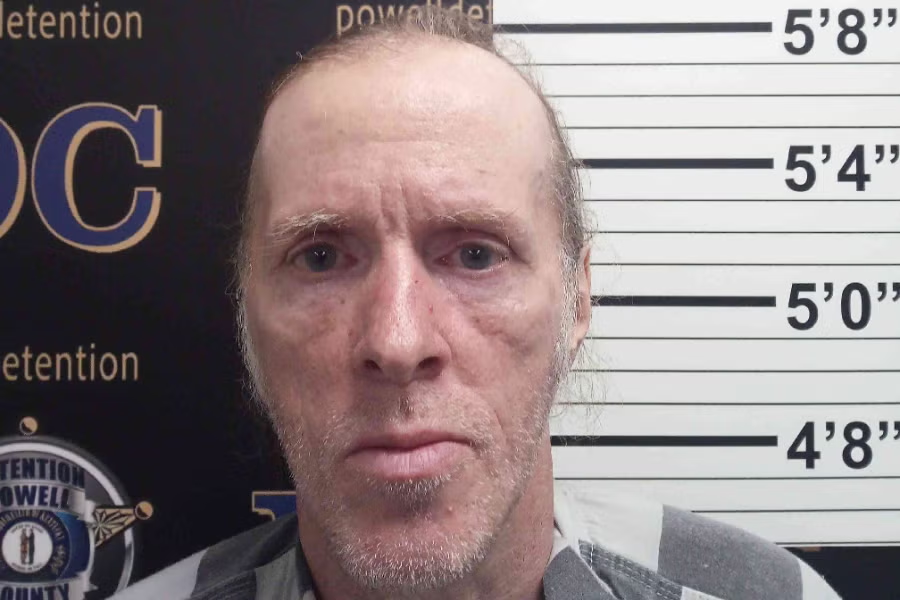
Following his booking, Marcum underwent standard processing at the Powell County Detention Center, a facility housing about 150 inmates with capacity for overflow from nearby counties. Bond was set at $5,000 during his initial appearance, reflecting the charges’ seriousness but not elevating to felony status. As of October 8, 2025, he remains in custody, with jail records listing no prior convictions but noting a history of minor traffic violations. Legal experts anticipate a plea deal possibility, given the misdemeanor level, though victim impact statements from officials could influence sentencing.
The arrest has prompted internal reviews within Stanton city government. Mayor Royce Adams, whose title appeared on one bag, issued a statement condemning the act while urging community dialogue on resolving disputes peacefully. “We respect First Amendment rights, but public safety comes first,” Adams said. The Powell County Sheriff’s Office, in coordination with state police, increased patrols in the area to address any copycat concerns as Halloween nears.
Community Shockwaves and Broader Implications
Stanton’s reaction to the arrest has been one of collective unease, fracturing the town’s facade of neighborly harmony. Powell County Judge Executive Eddie Barnes, a longtime acquaintance of Marcum, shared mixed sentiments in interviews. “I’ve known Stephan for decades; he can be a good person with a big heart,” Barnes remarked. “But this? Driving by and seeing that in his yard—it’s harsh, way over the line. You don’t express anger like that.” Barnes, whose role was not directly targeted, highlighted the personal toll on officials already navigating budget strains and infrastructure debates.
Social media buzzed with divided opinions post-arrest. Some locals defended Marcum’s display as satirical protest against perceived bureaucratic overreach, citing frustrations with zoning enforcement in historic districts like Court Street. Others decried it as hate speech, drawing parallels to rising threats against public servants nationwide. A recent social media rant by Marcum, uncovered in reports, railed against city violations at his property, suggesting the decorations were a visceral response to a courtroom setback. “They hit me with ordinances I never knew existed—time to show how it feels,” he allegedly posted, fueling speculation on motive.
This event fits into a pattern of escalating political rhetoric in rural America, where small disputes morph into public spectacles. Similar incidents, like effigy burnings during election cycles or vandalized yard signs, have surged 20% in Kentucky over the past year, per state attorney general data. Experts warn that Halloween’s permissive atmosphere for gore could normalize such escalations, prompting calls for clearer guidelines on “threatening” decor from the American Civil Liberties Union.
For Stanton, recovery involves mending divides. Community leaders plan a town hall on October 15 to discuss civil discourse, with mental health resources offered for affected officials. Marcum’s family has stayed silent, but supporters have started a modest online fund for his defense, raising questions about free speech boundaries. As the case unfolds, it serves as a stark reminder: in tight-knit towns, one yard’s horror show can upend lives, demanding vigilance to prevent imitation.