
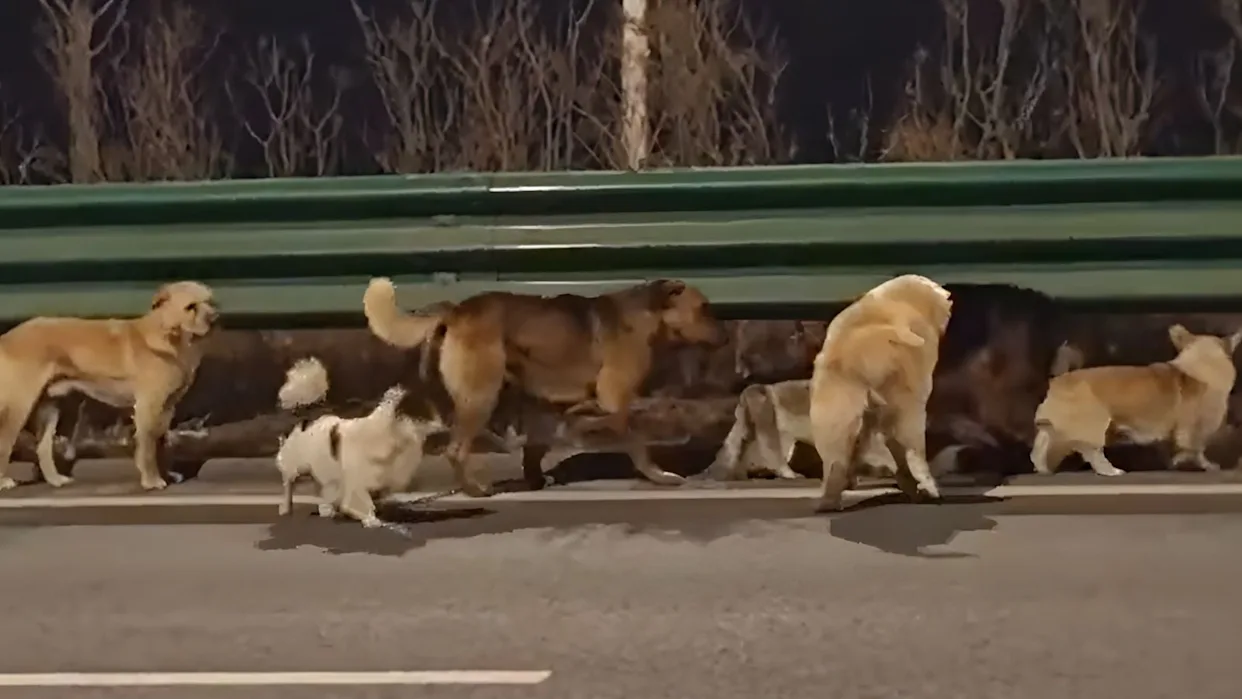
The story of Stolen Village Dogs Escape Meat Truck in northeastern China has captured global attention, not merely because of the danger they escaped, but because of the extraordinary determination and loyalty they displayed in finding their way home. Stolen under suspected circumstances linked to the dog meat trade, these animals managed to break free from captivity and embark on a long and perilous journey along a busy highway.
Covering approximately 17 kilometers, the dogs navigated traffic, stayed together as a pack, and ultimately returned to the families they belonged to. Their journey, documented in a widely shared video, resonated deeply with millions of viewers, highlighting not only the intelligence of animals but also the powerful emotional bonds they form with each other and their human companions.
A Dangerous Escape and a Remarkable Journey
The incident came to light on March 16, when a passerby recorded a group of seven dogs moving together along a highway in Changchun, located in China’s Jilin province. The footage showed an unusual and striking scene: the dogs were not scattered or panicked, but instead appeared organized, moving as a cohesive unit. At the center of the group was an injured German shepherd, clearly struggling, yet surrounded closely by the other dogs as if being protected. At the front of the pack, a Corgi repeatedly turned its head back, seemingly checking that every member of the group was keeping up.
This behavior suggested more than instinct; it indicated coordination, awareness, and possibly even leadership within the group. The presence of multiple breeds, including a golden retriever alongside the German shepherd and Corgi, further emphasized that these were not stray dogs randomly gathering, but animals familiar with one another. Reports later confirmed that all seven dogs came from the same village, where they had grown accustomed to roaming freely and forming close bonds.
The circumstances leading to their presence on the highway pointed toward a grim reality. It was widely suspected that the dogs had been stolen by individuals involved in the dog meat trade. Although no direct witnesses confirmed their abduction, the theory gained credibility due to the common occurrence of such thefts in certain regions and the fact that the dogs appeared to have escaped from a moving vehicle. Their sudden appearance far from their village, combined with their determined direction of travel, suggested they were attempting to retrace a path back home.
Read : China is Banning Multiple Influencers for Flaunting Wealth
The highway itself posed significant risks. With fast-moving vehicles and constant traffic, the dogs faced potential injury or death at any moment. Yet, they continued forward, maintaining their formation and pace. Their journey was not only physically demanding but also required a level of spatial awareness and memory that astonished observers.
Community Response and Rescue Efforts
The video recorded by the passerby quickly gained attention after being shared on a popular social media platform. Recognizing the urgency of the situation, the individual appealed for help, hoping that authorities or local organizations would intervene before tragedy struck. The response was swift and coordinated.
A local animal rescue group stepped in, mobilizing volunteers to locate and assist the dogs. What made this effort particularly notable was the use of modern technology alongside traditional search methods. Volunteers deployed a drone to track the dogs’ movement from above, allowing them to monitor the group’s progress and identify safe opportunities to intervene. This combination of human effort and technological support increased the chances of ensuring the dogs’ safe return.
Despite these efforts, the dogs proved difficult to approach. When the passerby initially attempted to guide them to safety, they ignored the assistance and continued on their path. This behavior reinforced the idea that the dogs were not aimlessly wandering but were instead focused on reaching a specific destination. Their determination to keep moving, even when help was offered, suggested a strong instinct guiding them homeward.
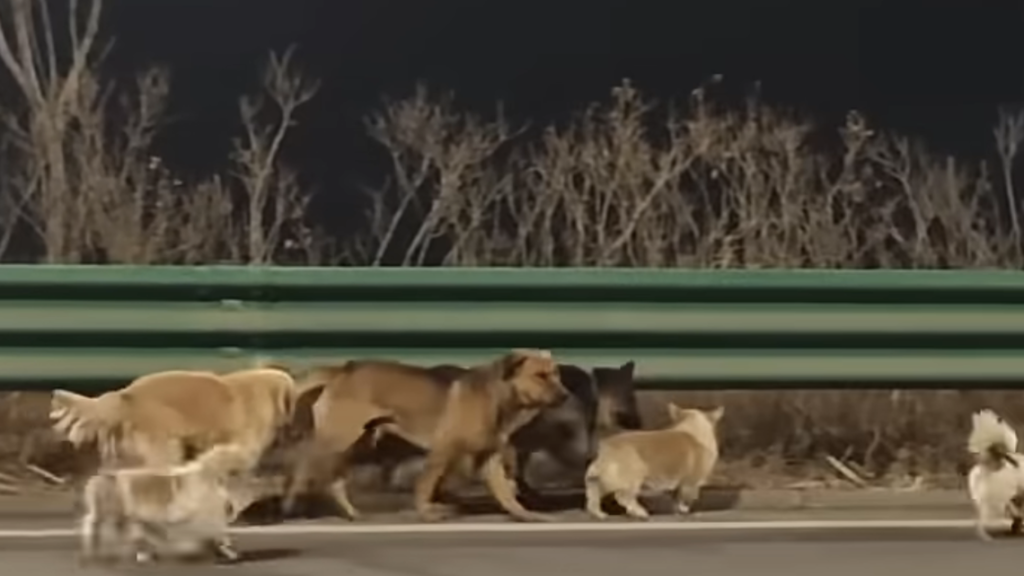
The rescue team adapted their strategy accordingly. Rather than attempting to stop the dogs outright, they focused on monitoring and safeguarding their journey. This approach minimized stress on the animals and allowed them to continue moving at their own pace while still being protected from immediate dangers.
Within a few days, the efforts paid off. By March 19, all seven dogs had successfully returned to their village. Their owners, coming from three different households, were reunited with their pets in an outcome that many had feared might not be possible. The emotional relief experienced by the families was profound, particularly given the circumstances under which the dogs had disappeared.
One owner expressed immense gratitude and disbelief at the outcome, emphasizing how fortunate they felt that the dogs had escaped a potentially fatal fate. The return of the animals not only restored a sense of normalcy to the households but also reinforced the deep connections shared between humans and their pets.
A Viral Story That Sparked Wider Reflection
The footage of the dogs’ journey quickly spread across the internet, accumulating more than 230 million views. The story resonated with audiences around the world, transcending cultural and geographical boundaries. Viewers were particularly moved by the apparent solidarity among the dogs, especially the way they protected the injured member of their group and maintained cohesion throughout the journey.
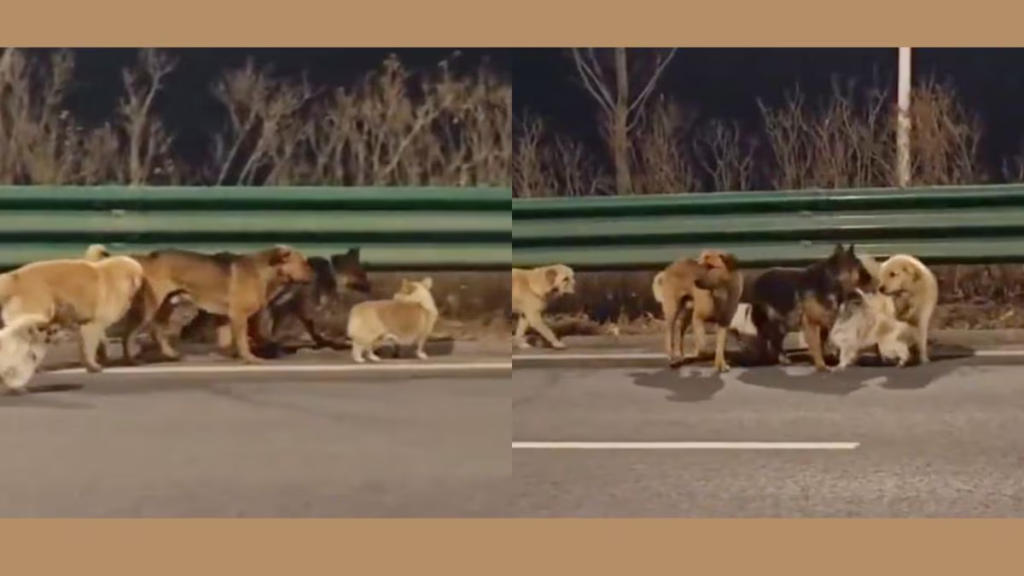
The image of the injured German shepherd being surrounded and supported by its companions became a powerful symbol of loyalty and empathy in the animal world. Similarly, the behavior of the Corgi at the front of the pack, repeatedly checking on the others, was widely interpreted as an act of leadership and care. These moments, captured on video, contributed to the emotional impact of the story and sparked widespread discussion about animal intelligence and social behavior.
Beyond the immediate emotional response, the incident also brought renewed attention to the issue of dog theft and the broader context of the dog meat trade. While laws in China classify dog theft as a criminal offense, enforcement and penalties can vary depending on the circumstances. The lack of clear and uniform regulations regarding the consumption of dog meat has also been a topic of ongoing debate. Some regions have taken steps to address the issue, but it remains a complex and sensitive subject.
The story of these seven dogs highlighted the risks faced by animals in areas where such practices exist, while also demonstrating the resilience and adaptability of animals when confronted with danger. It served as both a heartwarming account of survival and a reminder of the challenges that persist in ensuring animal welfare.
In the aftermath of the incident, there has been no confirmed information regarding the individuals suspected of stealing the dogs. The absence of leads underscores the difficulty of addressing such crimes and holding perpetrators accountable. However, the widespread attention generated by the story may contribute to increased awareness and vigilance within communities.
Ultimately, the journey of these seven dogs stands as a remarkable example of determination, loyalty, and survival. Their ability to escape captivity, navigate a hazardous route, and return home together reflects not only their physical endurance but also the strength of their bonds. The story continues to inspire and move people, serving as a testament to the extraordinary capabilities of animals and the enduring connection they share with those who care for them.