
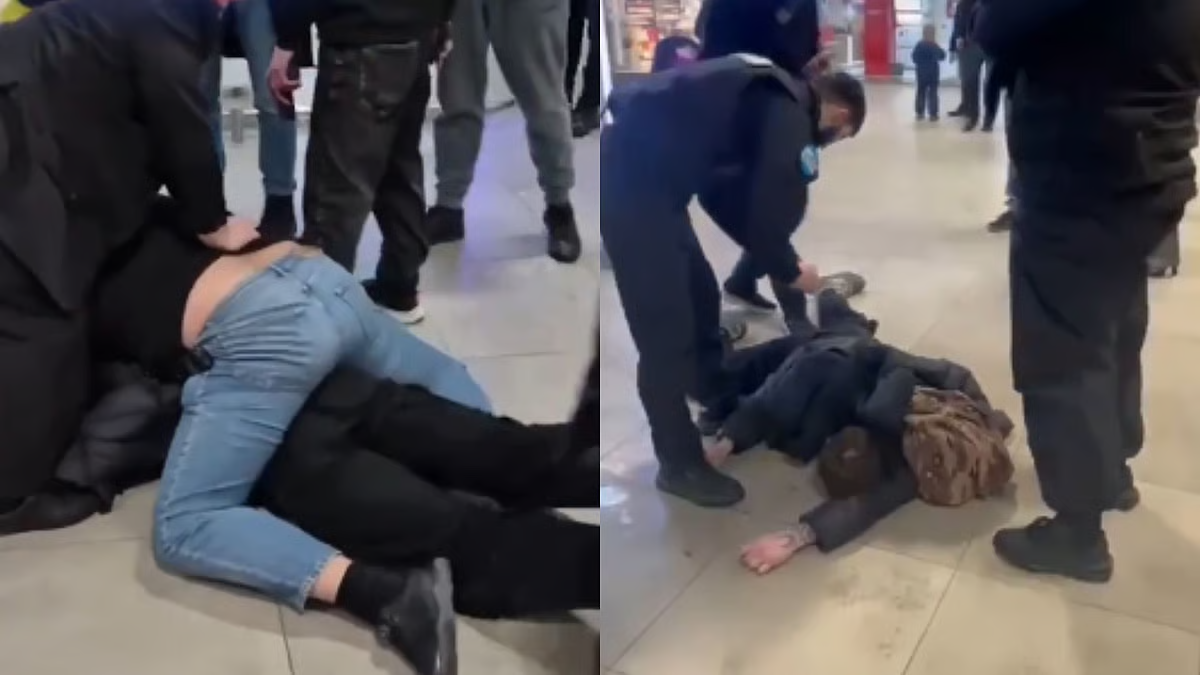
The death of a 24-year-old man at City Mall in St. Petersburg has triggered widespread scrutiny of private security practices in Russia and raised urgent questions about the use of force in civilian settings. What began as an alleged shoplifting incident inside a busy supermarket escalated into a fatal confrontation that authorities now say constitutes murder.
Following forensic findings that confirmed the man died from mechanical asphyxia, Russian investigators have reclassified the case from negligence to murder committed by a group of individuals, marking a significant shift in the legal and moral gravity of the incident. The case has drawn national attention not only because of its violent outcome, but also due to the circumstances under which it unfolded.
The incident occurred in a public commercial space during regular business hours, involved multiple security guards acting in an official capacity, and resulted in the death of an unarmed civilian who was being detained rather than posing an immediate lethal threat. As details continue to emerge, the case has become emblematic of broader concerns over accountability, restraint, and the boundaries of authority exercised by private security personnel.
Incident at Perekrestok Supermarket
The fatal encounter took place on January 21 inside a Perekrestok supermarket, part of the City Mall shopping and entertainment complex in St. Petersburg. According to preliminary reports, the young man was suspected of shoplifting after using a self-checkout terminal to pay for a low-cost item while allegedly attempting to leave the store with a second, more expensive product that had not been scanned. Store security staff intervened near the exit, at which point the situation rapidly deteriorated.
Eyewitness accounts and local media reports indicate that a physical altercation ensued almost immediately. During the confrontation, the man reportedly discharged a gas pistol toward one of the security guards. While gas pistols are generally classified as non-lethal weapons, their use can still cause panic, respiratory distress, or injury, and the act was cited by security personnel as justification for forcibly restraining him. However, investigators have not indicated that the man continued to pose an active threat once he was overpowered.
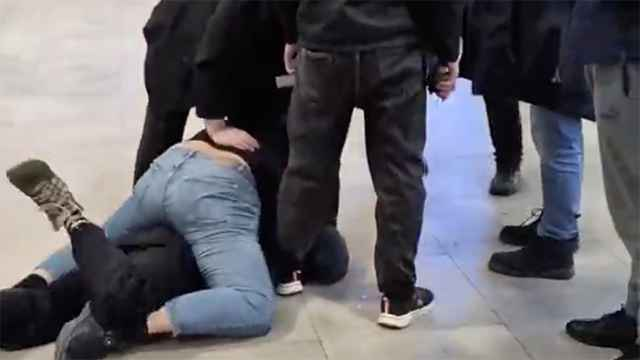
According to reporting by local outlet 78.ru, the guards forced the man to the floor, where one guard positioned himself on top of the suspect while another assisted in holding him down. The restraint reportedly lasted for approximately ten minutes. During this time, the man became unresponsive. Emergency medical personnel were called, but doctors pronounced him dead at the scene.
🚨In Russia, brutal security guards strangled a young man to death in a shopping mall — he was screaming and begging for mercy
— NEXTA (@nexta_tv) January 23, 2026
The incident took place in Saint Petersburg. The 24-year-old Russian man was suspected of theft. When the guards tried to detain him, he sprayed pepper… pic.twitter.com/6ejXk6kofp
The prolonged nature of the restraint has become a central focus of the investigation. Medical experts note that sustained pressure on the torso or neck, particularly when a person is lying face down, can severely restrict breathing and lead to mechanical asphyxia. Such restraint techniques have been widely criticized by human rights groups and medical professionals, who warn that they can be fatal even in the absence of overt violence.
Forensic Findings and Legal Reclassification
In the immediate aftermath of the death, authorities opened a criminal case on the charge of causing death by negligence. This initial classification suggested that investigators believed the guards did not intend to kill the man, but may have acted carelessly or without proper regard for the consequences of their actions. However, this assessment changed following the results of a forensic medical examination.
On January 23, the Investigative Committee of Russia announced that the forensic report had established the cause of death as mechanical asphyxia. This finding indicated that the man’s breathing had been obstructed by external force, consistent with prolonged physical restraint. Based on this conclusion, investigators upgraded the case to murder committed by a group of persons, a far more serious charge that carries significant prison sentences under Russian law.
The reclassification reflects the view that the guards’ actions went beyond accidental harm and involved the conscious application of force that resulted in death. Legal experts in Russia note that while intent to kill is a key element in murder cases, Russian criminal law also recognizes murder in situations where individuals knowingly apply potentially lethal force without taking steps to prevent fatal outcomes. The coordinated involvement of multiple guards further strengthens the case for group liability.
Authorities confirmed that the suspects have been detained and are expected to be formally charged. While their identities have not been publicly released, investigators have stated that all individuals directly involved in restraining the victim are under scrutiny. The investigation is also examining whether the guards followed established protocols, whether they received adequate training, and whether their employer bears any responsibility for the incident.
Broader Implications for Private Security Practices
The death has sparked renewed debate in Russia over the role and regulation of private security guards, particularly in retail environments. Unlike police officers, private security personnel operate under limited legal authority and are generally expected to prioritize observation, reporting, and non-violent intervention. Their powers to detain individuals are constrained, and the use of physical force is meant to be a last resort.
Critics argue that the City Mall incident exposes systemic problems, including inadequate training, poor oversight, and a culture that encourages aggressive enforcement over de-escalation. Human rights advocates have pointed to similar cases in Russia and abroad where civilians died after being restrained by security guards or law enforcement officers using dangerous techniques. These cases often involve suspects accused of minor offenses, raising questions about proportionality and necessity.
The involvement of a gas pistol has complicated public reaction, with some commentators emphasizing the potential danger posed to the guards. However, legal analysts stress that once the man was subdued, the continued application of force had to be reassessed in light of his physical condition and compliance. International standards on the use of force, including those referenced by the United Nations, emphasize that restraint methods must minimize the risk of asphyxiation and require constant monitoring of a detainee’s breathing and responsiveness.
The case has also intensified calls for clearer guidelines and mandatory training for private security staff. Experts suggest that guards should be trained in safe restraint techniques, first aid, and rapid response protocols when a detainee shows signs of medical distress. Some have argued for body cameras or increased surveillance transparency in shopping centers to ensure accountability and provide objective records of such encounters.
As the investigation proceeds, the City Mall death is likely to have lasting repercussions. It has already prompted discussions among lawmakers, retail chains, and security firms about revising standards and reinforcing oversight mechanisms. For the victim’s family, the legal reclassification represents a crucial acknowledgment of the seriousness of what occurred. For the broader public, the case serves as a stark reminder of how quickly routine security interventions can turn deadly when force is misused or inadequately controlled.