
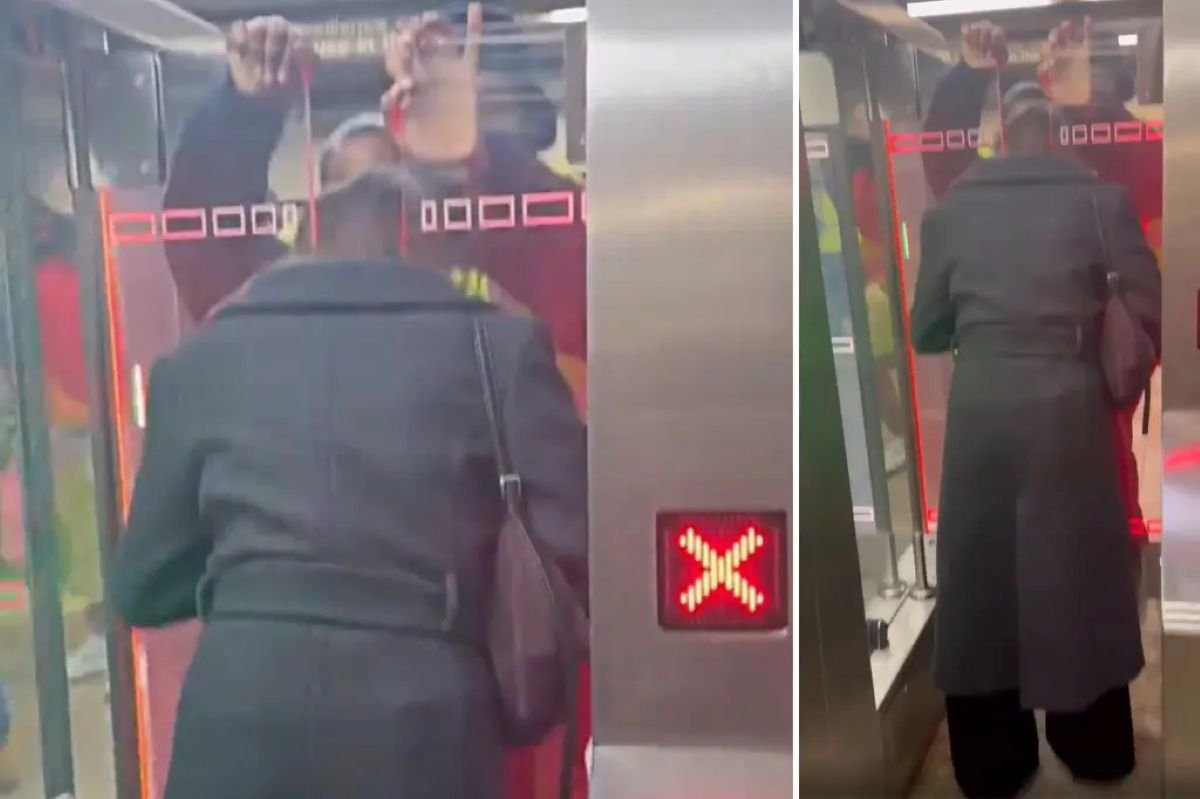
A chaotic moment at Manhattan’s Broadway–Lafayette subway station has become a flashpoint in New York City’s ongoing debate over fare enforcement, surveillance, and the redesign of public infrastructure. A viral video shows a woman in a long black coat trapped in the jaws of a newly installed automated fare gate, her neck pinned as the doors clamp shut. An MTA worker is seen on the opposite side attempting to pry the doors open while onlookers film the scene.
According to technicians familiar with the equipment, the incident likely occurred when the woman attempted to pass through the gate behind another commuter without paying, triggering sensors designed to detect multiple entries. While no official police record exists for the incident, the footage and subsequent explanations from transit employees have amplified scrutiny of the MTA’s multi-million-dollar effort to curb fare evasion and raised questions about design, safety, and public trust in automated enforcement systems.
Straphanger Gets Head Stuck in New MTA
The incident unfolded at the Broadway–Lafayette station, a busy transfer hub where the MTA has been piloting new fare gates equipped with automated doors and sensor technology. In the video, the woman approaches a gate displaying a red “X,” a visual indicator that entry is not permitted. She proceeds anyway and is immediately caught as the doors close from both sides. An MTA employee on the far side of the gate attempts to force the doors apart, but the automated mechanism resists until the system can be disabled and opened manually.
Technicians told reporters that the gates are designed to identify when two people attempt to enter on a single fare. The sensors detect the presence and spacing of bodies moving through the threshold; when the system registers a second person too closely following the first, it responds by closing the doors. According to one MTA employee, this safety and enforcement feature is intended to deter “tailgating,” a common form of fare evasion in which a rider slips through behind a paying customer. The employee added that incidents like this occur when two people try to pass together and the sensor closes on the second person.
Another technician explained that freeing someone from the gate requires shutting off the automated system and opening the doors manually. That step underscores both the rigidity of the mechanism and the importance of trained staff presence during the pilot phase. The MTA later confirmed that the video was recorded during the first hours of the pilot and said the equipment is being closely monitored as part of ongoing evaluation.
Read : Global Adventures: Discovering the Most Enchanting Destinations on Earth
The agency has emphasized that similar automated doors are used in other transit systems, including Boston, where sensors and alarms are intended to catch tailgaters. However, reports from those systems suggest mixed results, with alarms sounding more reliably than doors closing quickly enough to stop fare evaders. The Broadway–Lafayette incident has therefore become a high-visibility test case for whether New York’s implementation strikes the right balance between deterrence and safety.
A Viral Moment Fuels a Broader Debate Over Safety and Design
As the video spread across social platforms, reactions were swift and polarized. Some viewers mocked the woman’s predicament, while others expressed alarm at the apparent force of the doors and the risk posed to a person’s neck. Online comments ranged from gallows humor to pointed criticism of the MTA’s engineering choices, with some users likening the gates to dystopian devices that prioritize enforcement over human error.
Read : Six New Yorkers Killed This Year by Renewed ‘Subway Surfing’ Social Media Stunt
Public commentary extended beyond social media. A 23-year-old New Yorker described the turnstile overhaul as “dystopian,” joking that the system felt controlling. Another commuter encouraged riders to pay attention and pay their fares, framing the incident as a cautionary tale. Tourists chimed in with incredulity, questioning how someone could get stuck in such a manner. These reactions reflect a citywide tension between frustration with fare evasion and unease about increasingly aggressive deterrents in public spaces.
From a design perspective, the incident raises fundamental questions about fail-safes and human factors. Automated systems must anticipate misuse, hurried behavior, and edge cases, particularly in crowded environments where people rush to catch trains. The Broadway–Lafayette gates rely on sensors to make rapid decisions, yet the consequences of those decisions can be physically consequential. While the MTA has stated that the equipment is monitored and that the pilot phase includes adjustments, critics argue that any system capable of clamping shut on a person’s neck demands rigorous testing and clear protocols for immediate release.
The absence of an NYPD record adds another layer of complexity. Without an official incident report, public understanding relies largely on the video and secondhand explanations. The MTA’s statement sought to contextualize the footage within the early hours of the pilot, but for many viewers, the visual impact overshadowed procedural assurances. In public infrastructure, perception often shapes acceptance as much as technical performance, and viral imagery can harden opinions before data-driven evaluations are complete.
Fare Evasion, Costly Countermeasures, and the Future of the Pilot
The Broadway–Lafayette episode cannot be separated from the broader campaign against fare evasion that has intensified across the subway system. The MTA has invested heavily in deterrents, including the new automated fare gates and the much-discussed “fins” and “sleeves” attached to older turnstiles. These additions, intended to make vaulting and squeezing through turnstiles more difficult, have been rolled out at significant expense. Estimates suggest that installing fins and sleeves across the city’s 472 stations could cost upward of $7 million per station, a figure that has fueled criticism about cost-effectiveness.
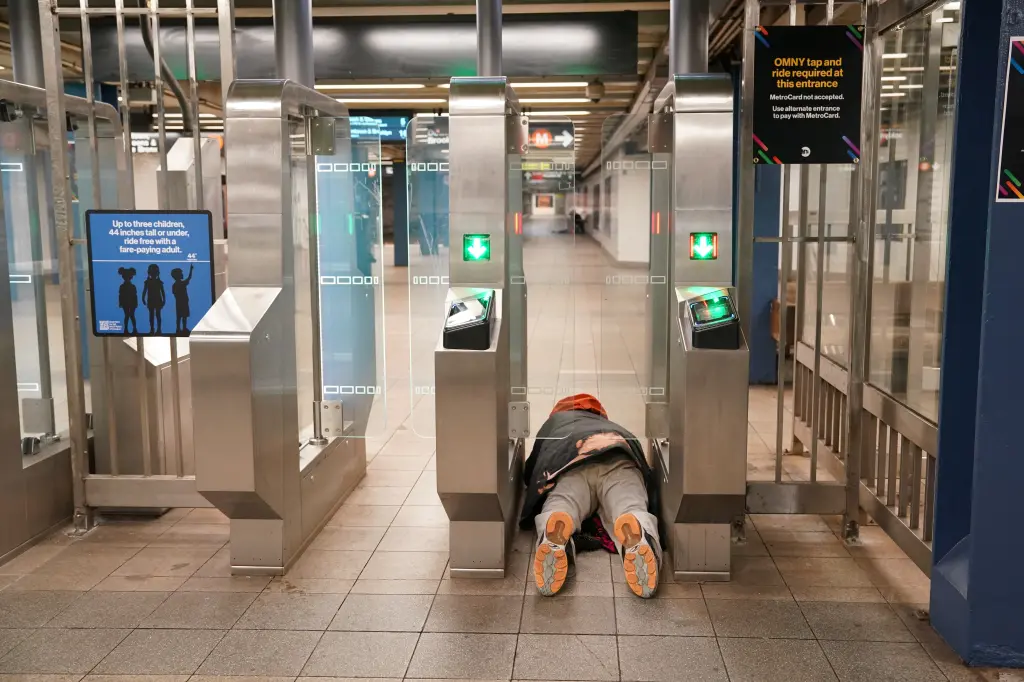
Despite these investments, fare evasion persists. Reports indicate that some commuters have adapted quickly, using the fins as leverage to hurdle turnstiles more efficiently. The persistence of fare-skipping has prompted questions about whether mechanical barriers alone can solve a problem rooted in affordability, enforcement consistency, and rider behavior. The new automated gates represent a more technologically sophisticated attempt to address tailgating, but the Broadway–Lafayette incident highlights the risks inherent in escalating physical deterrence.
The MTA has acknowledged that the gates are still being tested at select stations. Monitoring during the pilot phase is intended to identify malfunctions, adjust sensor sensitivity, and refine response protocols. Advocates of the system argue that early incidents are part of the learning curve and that automation can ultimately reduce revenue losses without relying solely on policing. Critics counter that the human cost of errors, even rare ones, must be weighed carefully against potential gains.
Comparisons to other cities provide limited reassurance. While Boston employs similar doors, reports suggest they rarely close quickly enough to physically stop a second person, instead relying on alarms. New York’s approach appears more assertive, reflecting the scale of the system and the urgency of addressing revenue shortfalls. Whether that assertiveness proves sustainable will depend on transparent reporting, demonstrable safety improvements, and public confidence that the gates will not endanger riders.
As the pilot continues, the Broadway–Lafayette video will likely remain a reference point in discussions about automation and accountability in mass transit. The incident encapsulates the challenge facing the MTA: enforcing fares in a sprawling, high-pressure environment without alienating riders or introducing new hazards. The outcome of the pilot, and any subsequent redesigns, will shape not only how New Yorkers enter the subway but how they perceive the trade-offs between security, efficiency, and safety in their daily commute.
Yo, 78winlive is pretty solid! Been kicking around there for a bit, and the games are decent. Worth checking out if you’re looking for a new spot. 78winlive