
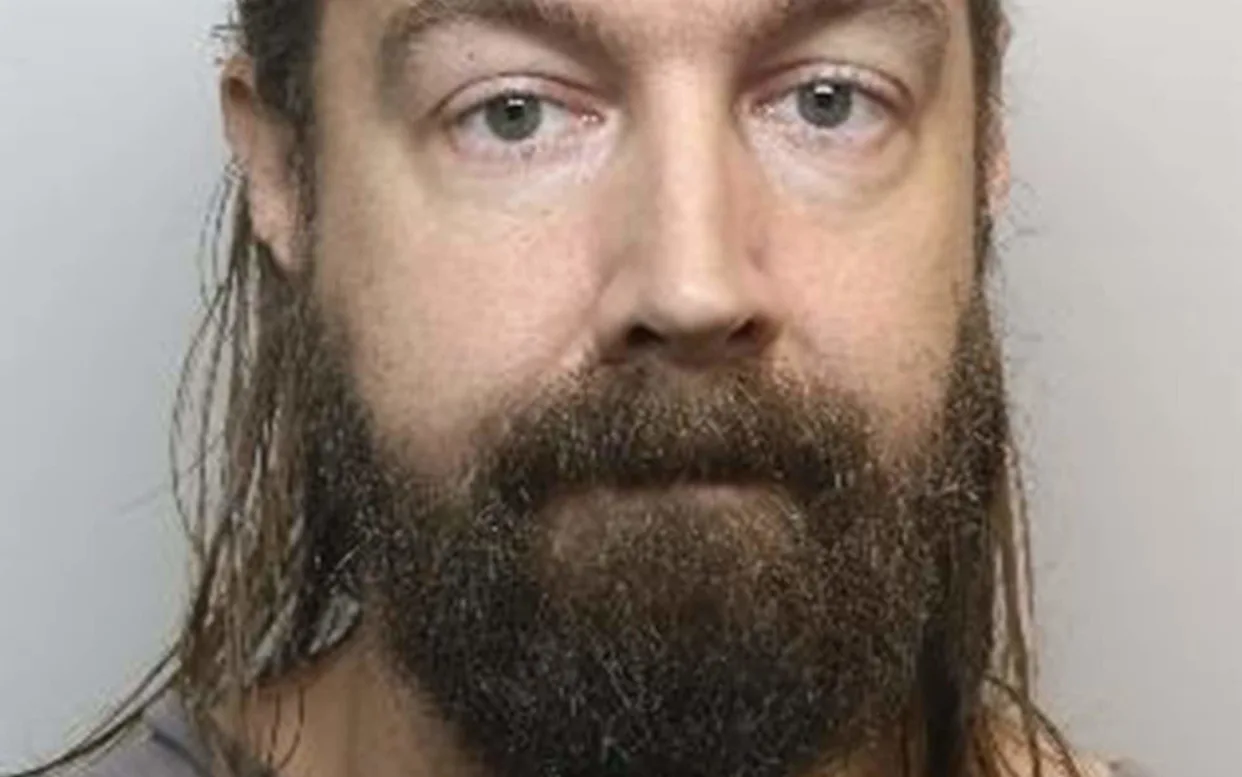
In a case that has shaken public confidence in law enforcement, former South Yorkshire Police officer Stuart Trentham has been sentenced to 18 months in prison for engaging in a sexual relationship with a vulnerable burglary victim while on duty. The 41-year-old, a father of three from Wakefield, West Yorkshire, pleaded guilty to misconduct in a public office at Sheffield Crown Court.
This marks the second time Trentham has been jailed this year for similar offenses, highlighting a disturbing pattern of exploiting women he encountered through his role as a police officer. The latest incident dates back to 2020, during the height of the COVID-19 lockdown, when Trentham responded to a burglary report and subsequently initiated flirtatious and sexualized communications with the complainant, culminating in consensual sex at her home while he was supposed to be working.
Stuart Trentham’s actions have been condemned as a grotesque breach of trust by the presiding judge, Jeremy Richardson KC, who emphasized the critical role police officers play in society and the need for severe punishment to deter such behavior. The victim, who later referred to Trentham as “PC Predator” in her phone contacts, initially hesitated to report the matter out of fear of alienating local authorities but was spurred to action after viewing a documentary on the murder of Sarah Everard by Metropolitan Police officer Wayne Couzens and upon learning of Trentham’s prior conviction.
South Yorkshire Police Chief Constable Lauren Poultney has publicly denounced Trentham’s conduct, stating it runs counter to the force’s values and that such corruption will not be tolerated. This case comes amid broader scrutiny of police misconduct in the UK, where officers abusing their positions to exploit vulnerable individuals has prompted calls for stronger oversight and accountability measures. Trentham, who resigned from the force in 2023, has been described in court as suffering from autism and post-traumatic stress disorder (PTSD), factors his defense highlighted to contextualize his personal struggles, including the difficulties he faced during his previous incarceration.
However, these considerations did not sway the judge from imposing a substantial sentence, underscoring the severity of betraying public trust not once, but twice. As details of the case unfold, it serves as a stark reminder of the vulnerabilities faced by crime victims and the imperative for law enforcement to uphold the highest standards of professionalism.
The Burglary Victim Case: A Breach of Trust During Lockdown
The core of Stuart Trentham’s most recent conviction revolves around events that transpired in 2020, a time when the UK was under strict COVID-19 lockdown measures, and public reliance on essential services like policing was at an all-time high. As a serving officer based in Doncaster with South Yorkshire Police, Trentham was dispatched to investigate a reported burglary. The complainant, a woman already distressed by the intrusion into her home, found herself in contact with Trentham as part of the official response.
What began as professional interaction quickly deviated into inappropriate territory. Court documents and proceedings reveal that Stuart Trentham exchanged a series of flirtatious and increasingly sexualized messages with the victim via text and other platforms. These communications escalated over time, leading to an arrangement where Trentham visited her residence while on duty and engaged in consensual sexual activity. The encounter, though described as consensual, was deemed a clear abuse of his position, as it exploited the power imbalance inherent in his role as a protector of the public.
The victim, whose identity remains protected, later expressed profound regret and a sense of violation. In a poignant detail shared during the trial, she had saved Stuart Trentham’s phone number under the moniker “PC Predator,” a label that encapsulated her growing unease about his intentions. This nickname was highlighted by the prosecution to illustrate the predatory nature of his behavior, where he leveraged his authority to pursue personal gratification at the expense of a vulnerable individual seeking help.
Her decision to come forward was not immediate. For years, she grappled with the fear that reporting the incident might lead to backlash from local police, potentially compromising her safety or access to services. It was only after watching a documentary detailing the horrific case of Sarah Everard—abducted, raped, and murdered by serving officer Wayne Couzens in 2021—that she felt empowered to speak out. The parallels between Couzens’ abuse of power and Trentham’s actions resonated deeply, prompting her to confide in a friend who encouraged her to file a formal complaint.
Further motivation came from media coverage of Trentham’s earlier conviction in February 2025, which brought his name into the public eye and reinforced her resolve. The investigation that followed uncovered digital evidence of the messages and confirmed the timeline of events, leading to Stuart Trentham’s arrest and eventual guilty plea.
Read : Man Attacks Police Officer Guarding Israeli Embassy in Serbia with Crossbow: Shot Dead
This incident not only violated departmental protocols but also eroded the foundational trust between police and the communities they serve. Experts in police ethics have noted that such cases during lockdowns were particularly egregious, as victims were often isolated and more dependent on official support. Stuart Trentham’s defense argued that his actions were influenced by personal vulnerabilities, including his diagnoses of autism and PTSD, which may have impaired his judgment. However, the court viewed these as mitigating factors rather than excuses, prioritizing the harm inflicted on the victim and the broader implications for public safety.

In the aftermath, the victim has spoken through her impact statement about the emotional toll, describing how the experience compounded her trauma from the burglary and left her wary of authority figures. This case underscores the need for robust training and monitoring within police forces to prevent officers from crossing ethical boundaries, especially with those in fragile states.
Previous Misconduct: Patterns of Exploitation Emerge
Stuart Trentham’s imprisonment in August 2025 is not an isolated event but part of a troubling pattern, as evidenced by his prior conviction earlier in the year. In February 2025, he was sentenced to nine months in prison for an “almost identical” offense, again involving the exploitation of a vulnerable woman under his investigative purview. This earlier case, also heard at Sheffield Crown Court, laid bare a recurring theme in Trentham’s professional conduct: using his position to initiate inappropriate personal contacts.
The victim in the February case had approached South Yorkshire Police after discovering that explicit sexual images of her had been posted online without her consent—a distressing cybercrime that left her feeling exposed and powerless. Stuart Trentham was assigned to handle the investigation, a role that required sensitivity and professionalism. Instead, he began sending messages via WhatsApp that started innocuously but rapidly turned inappropriate and sexualized.
Court records detail how Stuart Trentham commented on the woman’s physical appearance, including crude remarks such as expressing a preference for “a bit of meat” and disliking “flat, boney butts.” He signed off messages with kisses, sent winking and kissing emojis, and even shared a photo of himself in uniform while claiming to be “working hard.” More alarmingly, he lied to the victim about the status of her case, insisting that a suspect was under investigation long after the inquiry had been closed due to insufficient evidence to identify the perpetrator.
In a further breach, Stuart Trentham forwarded sensitive case materials, including links to the explicit images, from the police system to his personal email account. Although he was unable to access the content from there, this act alone represented a serious violation of data protection protocols and further traumatized the victim, who felt “simply a target for exploitation,” as stated in her victim impact statement. The interactions had a catastrophic effect on her mental health, exacerbating existing vulnerabilities and pushing her to the brink.
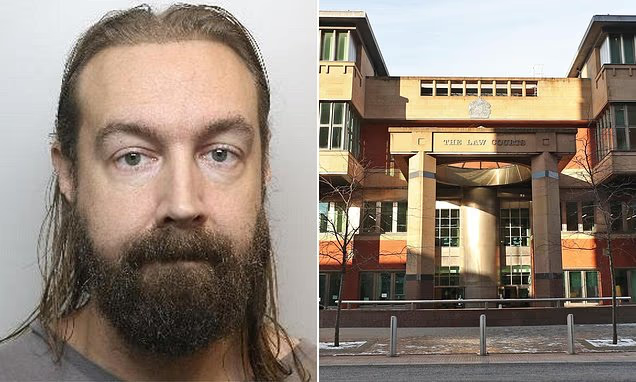
Unlike the burglary case, no physical sexual encounter occurred here, but the emotional and psychological harm was profound. The judge, Jeremy Richardson KC, who presided over both trials, noted that Stuart Trentham’s behavior could deter other vulnerable women from reporting crimes, fearing similar mistreatment. This conviction resulted in Trentham’s immediate dismissal from the force, though he had already resigned by 2023 amid internal investigations.
Defense counsel in the February hearing emphasized Trentham’s remorse, with him offering apologies to the victim and his former colleagues. They also pointed to his personal challenges, including autism and PTSD, suggesting these conditions contributed to his poor decision-making. However, the court prioritized accountability, sentencing him to nine months to reflect the gravity of undermining public trust.
This prior misconduct reveals a pattern where Stuart Trentham repeatedly targeted women in distress, blending professional duties with personal advances. It raises questions about how such behavior went undetected for years, prompting South Yorkshire Police to review their internal safeguards. Chief Constable Lauren Poultney reiterated in statements following both cases that the force maintains high standards and actively pursues misconduct, but critics argue more proactive measures, like enhanced digital monitoring and victim feedback mechanisms, are essential to prevent recurrence.
The emergence of this pattern has fueled discussions on systemic issues within policing, where power dynamics can enable predatory actions. Trentham’s cases align with national concerns, as seen in reports from bodies like the Independent Office for Police Conduct, which have documented rising instances of officer misconduct involving sexual exploitation.
Court Proceedings and Sentencing: Justice Served Twice
The culmination of Trentham’s legal troubles played out in the solemn atmosphere of Sheffield Crown Court, where Judge Jeremy Richardson KC delivered verdicts that underscored the judiciary’s stance on police accountability. In the August 2025 hearing for the burglary victim case, Stuart Trentham appeared on bail, dressed in a blue suit, and was observed with his head in his hands—a visual testament to the weight of the proceedings. Having pleaded guilty to misconduct in a public office, he faced the same judge who had sentenced him just months earlier, adding a layer of continuity and emphasis to the repeated nature of his offenses.
Prosecutor Joseph Bell outlined the facts meticulously, drawing on digital evidence of the messages and the victim’s detailed account. The defense, represented by Curtis Dunkley, sought leniency by highlighting Trentham’s “living hell” during his prior incarceration as a former officer, where he faced hostility from other inmates. They also stressed his diagnoses of autism and PTSD, portraying him as a man grappling with internal demons rather than a calculated predator. Trentham himself expressed a desire to apologize to the victim and his ex-colleagues, though the court noted the absence of direct remorse in earlier stages.

Judge Richardson’s sentencing remarks were scathing and principled. He labeled Trentham’s actions a “grotesque breach of trust by a police officer” and declared him “a disgrace to the police force.” Emphasizing the societal role of law enforcement, he stated, “Police officers have a high position in society and are an essential component of a civilized country. You abused the responsibility reposed in you. You betrayed that trust and you have betrayed that trust now twice.” The 18-month sentence was intended not only as punishment but as a deterrent, signaling that such misconduct would invite severe consequences.
This echoed his February 2025 ruling, where a nine-month term was imposed for the online images case, with similar admonitions about eroding public confidence and deterring victims from seeking help. The judge’s consistency reinforced the message that repeated offenses warrant escalation in penalties.
Post-sentencing, South Yorkshire Police issued a statement from Chief Constable Lauren Poultney, affirming that Stuart Trentham’s criminality “goes completely against the standards I expect from officers.” She highlighted the force’s proactive approach to identifying substandard behavior and commitment to public service values, while assuring that robust actions are taken against those who fall short.
The proceedings have broader implications, contributing to ongoing reforms in UK policing. Initiatives like enhanced vetting, mandatory body-worn camera usage, and independent oversight are gaining traction in response to cases like Stuart Trentham’s. For the victims, the sentences offer a measure of closure, though the scars of betrayal linger. As Trentham begins his latest term, his story serves as a cautionary tale, urging systemic changes to protect the vulnerable and restore faith in those sworn to serve.