
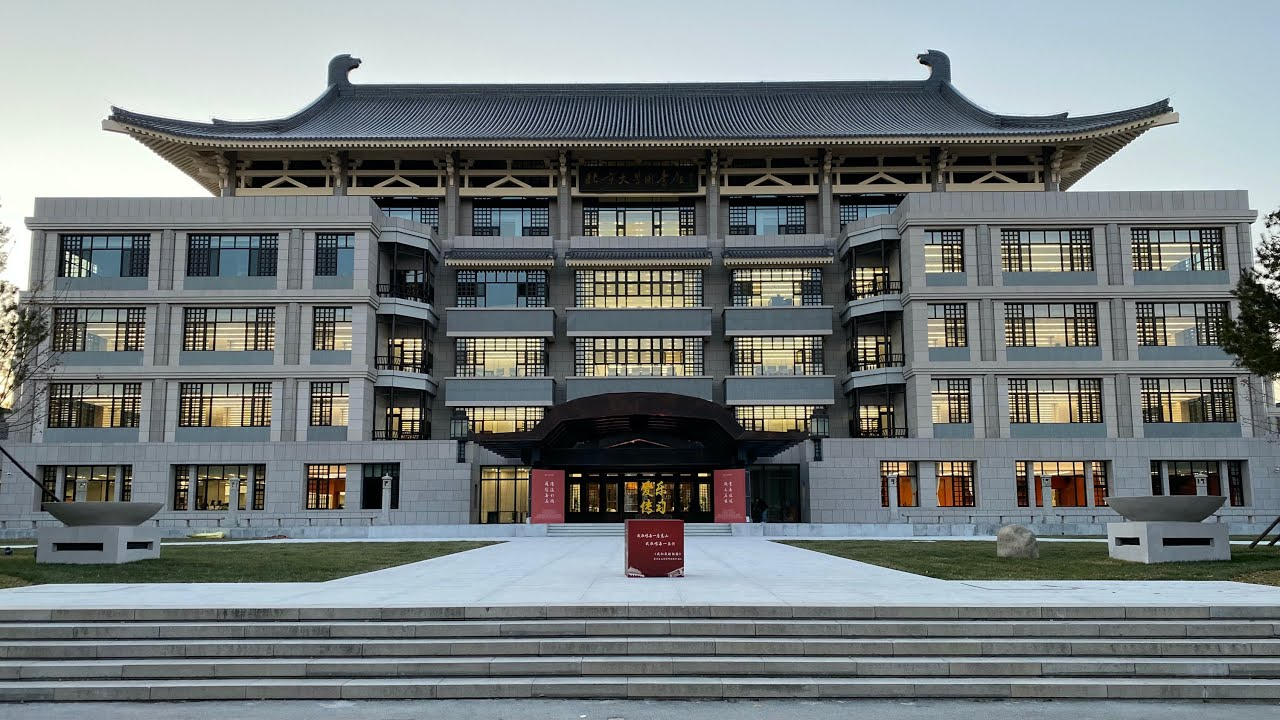
The pursuit of happiness often takes people down unexpected paths, and for one young woman in China, this meant leaving behind a prestigious and well-paying career to embrace a simpler life.
A former Peking University Student Left High-Paying Job to Work in Canteen, prioritizing her well-being over financial success. Despite having a master’s degree in journalism from Peking University, Huang, 26, chose a career that brings her personal satisfaction rather than one dictated by societal expectations.
A Bold Decision Against Societal Norms
Huang hails from a remote part of the Hunan region in central China, where her parents, both bus drivers, worked hard to provide her with opportunities they never had.
They had high hopes for their daughter, expecting her to leverage her prestigious education to secure a lucrative career. However, Huang’s decision to work at Peking University’s canteen instead of pursuing a conventional corporate job came as a shock to her family.
Her parents disapprove of her career choice, fearing that the physically demanding nature of the job and its low salary will make life difficult for her. When people ask about their daughter’s occupation, they prefer to say that she works at Peking University, leaving out the details of her job role.
This omission highlights the societal pressure in China, where academic success is often directly associated with high salaries and prestigious positions. However, Huang remains unfazed by societal expectations and continues to embrace her role in the university’s canteen.
She has become a familiar and beloved figure among the students, who affectionately call her “Mum Huang.” Her work involves long hours on her feet, chopping vegetables, serving food, and preparing meals for the students. Despite the physical demands, she finds joy in the simplicity of her job and the interactions she has with students.
The Burden of a High-Pressure Career
Before making the drastic switch to a canteen job, Huang had interned at multiple media organizations and internet companies. As a journalism graduate, she initially pursued a career in her field but soon realized that the industry’s high-pressure environment was taking a toll on her mental health.
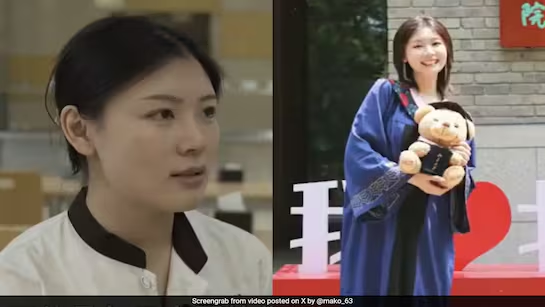
She found that working in media required her to constantly meet strict targets and goals. The relentless demands of the job meant that even outside of working hours, she had to be available to respond to her boss’s messages and meet deadlines. The stress of always being on duty made her feel like she never truly had time for herself.
This never-ending cycle of work-related stress led her to reevaluate her career choices. Despite the higher salary and prestige associated with her degree, Huang realized that she valued her happiness and peace of mind more than financial rewards.
Read : Is the Young Generation of the 21st Century Lazy, or Do They Believe in Smart Work Over Hard Work?
The intense pressure of her previous jobs made her feel drained, while working in the canteen allowed her to disconnect from work once she finished her shift. She found that, unlike her previous roles, the physical exhaustion of canteen work could be remedied with a good night’s sleep, whereas mental exhaustion was far harder to recover from.
Finding Fulfillment in a Modest Job
While working in the university’s canteen has brought her joy, it has not been without challenges. The job is physically demanding, and there have been moments when Huang questioned her decision.
She recalled an incident where she had to cut a large basket of hot peppers, causing her hands to swell painfully. However, she endured the discomfort, and by the next day, the pain had subsided.
Initially, she struggled with the exhaustion that came with the job, but over time, she adapted and found that a restful sleep was enough to restore her energy. Unlike the endless stress of corporate work, her current job provided her with a sense of accomplishment and satisfaction at the end of each day.

Huang earns 6,000 yuan (approximately Rs 69,300) per month, which is significantly lower than the salaries her former classmates receive. Many of them earn around 20,000 yuan per month, working in high-powered positions in journalism or related fields. However, financial comparisons do not concern her. She believes that the true measure of success is personal happiness, not just a high salary.
Despite her modest earnings, Huang has ambitions within her chosen field. She hopes to become the canteen manager one day, continuing to work in an environment where she feels content and valued. Her journey has challenged conventional notions of success and has become an inspiring example of choosing personal well-being over societal expectations.
Huang’s story is a reminder that success is subjective, and true fulfillment comes from following one’s heart. In a world where professional achievements are often equated with financial gain, her decision to prioritize happiness over prestige is a bold and inspiring move.