
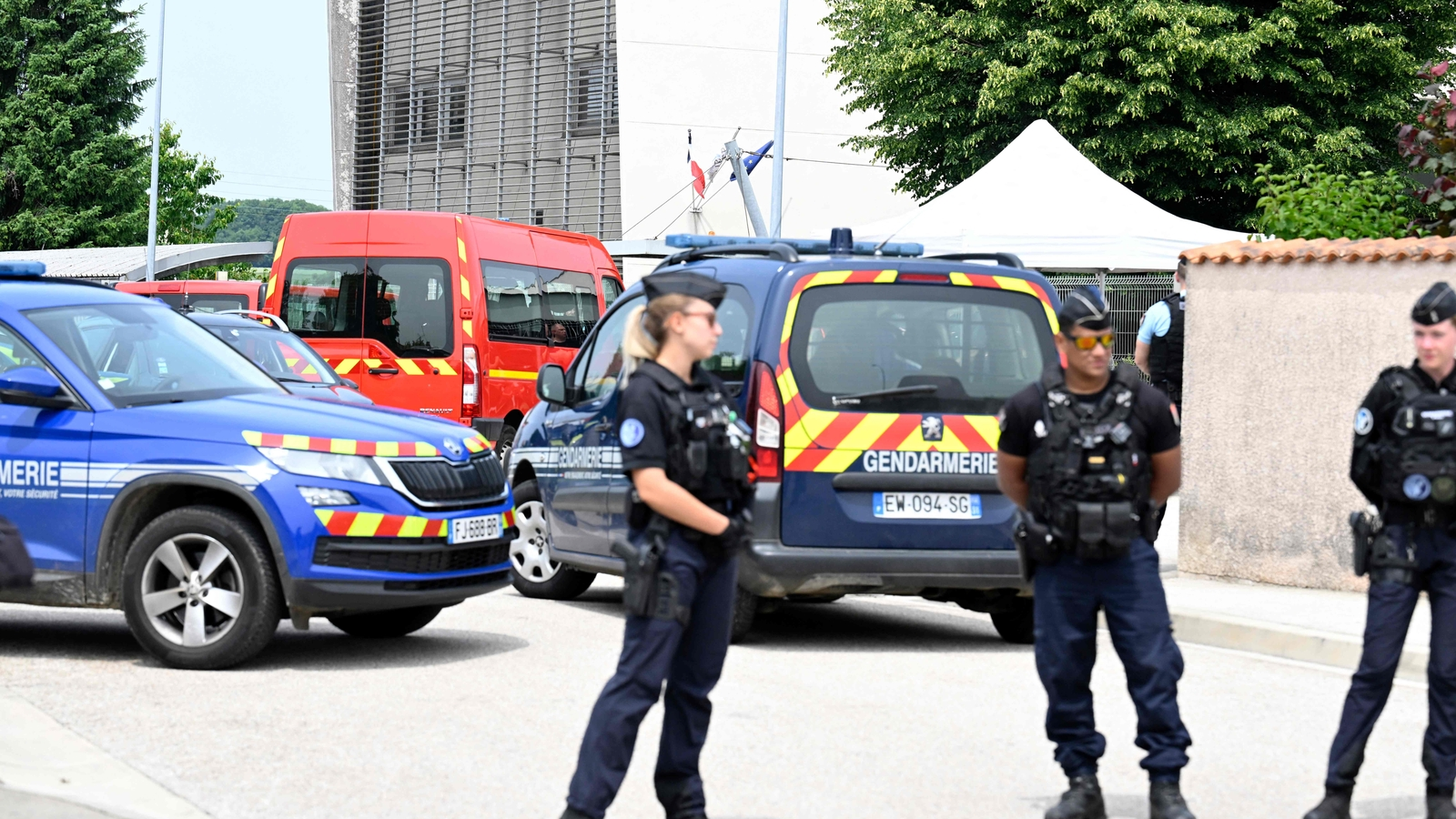
A grim shadow fell over the small town of Nogent in northeastern France when a tragic incident unfolded at the gates of Françoise Dolto School. A 14-year-old student fatally stabbed a 31-year-old school assistant during a routine bag check, shocking the local community and prompting widespread national condemnation.
The attack has reignited concerns about youth violence and safety protocols in French schools. The event, described as a “senseless wave of violence” by French President Emmanuel Macron, has rattled not only students and staff at the school but the nation as a whole.
The victim, a former hairdresser who had joined the school’s staff only in September, was remembered by her family as a cheerful and kind individual. She was also the mother of a young boy. Her death has sent waves of grief through the local community and raised alarms across the country. As the government and education officials grapple with how to respond to such a heinous act, calls for increased school security and better preventive measures grow louder.
The Incident That Shook Nogent
The fatal stabbing occurred outside Françoise Dolto School during a bag check — a security measure introduced to counter the rising threat of students carrying dangerous items. The school assistant, performing her duty at the entrance gate, was attacked suddenly and fatally by a 14-year-old student.
As shocking as the act was, what made it even more disturbing was that the attacker was considered a well-integrated student from a stable family background. Both his parents are employed, and according to Education Minister Élisabeth Borne, he had shown no previous signs of behavioral issues.
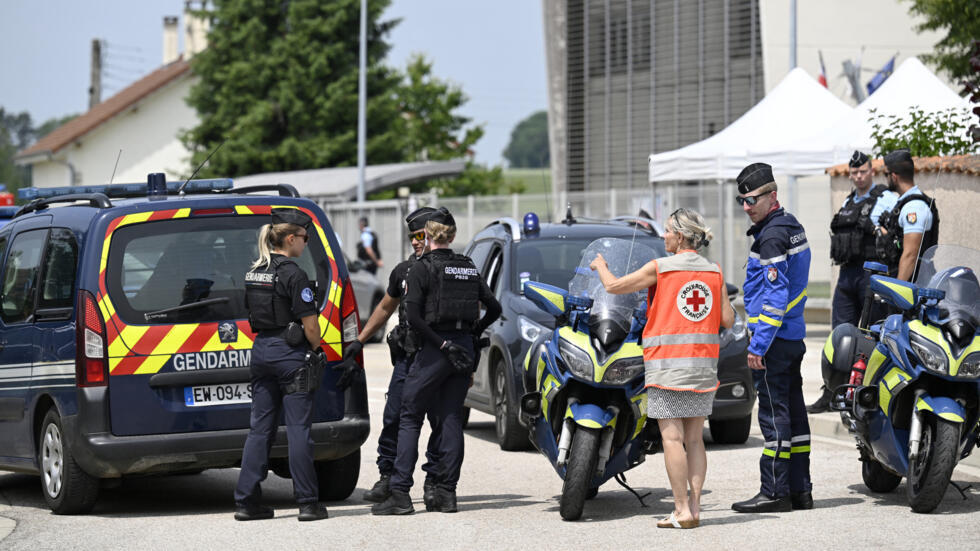
French law enforcement responded promptly. The attacker was restrained and taken into custody at the local gendarmerie in Nogent. A police officer assisting with the bag checks sustained minor injuries while apprehending the teenager. Despite swift intervention, the tragic damage had already been done.
Read : 21-Year-Old Student Who Opened Fire at BORG Dreierschützengasse Dies by Suicide in School Bathroom
The fatal stabbing has led to mourning in parliament, with lawmakers observing a minute of silence. President Emmanuel Macron publicly expressed his sorrow and pledged the government’s commitment to combating youth crime.
Read : “Saw Kids’ Bodies in Pieces”: Local of Gaza After Israeli Attack Kills 16 in UN School Shelter
Statements from the scene have emphasized the sheer shock among students and staff. “The young people are shocked. They are also very shocked to see that one of their classmates could commit such a horrific act,” said Minister Borne. This act, perpetrated by someone perceived as ‘normal’ and ‘well-integrated,’ has blurred any illusions of predictability in the behavior of minors and raised urgent questions about mental health, violence exposure, and school safety.
Rising Tide of Youth Violence in France
The tragedy in Nogent is not an isolated event. In recent months, France has seen a worrying increase in violent incidents within school premises. Only in April, a student in Nantes went on a stabbing spree, killing a girl and injuring several others. Reports of knives and bladed weapons in schools have surged by 15 percent over the past year. According to government statistics, between March 26 and May 23, 6,000 school checks led to the seizure of 186 knives.
This pattern of escalating youth aggression has caused alarm among educators, parents, and law enforcement. Authorities have acknowledged the need for more proactive interventions. Prime Minister François Bayrou lamented the “breakdown of the society in which we live” and emphasized that the incident in Nogent is indicative of a broader societal issue, not merely a one-off tragedy.
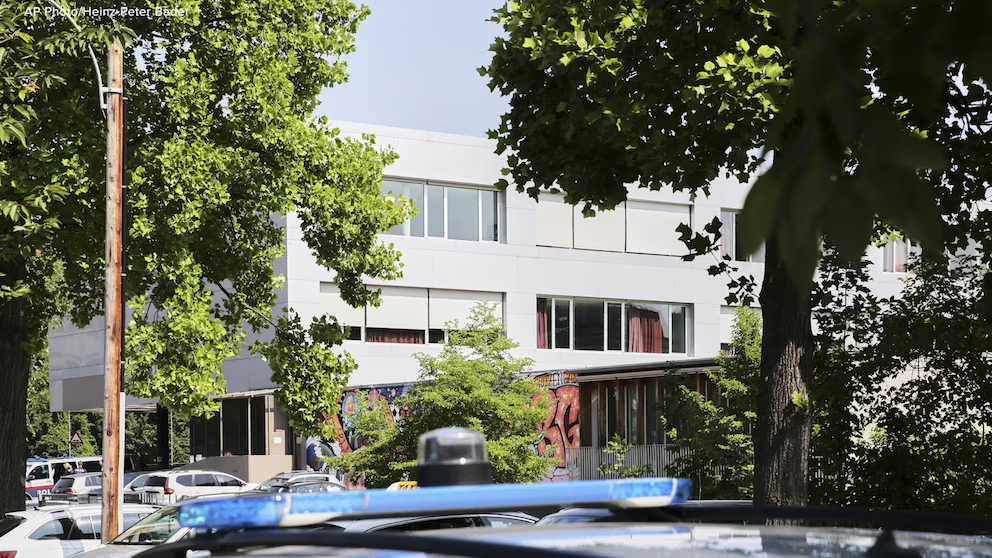
Security measures have already started evolving. Earlier this year, random searches for knives and other concealed weapons in school bags became more frequent. These measures were seen as necessary yet insufficient by many. Following the fatal incident at Françoise Dolto School, the government is considering installing security gates in schools and tightening regulations on online sales of weapons to minors. The Ministry of Education has been instructed to review current safety protocols and explore more effective ways to prevent such attacks.
Unions and teachers’ associations have also weighed in on the growing threat. Elisabeth Allain-Moreno from the SE-UNSA teachers’ union pointed out that while prevention is crucial, no school can ever be completely secure. Jean-Rémi Girard, president of the National Union of Secondary Schools, emphasized the psychological toll on educators who cannot treat every student as a potential threat. This delicate balance between vigilance and trust is becoming increasingly difficult to maintain.
Public Reactions and Political Responses
The brutal killing of the teaching assistant has sparked a nationwide conversation about how to address youth violence, especially in schools. French President Emmanuel Macron condemned the act as part of a “senseless wave of violence,” highlighting the emotional and symbolic weight carried by the loss of someone who was responsible for the care and safety of children.
Prime Minister Bayrou took a somber tone, saying the incident illustrates a societal breakdown, a sentiment shared by many lawmakers and community leaders. In parliament, the moment of silence observed by legislators was not merely symbolic — it was a reflection of the collective shock and grief experienced by a nation that prides itself on its educational values and social cohesion.
Marine Le Pen, leader of the far-right National Rally party, offered a more incendiary perspective. She criticized what she described as the “normalisation of extreme violence,” accusing the authorities of apathy and calling for a firm and uncompromising political response to juvenile crime. Her comments underscore how such tragic events can become highly politicized, with different factions proposing varied solutions ranging from enhanced surveillance to stricter punishment laws.
The wider public remains deeply unsettled. Parents across the country are questioning whether their children are safe at school. Teachers are increasingly anxious about the possibility of similar acts occurring in their own institutions. Social media platforms have become sounding boards for frustration, fear, and demands for change.
In response, the government is now evaluating the feasibility of introducing security gates at school entrances, akin to those used in airports. They are also intensifying internet surveillance to curb the ease with which minors can acquire weapons online. However, critics argue that such measures are reactive and fail to address the root causes of juvenile aggression.
Preventive strategies are being pushed to the forefront of the national agenda. These include better mental health resources for students, stronger counseling programs, and enhanced parental engagement. Many experts insist that while security infrastructure is important, it cannot substitute for the need to understand why young people are turning to violence in the first place.
This tragedy has left a painful imprint on French society. The victim’s cousin, Aurore, described her as a “very cheerful, very kind person” — a poignant reminder that behind every statistic or news headline lies a human life, with relationships, responsibilities, and dreams cut short in an instant.
As France mourns, the country must also reflect. The attack at Françoise Dolto School serves as a stark reminder that schools, which should be safe havens for learning and growth, are increasingly becoming battlegrounds for deeper societal tensions. The path forward will require not just laws and metal detectors but empathy, education, and earnest effort to reclaim the sanctity of the classroom.