
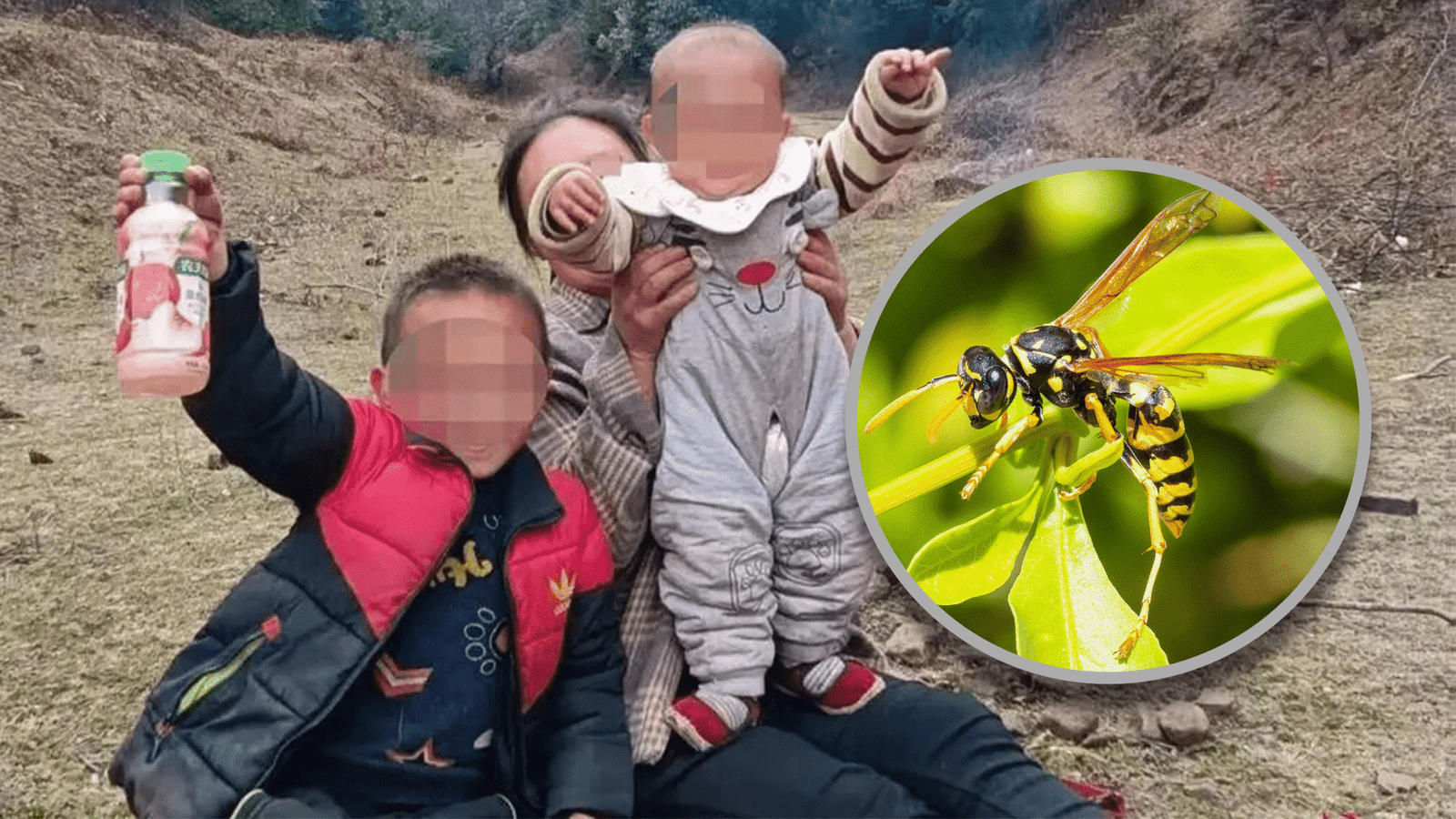
In a heartbreaking incident that has sent shockwaves through communities in southwestern China, a young brother and sister lost their lives after being Stung Hundreds of Times by Wasps. The tragedy, which unfolded in late June, highlights the hidden dangers lurking in rural areas and has prompted swift action from local authorities.
The incident occurred on June 28 in a quiet village in Muding county, where the two children were simply enjoying a day outdoors. The seven-year-old boy and his two-year-old sister were under the care of their grandmother, as their parents were away working as migrant laborers in the eastern province of Zhejiang. What began as an ordinary afternoon turned into a nightmare when the siblings wandered into nearby pine woods adjacent to a cornfield. There, they encountered aggressive swarms of wasps—later identified as yellow-legged hornets—that unleashed a relentless assault.
Eyewitness accounts and official reports describe a scene of utter chaos. The children’s cries for help alerted a nearby villager, who rushed to their aid only to be stung multiple times themselves. The grandmother, attempting to rescue her grandchildren, also fell victim to the stinging insects, suffering several stings in the process. The attack was so ferocious that no part of the children’s bodies was spared, with stings covering their faces, limbs, and torsos.
Medical examinations later revealed the horrifying extent of the injuries: the two-year-old girl endured more than 700 stings, while her seven-year-old brother sustained over 300. The sheer volume of stings overwhelmed their small bodies, leading to rapid deterioration. Emergency services were called immediately, but the remote location and the intensity of the attack made timely intervention challenging. The younger sibling, the girl, was pronounced dead at the scene due to the massive trauma inflicted by the stings.
Her brother was rushed to a local hospital, where doctors fought valiantly to stabilize him. Despite their efforts, including treatments for anaphylactic shock and multiple organ failure, the boy succumbed to his injuries the following day, on June 29. The father of the children, upon learning of the tragedy, expressed profound grief, noting that the wasps had stung every inch of their bodies without mercy. This devastating loss has left the family shattered, compounding the hardships they already faced as migrant workers separated from their young ones.
The wasps involved in this fatal attack were not wild insects but part of a beekeeping operation run by a local farmer known only as Li. Authorities quickly traced the source of the swarm to hives maintained by Li on his property near the pine woods. It turned out that Li was raising these yellow-legged hornets, a species known for its aggressive nature and potent venom, for purposes that included harvesting larvae or other commercial uses. However, investigations revealed that his operations were conducted without proper permits, making it an illegal endeavor under local regulations.
Following the incident, Li was detained by police on charges of negligent homicide. Officials determined that his failure to secure the hives adequately and to warn the community about the potential risks contributed directly to the children’s deaths. The beekeeper reportedly exterminated the remaining hornets after the attack, but this action did little to mitigate the consequences.
Read : Builddoom! Bridge under Construction in China Collapses into Yellow River
In a broader response, the Yunnan provincial authorities have imposed a complete ban on hornet farming across the region. This measure aims to prevent similar tragedies by prohibiting the cultivation of such dangerous insects. Additionally, inspections have been ordered for all existing beekeeping sites to ensure compliance with safety standards and to dismantle any unauthorized operations.
Read :A Tour of the Six Disneylands Around the World
This case underscores the complexities of rural livelihoods in China, where beekeeping—particularly of honeybees—has long been a traditional practice. However, the shift toward raising more aggressive species like yellow-legged hornets for profit has introduced new hazards. These insects are larger and more venomous than common wasps, capable of delivering stings that cause severe allergic reactions, tissue damage, and systemic failure even in healthy adults, let alone young children. The incident has sparked discussions among villagers about the need for better education on insect threats and the enforcement of zoning laws to keep such activities away from residential and play areas.
The Harrowing Incident: A Timeline of Tragedy
To fully grasp the gravity of this event, it’s essential to reconstruct the timeline based on available reports from local news outlets and official statements. The day started innocently enough in the rural village of Muding county, nestled amid the lush landscapes of Yunnan province. The siblings’ parents, relying on their grandparents for childcare due to demanding jobs in Zhejiang, had left the children in the care of their grandmother. She had taken them to a nearby cornfield for light farm work, a common activity in the agricultural community.
Around midday, the children, full of youthful curiosity, strayed from the field into the adjacent pine woods. This area, while scenic, harbored an unseen peril: the hornet hives operated by the neighboring beekeeper, Li. Reports indicate that the children may have disturbed a hive, perhaps by throwing stones or simply getting too close, triggering the defensive response from the colony. Yellow-legged hornets, scientifically known as Vespa velutina or similar aggressive variants, are notorious for their group attacks. Once agitated, hundreds can swarm a target, stinging repeatedly until the threat is neutralized—or in this case, until the victims are incapacitated.
The assault lasted only minutes but felt eternal to those involved. The two-year-old girl, being smaller and less able to run, bore the brunt of the attack, receiving over 700 stings. Her tiny frame went into immediate shock, with swelling, difficulty breathing, and cardiovascular collapse setting in rapidly. By the time help arrived, she had already passed away on the spot. The seven-year-old boy, though older and able to flee somewhat, was pursued by the swarm and stung more than 300 times. His injuries included widespread envenomation, leading to intense pain, vomiting, and eventual organ failure.
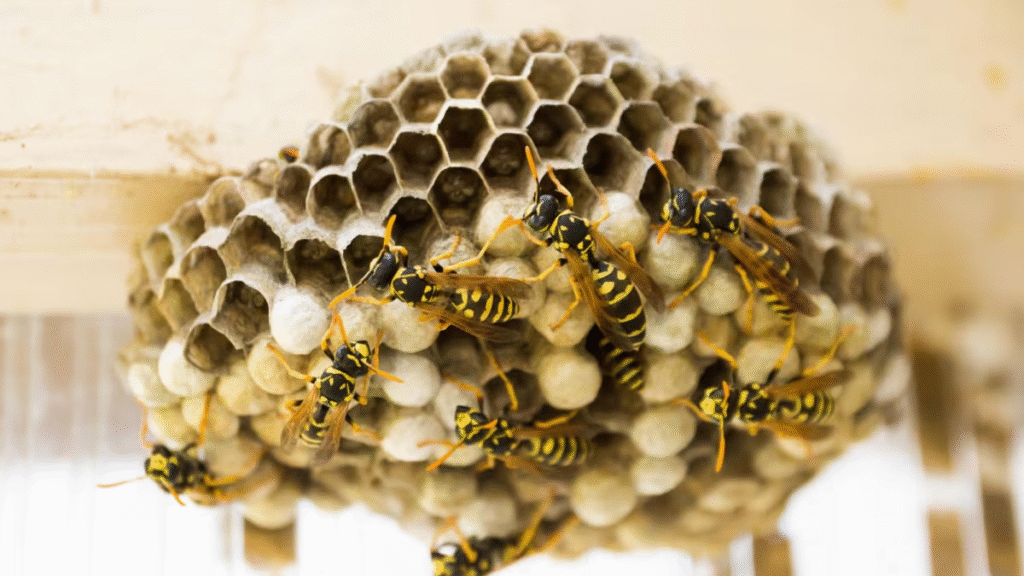
The grandmother’s intervention added to the heroism of the moment but also highlighted the risks. Stung several times while trying to shield the children, she managed to call for help, alerting a villager who then contacted emergency services. Firefighters and medical teams arrived within the hour, but the boy’s transport to the hospital was delayed by the rugged terrain. At the medical facility, he received antivenom, fluids, and supportive care, but the cumulative effect of the stings proved too much. His death the next day marked the end of a brief but unimaginable ordeal for the family.
This timeline not only illustrates the speed at which the tragedy unfolded but also points to potential points of prevention. Had the hives been properly fenced or the community informed of the risks, the children might have avoided the woods altogether. The incident’s details, corroborated by The Paper and other sources, paint a picture of a preventable disaster rooted in negligence and lack of oversight.
Aftermath and Legal Repercussions: Justice and Prevention Measures
In the wake of this double tragedy, the response from authorities has been decisive and multifaceted. The detention of beekeeper Li on negligent homicide charges represents a clear signal that such operations will not be tolerated when they endanger lives. Under Chinese law, negligent homicide applies when one’s careless actions foreseeably lead to death, and Li’s unauthorized hornet farming fits this criterion. He faces potential imprisonment and fines, with the case still under investigation as of early September 2025. The family’s pursuit of justice is ongoing, with calls for compensation to cover funeral costs and emotional damages.
On a regional level, the Yunnan government has enacted a ban on all hornet farming activities, effective immediately following the incident. This policy shift includes mandatory inspections of apiaries across the province to identify and shut down any similar illegal setups. Forestry experts and local fire services have been mobilized to remove existing nests and educate residents on safe practices. The ban extends to the sale and distribution of hornet products, aiming to curb the economic incentives that drive such risky endeavors.

The family’s grief has resonated widely, with the father publicly sharing his anguish over the loss of his children. As migrant workers, the parents were already strained by separation, and this event has compounded their sorrow. Community support has poured in, including donations for burial expenses and counseling services. However, the psychological toll on the grandmother, who feels partial responsibility despite her efforts, cannot be overstated. Mental health resources in rural areas are limited, making recovery challenging.
Legally, this case sets a precedent for holding individuals accountable for environmental hazards on their property. Prosecutors are examining whether Li’s hives violated agricultural codes, and environmental agencies are involved to assess any ecological impact from the hornet population. The charges against Li could lead to a trial that highlights the intersection of rural economy and public safety, potentially influencing similar regulations nationwide.
Broader Implications: Wasps, Safety, and Rural China
This tragic event extends far beyond the immediate loss, shedding light on pressing issues in rural China. Yellow-legged hornets, while valuable for certain traditional medicines or as a protein source in larvae form, pose significant risks when farmed irresponsibly. These insects’ venom contains multiple toxins that can cause hemolytic effects, neurological damage, and anaphylaxis. In children, whose immune systems are developing, even fewer stings can be lethal—let alone hundreds. Experts note that a single sting from this species is painful but survivable for most adults; however, mass attacks overwhelm the body’s defenses.
In the context of China’s rural landscapes, such incidents are not isolated. Yunnan province, with its diverse ecosystems and pine forests, provides ideal habitats for hornets. Climate change and habitat encroachment have increased human-insect encounters, exacerbating risks. Previous cases, like a 2019 wasp attack at a funeral in Guangxi that killed three, or a 2018 incident where a man died from 50 stings while hunting larvae, underscore a pattern. Yet, this sibling duo’s story stands out for its scale and the involvement of farmed insects.
Public safety measures must evolve accordingly. Authorities are now promoting awareness campaigns on recognizing hornet nests—large, paper-like structures often in trees—and avoidance strategies. Schools in affected areas are incorporating insect safety into curricula, teaching children not to provoke swarms and to seek adult help immediately. For beekeepers, new guidelines emphasize protective barriers, signage, and licensing, shifting from honeybees to safer practices.
Economically, the ban disrupts local incomes, but alternatives like traditional honey farming or eco-tourism are being encouraged. This tragedy highlights the need for balanced development in rural China, where poverty drives risky ventures. Support for migrant families, including better childcare options, could prevent children from being left unsupervised in hazardous areas.
Ultimately, the loss of these two young lives serves as a call to action. It reminds us that behind every news headline is a human story of joy cut short. As investigations continue and policies adapt, the hope is that such vigilance will protect future generations from similar fates. In remembering the brother and sister, we honor their memory by advocating for safer communities.