
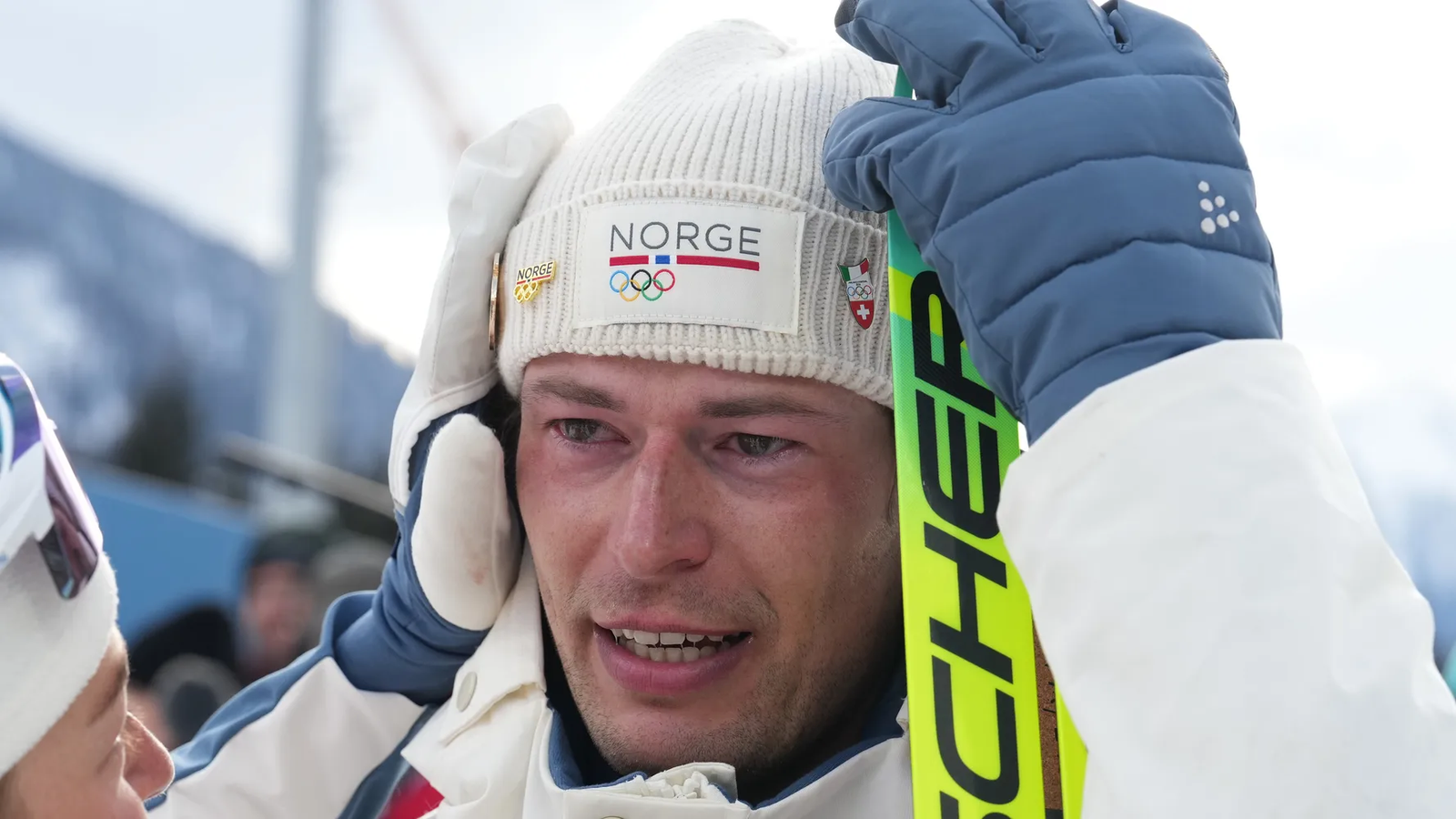
Sturla Holm Lægreid is widely recognized as one of Norway’s most accomplished modern biathletes, a precision athlete whose calm composure and consistent shooting accuracy have helped define his rapid rise through international winter sports. Yet during the 2026 Milan Cortina Winter Olympics, his sporting performance became only part of the story. After securing a bronze medal in the men’s 20-kilometer biathlon event, the Norwegian competitor delivered an emotional and deeply personal confession that quickly captured global attention.
In a post-race interview, he revealed that he had cheated on his girlfriend months earlier and expressed public regret, saying he hoped she might still forgive him. The unexpected disclosure stunned audiences, commentators, and fellow athletes alike. Medal interviews traditionally focus on training, strategy, or competition, but Sturla Holm Lægreid used the moment to speak openly about his private life, describing his remorse and acknowledging the consequences of his actions.
His comments circulated widely across social media and sports media platforms, turning what might have been a routine Olympic medal reaction into one of the most discussed personal moments of the Games. To understand why the confession resonated so strongly, it helps to look beyond the headlines and examine Sturla Holm Lægreid’s career, the circumstances surrounding his Olympic statement, and the response that followed from the sporting world and public observers.
Early life and rise in international biathlon
Born in Norway, a country with a deep and celebrated tradition in winter sports, Sturla Holm Lægreid emerged as a standout talent in biathlon at a relatively young age. The sport combines cross-country skiing endurance with rifle shooting precision, demanding both physical stamina and mental discipline. Norway has long been dominant in the discipline, producing world champions and Olympic medalists across generations. Lægreid developed his career within this highly competitive national system, rising through junior ranks and quickly gaining recognition for his technical consistency.
His breakthrough on the international stage came during the Biathlon World Cup circuit, where he demonstrated remarkable shooting accuracy and strong race pacing. These attributes helped establish him as one of the most reliable performers in high-pressure competitions. Over time, he accumulated multiple world championship titles, eventually becoming a six-time Biathlon World Champion. Such achievements positioned him among the sport’s elite competitors and reinforced Norway’s continued prominence in biathlon.
Sturla Holm Lægreid also gained Olympic experience prior to the Milan Cortina Games. At the 2022 Winter Olympics in Beijing, he was part of Norway’s gold-medal-winning relay team, contributing to the country’s continuing success in the discipline. That victory further strengthened his reputation as a dependable team competitor capable of delivering under pressure.
By 2026, Sturla Holm Lægreid entered the Winter Olympics with significant expectations. As an established international athlete in his late twenties, he was considered a serious contender in individual events. His performance in the men’s 20-kilometer race ultimately earned him a bronze medal, marking his first individual Olympic medal at those Games. The achievement represented both personal success and continuity in Norway’s biathlon legacy.
Call me old fashioned but I don’t think telling the world you cheated on your girlfriend right after you win an Olympic medal is the best idea.
— RGF (@rgfray1) February 10, 2026
Norway’s biathlete Sturla Holm Laegreid is having quite the week#olympics2026#milanocortina2026
pic.twitter.com/bcI9zBHaoA
His competitive environment also included emotional context beyond sport alone. The Norwegian biathlon community had recently been affected by the death of teammate Sivert Guttorm Bakken during a training camp in Italy. Lægreid publicly honored Bakken in the months prior to the Olympics, reflecting the close-knit nature of the team and the emotional atmosphere surrounding the season. Against this backdrop of professional achievement and personal complexity, Lægreid stepped into the Olympic spotlight after his medal performance and delivered remarks that would redefine the narrative of his Games.
The emotional confession after Olympic bronze
Following his bronze medal finish, Sturla Holm Lægreid participated in a post-race interview with Norwegian Broadcasting Corp. (NRK). During the conversation, he unexpectedly shifted focus away from competition and toward a deeply personal subject. He revealed that three months earlier he had been unfaithful to his girlfriend, whom he described as “the love of [his] life.” He explained that he had told her about the betrayal a week before the Olympic race and that she ended the relationship afterward.
The timing of his confession was striking. Medal interviews typically celebrate athletic achievement, yet Sturla Holm Lægreid framed his Olympic moment in terms of personal loss rather than sporting triumph. He said that although he had won a medal, he felt that he had lost something far more important. He described the previous week as the worst of his life and acknowledged that many people might now see him differently.
He also explained why he chose to speak publicly. According to his statements, he wanted to demonstrate the depth of his regret and his commitment to honesty. He described his decision as a form of accountability, even calling it “social suicide,” suggesting that exposing his mistake on a global stage might show how seriously he valued the relationship. He said he hoped she might still be watching and that he wished he could share the Olympic moment with her.
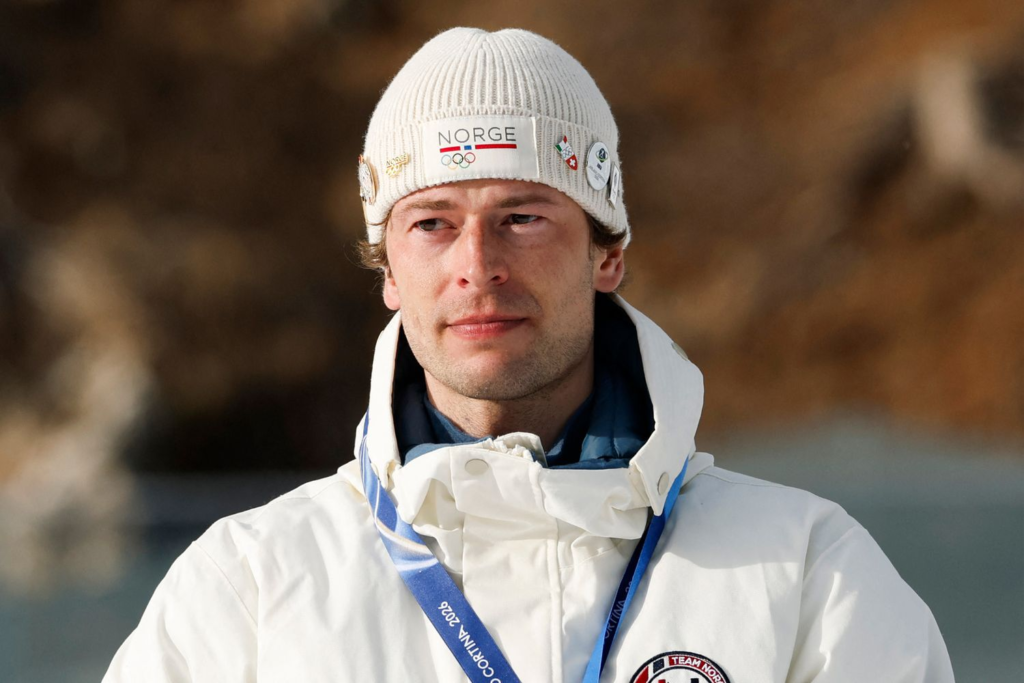
Sturla Holm Lægreid emphasized that he had no intention of concealing the truth. He explained that he could not imagine continuing his life while keeping such a secret and believed that complete openness was the only path forward. He acknowledged the harm he had caused and stated that he accepted the consequences. In one widely quoted remark, he said that although he is a member of Mensa, he still makes serious mistakes, reflecting his effort to acknowledge personal fallibility despite intellectual achievement.
During a later press conference, he reiterated that he did not know whether speaking publicly was the right decision, but it was the one he chose. He framed his confession as an attempt to do everything possible to repair the relationship, even if reconciliation never occurred.
His comments transformed the medal ceremony’s aftermath into a widely discussed moment that extended far beyond biathlon or Olympic sport. Instead of focusing solely on race performance, the conversation shifted toward personal responsibility, emotional vulnerability, and the boundaries between private life and public visibility.
Reactions from teammates, media, and the public
The response to Lægreid’s remarks spread rapidly across sports media and online platforms. Journalists and commentators described the interview as unusual and unexpected. One Swedish sports reporter called it among the strangest medal interviews he had witnessed. Social media users expressed a mixture of surprise, confusion, and curiosity, with some describing it as one of the most bizarre Olympic moments in recent memory.
Read : Frank Murphy Voices Support for Fairness in Women’s Sports at Supreme Court Trans Athlete Hearing
The intensity of the reaction reflected both the scale of the Olympic platform and the rarity of such personal disclosures in elite sports settings. Athletes frequently share emotional responses after competition, but public admissions of relationship infidelity during medal interviews are highly uncommon.
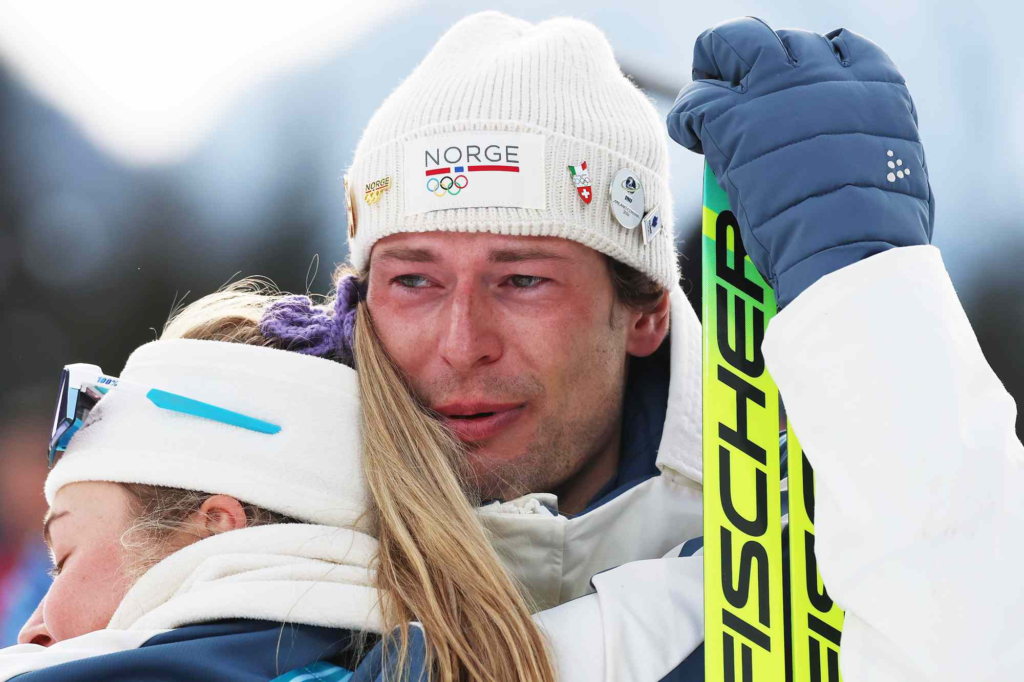
Within the Norwegian biathlon team, responses varied. Teammate Johannes Dale-Skjevdal acknowledged that some athletes had been aware of the situation beforehand. He described the matter as difficult to comment on but noted that openness was Lægreid’s choice. Another teammate, Martin Uldal, said he had noticed changes in Lægreid’s behavior but had not known the reason until the public statement. He expressed sadness and described the situation as difficult, emphasizing team support.
Johan-Olav Botn, who won the gold medal in the same event, characterized the situation as a personal matter outside his concern. He emphasized his own race as an emotional and individual achievement. During the interaction, Lægreid briefly apologized if his confession had drawn attention away from other athletes, indicating awareness of how his remarks might affect the broader event narrative.
Observers also noted the contrast between Lægreid’s competitive success and his emotional state. When asked how he managed to perform strongly despite personal turmoil, he credited support from his home club, which had sent him a motivational video before the race. He said he wanted to remain a positive role model while acknowledging wrongdoing, describing the importance of recognizing actions that cannot be defended.
Media coverage expanded beyond sports reporting into broader cultural discussion. Commentators examined how public figures handle personal mistakes, the role of vulnerability in athlete identity, and the pressures of global visibility during major events. The moment became part of the wider Olympic conversation, appearing alongside other sporting developments and headlines from the Games.
For Lægreid, the bronze medal represented a milestone in his Olympic career, but the public memory of the race became closely tied to his personal disclosure. His athletic record remained significant—world championship titles, Olympic relay gold, and individual podium finishes—but the Milan Cortina interview ensured that his name would also be associated with one of the most unusual post-race statements in recent Olympic history.
As coverage continued, attention focused on both his competitive achievements and his decision to address personal matters in a global forum. The intersection of elite sport performance and private life disclosure placed Lægreid in an uncommon position, illustrating how Olympic visibility can extend far beyond competition results.