
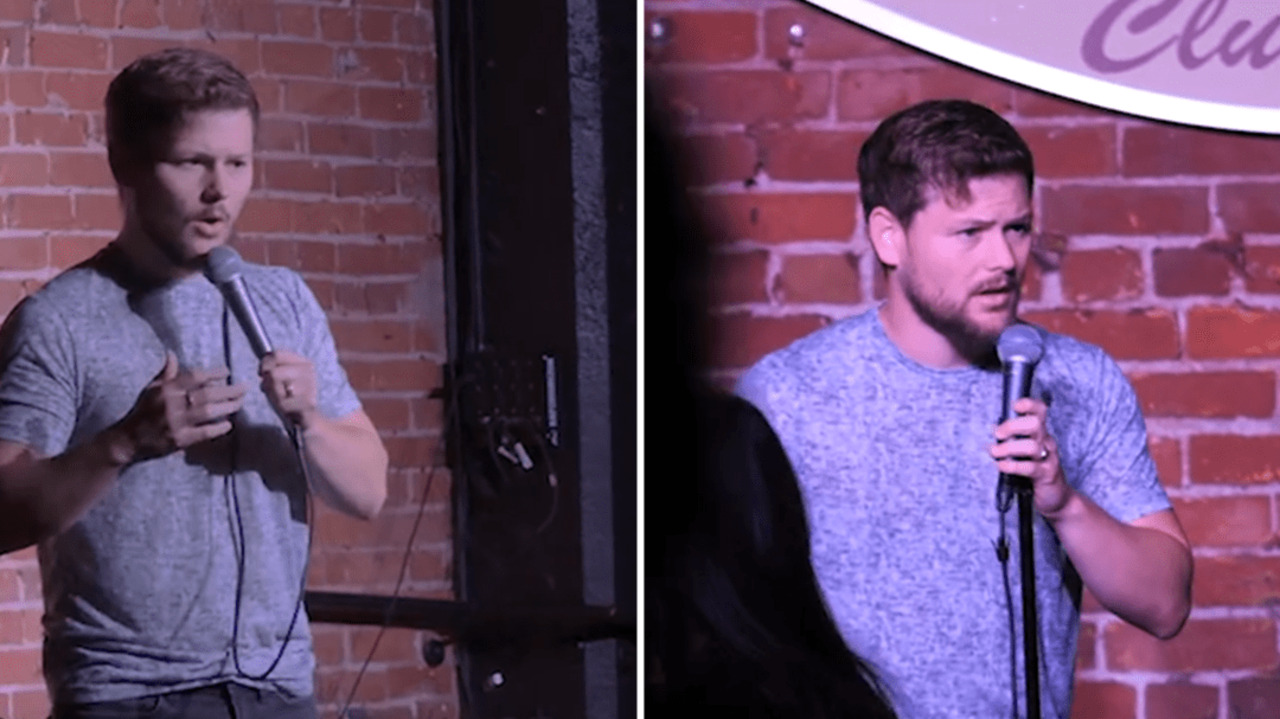
In a night that blended laughter with life-or-death drama, an elderly audience member at comedian Drew Lynch’s show in Spokane, Washington, suffered a sudden cardiac arrest on September 12, 2025. What began as a routine performance at the Spokane Comedy Club quickly transformed into a testament to human compassion and quick thinking. Mr. Wende, as the man was later identified, collapsed mid-set, prompting an extraordinary response from fellow attendees who sprang into action with CPR, ultimately reviving him until paramedics arrived.
The incident, captured in a raw video shared by Lynch himself, has since gone viral, highlighting not just the vulnerability of health emergencies in public spaces but also the profound power of community solidarity. As news of the event spreads, it serves as a poignant reminder of how ordinary people can become heroes in extraordinary circumstances, turning a comedy club into a scene of salvation. Drew Lynch, the 34-year-old stand-up sensation known for his resilient humor and runner-up finish on Season 10 of America’s Got Talent, was about 10 minutes into his early evening set when the unthinkable unfolded.
The venue, a cozy spot popular for its intimate atmosphere and lineup of touring comics, was buzzing with anticipation. Lynch, who has built a devoted following through his YouTube series Dog Vlog and appearances on shows like Conan, was in the midst of delivering his signature blend of witty observations laced with vulnerability—often drawing from his own experiences living with a stutter following a traumatic brain injury in 2011. The crowd, a mix of locals and fans drawn to Spokane’s growing comedy scene, was laughing along when a commotion erupted from the seating area.
According to Lynch’s firsthand account in a TikTok video that has amassed millions of views, he paused his routine after noticing the disturbance. “Oh, hey. Everything okay?” he asked into the microphone, his voice shifting from comedic timing to genuine concern. The response was immediate and alarming: “No,” came the reply from a nearby attendee, followed swiftly by another voice declaring, “I’m calling 911 right now.” Mr. Wende, seated among the audience, had slumped forward, his body going limp as cardiac arrest gripped him. No pulse was detectable, and the room fell into a hushed urgency, the laughter evaporating like mist under a sudden storm.
The transition from entertainment to emergency was seamless yet surreal. Venue staff, trained in basic protocols, cleared space around the fallen man, but it was the audience who truly took charge. Nurses in the crowd—seated coincidentally at a table just behind Mr. Wende—leapt to the forefront, their professional instincts kicking in without hesitation. One woman announced, “CPR started,” as she positioned herself for chest compressions, her hands pressing rhythmically against his sternum. Another voice chimed in, “I can be your second,” offering to relieve her and maintain the vital flow of blood through compressions.
For over five grueling minutes, strangers rotated turns, their arms aching but unwavering, monitoring vitals and coordinating efforts as if they’d rehearsed it a hundred times. Questions about an AED (automated external defibrillator) rippled through the group, though details on its use remain unconfirmed in initial reports. Lynch, microphone in hand, directed the flow of movement, calling out to shift furniture and create a clear path for arriving paramedics. The air was thick with tension, punctuated by the steady counts of “one, two, three” from the CPR team, a cadence that underscored the fragility of the moment.
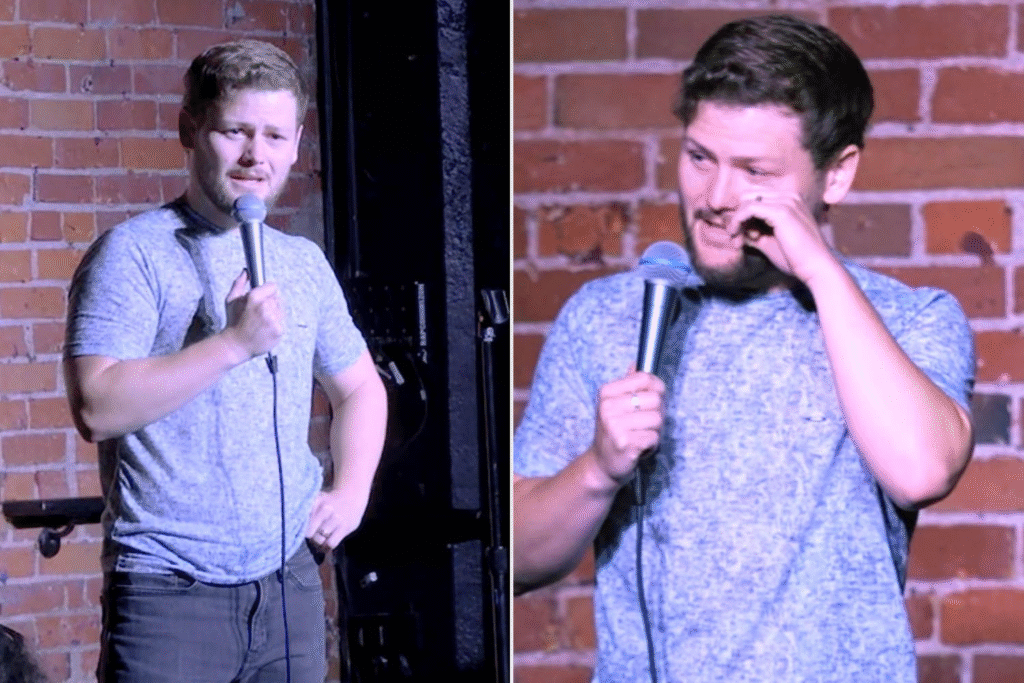
As the paramedics finally burst through the doors, their equipment clattering, the collective exhale was palpable. Mr. Wende’s color began to return, his heartbeat restored through the unyielding efforts of those around him. The show, of course, ground to a halt, but not before Lynch addressed the crowd with raw emotion. “You guys all really just came together in a really cool way. You saved that guy’s life,” he said, his voice cracking as he fought back tears. The comedian, no stranger to vulnerability on stage, later reflected that the incident transcended his profession: “I’m a comedian, but who cares? I felt as a human being that I got to experience a group of people coming together to revive someone, to give back someone their life.”
The Lifesaving Power of Community and CPR Training
The audience’s response wasn’t just instinctive; it was a shining example of how widespread CPR training can turn bystanders into lifesavers. In the United States, cardiac arrest claims around 350,000 lives annually outside of hospitals, with survival rates plummeting if CPR isn’t initiated within minutes. Yet, on this night in Spokane, the odds flipped dramatically thanks to everyday heroes armed with knowledge. The nurses who led the charge exemplified professional poise, but even non-medical attendees contributed—holding airways open, fetching water, or simply holding space for the responders.
Read : Japan Releases AI-Generated Video Showing What Will Happen in Tokyo if Mount Fuji Erupts
Lynch himself has since amplified the story to advocate for certification, noting in follow-up posts, “I hope [this] is a reminder of how important such training can be.” This event echoes broader public health narratives, where venues like comedy clubs are increasingly equipped with AEDs and staff drills, but it’s the ripple effect of personal preparedness that truly saves lives. Mr. Wende’s revival hinged on that chain of survival: early recognition, immediate CPR, and rapid defibrillation.
Without the crowd’s ego-free collaboration—clearing paths, taking turns to avoid fatigue—the outcome could have been tragic. As one fan commented online, even seasoned EMTs can freeze in the shock of the moment; here, a village of strangers formed instantaneously, proving that hope thrives in collective action. Spokane’s medical community, from the arriving paramedics to the hospital team, sealed the success, but the initial spark came from the seats.
The incident also spotlights the unspoken bonds in live entertainment spaces. Comedy clubs, with their close-knit seating and shared energy, foster an environment where help feels accessible. Rachel Aflleje, another performer on the bill that night, described the delay in realizing the severity as “what felt like forever,” yet once awareness hit, the room mobilized like a well-oiled machine. This wasn’t chaos; it was choreography born of empathy, a microcosm of how communities can rally against adversity.
Comedian’s Emotional Aftermath and Visit to the Hospital
For Drew Lynch, the night etched itself into his psyche, blending professional poise with profound personal impact. Visibly shaken, he broke down in tears post-show, a vulnerability that resonated deeply with his audience and fans worldwide. “It was a beautiful thing to witness, because it restored hope for whatever is going on in the crazy of this world,” he shared in the viral clip, his stutter adding an authentic layer to the raw honesty. The comedian, who often weaves his health challenges into his material, found himself on the receiving end of a narrative far weightier than any punchline.
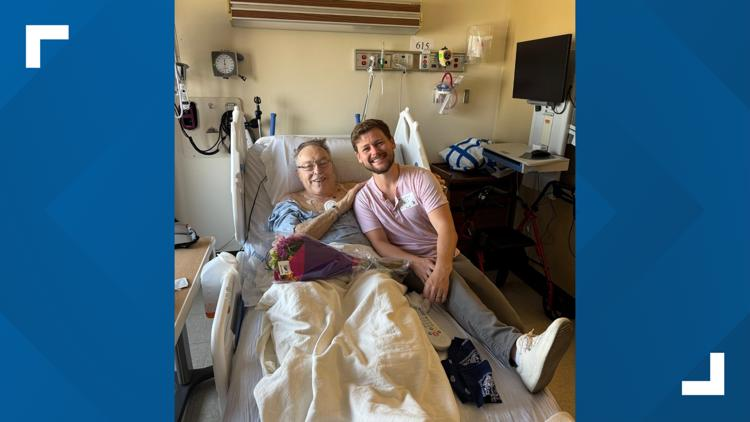
The following day, Lynch, alongside fellow comics Akeem and Rachel Aflleje, made their way to the hospital to check on Mr. Wende. What they found was a man in remarkably good spirits, surrounded by family and cracking jokes of his own. Identified as a speech therapist working in local schools—a profession that ironically intersects with Lynch’s own speech journey—Mr. Wende engaged the visitors with insider comedy questions and tales from his career.
Lynch performed snippets of his unfinished set right there by the bedside, turning the sterile room into an impromptu stage. Photos shared by the comedian captured the warmth: Lynch grinning beside the bed, Wende’s son Nathan beaming in appreciation. Nathan’s message, relayed through Lynch’s social media, captured the family’s gratitude: “I don’t know all of your names but I hope you know how much you are appreciated.”
The visit stretched into hours of laughter and storytelling, a healing balm for all involved. Lynch later reflected, “Getting to laugh and share stories with his family for hours was the reminder I needed of why comedy is so needed, especially when the world feels so divided.” For the Wende family, the ordeal underscored life’s unpredictability, but also its interconnectedness—strangers becoming saviors, a comedian becoming a friend.
A Heartfelt Tribute to Spokane’s Spirit of Resilience
In the wake of the incident, Spokane has emerged as the unsung star of this story. The city’s comedy scene, bolstered by venues like the Spokane Comedy Club, prides itself on fostering joy amid everyday stresses, and this event amplified that ethos tenfold. Lynch’s repeated shout-outs—”Shout out to the city of Spokane, the medical professionals, and the Wende family for bringing this beautiful man into my life and reminding me how special community is”—have sparked local pride.
Fans and residents alike have shared their own tales of quick-thinking neighbors, turning the news into a catalyst for conversations about emergency preparedness. The broader implications ripple outward: venues nationwide might now double down on AED accessibility and CPR workshops, while individuals reconsider their own training.
Mr. Wende’s full recovery remains a beacon, his return to health a victory for proactive citizenship. As Lynch wraps his tour, this Spokane stop will stand out not for the laughs alone, but for the lives affirmed. In a world often fractured, nights like this reaffirm our shared humanity—one compression, one call, one collective breath at a time.