

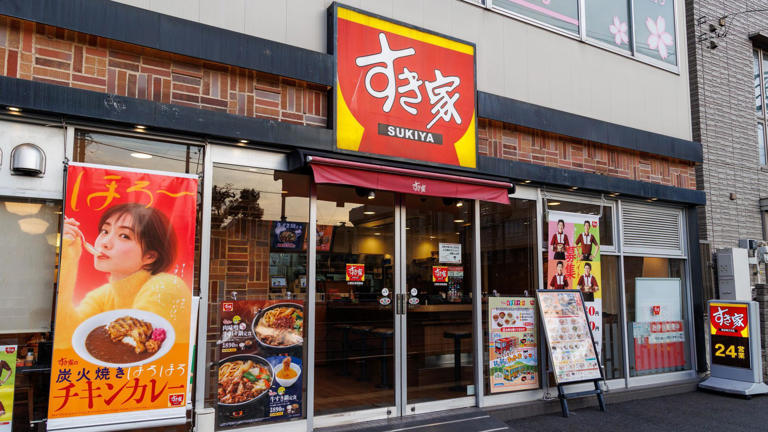
Japan’s fast-food industry has been rocked by a major scandal as Sukiya, the country’s largest beef bowl chain, announced the temporary closure of nearly all its 2,000 stores due to food contamination issues.
This drastic move comes in response to two alarming incidents where a customer found a rodent in a bowl of miso soup, and another discovered a bug in their meal. The decision highlights the importance of food safety and the potential impact of such incidents on consumer trust and corporate reputation.
The Contamination Incidents and Immediate Fallout
The first incident, which took place in January at a Sukiya location in western Japan, involved a rat being discovered in a bowl of miso soup. The company issued an official apology on March 22 after the case came to light, acknowledging the seriousness of the situation.
This revelation sent shockwaves across Japan, leading to a sharp decline in the parent company Zensho Holdings’ stock price, which plummeted by as much as 7% on March 24.
As if one contamination case was not damaging enough, Sukiya faced yet another incident on March 29 when a store in suburban Tokyo served a meal containing a bug. The discovery of two separate contamination cases within such a short period created an uproar among consumers and forced the company to take drastic action.
The company swiftly announced that nearly all of its stores would close for four days, from Monday morning to Friday morning, to address the issue and implement measures to prevent further contamination.
Read : Two Japanese Tourists Deported for Taking Pics Exposing Buttocks At Great Wall of China
In an official statement, Sukiya expressed deep regret over the situation, stating, “We take very seriously the fact that this incident has occurred. We deeply apologize to our customers.” The company’s decision to shut down such a large number of stores nationwide underscores the severity of the issue and the need for urgent corrective measures.
Impact on Sukiya’s Business and the Broader Food Industry
Sukiya’s temporary closure represents a significant setback for the company and could have lasting repercussions on its reputation and financial performance. As of the end of 2024, Sukiya operated 1,965 stores in Japan, making it the country’s leading beef bowl chain, surpassing its competitors Yoshinoya (1,250 stores) and Matsuya (1,100 stores).
The suspension of operations across nearly all outlets is expected to result in substantial financial losses, both in terms of direct revenue decline and potential compensation for affected customers.

Consumer trust is a crucial factor in the food industry, and a contamination scandal of this magnitude can significantly damage a brand’s image. Even after the stores reopen, Sukiya will likely face an uphill battle in regaining customer confidence.
The company will need to reassure the public that stringent food safety protocols have been put in place to prevent any recurrence of similar incidents.
Read : 1.6 Million People Worldwide Fall Ill Due to Eating Contaminated Food: WHO
Moreover, this scandal is likely to have a ripple effect on the broader fast-food industry in Japan. Food safety has always been a top priority in the country, and regulatory authorities may now impose stricter guidelines on restaurant chains to ensure compliance.
Other competitors, such as Yoshinoya and Matsuya, may also come under increased scrutiny, with customers paying closer attention to hygiene and quality control standards at their outlets.
Internationally, the scandal could impact Sukiya’s operations in other markets, including China, Southeast Asia, and Latin America, where it operates around 650 stores. While the current crisis is centered on Japan, global consumers may develop concerns over the brand’s food safety practices, potentially affecting its overseas sales.
Measures to Address the Crisis and Restore Consumer Confidence
In response to the crisis, Sukiya has committed to taking immediate steps to prevent future contamination incidents. While specific details of the corrective actions have not been disclosed, it is expected that the company will implement comprehensive hygiene inspections, upgrade food storage and handling procedures, and reinforce staff training programs.
These measures are essential not only for addressing the current crisis but also for rebuilding consumer trust and safeguarding the brand’s future.
Sukiya’s parent company, Zensho Holdings, may also introduce independent third-party audits to verify food safety standards across its outlets. Collaborating with external experts and government agencies could help reassure customers that the company is taking proactive steps to improve hygiene standards.
Additionally, transparent communication will be key in restoring public confidence. Sukiya will need to maintain an open dialogue with customers, regularly updating them on the measures being taken to prevent similar incidents. Leveraging social media and digital platforms to engage with customers and address their concerns could play a vital role in rebuilding trust.
Looking ahead, the Sukiya scandal serves as a cautionary tale for the entire food industry. It underscores the critical importance of rigorous food safety protocols, prompt crisis management, and the need for proactive measures to maintain consumer trust.
For Sukiya, the road to recovery will be challenging, but with the right actions and a commitment to transparency, the company may eventually regain its status as Japan’s leading beef bowl chain.