
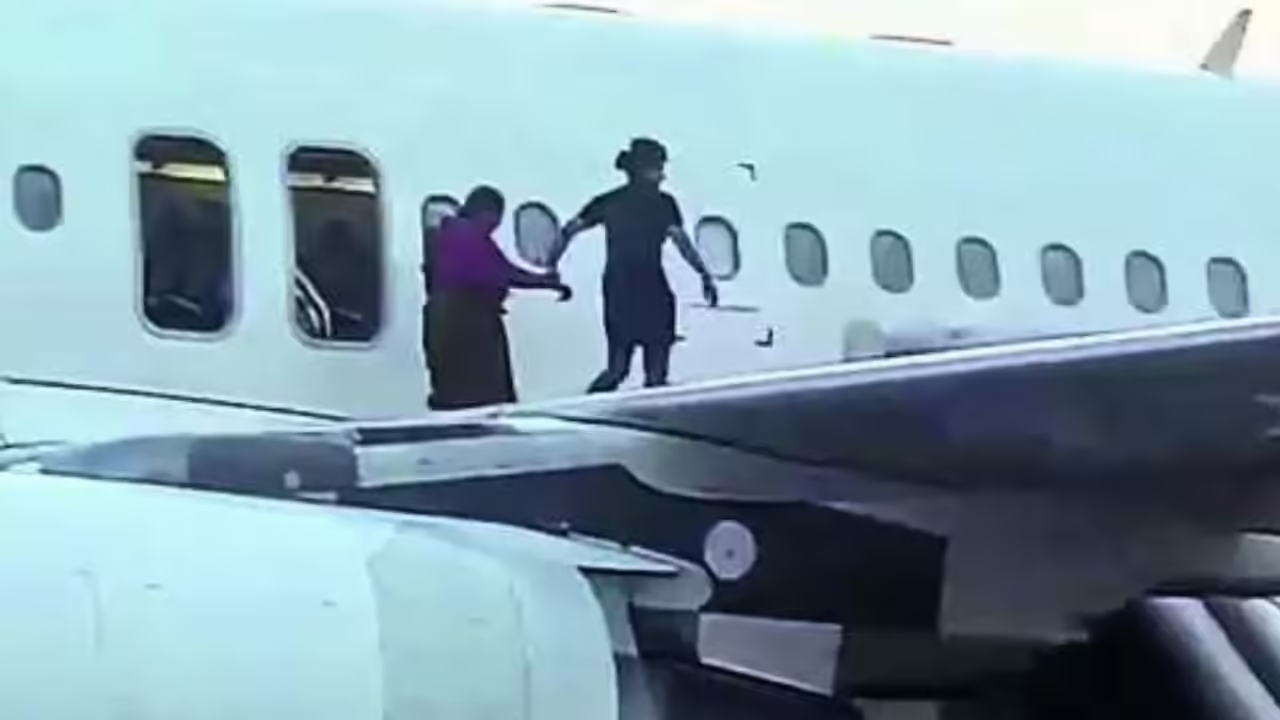
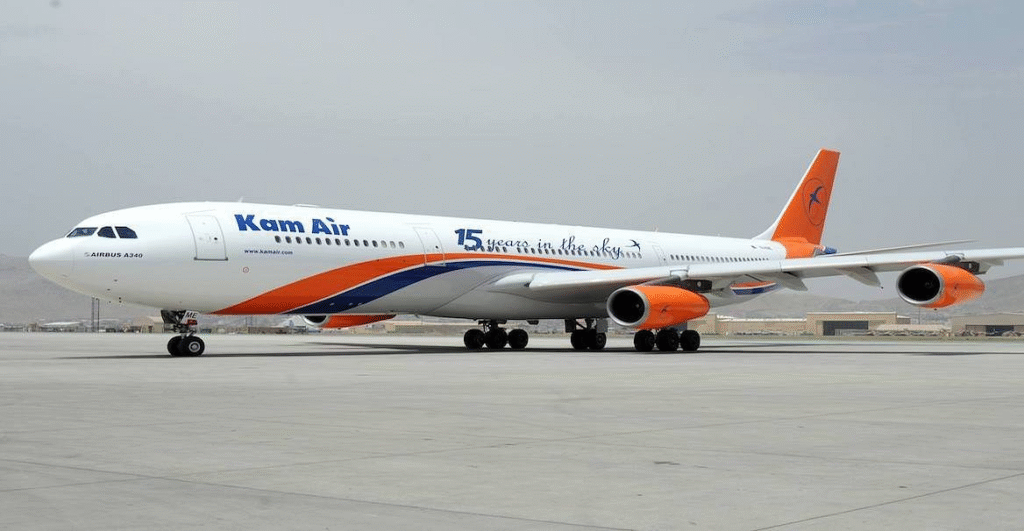
In a story that blends desperation, sheer luck, and the harsh realities of aviation survival, a 13-year-old boy from Afghanistan has defied the odds by stowing away in the rear wheel well of a commercial flight and emerging unscathed. On Sunday, September 21, 2025, the boy, hailing from the northern city of Kunduz, slipped past security at Kabul’s Hamid Karzai International Airport and hid in the landing gear compartment of a KAM Air Airbus A340 bound for India’s capital.
What was meant to be a covert journey to Iran turned into an unintended 94-minute odyssey to Delhi, where ground staff discovered him wandering in a restricted area of Indira Gandhi International Airport. This incident not only highlights the vulnerabilities in airport security but also underscores the perilous lengths to which young migrants will go amid ongoing turmoil in their homeland. As details emerge from official sources and aviation experts, the boy’s tale serves as a stark reminder of human resilience in the face of extreme danger.
The Desperate Stowaway: A Boy’s Risky Gamble at Kabul Airport
The sequence of events began in the early morning chaos of Kabul’s main international gateway, a hub strained by the aftermath of the Taliban’s 2021 takeover and the persistent exodus of Afghans seeking better lives abroad. The boy, dressed simply in a traditional kurta and pyjama, had no ticket, no passport, and no clear plan beyond escape. According to accounts from security personnel and airline staff, he confessed during questioning that his original intention was to reach Iran, a common destination for Afghan migrants hoping for work or asylum.
However, in a critical miscalculation, he tailed a group of passengers through the boarding process and climbed into the rear central landing gear compartment of flight RQ4401, operated by the Afghan carrier KAM Air. This method of stowaway—known as “wheel-well” infiltration—is as old as commercial aviation itself, but no less deadly. The boy reportedly entered the compartment during the aircraft’s ground preparations, squeezing into the confined space designed solely for retractable landing gear.
As the Airbus A340 taxied for takeoff at 8:46 a.m. IST, the wheels retracted, sealing him in a metal enclosure exposed to the elements. Aviation protocols at Kabul, already under scrutiny for lapses since the chaotic U.S. withdrawal, apparently failed to detect the intrusion. A security source involved in the aftermath described the breach as a “serious concern,” pointing to gaps in passenger screening and perimeter checks that allowed the teenager to slip through unnoticed.
Eyewitness reconstructions from airport logs reveal a scene of routine boarding disrupted only by the boy’s stealth. He moved with the determination of youth, blending into the crowd of travelers—many of whom were themselves fleeing economic hardship or political instability. Once airborne, the flight charted a short but intense path northwest, covering approximately 1,000 kilometers at cruising altitudes around 30,000 feet.
Read : Jevon Castrillo Receives Handwritten Letter from Flight Attendant Mother Who Died in 9/11 Attack
For the boy, this was no ordinary trip; it was a plunge into an environment hostile to human life, where temperatures plummet to minus 50 degrees Celsius and oxygen levels drop precipitously. Yet, against all statistical improbability, he endured, his body adapting in ways that continue to baffle medical experts. The motivation behind such a reckless act remains partially shrouded, with the boy citing a vague “curiosity” in initial statements, though deeper probes suggest familial pressures and the allure of opportunity abroad.
Afghanistan’s youth unemployment rate hovers above 30 percent, exacerbated by international sanctions and internal conflicts, pushing thousands annually toward irregular migration routes. This boy’s story echoes those of countless others who view borders not as lines on a map but as barriers to survival. As the plane hurtled toward Delhi, oblivious to its hidden passenger, the world was none the wiser to the drama unfolding in its underbelly.
A Chilling Voyage: Surviving the Impossible at 30,000 Feet
Few feats in modern aviation rival the sheer improbability of wheel-well survival. Historical data from the Federal Aviation Administration and aviation safety records indicate that out of 99 documented cases between 1947 and 2013, only 23 individuals lived to tell the tale, with a fatality rate exceeding 75 percent. The dangers are multifaceted: rapid decompression leads to hypoxia, where the brain starves for oxygen; extreme hypothermia sets in as frost forms on exposed skin; and the mechanical risks of gear retraction threaten instant crushing.
Yet, this 13-year-old emerged from his 94-minute ordeal in stable condition, a medical anomaly that experts attribute to a rare physiological response. Aviation specialist Captain Mohan Ranganathan, commenting on similar incidents, explained that the rear wheel well of an Airbus A340 offers a sliver of protection compared to forward bays. “The compartment isn’t fully pressurized like the cabin, but it’s somewhat enclosed, allowing partial oxygen retention from ground levels,” he noted.
During ascent, the boy’s body likely entered a state of “suspended animation,” akin to hibernation, where metabolic rates plummet to conserve energy. His core temperature may have dipped to hypothermic levels—potentially as low as 26 degrees Celsius, as seen in a 2000 case involving a stowaway from Tahiti to Los Angeles—but without reaching lethal thresholds. Upon descent, the warming air and gradual repressurization spared him the explosive decompression that claims most victims.
The flight’s brevity played a crucial role; longer hauls, like transatlantic routes, amplify exposure to sub-zero voids. At 10:20 a.m., the A340 touched down smoothly at Delhi’s Terminal 3, its 200-plus passengers disembarking without incident. It was only during post-flight taxiing that a vigilant ground handler spotted an unusual figure stumbling across the apron—a disoriented teenager, frost-kissed but ambulatory, clad in the same kurta now stiff with ice.
Central Industrial Security Force (CISF) officers swiftly intercepted him, their initial shock giving way to protocol: medical evaluation, followed by handover to Delhi Police for immigration processing. On-site medics reported no fractures, concussions, or severe frostbite, though the boy exhibited mild hypothermia and dehydration. Blood oxygen saturation hovered at 92 percent upon arrival, remarkably high for such an exposure.
This resilience mirrors rare survivors like Armando Socarras Ramirez, a Cuban defector who in 1969 rode an Iberia flight from Havana to Madrid, awakening covered in ice to the nickname “Mr. Popsicle” from Spanish doctors. For the Afghan boy, the landing marked not triumph but disorientation; he reportedly asked in Pashto for directions to Iran, underscoring his navigational blunder. As he was escorted to a secure holding area, the incident rippled through airport operations, grounding similar flights briefly for enhanced inspections.
Aftermath and Echoes: Security Lapses, Deportation, and Broader Implications
The discovery triggered an immediate multi-agency response, blending compassion with enforcement. Handed over to immigration authorities, the boy underwent debriefing where he detailed his solo journey from Kunduz, a Taliban stronghold plagued by poverty. Lacking documentation, he was processed as an undocumented minor migrant. By Monday evening, September 22, arrangements were underway for his deportation back to Kabul via the next available KAM Air flight, a bittersweet return that dashed his dreams of a new start.
Indian officials, citing bilateral agreements with Afghanistan, prioritized swift repatriation to avoid straining asylum resources, though child welfare protocols ensured psychological counseling before departure. The episode exposed glaring security fissures at Kabul’s airport, a facility still recovering from the 2021 siege that saw desperate Afghans clinging to departing U.S. military jets. Sources decried the ease of tailgating, urging upgrades in CCTV surveillance and baggage reconciliation. On the Delhi side, CISF’s quick action prevented further breaches, but it reignited debates on apron access controls.

Aviation bodies like the International Civil Aviation Organization may launch inquiries, potentially leading to protocol overhauls for low-cost carriers like KAM Air. This is not India’s first brush with wheel-well stowaways. In 1996, two Punjabi brothers, Pardeep and Vijay Saini, survived a Delhi-to-London flight on a British Airways Boeing 747, their bodies in hypothermic stasis upon arrival. Accused of separatist ties, they sought asylum and highlighted migration’s desperate edges. Globally, such cases spike during crises—think the 2015 European migrant surge or recent Afghan evacuations—serving as harbingers of humanitarian strain.
The boy’s survival, while miraculous, carries a cautionary weight. At 13, he embodies a generation caught in Afghanistan’s vortex: over 40 percent of the population under 14, many orphaned or displaced by conflict. His “curiosity” masks deeper despair—stories of family separation, economic collapse, and Taliban restrictions on education for girls that ripple into boys’ futures. As he boards his return flight, one wonders if this brush with death will deter or embolden future attempts.
In the end, this 94-minute miracle is less about heroism than heartbreak. It spotlights the invisible borders that claim lives daily, urging policymakers to bridge the gap between desperation and opportunity. For now, the boy fades back into Kabul’s shadows, his tale a fleeting headline in a world accustomed to such tragedies. Yet, in its improbability, it reminds us: survival, even against the skies, is a testament to the unyielding human spirit.
vl51z0
Usually I don’t read post on blogs, but I would like to say that this write-up very forced me to try and do it! Your writing style has been surprised me. Thanks, quite nice article.
This is the right blog for anyone who wants to find out about this topic. You realize so much its almost hard to argue with you (not that I actually would want…HaHa). You definitely put a new spin on a topic thats been written about for years. Great stuff, just great!