
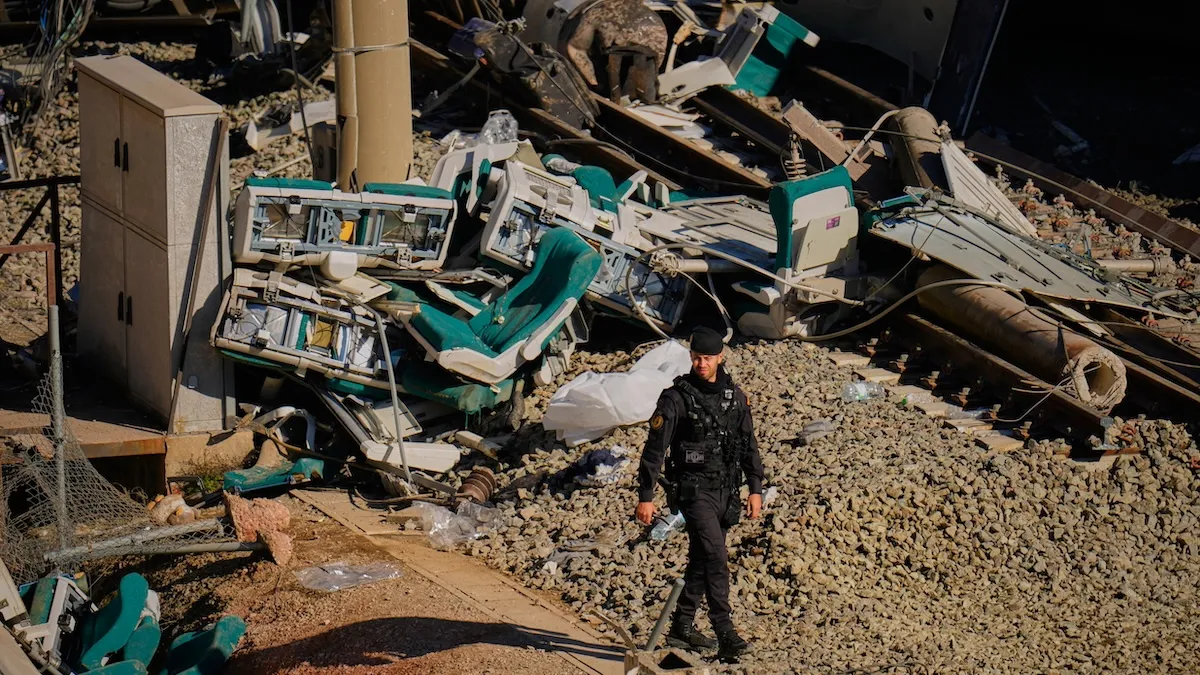
Southern Spain is grappling with grief after one of the deadliest rail disasters in the nation’s modern history, a collision that has left at least 41 people dead and many more injured. The accident, which occurred near the town of Adamuz in Córdoba province, has shaken public confidence in a high-speed rail network long regarded as among the safest in Europe.
Amid the devastation, one story has come to symbolize both the scale of the tragedy and a rare note of survival: a six-year-old girl who emerged from the wreckage alive while losing her parents, brother, and a cousin in the crash. Her survival, described by local officials as nothing short of miraculous, has focused national attention on the human cost of the disaster and the questions it raises about rail safety, emergency response, and the long road to accountability.
The child was traveling with her family in the front carriages of the train, which absorbed the brunt of the impact when a train traveling in the opposite direction derailed and collided for reasons that remain under investigation. As twisted metal littered the countryside and rescue teams worked through the night to reach trapped passengers, the girl managed to escape through a broken window and was later found barefoot on the tracks by a Civil Guard officer.
She sustained only minor injuries, receiving three stitches to her head before being released from hospital care. While the country mourns the dozens of lives lost, the child’s survival has become a focal point of collective sorrow and resilience, underscored by the declaration of three days of mourning in Punta Umbría, her family’s hometown.
The Crash That Shattered a Nation
The collision occurred on Sunday evening in rolling, olive-growing countryside near Adamuz, an area characterized by narrow access roads that complicated rescue efforts. According to regional authorities, one train operated by the state-run Alvia service plunged down a four-metre embankment after the crash, while the rear carriages of a train operated by private consortium Iryo were left severely damaged. The front carriages, where many of the fatalities occurred, bore the greatest force of the impact.
Emergency services described a chaotic scene marked by crushed compartments, torn-open metal frames, and debris scattered across a steep slope. Spain’s extensive high-speed rail network has been a source of national pride since its expansion over recent decades, making the Adamuz crash particularly jarring. Officials have described it as the first-ever deadly accident on the country’s high-speed rail system, a distinction that has intensified scrutiny of infrastructure maintenance and operational oversight.
Early assessments by experts have pointed to the possibility of a faulty rail joint as a contributing factor, though investigators have emphasized that conclusions will only be drawn after a thorough technical examination of the tracks, signaling systems, and train data recorders. Rescue operations continued into Tuesday as crews used cranes and heavy machinery to access the most severely damaged carriages.
The terrain posed significant challenges, requiring emergency services to level ground around the wreckage before additional equipment could be deployed. Two cranes were added to the operation as authorities worked to recover the remains of victims still missing and to ensure that no survivors were trapped beneath the debris. The scale of the response reflected both the severity of the crash and the difficulty of operating in a remote location reachable by only a single-track road.
🇪🇸🇪🇸🇪🇸🇪🇸🇪🇸🇪🇸🇪🇸🇪🇸🇪🇸🇪🇸🇪🇸
— kayvan sabouri (@KayvanSabouri) January 20, 2026
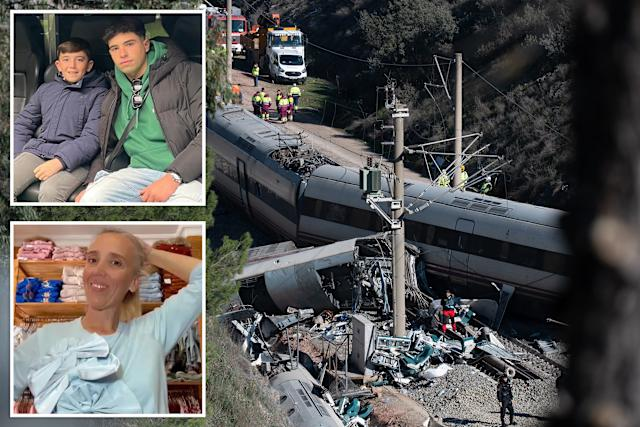
Surviving among the wreckage, a 6-year-old girl survived the collision of two trains that occurred on Sunday evening in Spain.
Her mother (left photo), her father, her brother (middle photo) and her cousin (right photo) all perished in the accident.
To… pic.twitter.com/r7GoTuzJpF
As details emerged, the national mood shifted from shock to mourning. Vigils and minutes of silence were observed across affected communities, and flags were lowered in towns linked to the victims. The accident has also prompted renewed debate about the balance between expanding high-speed rail services and maintaining the infrastructure required to ensure safety at every level. For many Spaniards, the crash has raised uncomfortable questions about whether sufficient safeguards are in place to prevent such a tragedy from happening again.
A Child Found Alive Amid the Wreckage
Against this backdrop of destruction, the survival of the six-year-old girl stands out as an extraordinary exception. According to reports from La Vanguardia and statements from the Civil Guard, an officer discovered the child wandering barefoot along the tracks after she escaped through a shattered window of the derailed carriage. The image of a young child emerging alone from the wreckage has resonated deeply with the public, symbolizing both the randomness of survival and the profound losses suffered by families on board.
Relatives later confirmed that the girl was in good health following treatment at a hospital, where doctors administered three stitches to a head wound. Beyond those minor injuries, she was described as physically unharmed, a fact that has astonished medical professionals and rescue workers alike given the extent of the damage to the carriages in which her family was traveling. The mayor of the village near the rail line where the family lived expressed a sense of solace in the child’s survival, acknowledging that it offered a small measure of comfort amid overwhelming grief.
Read : World’s First Leucistic Iberian Lynx Spotted in Jaén Mountains of Spain
For Punta Umbría, the coastal town that declared three days of mourning, the tragedy has been intensely personal. Mayor José Carlos Hernández addressed residents and reporters after leading a minute of silence, emphasizing the collective sorrow felt for the victims while also recognizing the survival of those who lived through the crash. He referred to the girl’s escape as a miracle, a sentiment echoed by many who have followed the story.
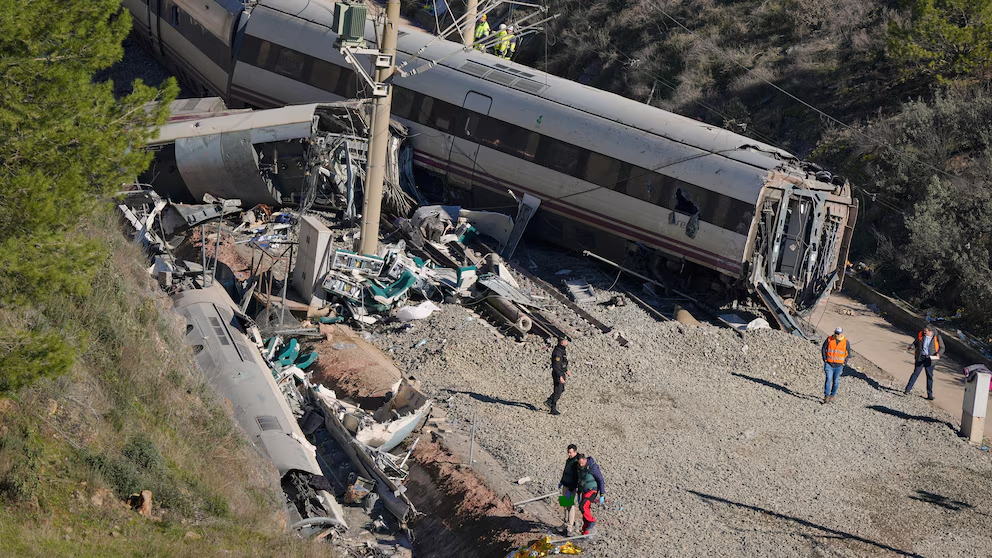
The town has rallied around the child, viewing her survival as a shared responsibility and a reminder of the human dimension behind the statistics of the disaster. The girl is now staying with her grandparents in a hotel in Córdoba, the nearest city to the crash site. Local officials have underscored that she is surrounded by family members committed to supporting her future, a reassurance offered in response to public concern about her wellbeing.
While physical injuries may heal quickly, the psychological impact of losing her immediate family in such a traumatic event is expected to require long-term care and support. Specialists note that children who survive large-scale disasters often need sustained counseling and stability to process their experiences and rebuild a sense of normalcy.
Investigation, Mourning, and the Road Ahead
As Spain mourns, attention has turned toward understanding how the crash occurred and what steps will be taken to prevent a recurrence. Investigators are examining the possibility that a defective rail joint contributed to the derailment that led to the collision, though officials caution that multiple factors may be involved. Data from onboard systems, maintenance records, and track inspections will form part of a comprehensive inquiry aimed at establishing accountability and identifying any systemic failures.
The involvement of both a state-run operator and a private consortium has added complexity to the investigation, raising questions about coordination, oversight, and standards across different segments of the rail network. Transportation authorities have pledged transparency throughout the process, recognizing the need to restore public confidence in high-speed rail travel. For families of the victims, however, the pursuit of answers is inseparable from the search for closure.
Meanwhile, rescue and recovery efforts have highlighted the challenges faced by emergency services responding to large-scale incidents in difficult terrain. The use of heavy machinery, including cranes, was essential to accessing crushed carriages and recovering victims, underscoring the importance of preparedness for worst-case scenarios even in systems considered highly reliable. Officials have indicated that lessons learned from the Adamuz crash will inform future emergency planning and infrastructure management.
The story of the six-year-old survivor remains central to the national conversation, not as a distraction from the tragedy but as a reminder of the individual lives affected. Her survival has been widely reported, yet it exists alongside the reality that dozens of others, including her immediate family, did not escape. As mourning continues in Punta Umbría and across Spain, the focus remains on honoring the victims, supporting survivors, and ensuring that the investigation leads to meaningful improvements in rail safety.