

In a recent incident that highlights the delicate balance international brands must maintain in culturally sensitive markets, Swiss watchmaker Swatch has found itself at the center of controversy. The company issued a formal apology after an advertisement featuring an Asian male model making a “slanted eyes” gesture sparked widespread outrage on Chinese social media platforms.
The ad, part of the promotion for Swatch’s Essentials collection, was quickly condemned for perpetuating racist stereotypes against Asians. This event unfolded rapidly over the weekend of August 16-17, 2025, leading to the swift removal of the offending materials worldwide. As China remains a critical market for luxury goods, including watches, the backlash underscores the risks of cultural missteps in advertising. Swatch’s shares experienced a notable dip following the uproar, reflecting immediate financial repercussions.
The Launch of the Controversial Advertisement Campaign
Swatch, a renowned Swiss brand known for its colorful and affordable timepieces, launched its Essentials collection in early August 2025. This line targets everyday wear with a focus on versatility, featuring men’s watches designed to appeal to a global audience. The promotional campaign included a series of images shared across social media platforms, including Instagram and China’s Weibo.
One particular image stood out: an Asian male model posing with his fingers pulling the corners of his eyes upward and backward, creating what many interpreted as a “slanted eyes” gesture. This pose has long been associated with racist mockery of Asian facial features, a stereotype rooted in historical discrimination that dates back to colonial eras and persists in modern pop culture.
The advertisement was intended to showcase the product’s adaptability and fun aesthetic, according to Swatch’s initial marketing narrative. However, the choice of imagery immediately raised eyebrows. Critics argued that the gesture was not only insensitive but deliberately provocative, especially given Swatch’s extensive history in the Chinese market.
The company, part of the larger Swatch Group which also owns high-end brands like Omega and Tissot, has been operating in China for decades, capitalizing on the country’s growing appetite for luxury and fashion accessories. In 2024, regions including China, Hong Kong, and Macau accounted for approximately 27% of Swatch Group’s total sales, underscoring the market’s importance despite recent economic challenges.
The ad’s release came at a time when global brands are under increased scrutiny for cultural representations. Swatch’s creative team, likely based in Europe, may have overlooked the potential for misinterpretation, viewing the pose as playful or abstract. Yet, in the context of Asian audiences, such gestures evoke painful memories of bullying and exclusion.
Read : 30-Year-Old Kseniya Alexandrova Dies After Tragic Elk Accident Leads to Coma
For instance, in Western countries, children have historically used similar actions to taunt Asian peers, reinforcing harmful stereotypes. The image was not isolated; it was part of a broader campaign that included other models, but this specific one drew the most ire due to its direct reference to ethnic features. Experts in advertising have pointed out that this incident reveals gaps in cultural vetting processes.
#Swatch issued a public apology on social media after a 'slanted-eye' image sparked outrage in China. The offensive image has since been removed. pic.twitter.com/AhSnzn7VBU
— Shanghai Daily (@shanghaidaily) August 16, 2025
Public relations consultant Mark Borkowski described it as a “fundamental mistake,” questioning how such content passed through executive approvals. In an era where social media amplifies voices instantaneously, brands like Swatch must employ diverse teams to anticipate reactions across different cultures. The Essentials collection itself aimed to emphasize simplicity and universality, with watches priced accessibly to attract younger consumers.
However, the controversial image overshadowed these intentions, turning what could have been a successful launch into a public relations crisis. This is not the first time a watch or luxury brand has faced accusations of insensitivity. The industry, valued at billions globally, often draws from diverse cultural inspirations, but missteps can alienate key demographics.
Swatch’s ad campaign, while innovative in its visual style, failed to account for the nuanced perceptions of racism in Asia, particularly in China, where national pride and historical grievances play significant roles in consumer behavior. As the backlash began to build, it became clear that the advertisement had crossed a line, prompting discussions about accountability in global marketing strategies.
The Surge of Online Criticism in China
The backlash against Swatch’s advertisement erupted almost immediately after the images were posted on Weibo, China’s equivalent to X (formerly Twitter). Users flooded the platform with comments condemning the ad as racist and insulting to Chinese people. Hashtags such as #SwatchInsultsChina and #BoycottSwatch gained traction, amassing thousands of posts within hours.
One Weibo user remarked that the gesture was “terrible to disgust Asians and degrade Chinese,” especially amid challenges in the watch industry. Another expressed disbelief, stating, “How could a brand with such a long history in China approve this?” The criticism was not limited to anonymous users; influencers and public figures joined the fray. Fashion influencer Peter Xu, who boasts over seven million followers on Weibo, weighed in, predicting that the controversy would harm Swatch’s business in China but might be short-lived due to the company’s quick response.
A 23-year-old student named Justin Zhao shared his shock, noting that Swatch should have known better given its market presence. These voices amplified the outrage, turning a single image into a national discussion on cultural respect and foreign brands’ attitudes toward Chinese consumers. China’s online environment is particularly fertile for such backlashes, fueled by rising nationalism and a history of perceived slights from Western companies.

Social media users in the country are quick to mobilize, often leading to boycott campaigns that can dent sales significantly. In this case, the “slanted eyes” gesture resonated deeply because it echoes longstanding stereotypes used to demean Asians globally. Historical contexts, such as anti-Asian sentiment during the COVID-19 pandemic or earlier discriminatory policies, added fuel to the fire, making the ad feel like a deliberate provocation rather than an oversight.
The wave of criticism extended beyond Weibo to other platforms, including international sites like X, where users shared articles and expressed solidarity with Chinese netizens. Posts in multiple languages highlighted the ad’s insensitivity, with some calling for global accountability. This cross-platform amplification increased pressure on Swatch, as the story gained traction in Western media outlets as well.
The backlash also tied into broader economic sentiments; with China’s luxury market facing a slowdown—Swatch reported a 14.6% revenue drop to 6.74 billion Swiss francs in 2024—consumers are more selective and less forgiving of brands that appear out of touch. Similar incidents have plagued other brands in recent years. For example, Dolce & Gabbana faced a massive boycott in 2018 over ads perceived as mocking Chinese culture, while Gucci and Prada have dealt with accusations of racial insensitivity.
These cases illustrate a pattern: Western brands entering the Chinese market often underestimate the cultural vigilance of local audiences. In Swatch’s situation, the online uproar not only damaged reputation but also raised questions about diversity in creative decision-making. As the criticism peaked on August 16, 2025, it became evident that ignoring such feedback could lead to long-term boycotts, prompting Swatch to act decisively.
Swatch’s Response and the Aftermath
In response to the mounting criticism, Swatch issued an apology on August 16, 2025, posting statements in both Chinese and English on Weibo and Instagram. The message read: “We sincerely apologize for any distress or misunderstanding this may have caused and pulled the ad worldwide.” The company emphasized that the intention was to highlight the product’s versatility, not to offend any group. All related materials were immediately removed from circulation, demonstrating an effort to mitigate further damage.
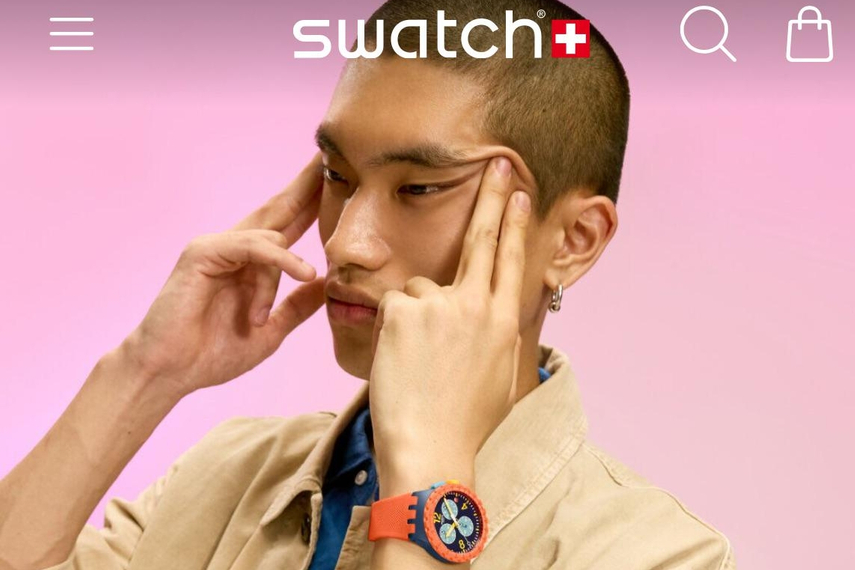
This swift action aligns with best practices for crisis management in the digital age, where delays can exacerbate issues. Swatch declined additional comments beyond the statement, focusing instead on internal reviews. The apology was well-received by some, with influencer Peter Xu suggesting the fallout might be temporary. However, others remained skeptical, demanding more accountability, such as explanations from the creative team or commitments to cultural training.
The financial impact was immediate: Swatch shares fell as much as 4% on August 18, 2025, before stabilizing at a 3.1% decline by mid-afternoon GMT. This drop compounds existing pressures, including a more than 50% decline in share value since early 2023 and impending 39% tariffs on U.S. exports. With China contributing significantly to revenue, any prolonged boycott could worsen the 2024 sales slump attributed to weak consumer demand.
Broader implications extend to the luxury industry at large. Brands must navigate China’s economic slowdown, shifting preferences toward domestic products, and heightened sensitivity to foreign portrayals. This incident joins a list of cautionary tales, urging companies to prioritize cultural intelligence in advertising. For Swatch, recovery may involve targeted campaigns emphasizing respect and inclusion, potentially rebuilding trust in a market vital to its future.
In conclusion, Swatch’s apology marks a critical step, but the event serves as a reminder of the power of social media and the need for vigilance in global marketing. As consumers demand authenticity, brands like Swatch must evolve to avoid similar pitfalls, ensuring their messages resonate positively across borders.
I’ve been surfing online more than three hours lately, but I by no means found any fascinating article like yours. It’s beautiful price enough for me. Personally, if all website owners and bloggers made excellent content material as you probably did, the net will likely be much more useful than ever before. “Revolution is not a onetime event.” by Audre Lorde.